Jacob Asare
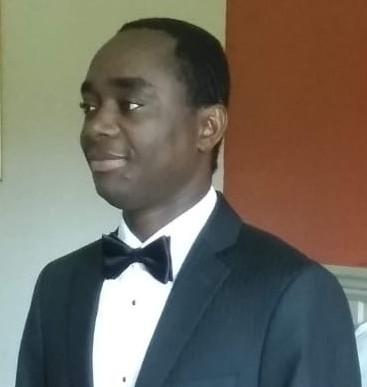
Hello, Jake welcomes you to my e‑portfolio site.
I am an emerging Cybersecurity professional with a strong foundation built from my experiences in Education, Physical Security, and hands‑on technical training. My career began as a Middle School Mathematics Teacher, where I earned the Best Mathematics Teacher’s Award in 2004. In 2007, I transitioned into Physical Security and received multiple recognitions, including Best Officer of the Month and Best Officer of the Year. These roles strengthened my discipline, attention to detail, incident documentation skills, and ability to assess risk—competencies that now support my cybersecurity work.
In 2023, I began pursuing my bachelor’s degree in Cybersecurity at Old Dominion University, expected to be completed in Fall 2026. Throughout this program, I have developed skills in digital forensics, incident response, network analysis, and security fundamentals, supported by hands‑on labs and real forensic case simulations. In 2025, I earned my CompTIA Security+ certification, which further solidified my technical foundation.
My e‑portfolio showcases this progression through structured artifacts, forensic reports, and technical demonstrations that reflect my growth across three core competencies: Incident Response & Digital Forensics, Cybersecurity Fundamentals, and Network Engineering & Systems Analysis. I am committed to transitioning into a Junior Cybersecurity Analyst role, where I can apply my combined experience to help organizations strengthen their security posture and respond effectively to evolving threats.
Personal Narrative Essay
Abstract
This personal narrative explores the development of my cybersecurity identity through the lens of academic experiences, professional work, and hands‑on technical training. Drawing on McAdams’s (2001) life story model, Smith’s (2017) concept of redemptive storytelling, and Nguyen’s (2013) framework of the ePortfolio as a living portal, the essay recounts how my early experiences in physical security shaped my investigative instincts and guided my transition into cybersecurity. Key educational and technological achievements including network simulations, Linux and PowerShell labs, digital forensics activities, cloud settings, and outside venues like TryHackMe, Hack The Box, and Let’s Defend, show my development of analytical abilities and professional identity. The story shows how experiential learning, coursework, and introspection enabled me to see a future as a cybersecurity expert, grasp my present, and rethink my past.
Sitting in a quiet security office surrounded by fluorescent light buzz, radio noise, and camera feeds, I never would have imagined my début into cybersecurity. I was a Security Shift Supervisor then, responsible with guarding and defending property, answering events, and recording all that occurred on my shift. Although, I do not consider myself to have a “narrative identity,” McAdams (2001) explains that we all create internalized life narratives that give our events direction and coherence. When l look back now, I can see that my narrative was already developing far before I ever launched a terminal window or finished a cybersecurity lab.
Over my years in physical security, I started to notice little things like propped doors, suspicious individuals and cars coming back at the same time every week, and detected several potentially damaging water leaks. Eventually, my manager started referring to me as “Detective”. I first laughed it off, but the nickname stayed. Then I failed to see that this label accurately reflected my nature. I found pleasure in problem-solving. I liked assembling hints. I liked learning how something happened and how to keep it from happening once more. Smith (2017) notes that people sometimes interpret their life via redemptive narratives, ordinary or painful events become significant turning points. One of those events, that moniker was one. Though not spectacular, it exposed a side of myself I still had not quite grasped. It was the first indication I was meant to conduct investigative work online in addition to physically.
During the night shift when I was checking system logs for an access control problem, the true turning point came. As lines of data passed by, I recall gazing at the screen with both excitement and annoyance. Though I found it enticing, I did not fully grasp all I was seeing. I was curious as to the meaning of the logs. I wanted to understand how attackers thought. I wanted to protect systems the same way I protected buildings. That turned out to be the turning point in my story. McAdams (2001) sees turning points as occasions that change the direction of a life narrative. That evening was the time I knew I had to go into cybersecurity.
I first started Old Dominion University hoping to pick up technical abilities. I had not expected how much the procedure would change my view of myself. The NIST Framework, Linux, PowerShell, networking, and digital forensics, all fundamental cybersecurity principles, were covered in my coursework. Every lab gave my identity another level. Linux labs helped me to understand file systems and control permissions. PowerShell drills helped me to examine system behavior and automate activities. Forensics labs helped me learn to think like an investigator, analyze evidence, and retrieve erased files. Networking labs through MindTap helped me understand how packets move, how devices communicate, and how attackers exploit weaknesses. One of the most eye‑opening experiences was the Networking Simulator lab on hub operation. In that lab, I set up IP addresses, tracked ARP broadcasts, and observed a hub duplicating every frame to every linked device. Watching ARP requests, unicast replies, and ICMP packets flow across a common collision domain helped me to see why hubs are insecure and how attackers could grab traffic. Every packet hop brought the same inquiry concentration I used to have during actual events. I was first sensing my past and present merging.
I drove myself more outside of class. Apart from class, I pushed myself still more. Long hours were spent on TryHackMe (https://tryhackme.com/) learning practical labs on the actual operation of cybersecurity. From a defender’s perspective as well as an attacker’s, I learned how to analyze logs, look into alerts, negotiate Linux systems, and think. Hack The Box (https://www.hackthebox.com/) presented me challenges in actual penetration testing. I was introduced to SOC processes, alert triage, and incident response via Let’s Defend (https://letsdefend.io/). Azure cloud labs enlightened me on virtual machines, identity management, and cloud security. These tools not only taught me abilities but also transformed my perspective on myself. I was more than simply a student finishing projects. I was growing into someone who could identify risks, see weaknesses, and keep systems safe. I still recall the first time I independently finished a TryHackMe challenge. The same thrill I used to experience when handling a challenging physical security event flooded me. It was clear at one time that I fit in this subject.
Python also became part of my growth. One of the labs that stands out is the Income Tax Calculator. It was this cybersecurity lab that taught me discipline. I had to write pseudocode, validate inputs, handle calculations, and format output correctly. Debugging rounding mistakes helped me to understand how exactly coding need to be. Examining logs, creating scripts, or automating activities in cybersecurity calls for that same accuracy. Though the lab had little to do with security, it helped to reinforce my present patterns.
I first believed my ePortfolio was only a location for assignments. But it became much more than that. Nguyen (2013) describes the ePortfolio as a “living portal”, a space where students reinterpret their past, understand their present, and imagine their future. As I added my labs, reflections, and projects, I began to see how everything connected. My security background was not separate from my cybersecurity journey; it was the foundation. My nickname “Detective” was not just a joke; it was the beginning of my investigative identity. My networking simulator lab was not just a requirement; it was a moment when I understood how attackers exploit weaknesses. Not just practice, my TryHackMe and Hack The Box labs showed evidence of my capacity to solve actual issues. Nguyen (2013) says that when we show ourselves to others, narrative identity gets more obvious. Creating my ePortfolio made me clearly define my identity and direction. It enabled me to view my story as one of development, agency, and direction.
Smith (2017) points out that people usually view their past in a redemptive way that turns past events into significant steps toward a better future. Thinking back on my past, I saw that my security position was preparation, not only employment. Early forms of the work I want to do now include long hours, incident reports, inquiry, and progress to engineer. I started to consider my past as part of a redemptive narrative instead of apart from my future. Today I am getting ready for my first junior analyst job or cybersecurity internship. I am ready, not since I know everything but rather because I get my story. McAdams (2001) claims that our life are shaped by the stories we spin about ourselves.
Introspection and my ePortfolio have helped me to create a story that inspires me. As someone who protects systems, evaluates hazards, and helps to foster a more secure digital environment, I am an operator of systems. I see a meaningful impact and ongoing development of my abilities in the future. This view of the future relates back to another aspect of my past in several respects. I invented SUV rim design and received Patent in 2015 when good-looking rim designs were uncommon. A few years later, the automotive sector started making rims that were surprisingly close to the ideas I had in mind. That encounter helped me realize I have a natural ability for invention, seeing holes, envisioning ideas, and producing something fresh before the sector gets up. I now want to apply that same inventiveness into cybersecurity. Just as I once produced something unique in the automotive sector, I want to someday assist to develop tools, systems, or procedures to identify, stop, or lessen cyber-attacks. Though my story is still developing, I at last see where it is going and am ready to create the future I could only envision.
References
McAdams, D. P. (2001). The psychology of life stories. Review of General Psychology, 5(2), 100–122.
https://doi.org/10.1037/1089-2680.5.2.100
Nguyen, C. F. (2013). The ePortfolio as a living portal: A medium for student learning, identity, and assessment. International Journal of ePortfolio, 3(2), 135–148.
https://files.eric.ed.gov/fulltext/EJ1107805.pdf
Smith, E. E. (2017). The two kinds of stories we tell about ourselves.
CYBERSECURITY AWARENESS
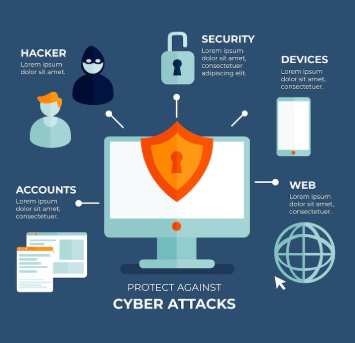
https://www.freepik.com/free-photos-vectors/cybersecurity-awareness

Data Privacy
https://www.freepik.com/free-photos-vectors/cyber-security

Social Engineering – illustrating phishing attacks, such as a deceptive
email or a person receiving a suspicious message.
https://www.shutterstock.com/search/suspicious-mail
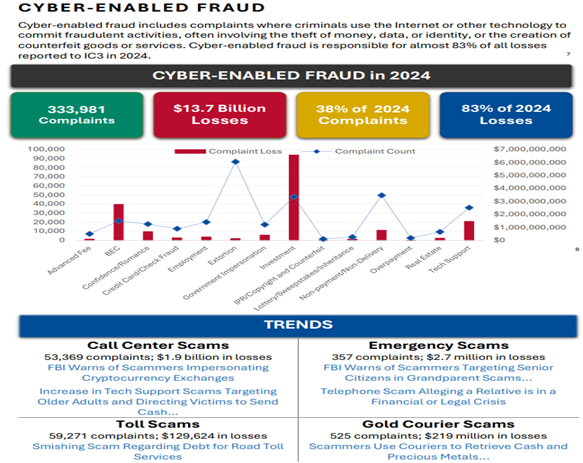
Impact of Cybercrime on Society: A visual representation of statistics
related to cybercrime.
https://www.ic3.gov/AnnualReport/Reports/2024_IC3Report.pdf
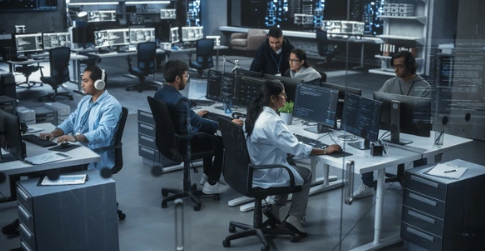
Collaboration Between Disciplines: A photo of a diverse group of professionals
working together on cybersecurity solutions.
https://www.shutterstock.com/search/cyber-security-collaboration