Stephen Giorgi
IDS 493
Dr.Steffen
10/5/2024
Journey to Cyber Security
The Stage
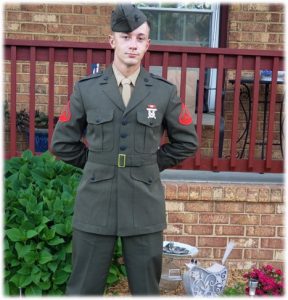
I owned my first computer when I was 16 years old. I got it as a gift from my father. Despite being retired military from a 26-year-long career, he was never in a good financial state. That said, he still gave as much as he could and gave me that old Dell laptop that he had used for his time in college. It didn’t work very well; I hadn’t used it because I had nothing to use it for. So that computer collected dust, and I honestly don’t know where it is now. Now I’m in my fourth year as a cyber security major and I am a network administrator in the United States Marine Corps.
To understand the jump from barely being able to use a keyboard and not avidly using a computer until adulthood to now, we need to understand concepts proposed by Dan McAdams called “casual” and “thematic coherence.” McAdams(2011) in The Psychology of Life Stories proposes that individuals can create meaningful narratives of their lives through three forms of coherence: temporal, causal, and thematic.
I see mine as one of casual coherence; one event leading logically to the next. If I were to attach a theme to my narrative, it would be perseverance. In truth, everyone is familiar with the concept. People naturally see themselves as the main character of their own story and, generally, people like to think there is reason for events in their lives. Desire for reason is the foundation of science, religion, and philosophy; thinking in cause and effect or thematically is only natural(McAdams, 2011).
The Purgatory
So, we’ll have to look at the first cause. In high school, I had no idea where I was going to go afterward. I figured I was going to join the military, so I opted to take the ASVAB. A fact that I had completely forgotten until the day of. I scored a 66 overall. For the ASVAB, not bad, not great. I soon after was talking to recruiters.
I briefly spoke to a Marine recruiter who uncharacteristically looked at my ASVAB, heard I wasn’t an athlete, and basically told me to get out his office. I spoke to some AirForce recruiters who were willing to work with me. They got me as far as the medical portion of entry processing where I had a run-in with a doctor infamous for disqualifying kids for nonsense reasons and would be the bane of my existence for the next three years. The Air Force recruiters considered me more trouble than I was worth.
The year of 2018, a few months after my disqualification and a year after high school graduation, I decided to enroll at TCC as the military was seeming like less of an option. I started as a general studies major because I still did not have a direction. I then proceeded to get the highest letter grade of a ‘B’ in one of my three classes. “I guess school really isn’t for me so I should continue trying for the military,” I said to myself. In reality, I hadn’t fully applied myself like I could have. I attended one of those classes enough to fail and I couldn’t be withdrawn.
After a wild goose chase for medical papers that would clear me, I started talking to a Navy recruiter. I got an appointment set up, I show up and no one is in the building and the recruiter is conveniently unreachable. As I’m turning away thinking “Guess I’ll try the army”, I get flagged down by a Gunnery Seargent (E-7 Marine) asking me if I wanted to join the armed forces.
“Yes, sir. Yes, I do.”
The Escape
The Marine recruiters were much more helpful this time around, but there were still some shenanigans. I was asked what component I wanted to join, and I said, “Whatever will get me in faster”, words I would come to regret. At this point, it had been so long since my ASVAB that my score had expired so I took it again. With a new ASVAB score two points higher than my brother’s score of 86, a few waivers, and a now passing initial strength test score (the physical test every marine must pass before going to boot camp) I had to pick my job.
I was given a list of jobs narrowed down by my recruiter to jobs that were only available to me because of how high my ASVAB was. The descriptions for all of them were vague. The one I was pushed towards sounded like a desk job (something I didn’t want) working with computers and my recruiter had no knowledge about it. Another recruiter stepped in and explained that it was about setting up a radar.
The Fight
After going to entry processing for the seventh time and finally getting a different doctor, I became a marine upon completion of boot camp in April of 2020. Proceeding this was a month of combat training then eleven months of being told my life was somehow easier by peers for being a reservist despite the training we received up until that point being identical and the benefits of being a reservist being much less in the long term. The radar I was supposed to be working with as the recruiters told me was actually the subject of a different MOS in my field. I spent my time learning to be a network administrator, learning networking via Cisco packet tracer, using Unix, understanding subnetting, and learning about virtual machines.
While I had been searching for a direction for all this time, I was not happy with the one decided for me. As soon as I could, I wanted to do all of this over. I didn’t want to be a reservist. The quickest way that I could correct this was by commissioning and becoming an officer. To do this though, I would need to go back to school which wasn’t for me.
I am a bit conflicted at this point, naturally. On the other hand, I was done making the mistake of simply looking for the best direction. I had to be decisive. I know that this is the direction for me and not rain nor snow will keep me from achieving this goal. That is my redemption(Smith, 2017). Besides, I know that I can fare better this time. I had learned what I could accomplish when I applied myself and I was going through the hardest schooling I had ever been through at the time.
The Grave
The last month of my training before I could finally come home after fifteen months and enact my plan of achieving this new goal, I was given news that my father had Covid-19. My family and I were sure he would be fine. He had a history of a fair share of medical issues and illnesses, some of them should’ve killed him. I was still talking to him as much as I could and told him about my aspirations to be an officer. I told him things like, “I’m going to be an officer someday and I want you to be there.” Two weeks after that I was given news that one of my friends back home had died. Two days after that I heard my father was hospitalized. I had some support in my peers and instructors, and as much as they tried, I could not get a Red Cross letter. I sent him messages and voicemails like “You need to get better and take care of yourself so I can give you my first salute”, but my father wasn’t very responsive. I graduated from my schoolhouse April 27th, 2021. The same day that my father passed away from complications related to Covid-19.
If there was any ounce of doubt in my goals, it had completely withered away. I came home, checked in with my unit, went to a few funerals, then re-enrolled at TCC. Now I only had to figure out what my major would be. It only made sense to attempt to align the new two halves of my life. Cyber security. I would use what I have learned to learn more about how to serve and protect, come hell or high water.
Since then, I have had classes of many different disciplines like Criminology, Philosophy, Business Analytics, and Programming. I had learned a lot of valuable information in Cyber Security from the many classes required, even if a lot of it was retreading what I learned in the schoolhouse what additional new information learned leads to a more comprehensive understanding of the subject. A few of these classes, like Cybersecurity Ethics, would further my understanding of other disciplines, like philosophy, and then evaluate how I could apply their concepts to cybersecurity.
References
McAdams, D. P. (2011). Narrative identity. In S. J. Schwartz, K. Luyckx, & V. L. Vignoles (Eds.), Handbook of identity theory and research (pp. 99–115). Springer Science + Business Media. https://doi.org/10.1007/978-1-4419-7988-9_5
Smith, E. (2017, January). There’s more to life than being happy [Video]. TED Conferences. https://www.ted.com/talks/emily_esfahani_smith_there_s_more_to_life_than_being_happy