Home
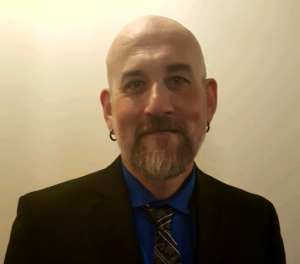
The purpose of this site is to document my journey through the Fall 2018 Semester of MET 330 “Fluid Mechanics”.
I am looking forward to this semester as I feel it is a vital piece of the engineering “tool box” of skills.
I am most interested in learning about pumps and oils. This is directly related to my job as I work in a machining and grinding environment and on a daily basis deal with cutting fluids that are used in both low and high pressure applications.
No that the semester has come to a close, here are my closing thoughts.
Reflections for MET 330
As I sit here think about the semester and in particular this course, I feel that I have performed well given the obstacles that were before me. Does my performance meet the objectives of the course? I feel my test scores are adequate proof that I have an understanding of the material presented in this course.
My lowest score was on the first test. This was due to my misunderstanding of the first question. I took what was described in the problem as a literal measurement and this was not the case. Without extra credit this score was an 86. This score troubled me for weeks and taught me a valuable lesson in this class. Ask questions! This test covered the manometry, static fluid forces, and buoyancy. I had been introduced to buoyancy years ago. I am also a graduate of The Apprentice School at Newport News Shipbuilding.
If there is a common thread to this course, it is Bernoulli’s Equation. The second test is where this was so vital to success. My score on the second test without extra credit was a 96. This by far was the most difficult test in the course. The work required in the part of the course was on a different level compared to the rest of the course. This test covered the bulk of the material in the course, including the use of Bernoulli’s, major and minor losses in pipe systems, and the beginnings of designing a system with a problem designing a fountain.
The third test covered several areas related to fluid mechanics and industry. These topics were much less complex than the second test but still relied on material learned for the second test. The topics included the Hardy-Cross Method for pipe networks, flow measuring devices, water hammer, forces created by moving fluids, open channel flow, and cavitation. My score on this test without extra credit was 92.6. This was due to a less than perfect homework score, a result of my schedule.
The course project was a semester long exercise of all of the material covered. I feel where the project was best served was in pump selection as this was not covered on any of the tests. The project, besides time demands, has it own set of potential obstacles. The mixing of online students and in-class students adds a layer of difficulty in collaboration. I personally feel the project should be scaled to become an individual project. Overall the project was beneficial and was certainly a unique experience.
While I feel my understanding of the material is best documented in test performance, I am especially happy with the second test. This test was at a time when I was completely overwhelmed with my schedule. As crazy as it sounds now, I was contemplating withdrawing from the class. Managing my career and trying to take four classes was an ambitious plan without complications. Throw in numerous work-related emergencies that also involved travel and it was nearly too much.
As my page states, I am an Engineering Analyst in the Components Manufacturing Dept. at Continental Automotive. The material in this course is relevant to my work. Machining and grinding operations, in recent years, have turned to cutting fluid being delivered directly to cutting point of the tool. This is done with passages through the tool or grinding stone using high or low pressure depending on the application. This provides a better-quality part and makes what was impossible, or at least very difficult decades ago, now just a part of everyday machining. While I haven’t had the opportunity to perform calculations, the understanding acquired in this course has been useful in understanding which tools will perform better for the needed application. This is absolutely vital to my career. I have been in manufacturing for almost 25 years now, so my career path is fairly determined at this point. I also feel my experience helps me to visualize concepts better than someone who has not experienced these applications in real life. I truly consider this an advantage.
If I were starting this class again, the biggest advice I would give myself is to “Know your limits!” My ambition to shave semesters off of my degree has cost me this semester. I missed out on things that I should have been a part of. Taking the project path, while it has its benefits of learning teamwork and scope of a large task, is not a wise choice for someone working 50+ hours per week and taking three other classes. I do wish I had the luxury of being a fulltime student. I really do consider that an opportunity that is often wasted on the young. With that said, I am certainly glad I did not withdraw from the class. I feel I have earned the material in a way that it will not be lost in a few months or even years. This is a testament to Dr. Ayala. His passion for the material shows in every lecture. It makes the lectures easy to stay engaged with. So, as I sit here at the end what comes to mind most? Two things actually come to mind…… I am glad the semester is over and thank you!