
Draw me a cell
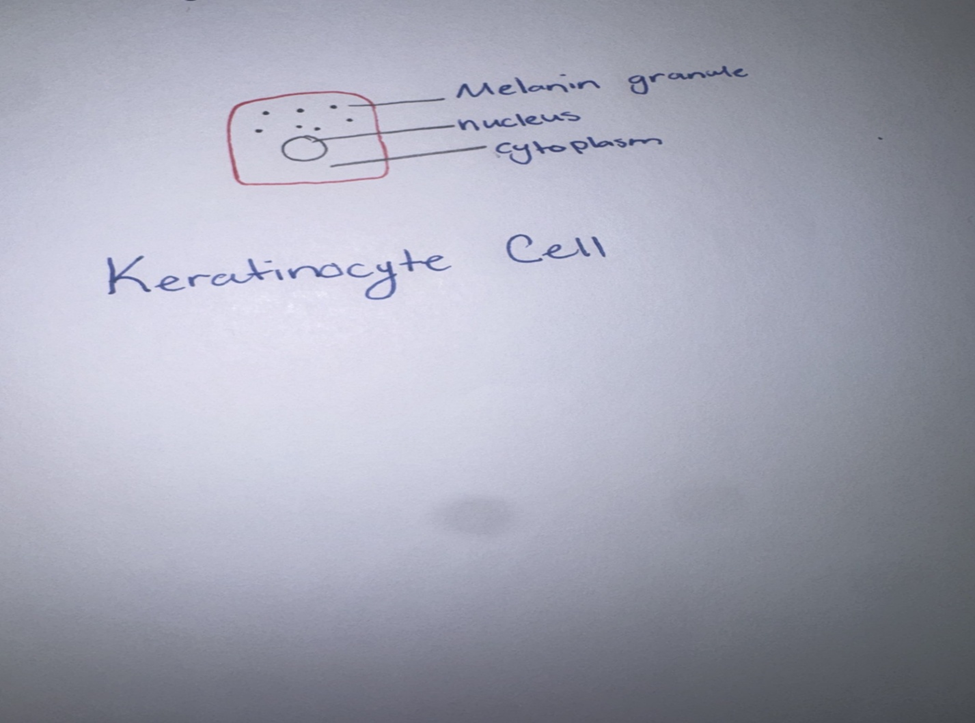
Keratinocyte cells are crucial in dermatology because of their role in maintaining the skin’s barrier function and immune response. Keratinocyte cells are the primary cell in the epidermis that form a protective barrier against environmental damage, pathogens, and toxins. Also, Keratinocyte cells play an important role in skin repair and regeneration. Meaning they respond to injury and aiding in the healing process. Their differentiation and metabolism are closely linked to skin disease, making them focus of research in dermatology.
Find me a meme
I chose this because “the mitochondria are the powerhouse of the cell”. It’s one of the first things that you learn about cells starting from middle school. So, it might seem simple enough, but as we’ve progressed through this cell biology class, I’ve realized that there is so much more to the simple sentence. In our study of cell respiration, we have learned about the Krebs cycle and the electron transport chain within the mitochondria to see how the “powerhouse” of the cell functions to generate energy for the cell and keep it alive. This is just one example of how my perspective of cell biology has changed in the past semester. Cell biology has become less about memorizing small phrases and structures in the cell, and more about seeing how complex systems work together to keep the cell alive.
Scientific Literature essay
What if scientists could evaluate the safety of new drugs without using animals, while also producing results that are more accurate for humans? For decades, animal models have been the standard method for testing drug safety and toxicity. However, differences between animal and human biology often make it difficult to accurately predict how drugs will affect people. In response, scientists are developing New Approach Methodologies (NAMs), which include technologies such as organs-on-chips, 3D organics, and artificial intelligence (AI) systems. These approaches use human cells and large biological datasets to simulate human physiology and predict toxicological outcomes. According to recent research, these methods are becoming increasingly important alternatives to traditional animal testing (Kwon, 2026, paras. Two–three).
Microfluidic organs-on-chips, 3D organics, and AI-based computational models, which rely on human cells and data to predict toxicology, are improving drug safety testing, but have yet to replicate the complex biological interactions occurring in the whole body. Microfluidic organs-on-chips and 3D organics constructed from human-derived induced pluripotent stem (discs) provide new models for biological assessment that more accurately reflect human physiological systems than traditional animal models.
Computational models and generative AI systems use human and laboratory data for training and validation, allowing them to predict possible toxic effects such as skin sensitization and liver injury. These technologies offer an alternative to testing on live animals. By identifying patterns in datasets containing chemical structure information and biological adverse effects, the AI models developed by the researchers can connect the dots between the two. As a result, scientists may identify toxicities, including liver damage caused by medications and allergic contact dermatitis before a drug is ever administered to a human patient. Images from organ- and cell-based lab models called organ-on-a-chip, for example, can be analyzed using generative AI and deep learning models for early signs of cell damage that indicates toxicity. By integrating these computer-based approaches with lab models, the research team reports achieving improved accuracy and efficiency in preclinical tests of potential medicines, reducing the need for animal testing. The hope is that AI can process thousands of chemicals in the period it would take a scientist to study one or two compounds today.
Current NAM’s have biological and technical limitations that prevent them from reproducing human systemic processes sufficiently well. This is reflected in the reductionist nature of New Approach Methodologies (NAM’s) currently available, where often only single tissues or selected biological processes are used as the basis for the test conditions. Whole-body processes such as the immune system, endocrine system or communication between multiple organs are not sufficiently covered by current NAM’s. Similarly, processes on a longer timescale such as ageing, chronic disease development and long-term toxicity studies are difficult to study using experimental systems. Even sophisticated systems such as multi-organ chips currently do not fully replicate the human communication network consisting of all organs. Additionally, AI models are only as good as the data used for their training and, if insufficient or biased data is available, predictions will not be accurate. While it is true that NAM’s will become increasingly important, current NAMs will primarily be used in a complementary fashion to support, for example, data generation for read-across approaches, or to augment and improve experimental design in vivo and vitro. Traditional methods will remain the gold standard and form the basis of conventional scientific investigation and NAMs will be used to support these approaches.
New Approach Methodologies, such as organ- on-a-chip, 3D organoids and other in vitro models (NAMs) that use human cells and data, are revolutionizing the way we evaluate drugs to predict toxicity in humans. Major advances include the use of iPSC-derived human tissues in microfluidic devices called organs-on-chips, and the use of artificial intelligence (AI) to analyze large biological datasets to predict potential toxic effects of compounds, such as liver injury or skin sensitization. These so-called New Approach Methods (NAMs) represent a simplification of biological systems and are not yet able to sufficiently mimic organ-level interactions, long-term physiological processes, and whole-body responses. However, technology has the potential to change biomedical research from bench to bedside by bringing in a new era of safer, quicker, and more compassionate drug testing and, ideally, lowering the use of animals for toxicity testing. This is because technology is developing so quickly.
References
Authors (Publication_Date). Title. Publication_Title, Url
Authors (2026, February 25). The age of animal experiments is waning. Where will science go next?. Publication_Title, https://www.nature.com/articles/d41586-026-00563-3
End of the term reflection: In cell biology, I enjoyed learning about how cell signaling and the cell cycle contribute to growth and maintenance of skin tissues through the division, differentiation, and coordinated behavior of skin cells, keratinocytes. This was interesting to me because it was a continuation of topics from the rest of the anatomy and physiology units, where we learned about the process of wound healing, signs and symptoms of inflammation, common skin disorders such as psoriasis and skin cancer, and the process of apoptosis and mutations in proteins that control the cell cycle, leading to the development of melanoma. Connecting these topics at the cellular and molecular level reinforced my understanding of how many of the skin diseases studied in dermatology develop. It also helped me develop a stronger appreciation for how research in cell biology contributes to new treatments and advancements in skin health. Studying cell biology increased my understanding of these diseases, which in turn helped me to develop as a student of these illnesses with the intent of providing care for patients with these diseases in the future.
Leave a Reply