Artifacts
Instructions
Exploring Culture
One common practice that I learned about in this course was the celebration of fiestas within the Spanish culture. Here in the United States, we have designated holidays that we celebrate. However, in Spanish culture they have 12 different celebrations that occur over the year. Another key difference within the Spanish culture is how tight knit the community is, in the United States we are not as social when it comes to celebrating.
Learning about different practices made me looks at certain viewpoints. For example, community celebrations flow more naturally among Spanish cultures, and everyone respects everyone. I do not see that happen often in my country, if it did, I feel like more people would be accepting of each other. Another thing I noticed is that Spanish culture has a more affectionate way of showing love to those they care about.
Engaging in the community is a good way to keep the culture alive for generations to come. It also helps younger generations with social skills because it allows others to experience different cultures and demographics without passing judgement.
Engaging in Communities
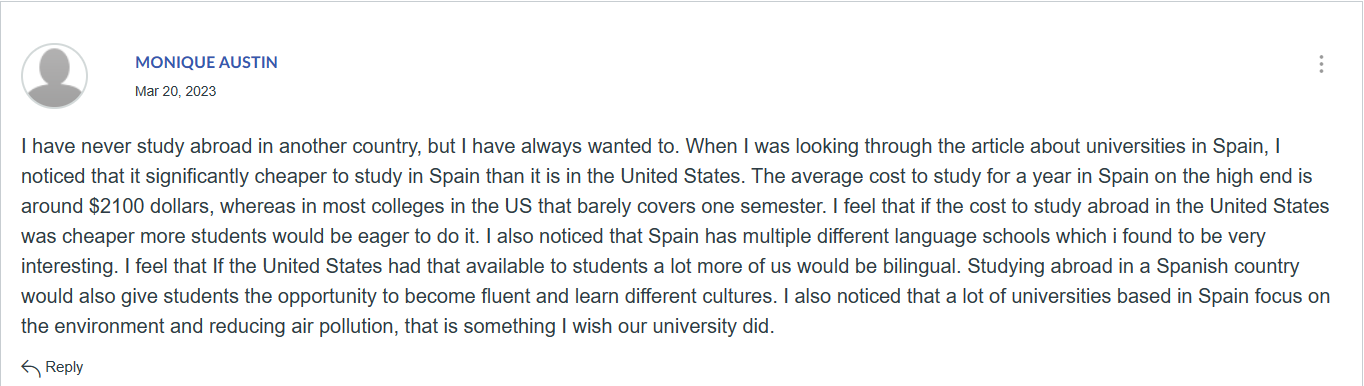
Interpersonal Communication
I would say that overall, this was a very interactive course. While it was an online course, I feel as though I was able to communicate with my classmates more than if the course was in person. There were multiple areas of improvement where you got to test your knowledge of the course material. The discussion board assignments also allowed us to see multiple different perspectives on what we thought about Spanish cultures.
Overall, when it came to interactive assignments in this course, I really enjoyed the discussion board assignments. It allowed me to see different perspectives of those who were a part of the Spanish culture and those who weren’t. The Flipgrid assignments were rather interesting as well, and they align nicely with the oral assignments. I like how they got more intense as we got deeper into the semester.
Regarding the homework database, I was not the biggest fan of that. I feel like some of the lessons were not well developed and did not provide enough resources for the assignments provided. For example, the assignment would give us a list of vocabulary words and then have an assignment that was difficult to understand not relating to the vocabulary that was provided. On the other hand, when it came to learning the language itself, Lingo learning is a great tool to use.
Presentational Speaking
This semester we completed a total of 5 oral speaking assignments on Flipgrid. In my opinion, the first assignment was the most challenging just because it was my first initial introduction to the language.
When I initially started the speaking assignments, I was not good at them at all. It took a lot of practice with pronunciation and vocabulary to accurately say what I was trying to say. As I got better and deeper into the semester, certain sentences can naturally to me due to repetition. I have learned that if you continuously see something you are more likely to retain the information. Towards the end of the semester, I started to struggle with the material a little bit due to it being a little more difficult. Overall, I still think I did a good job of learning and reiterating the material.
Presentational Writing
During the course of the semester, we had to research many different cultures and compare how they were different from the United States. One memorable article for me was when we had to research the work hours of different cultures and countries. We also got to compare the different education standards in different countries as compared to the United States.
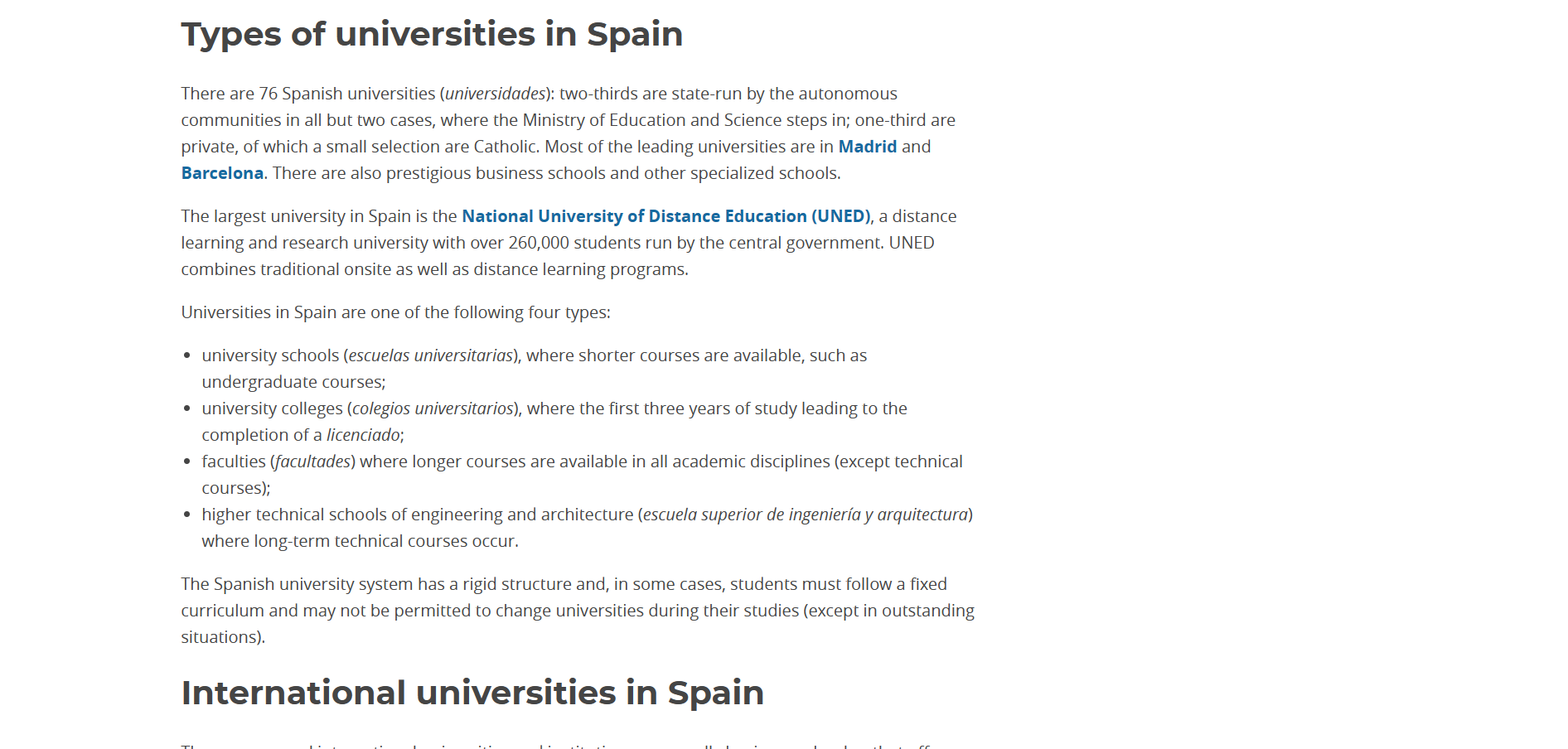
The activities were not necessarily difficult, it was more difficult to find native Spanish articles to access the information I needed to write my post. I also had to adjust my internet searches to Spanish words in order to get the necessary resources. On occasion some of the culture practices were difficult to comprehend and understand, such as Spanish working hours. I overcame any difficulties I had by using the resources provided to me such as Spanish dictionary which broke down the meaning of specific words.
Interpretive Listening
The listening portion of this course varied a lot between easy and difficult. At the beginning of each module the listening portion was very clear and simple to understand. Towards the end of the module, we had to listen to actual conversations and be able to identify what was being said. Sometimes this was a difficult because the conversation was be spoken so fast.
I heard multiple different Spanish conversations over the course of the semester. Most of those conversations happened on lingo learning. The most challenging part was the speed at which the conversations were happening. It was hard to understand what exactly was being said so I usually had to rewatch or relisten to the recording’s multiple times. The easiest part was when I was initially learning the material because the recording going over how to pronounce the vocabulary.
Interpretive Reading
There are two sites that really helped me learn over the course of the semester. The first website was lingo learning which is where most of the homework assignments took place. The second site was Spanish dictionary.
Lingo learning is somewhat the foundation of the course in my opinion. It lays down the basis of the vocabulary and with each lesson the material gets more difficult. My only downside to lingo learning is that in some lessons it lacks substance but overall, it is a great resource to use. Spanish dictionary helped me because it provided articles on the things that lingo learning failed to properly elaborate on. For example, the uses of ser vs estar. I was having a lot of difficulty distinguishing the two and could not accurately complete the lingo learning assignments. As a response to this, I went over to Spanish dictionary where the broke down the differences and provided multiple examples on when to use both ser and estar.