
Breaking Barriers: The Impact of Virgil Abloh on Fashion, Design, and Culture
When Virgil Abloh stepped into the fashion world, he didn’t just design clothes, he disrupted an entire industry. Known for blending streetwear with high fashion, Abloh challenged what luxury could look like and who it could be for. He wasn’t just a designer; he was a cultural architect, a boundary-breaker, and a symbol of possibility. His influence still ripples through fashion, art, music, and even the way we think about creativity itself.

Source: Fashion designer Virgil Abloh walks the runway during the Off-White show as part of the Paris Fashion Week Womenswear Fall/Winter 2018/2019 on March 1, 2018 in Paris, France. (Photo by Francois Durand/Getty Images).
Born in Rockford, Illinois, to Ghanaian immigrant parents, Abloh’s journey was anything but conventional. He studied civil engineering and architecture, and that nontraditional background helped him approach fashion with a different lens, one rooted in structure, experimentation, and deep curiosity. He first gained attention working with Kanye West, becoming the artistic director of Donda and collaborating on iconic album designs and fashion moments. That creative partnership laid the groundwork for what was to come.
In 2012, Abloh launched Pyrex Vision, a brand that recontextualized deadstock Ralph Lauren gear and printed bold graphics across them, effectively flipping streetwear into something that felt both rebellious and artful. From that, Off-White was born. And let’s be honest: when Off-White dripped it’s signature zip ties, quotation marks and industrial belts, people paid attention. Suddenly, streetwear wasn’t just about hoodies and sneakers, it was a movement. Abloh positioned Off-White as a dialogue between street style and high fashion, and the world listened.
But his biggest cultural mic drop came in 2018, when he was named the artistic director of Louis Vuitton’s menswear, a historic appointment. He was the first Black designer to lead the fashion house in its 160+ year history. That moment wasn’t just about fashion. It was about representation. It told an entire generation of young Black creatives that they belonged in the rooms they were once excluded from.
Abloh’s design language was always rooted in accessibility. He loved to remix existing symbols, flip everyday objects into statements, and blur the lines between disciplines. A quotation mark wasn’t just punctuation, it was a conversation. A plastic zip tie was not just hardware, it became luxury. His entire ethos felt like an open-source invitation to rethink what design could be. He once said, “everything I do is for the 17-year-old version of myself.” That mindset helped him reach people far beyond the traditional fashion elite.
What made Abloh so impactful wasn’t just his success, it was how generously he shared the blueprint. He mentored young artists, gave lectures at Harvard, and launched initiatives to support Black creatives across industries. He made fashion feel collaborative, not exclusive. He made it okay to be a multidisciplinary artist before it became a buzzword.
And let’s not forget his impact on sneakers. The Off-White x Nike “The Ten” collection literally reset the culture. He took classics like the Air Jordan 1 and Air Max 90 and reimagined them with deconstructed details, exposed stitching, and raw text. The collaboration sold out instantly and sparked years of copycats and conversation. Sneaker culture would never be the same.
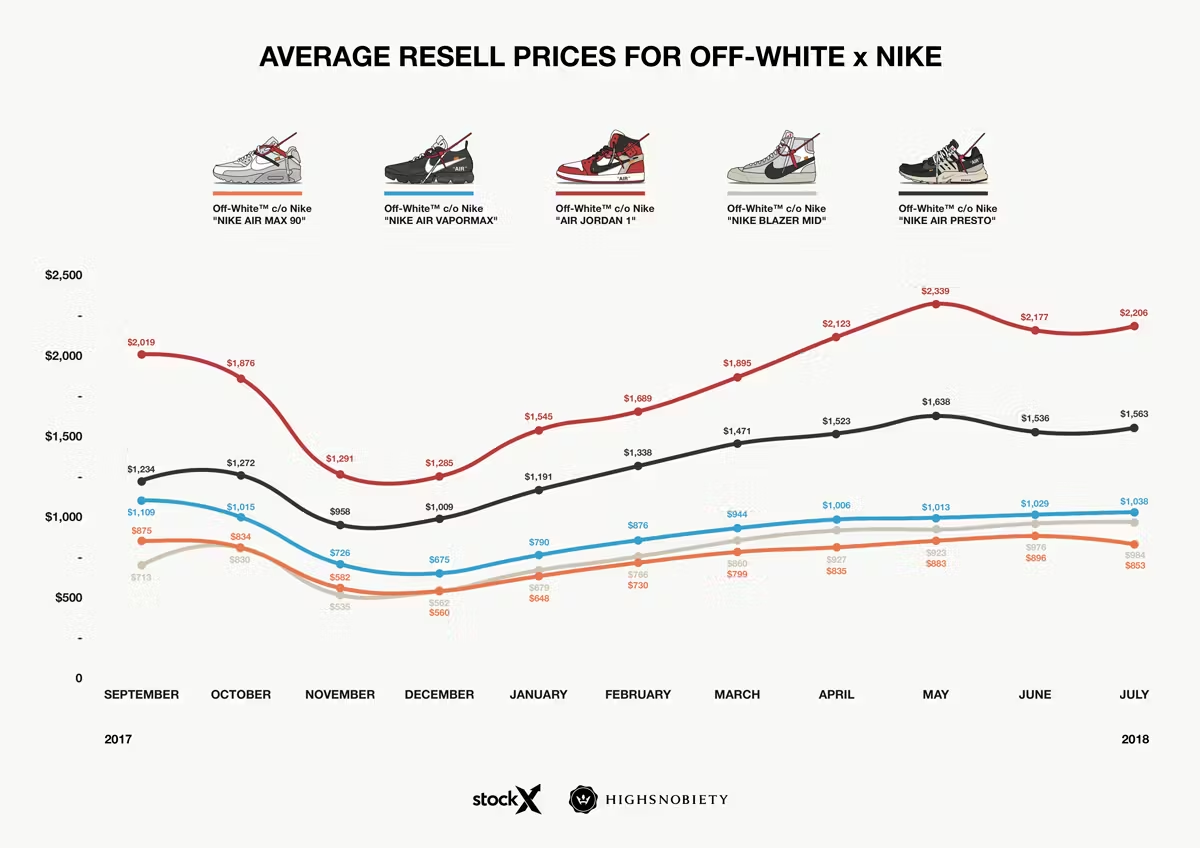
Source: Highsnobiety / Dan Freebairn
But Virgil wasn’t just a fashion figure, he was a culture-maker. He collaborated with IKEA on furniture, worked with Mercedes-Benz on futuristic car concepts, designed album covers for Jay-Z, A$AP Rocky, and Lil Uzi Vert, and even DJ’d at major music festivals. He was proof that creativity has no borders. You didn’t have to pick one lane, you could do it all.
His sudden passing in 2021 shook the world. At just 41, he left behind a legacy that feels both massive and unfinished. But maybe that’s part of his genius, he laid the foundation for others to build on. His work continues to inspire emerging designers, disrupt the gatekeepers, and push the culture forward.
Today, we see his impact everywhere, from the graphic heavy collections of young streetwear brands, to the inclusion efforts of major fashion houses trying (finally) to diversify their teams. Virgil Abloh didn’t just change what we wear. He changed how we think about design, collaboration, and inclusion. And perhaps most importantly, he showed us that creativity, when used with intention, can be a tool for real change.
References
- Broeke, T. van den. (2021, November 28). Virgil Abloh: “I now have a platform to change the industry… so I should.” British GQ. https://www.gq-magazine.co.uk/article/virgil-abloh-interview-2018
- Complex. (2021). How Virgil Abloh Changed the Sneaker World Forever. https://www.complex.com
- Crfashionbook. (2014, July 29). CR fashion book. Tumblr. https://crfashionbook.tumblr.com/post/93224247211/virgil-abloh
- Dazed. (2021, November 30). “you can do it too”: Virgil Abloh’s most powerful quotes. https://www.dazeddigital.com/fashion/article/54932/1/virgil-abloh-inspiring-powerful-quotes-louis-vuitton-off-white
- Durand, F. (2018). Louis Vuitton Names Virgil Abloh as Its New Men’s Wear Designer. photograph, Getty Images. Retrieved 2025, from https://www.nytimes.com/2018/03/26/business/louis-vuitton-virgil-abloh.html
- Fashion Channel. (2018, June 28). Virgil Abloh first LOUIS VUITTON show Menswear Spring 2019. YouTube. https://youtu.be/2dR8DEfKGq0?si=NFDG8Y2-xo2pK8OO
- Gorsler, W. by F., & Gorsler, F. (2018, July 26). A complete guide to off-white X nike resell prices. Highsnobiety. https://www.highsnobiety.com/p/off-white-nike-resell-price-analysis/
- Harvard GSD. (2017). Virgil Abloh: Everything in Quotes. https://www.gsd.harvard.edu
- Highsnobiety. (2021). A Timeline of Virgil Abloh’s Career. https://www.highsnobiety.com
- Le, H. (2018, October 22). Off-white X nike: The business of exclusivity. Medium. https://medium.com/@hungle_85471/off-white-x-nike-the-business-of-exclusivity-9ff9b4ea1d1d
- Lee, S. (2022, December 1). Virgil Abloh’s most iconic runway moments – off-white Louis Vuitton Men’s Kanye West. L’Officiel Philippines. https://www.lofficielph.com/fashion/virgil-abloh-most-iconic-runway-moments-off-white-louis-vuitton-men
- Nike News. (2017). Virgil Abloh and Nike Reimagine 10 Icons. https://news.nike.com
- Pyrexvision-23. (2014, February 12). Pyrex Vision – http://pyrexvision-23.tumblr.com/ – @pyrexvision-23 on Tumblr. Tumblr. https://www.tumblr.com/pyrexvision-23/76426104838/pyrex-vision-httppyrexvision-23tumblrcom?source=share
- Virgil Abloh, path-blazing designer, is dead at 41. (n.d.). https://www.nytimes.com/2021/11/28/style/virgil-abloh-dead.html
- Vogue. (2018). Virgil Abloh’s Debut Louis Vuitton Show Was a Cultural Milestone. https://www.vogue.com
- Yotka, S. (2019, October 8). Why the internet is wrong about Hailey Bieber’s wedding dress. Vogue. https://www.vogue.com/article/hailey-bieber-off-white-wedding-dress-grammatical-debate