ATA5:
The fifth assigned task was to do five nice things for people you do not know over the course of a week. In other words, our assignment was to “pay it forward” with random acts of kindness. I discussed each random act of kindness including all reactions to the good deeds. After I completed my five acts, I realized that this becoming a repertoire of behavior would be a good thing. I learned that it would be a good thing because though a single random act of kindness every day may not look like much on the surface, if everyone pays that little bit of kindness forward, then the cycle of generosity and kindness can make the world a bit happier.
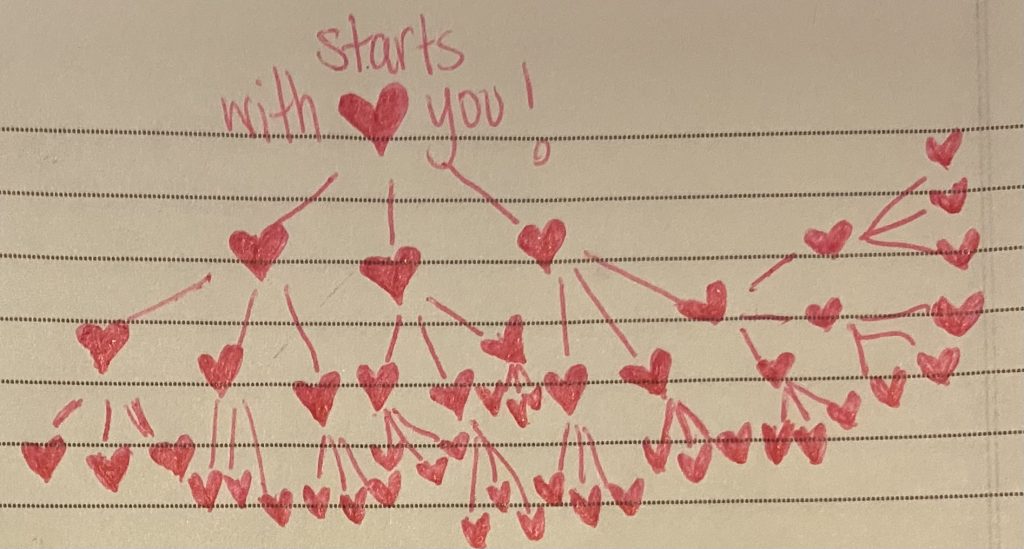
Not only that, but I learned by paying it forward you can improve your happiness and others. This relates to something I learned in my Health Psychology course about how kindness can push your body to produce serotonin, which decreases pain, by generating endorphins known as the brain’s natural painkiller. This assignment was personally relevant to me because it reminded me how influential kindness can be in improving not only my day but others as well. I included the image I drew below because it represents how spreading kindness starts with you!
ATA3:
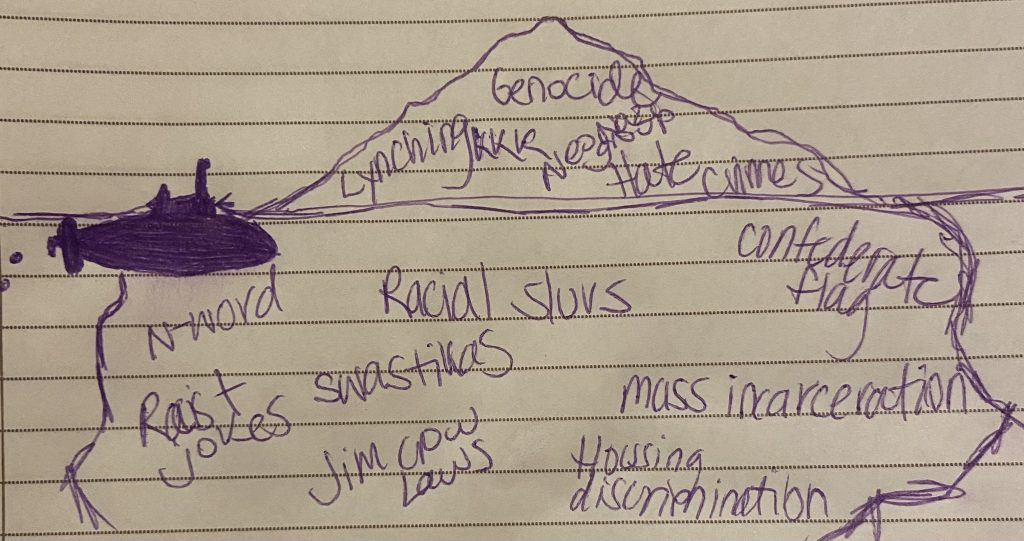
The third task was to decide whether or not it is possible to rattle off a list of racial slurs without a racist intent or without it revealing a deep-seeded prejudice. I discussed how Michael Richards’ tirade was indeed racist and supported my reasons. I drew a parallel to Mel Gibson ‘s similar behavior of controversial rants to showcase how both men used their bigotry against others when threatened. I also concluded that racial slurs can not exist without prejudice or racist intent. By completing this third assignment, I was able to learn the history about racial slurs, racial micro-aggressions or micro-assaults, hate speech, how influential off-hand comments can be and how they can expose underlying racism. The reason I chose the visual image that I included below is because it represents the underlying racism in our society. This visual representation represents my takeaway from the third assignment because that is how I thought of Michael Richards’ tirade. His so called “jokes” were just the tip of the metaphorical iceberg and underneath was deep-seated prejudice.
I was able to apply my knowledge from this assignment to a topic I learned in my Adolescent Psychology course. I applied what I learned from researching this assignment to how influential slurs can be in adolescents. By applying what I learned in this course I was able to better understand how this language impacts discrimination and bullying. Researching for this assignment allowed me to understand how slurs are associated with perceived stress, anxiety & depression, psychological well-being, and health risk behavior or substance abuse. This assignment is personally relevant to me because as a white person I believe I must acknowledge the horrendous cultural and historical connotations associated with words such as the n-word so its history is not downplayed or forgotten. For example, I was able to use the research from this assignment to educate others around me and bring awareness.
ATA2:
The second assigned task was to compile a representative group of photos of myself that I believe best reflects who I am as a person. The six respective photos that I chose reflected my self-concept, perceived self-control, and self-presentation. Each photo either captures the behaviors that I attempt to present, my belief in my determination to bring about my desired goals, or the views I maintain about who I am as a person and my effect on others. By completing this second assignment, I was able to learn all about “The Self”. My search for the first two photos taught me that a person’s view of themselves may not coincide with the person’s real self. Next, I learned how a person’s perceived self-control, their belief about their own capabilities to determine things, can influence how you respond to life events and your level of motivation to act. Finally, the last two photos representing self-presentation showed me how often people try to present a certain image to others with the secret goal of increasing their status. During my photo selection process, I learned how many different self-presentation strategies may be used to create certain emotions in others.
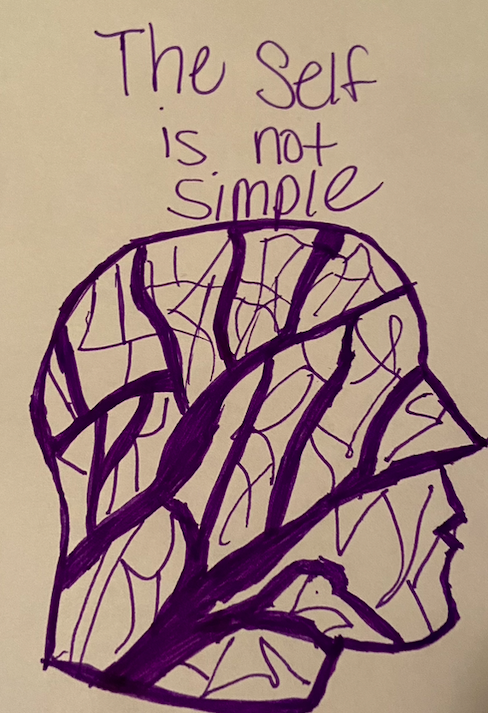
I was able to apply the knowledge from this assignment to a topic I learned in my Adolescence Psychology course. I applied what I learned from researching this assignment to the journey that an adolescent’s self-esteem grows and how impactful it can be. By applying what I learned about these three concepts I was able to better understand the involvement of self-concepts, perceived self-control, and self-presentation when growing up. This assignment was personally relevant to me because I practice these concepts often when socializing or performing certain tasks. For example, I present a different version of myself in class, my dorm, and my family home. The reason I chose the visual image that I included below is because that is now how I view “The Self”. Before this assignment, I had a simple view of how a person’s self influences behavior and others. Now I know that there is still more to learn about the concept of self that we have now. The image I drew represents how this assignment has changed my mind about this topic.
ATA1:
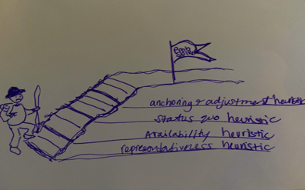
The first assigned task was to describe the heuristics learned and provide our own original examples of each. The heuristics I was tasked with describing were the representativeness, availability, status quo, and anchoring & adjustment heuristic. By completing this first assignment, I was able to learn how people can make decisions using heuristics. I learned that humans have cognitive limitations that cause them to rely on these mental shortcuts when in an uncertain situation. I described each heuristic and provided original examples for each. With each heuristic, I learned that though they helped facilitate problem-solving, they did not always lead to the correct inference. Heuristics are not reliable because we overestimate the value of our personal generalizations that can be inaccurate. Not only that, when using heuristics, it is easy to ignore all alternative ideas. The reason I chose the visual image that I included below is because that is how I first pictured heuristics in my head. The image I drew represents how a person can solely rely on heuristics in an uncertain climb to reach a decision.
I was able to apply the knowledge from this assignment to a topic I learned in my Human Cognition course. I applied what I learned from researching this assignment to what I learned about risk perception. By applying what I learned I was able to better understand the involvement of heuristics in between judgments of risk and benefit. This assignment was personally relevant to me because I heuristics all the time when I am making financial or medical decisions. For example, I have a lot of medical debt and I used heuristics to create a good financial plan.