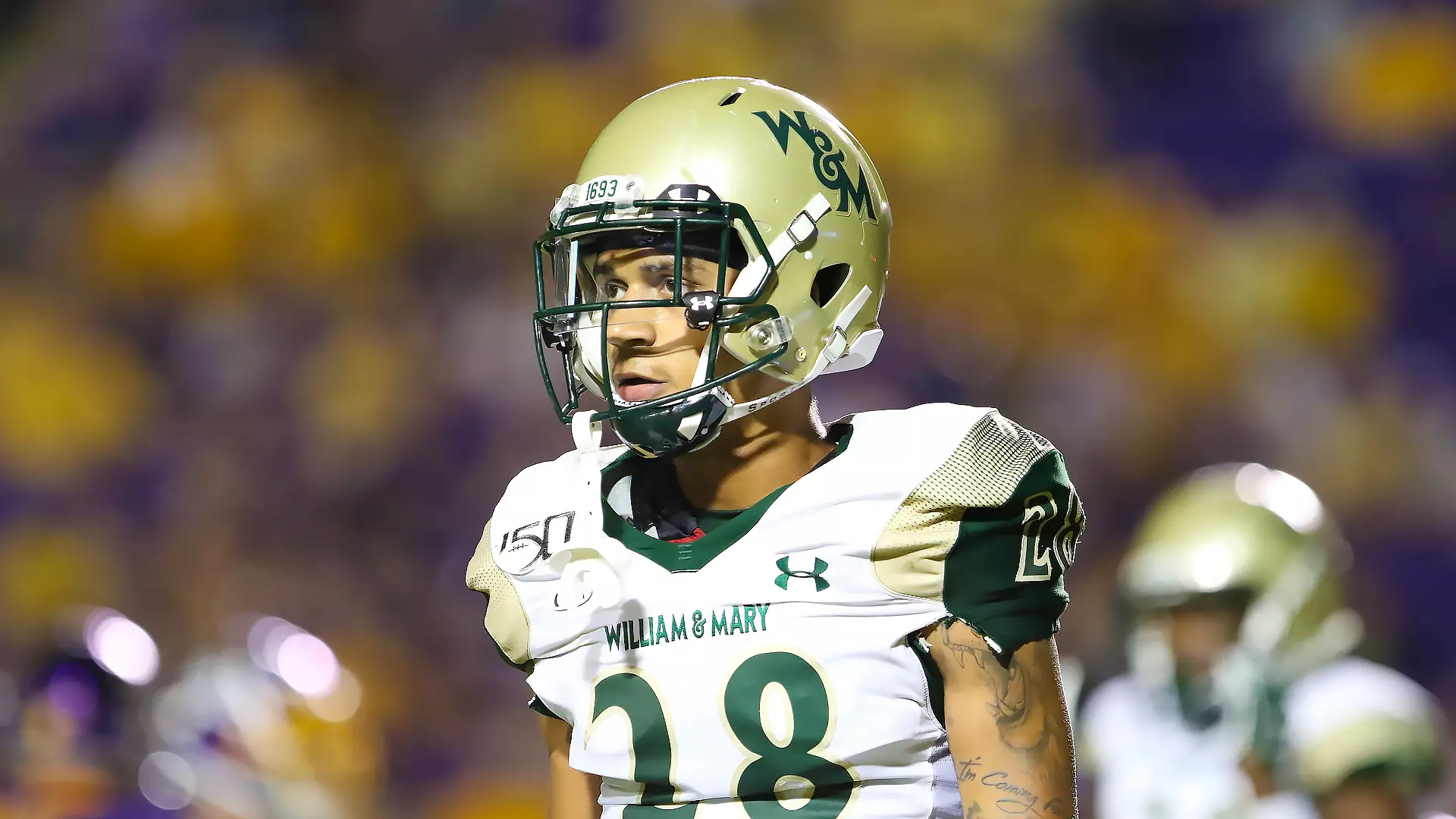
To most fans in the stands at Zable Stadium, number 28 looks like your typical college football player—locked in, athletic, and ready to go to battle on the field. But behind the helmet and the jersey, there’s a part of Latrelle Smith’s story that can’t be captured by stats or highlight reels. He’s not just defending passes and covering receivers—he’s managing a health condition that changed his life in the middle of his college journey. And yet, you’d never know it unless he told you.
When Latrelle arrived at William & Mary as a freshman, football was his main focus. He was excited to compete, grow as a player, and make an impact on and off the field. Like many student-athletes, his days were packed with weight room sessions, team meetings, practices, and studying. He was used to the grind. But everything changed during his sophomore year when he was diagnosed with Type 1 diabetes.
“Everything changed overnight,” Latrelle said. “One minute I was just worried about football and classes, and the next, I was learning how to give myself insulin and monitor my blood sugar around the clock.”
The diagnosis came as a shock. Type 1 diabetes is a lifelong condition that requires constant attention, and for someone playing football at a high level, the adjustment wasn’t easy. Suddenly, Latrelle had to think about more than his performance. He had to think about survival.
Managing a health condition like diabetes is hard enough on its own. But for a Division I student-athlete already balancing practices, workouts, team responsibilities, and a full academic course load, it was a whole new game. Latrelle had to completely shift how he prepared for each day. Meals had to be timed precisely. He had to check his glucose levels regularly. He needed to make sure he had supplies, snacks, and a backup plan everywhere he went—just in case.
“There were times I felt frustrated,” he admitted. “Like, why now? Why me? But I didn’t let it stop me.”
And he didn’t. Latrelle remained locked in. He showed up for his team every day, not just physically, but mentally. While others focused on routes and reps, he was juggling that plus an entirely new way of life. It took mental strength, discipline, and a maturity far beyond his years.
“Football is tough. College is tough. But managing diabetes on top of that? It forced me to grow mentally,” he said. “I had to be more aware, more responsible, and honestly, more proud of myself for the small wins.”
His coaches and teammates began to take notice—not just of his athletic ability, but his quiet resilience. He wasn’t just showing up to play; he was showing up to overcome.
In today’s sports world, we hear a lot about “mental toughness,” but what does that really mean? For some, it’s pushing through injuries or staying focused under pressure. But for Latrelle, it’s staying focused while constantly thinking about your health. It’s listening to your body when it’s telling you something’s off—while also keeping your competitive edge. It’s admitting you need help, and still showing up to fight another day.
His story is a powerful reminder that there’s more to being an athlete than talent and hustle. There’s a side of sports we often don’t see—especially when it comes to health and mental strength. Student-athletes like Latrelle are proof that true toughness isn’t loud or flashy. It’s steady, quiet, and consistent.
Today, Latrelle continues to thrive at William & Mary. He’s a leader on and off the field, known not just for his skills as a defensive back, but for his character and determination. While he never expected to be an example of strength through adversity, that’s exactly what he’s become.
His story resonates far beyond the football field. For young athletes managing chronic conditions or facing unexpected challenges, Latrelle shows that it’s possible to keep pushing toward your dreams. Not by pretending everything’s fine—but by adjusting, growing, and refusing to let obstacles define you.
As his sister, I’ve watched Latrelle grow through every stage of his journey. And while I’ve always been proud of him as an athlete, I’m even prouder of the strength he shows when no one’s watching. He reminds me—and anyone who hears his story—that being a great athlete isn’t just about how you perform. It’s about how you persevere.