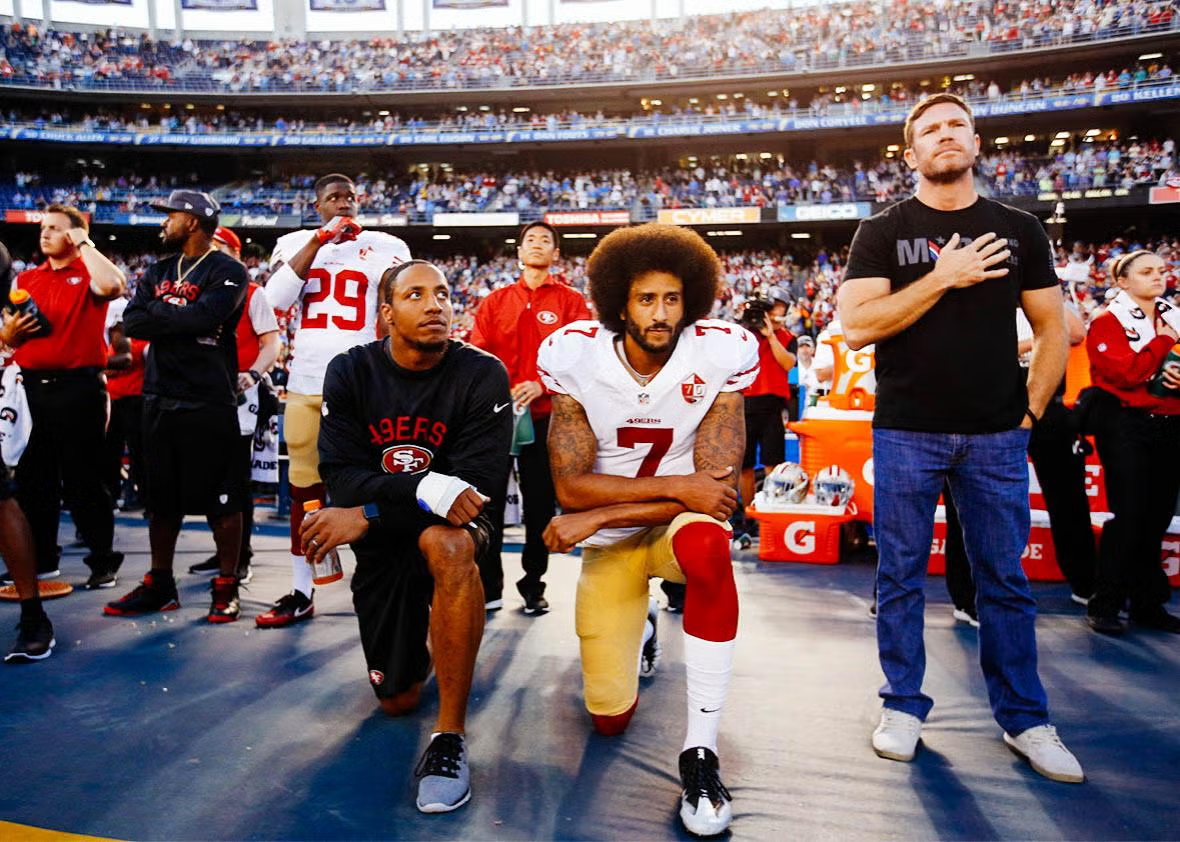
In 2016, during a preseason NFL game, San Francisco 49ers quarterback Colin Kaepernick made a quiet but powerful gesture. While the national anthem played, he took a knee instead of standing. It wasn’t for attention or disrespect—it was a protest against police brutality and systemic racism in America.
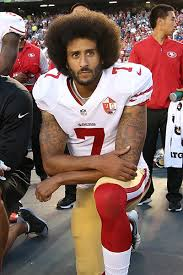
“I am not going to stand up to show pride in a flag for a country that oppresses Black people and people of color,” Kaepernick said in an interview with NFL Media following the game (Wagoner, 2016). That moment sparked a national conversation—and controversy—that still echoes today.
Kaepernick’s kneeling quickly became one of the most visible forms of athlete activism in modern sports. His protest spread beyond football. Athletes in the NBA, WNBA, MLB, and even high school teams took a knee in solidarity. However, Kaepernick himself paid a high price. Despite being a former Super Bowl quarterback, he went unsigned by every NFL team after the 2016 season. Many believe his activism—not his athletic ability—was the reason for his absence from the league.
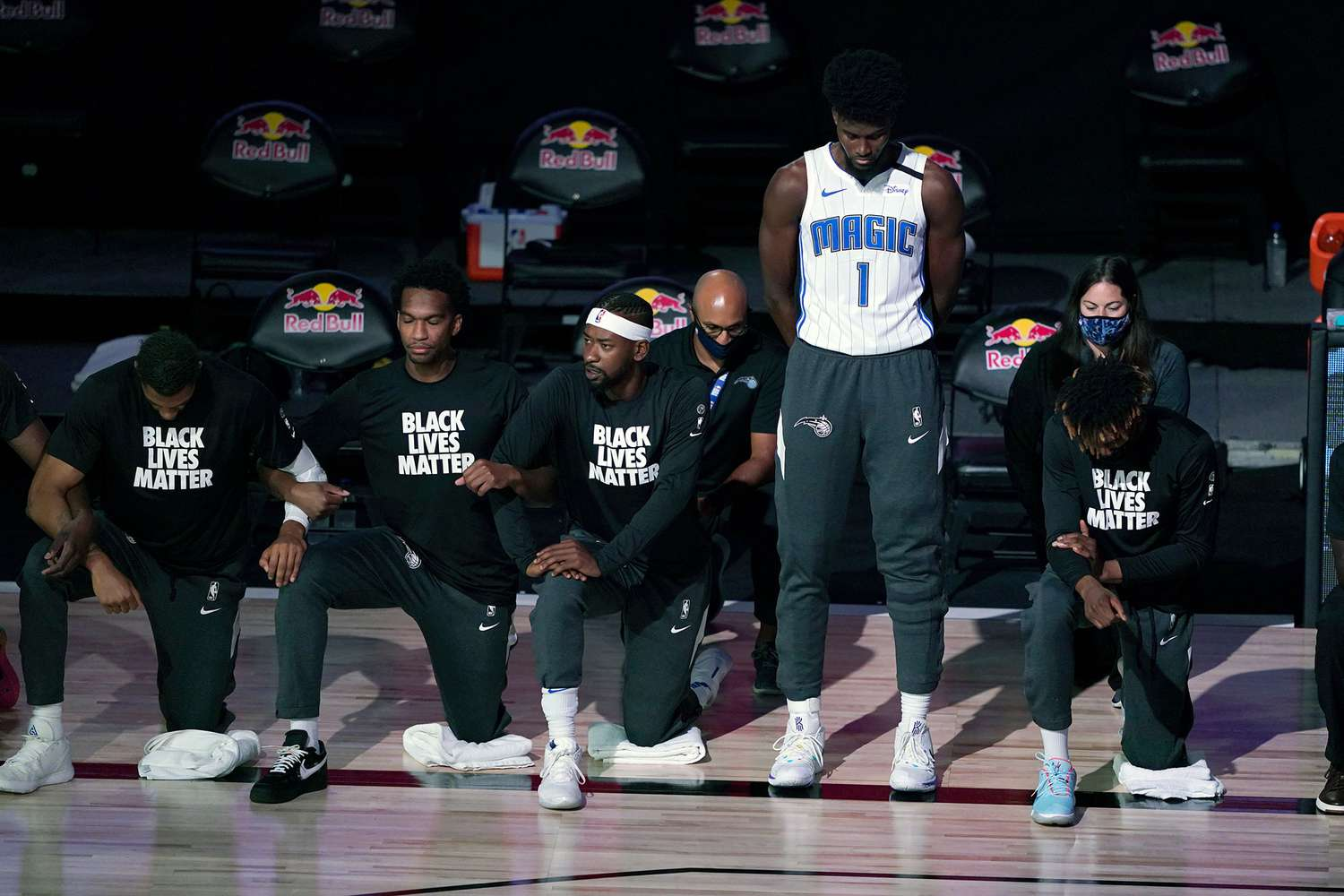
The media played a huge role in shaping public reaction to his protest. Some conservative outlets labeled him unpatriotic and disrespectful to the military. Then-President Donald Trump even stated at a rally, “Get that son of a b**** off the field right now. He’s fired!” (Time, 2017). Meanwhile, progressive news outlets and civil rights leaders praised Kaepernick for using his platform to spark necessary dialogue.
Social media, especially Twitter and Instagram, became central to both the spread and criticism of Kaepernick’s message. Hashtags like #TakeAKnee and #ImWithKap trended nationwide. Athletes and fans posted photos and statements of support, while others voiced their opposition. Kaepernick rarely responded directly online, but his silence spoke volumes—and his actions did, too.
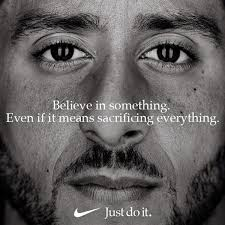
In 2018, Nike released an ad featuring Kaepernick with the words: “Believe in something. Even if it means sacrificing everything.” The campaign went viral, and while it sparked boycott threats from some, Nike’s sales actually increased after its release (CBS News, 2018). Kaepernick also launched the Know Your Rights Camp, a nonprofit aimed at educating and empowering young people on issues of racial injustice, legal rights, and civic responsibility.
Although Kaepernick hasn’t played in the NFL since 2016, his impact is undeniable. He changed how athlete activism is viewed and helped pave the way for current players who continue to speak out on social justice. For many, his legacy is not about lost games—it’s about the power of standing (or kneeling) for something greater than yourself.