Interpretive, Interpersonal, and Presentational Modes of Communication
Exploring Culture
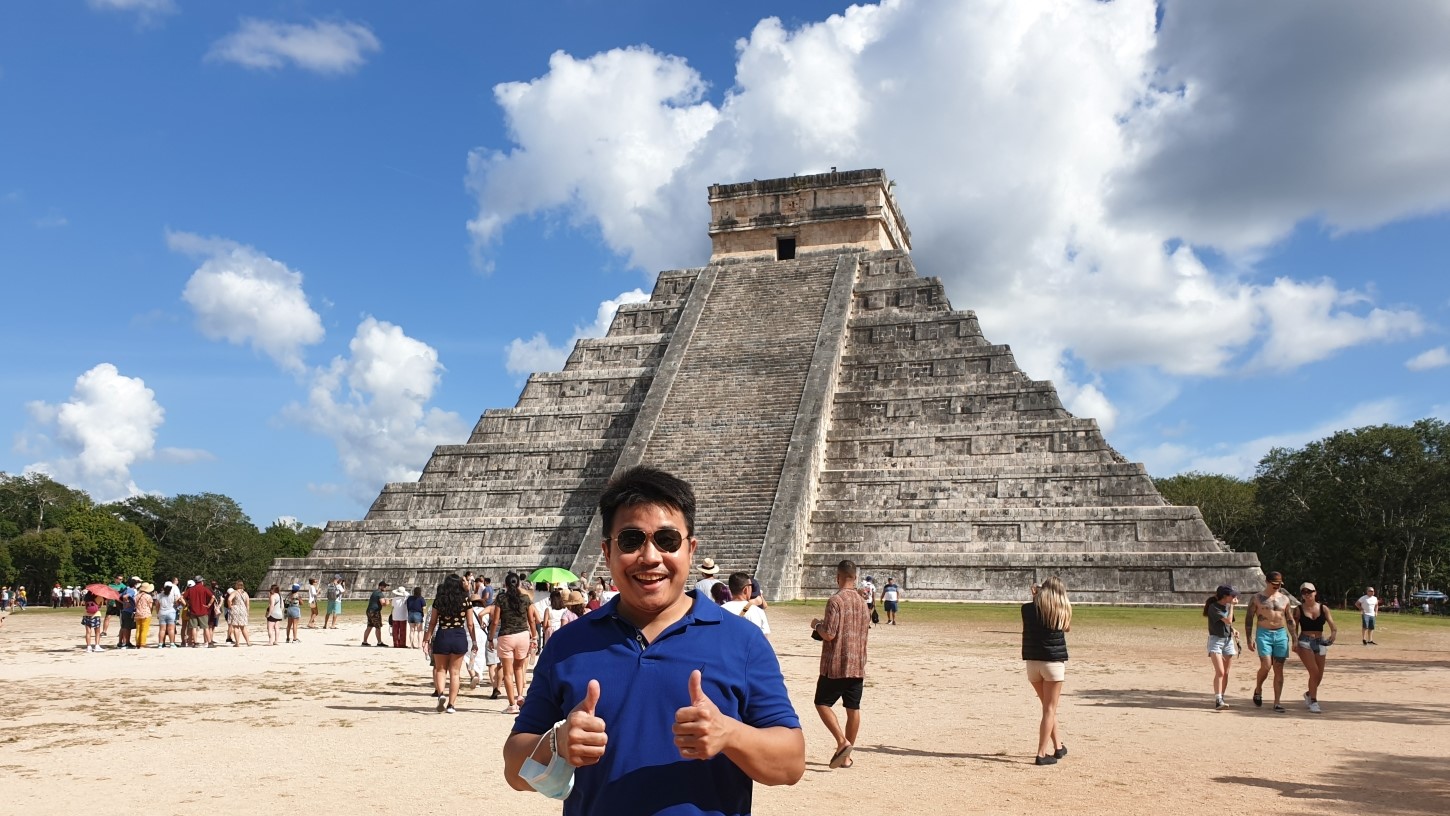
Some of the assignments required us to do research on the culture and the customs of several Hispanic countries. This helped me get a better understanding of their values and attitudes. I was not aware that several South American had stopped the practice of “siesta”. During my time in Spain (2007-2009), the “siesta” was alive and well in the Andalucía region.

Engaging in Communities
Community engagement is important for broadening the understanding of different cultures. It increases respect for others and invalidates stereotypes. It allows for open channels of communication and builds trust.
Interpersonal Communication
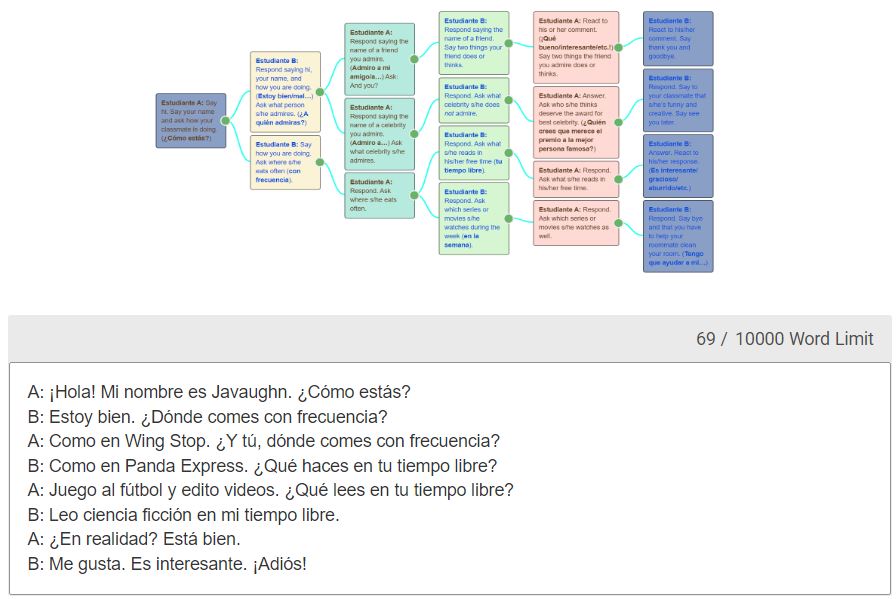
The Conversar assignments in LingroLearning allowed us to practice communicating in Spanish during class. In doing so, we were able to correct each other’s grammar, vocabulary, and pronunciation. Practice makes perfect, and I was able to improve my pronunciation through repetition.
Presentational Speaking
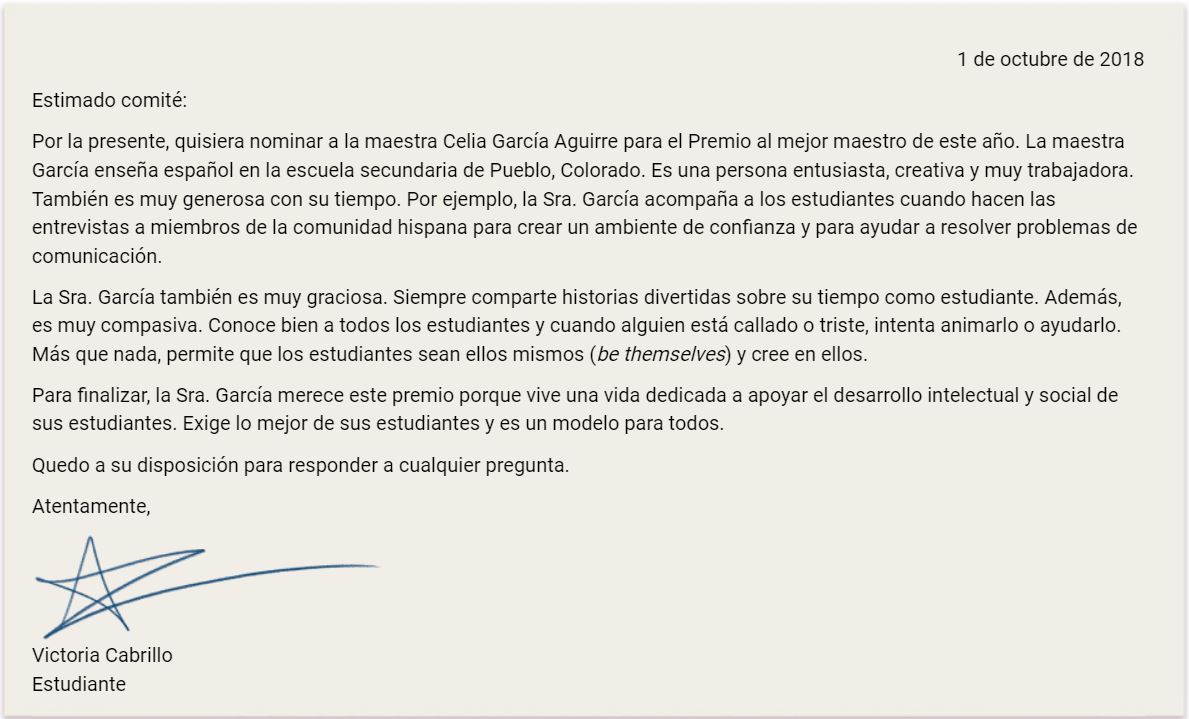
The Proyectos were the main presentational speaking activity. They were challenging in that I had to memorize a few lines of dialogue prior to filming. If I were to do it again, I’d record several different takes and choose the best one.
https://drive.google.com/file/d/1HHb5JzvpsrTr06q_db4TYr4XoQ8W0Ht-/view?usp=sharing
Presentational Writing
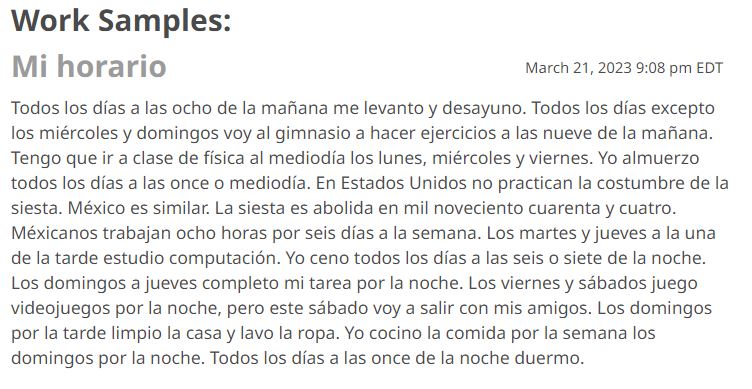
Proyecto 3-1 required us to write about our schedules. We had to map out our weekly activities down to the hour. The assignment was simple enough after learning how to communicate time and the days of the week.
Interpretive Listening
I felt the assignments in LingroLearning that required us to listen to audio samples were simple enough, although I would rewind certain sections repeatedly if the speaker spoke too fast.
Interpretive Reading
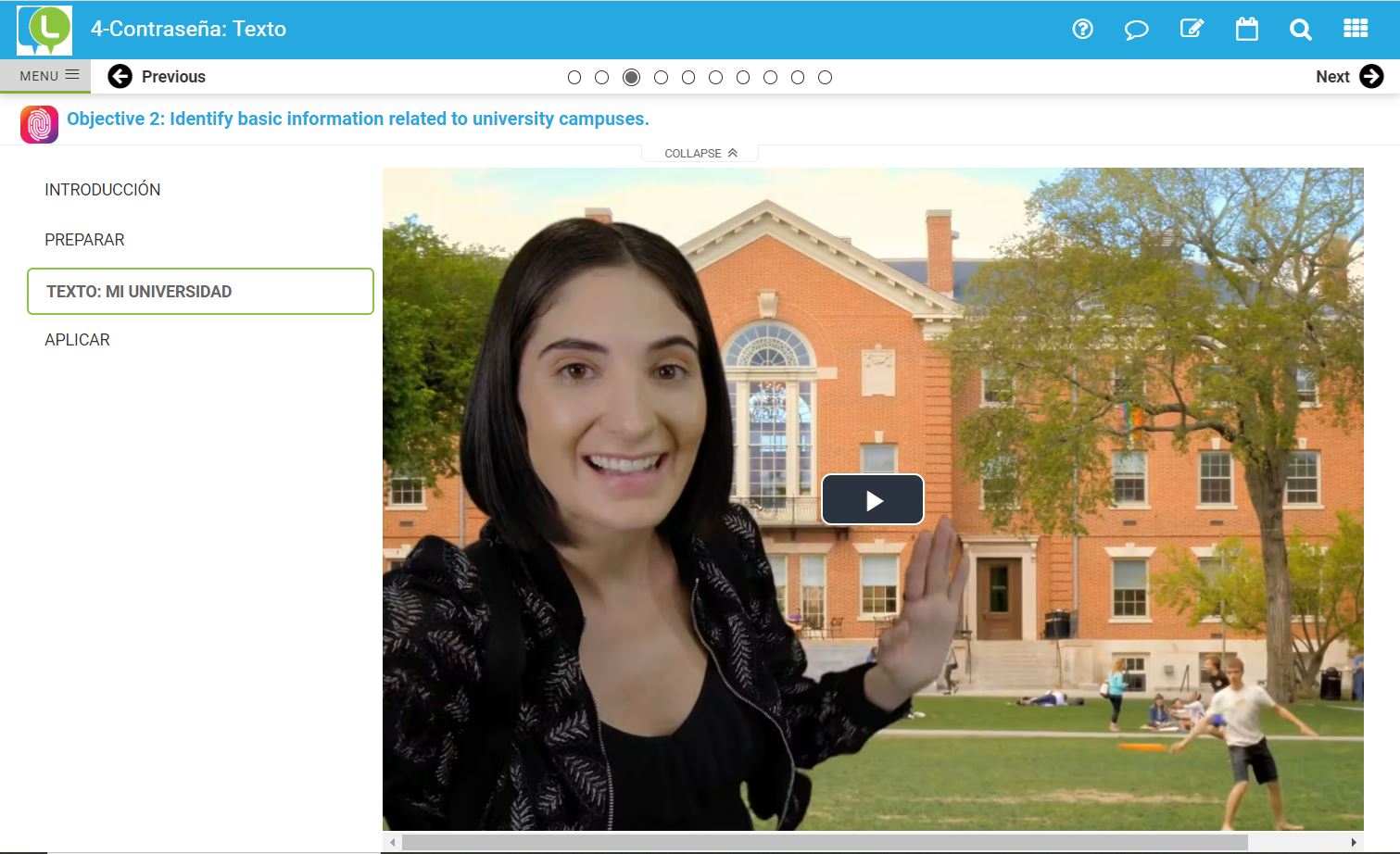
Some of the reading assignments were the most difficult for me. I had to utilize context clues or an online dictionary. It was the best way for me to grasp grammar and spelling.