Exploring Culture
Something that I personally love, is food and how food is prepared. People from Spanish speaking countries all cook their food slightly different and with slightly different ingredients. In Columbia, Bandeja paisa is the famous dish and something I would like to replicate. Bandeja paisa is a platter-styled meal with an assortment of meats, a fried egg, white rice, corn, plantain, red beans, and an avocado. During my Spanish 101 class, LingroLearning had activities that would require the research of topics related to the cultures of Spanish speaking countries. A famous practice is in Mexico, Day of the Dead. It is a day that the Mexican people use to celebrate the people they have lost.
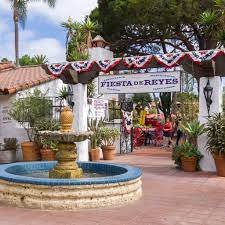
My mom grew up in San Diego, California and there is a historical town called Old Town, where the native Mexican people first establishes a community in the now called California. In the town they have authentic Mexican food, tourist souvenirs, and mariachi bands. Being able to visit there and the border of Mexico and California helped me learn a little bit of Spanish and the culture and practices of the Mexican people.
Engaging in Communities
Communities are made when a group of people with similar goals, ethnicities, and viewpoints. Spanish communities allow people to be able to communicate with other Spanish speaking people to either get to know their culture better or to open up their mindset on the world.
I personally do not participate in language communities, however, my Spanish 101 class can be seen as a community because we are all aiming towards the same goal of learning the Spanish language.
Interpersonal Communication
There have done many different styles of learning activities that have been used to help the learning of the Spanish language during my Spanish 101 class. The activity that helped the most was the LingroLearning activities. There was still a handful of different style of activates but LingroLearning had all of the activities with feedback and help to help you through the exercise. The class itself had discussion board that helped with the learning of the Spanish culture.
One of the most difficult activities was the one on one speaking with the teacher activity. The questions were spontaneous and being able to understand what the professor is asking and make think of a response in Spanish was very difficult for me. However, after completing them I was able to better listen to each accent and word that the professor was saying and that helped me better understand what to say in response
Interpretive Listening
Some listening activities were both on canvas and on LingroLearning, where we had to listen to what was being said and either select the correct answer or type in the correct answer. Another activity was the speaking with a professor, were I had to listen to what the professor was saying and be able to understand it and answer back with the proper response.
One thing that was difficult in the activities was that some letters sound similar in Spanish, but pas that the listening part is simple to comprehend.
Interpretive Reading
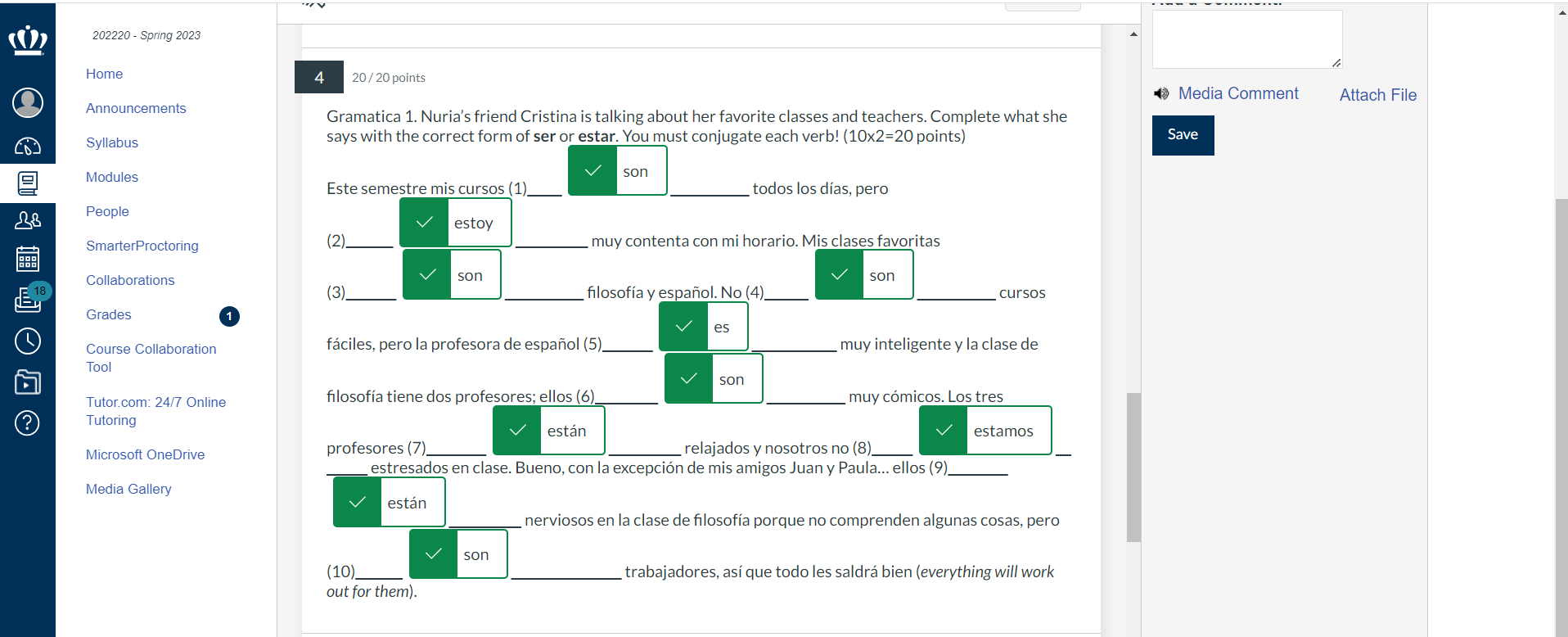
Reading activities are simpler to me then listening and those activities were the exams during my Spanish class. The exams consisted of an essay section, choosing the right verb, using the correct conjugation, and sometimes selecting the correct answers to questions based off of a Spanish reading.
The difficult part was the use of the correct verbs of ‘ser’ or ‘estar’ and the use of ‘saber’ and ‘conocer’. These two sets of words mean the same thing but are for different classifications of the same word. Another difficult part of the reading assignments was that some ‘fill in the blanks’ had you make the correct conjugations, but it was hard to decide who was the subject in the sentence.