Interpretive, Interpersonal, and Presentational Modes of Communication
Exploring Culture
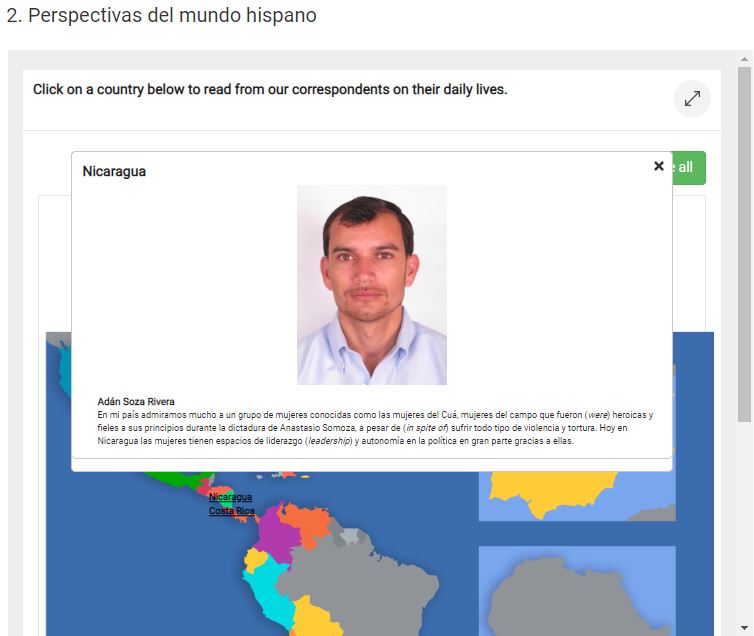
Throughout Spanish 101, we used products such a LingroLearning that included cultural exploration to aid students in learning more about different cultures.
Getting to see a different perspective really opened my mind to how other cultures do things. One of our lessons included information about social media use in Spanish speaking countries and how WhatsApp is a very popular app. I have thought about that a lot, as I’ve never used WhatsApp, but I’m seeing more of my friends pick it up lately. I have also been able to do research assignments about role models in Spanish speaking countries and why they are looked up to. This lead me to learning about different revolutionary acts.
Engaging in Communities
It is important to engage with your community and other communities globally to maintain understanding and appreciation for others. I do not have any global communities I have experience with, but being in the Spanish 101 class, we have created a small community ourselves. There are classmates with Spanish speaking family and they’re learning the language to communicate with them better, and I have classmates with absolutely zero Spanish experience. We all have a range of skill sets and we have learned about the others through video posts on Flipgrid and discussion boards. This has made us a sense of community so that we know we are all learning together, so we can help teach each other and not be embarrassed in making mistakes.
Interpersonal Communication
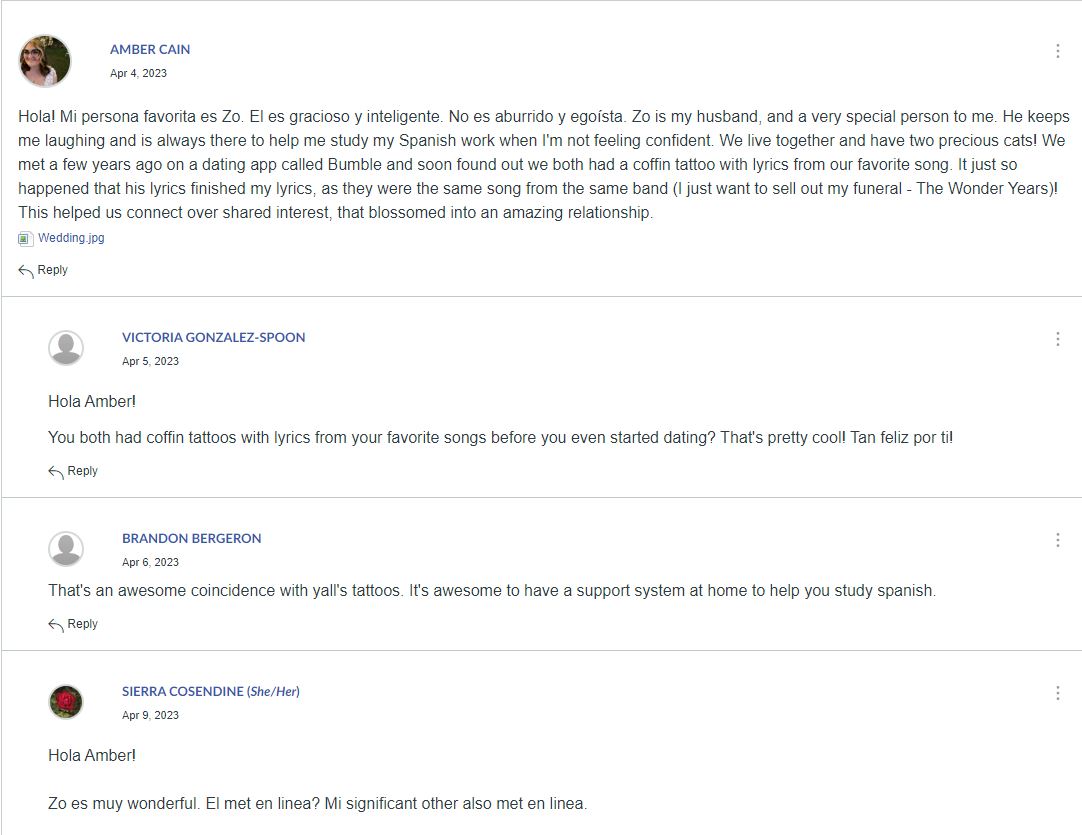
Throughout discussion posts and video posts, I have been able to go from speaking completely English, to speaking mostly English with some Spanish key words, to making videos fully speaking Spanish. I have been able to track my process over time with these different types of interpersonal communication and showcase my ability to speak in Spanish about my schedule, my social media accounts, and descriptions about myself and others.
It was very difficult for me to get comfortable in front of the Camera and to be vulnerable enough to publicly post a video of me speaking a different language. I was nervous to mispronounce words or make mistakes and for others to see that. I was able to overcome this by practicing my video recordings over and over until I felt confident in my pronunciation and delivery. There was also a sense of comfort that my classmates were also working through this, and they also were putting themselves out there to practice speaking. I have been able to practice pronunciation, verbs, and conjugations, through multiple discussion board posts, video interviews with my instructor, and video posts that tell a story and respond to questions asked by classmates.
Presentational Speaking
With my class being online, the most in class presentational projects I completed were the video posts previously mentioned and Zoom interviews with my instructor. This allowed me the time to present my Spanish speaking skills to others. I have also had an outside of school network that allowed me to practice speaking, such as a friend I have who is fluent in Spanish. I have utilized my relationship with my friend as an opportunity to speak back and forth and learn new words.
Presentational Writing
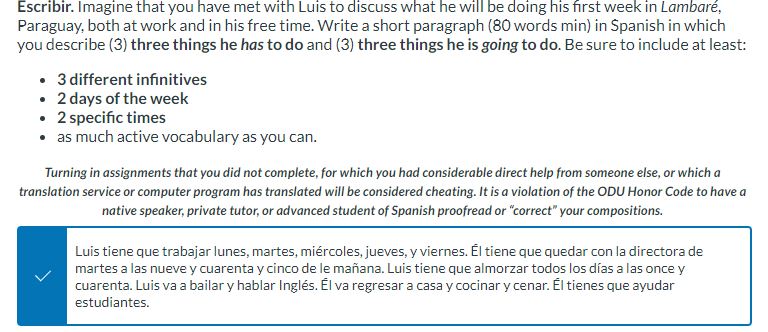
LingroLearning, discussion posts, and test gave me the opportunity to practice writing out Spanish and how to form thoughts and sentences. Each week I was presented with opportunities to research a topic in Spanish and write a few paragraphs of what information I learned through the LingroLearning platform.
When writing in Spanish, I faced difficulties on how to do past, present, and future tenses of words along with conjugating verbs. I gained more knowledge and outlook on those things throughout the semester, so over time I was able to write more and write longer stories.
Interpretive Listening
Listening is a huge part of learning a new language, because if I am not able to understand someone else, then I am not going to be able to fully communicate. During the semester, I had opportunities to listen to video recordings of my classmates asking questions and then respond to those questions in my own video. This gave me the chance to practice and prove my listening skills. During interviews with my instructor, I also had to understand the questions asked so that I knew how to respond.
Some recordings could be very difficult, especially if the speed was quicker than I could comprehend. I worked through this challenge by listening repetitively and speaking the words back to myself. This allowed me to work through pronunciation so that I could decipher each word. It is very interesting how some Spanish words sound very similar to the English equivalent so that helped me a lot to grasp new words.
Interpretive Reading
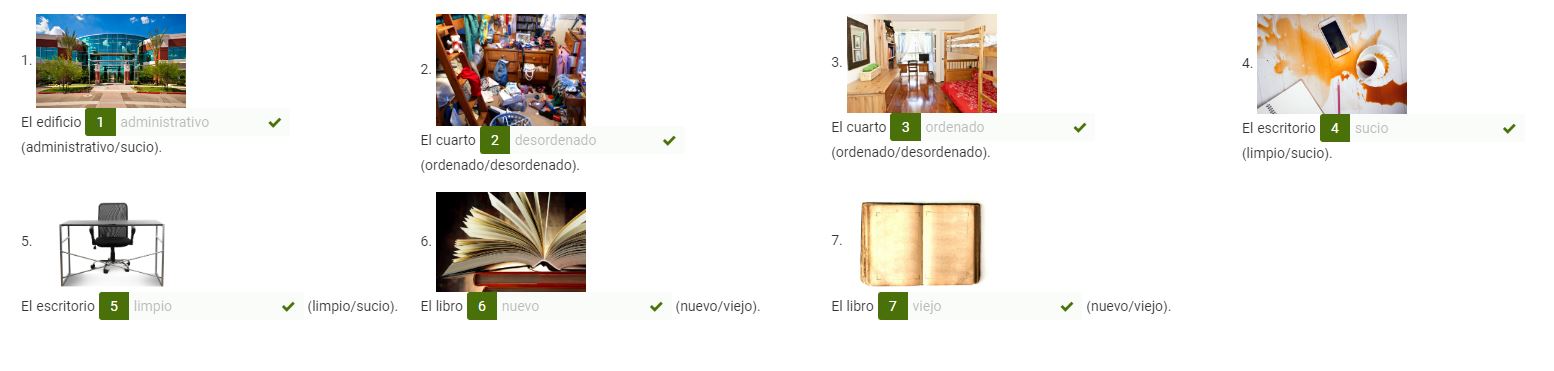
I have been provided with multiple resources on where I could read Spanish. Through instructions on assignments, through LingroLearning, and different online platforms. Include a copy of one of these activities; remember to cite it. (See Modes of Communication link for description and examples).
Reading Spanish has been one of the easier challenges to face within Spanish 101, because a lot of words look similar to the English equivalent word. I was able to use context clues to help me learn words I may not have known. It was easy to get caught up on words being conjugated, and having to remember the different types of conjugations, but through practice I was able to become better at reading Spanish.