Interpretive, Interpersonal, and Presentational Modes of Communication
Exploring Culture
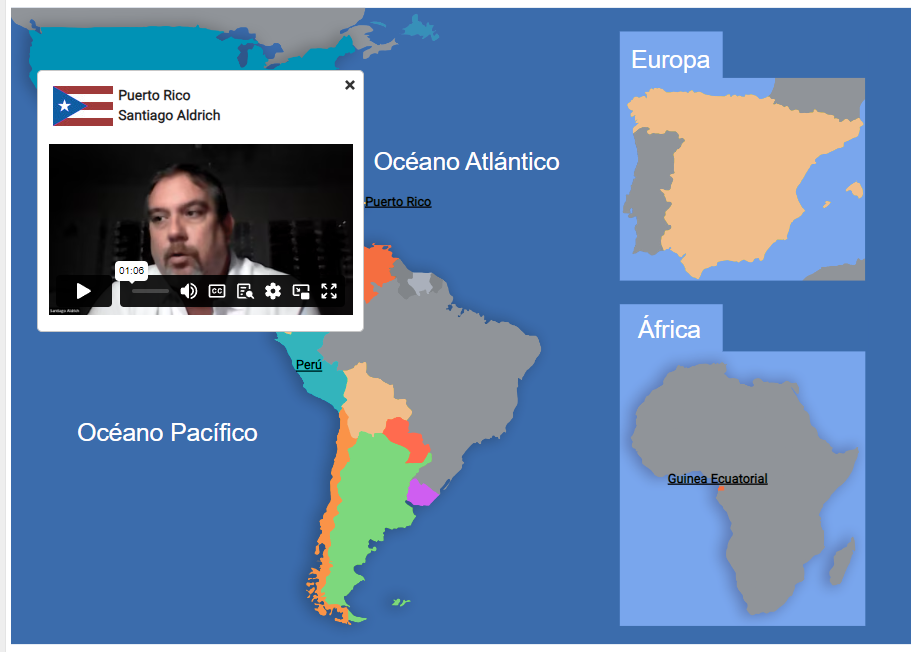
My favorite exploration of culture done in this class was the of foods that are considered “comfort foods” in various Hispanic cultures. Everyone has a favorite food, and these foods often remind people of home. Different cultures will often find creative ways to cook delicious food using the unique ingredients found in their own particular region. An excellent example of this can be found with Santiago from Puerto Rico, who described his favorite comfort food as being a piña colada, a drink which is made with ingredients that are famously produced in the Caribbean such as: coconut, pineapple, and rum.
This cultural exploration exercise made me reflect on the types of food that I like to consume and how they are related to my own culture here in the United States. While I do enjoy trying foods have been created in other cultures, I would be lying I said that I didn’t also enjoy a classic American cheeseburger and fries every now and then. It is a simple meal that can easily be enjoyed with just about anyone that I know in my own country. I assume that my feelings to ward that type of food must be the same way that Santiago feels about a piña colada.
Engaging in Communities
Engaging with communities is important because it allows us a chance to let others introduce new ideas into our minds and challenge our otherwise stagnant ways of thinking. It gives us a chance to reflect on how our actions and beliefs impact those around us, as well as ways that we might be able to change to make the world a better place for everyone.
I have not felt like I had much of a chance to have any truly meaningful interactions with the Hispanic community since taking this class.
Interpersonal Communication
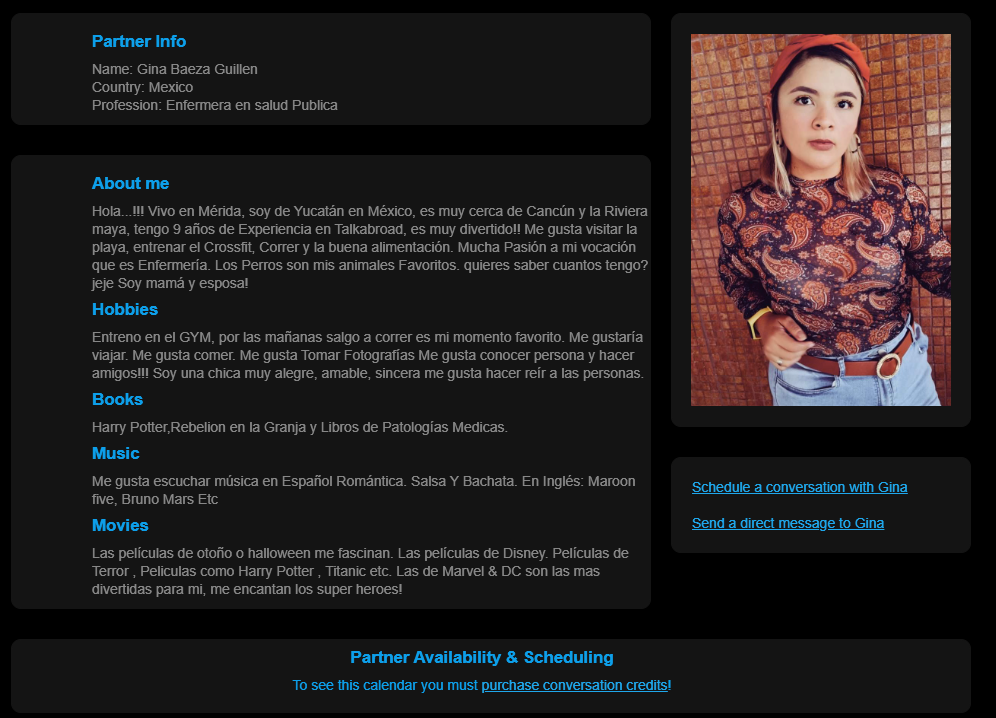
Using the website TalkAbroad, I was able to complete two conversations with a woman named Gina. I chose to speak with Gina because she lives on the Yucatán Peninsula in Mexico, which is a place that I have actually visited once before with my family. My conversations with her were difficult, as not only am I new to speaking Spanish, but she would often use words that not even my professor was familiar with. Overall, I enjoyed the TalkAbroad conversations, they did a lot to boost my confidence in my ability to have conversations in Spanish and to show me what kind of mistakes I was making.
I was scrolling through social media one morning to discover a video that was posted in Spanish, and to my surprise, I was able to understand it. This prompted me to open up the comments and see how many of them I could understand as well.
Presentational Speaking
Throughout the semester we engaged in a number of speaking activities which involved organizing into groups to answer a set of given questions and then presenting our answers to the class. These activities could include things such as explaining what someone was doing from a written description, or interpreting what was happening in a picture.
I never found these types of assignments to be terribly difficult. Often times the difficulty would come from just not remembering a particular word to use in your response. The assignments did do a good job at giving me an idea of what words I needed to review and allowed the professor to correct any mispronunciations that we were having in the class.
Presentational Writing
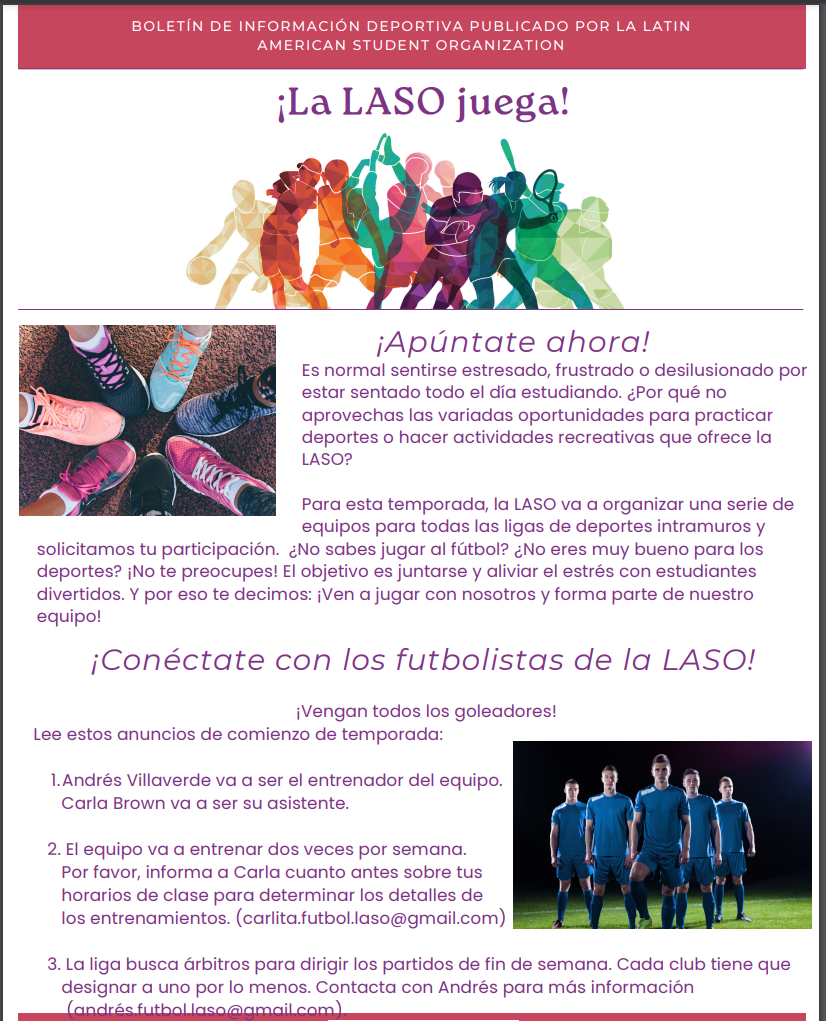
One of our projects for presentational writing was to create a flyer for a sports club of our choosing. The goal of this assignment was to show a basic understanding of not only vocabulary for sports and fitness, but also to demonstrate usage of command verbs.
I found this projects to be rather difficult. Not only had I not been able to fully memorize the vocabulary for that particular unit, but I was also thrown off by the introduction of reflexive verbs around this point into the class. After some generous help from my professor, I was finally able to string together a serviceable text and image for a flyer about a fictional hockey club.
Interpretive Listening
There were a number of listening activities that were performed during each chapter of this semester’s course material. The challenge was simple: an audio recording would play, and the students would have to pick out what the subject of the recording was based on what the voices were saying.
These types of activities have gotten more and more easy as I have become more experienced with Spanish as a language. At the beginning of the semester, I would often just resort to trying to listen out for a specific word that I could use to make a guess at what was being spoken about, but as time went on, I found myself being able to simply listen to the audio recordings and completely understand what they were saying. That isn’t to say that I never made mistakes, however. Often times, I would find listening out for new vocabulary words and verb conjugations to be difficult and I would sometimes need to listen to the recordings more than once.
Interpretive Reading
There were many different reading activities throughout the semester. There was nothing fancy about these assignments, simply read a short story provided from the textbook and then explain to the class what the content of the text stated.
These types of activities are not difficult to complete. They can be quite easy, as it is much easier to recognize words that are written down than it is when trying to listen to them.
When you have finished adding content to this page, delete all the instructions except the link to the Modes of Communication.