Exploring Culture
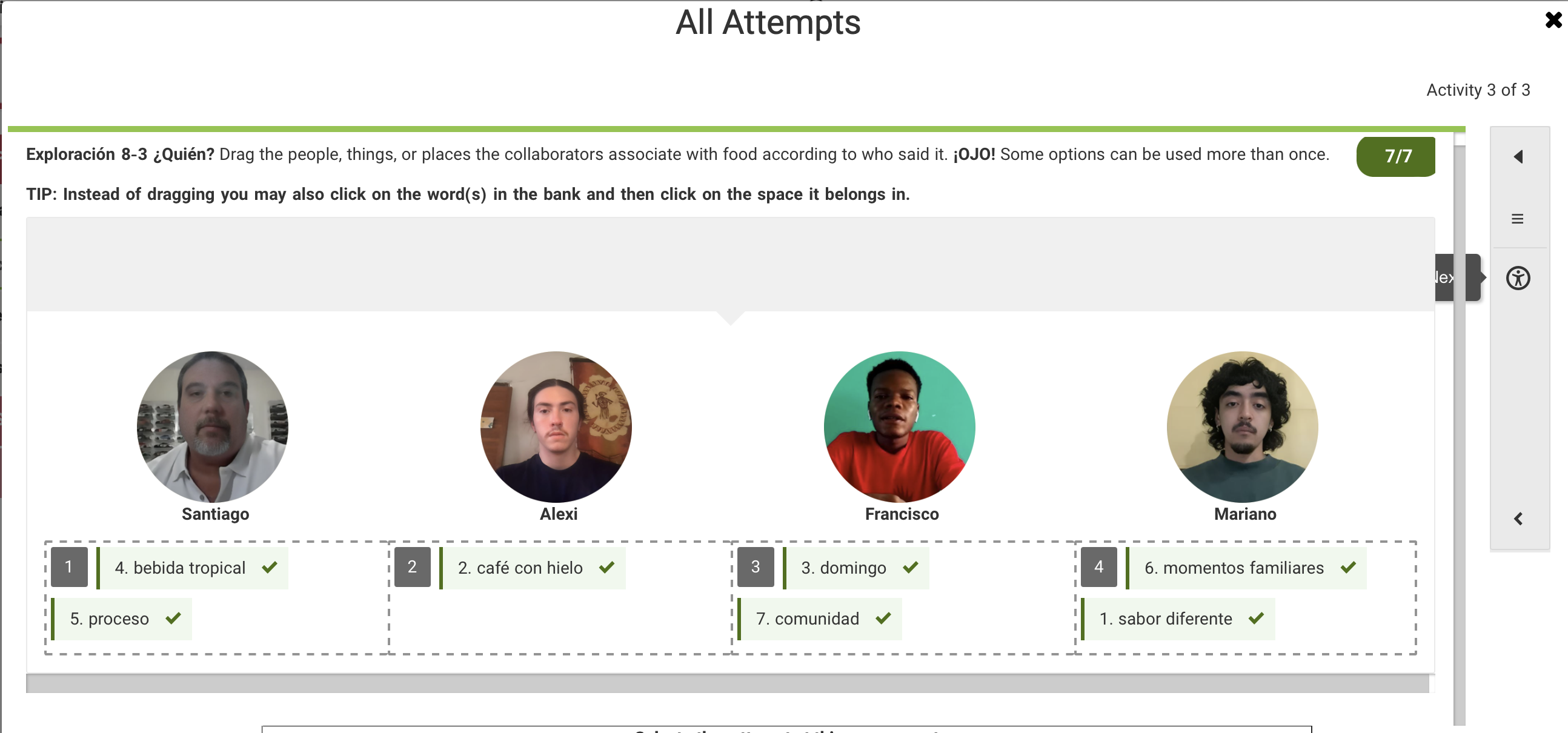
In my journey to understand different cultures better, trying out Hispanic food, like tacos and other dishes, became a tasty way to explore. Eating these dishes wasn’t just about flavors; it was like taking a bite out of Hispanic traditions and stories. Tacos, with their various fillings, showcased the diversity within Hispanic culture, while dishes like empanadas and mole taught me about family, history, and the importance of passing down recipes.
As I enjoyed these meals, I started to see how Hispanic values and attitudes are woven into everyday things like sharing a meal with family. The love and care put into cooking recipes from generations back spoke volumes about preserving cultural roots.
In the “Cultural Exploration” segment, we delved into the diverse array of foods associated with various Spanish-speaking countries around the globe.
Engaging in Communities
Participating in both your immediate community and the global community carries significant value and importance. In your local community, engagement cultivates a sense of connection, strengthens social ties, and contributes to the overall welfare of the community. Understanding and addressing local needs fosters a spirit of cooperation, making the community a better place for everyone. On a global scale, engagement promotes cultural understanding, empathy, and a broader worldview.
I contribute to my community by serving as a youth soccer coach, where I facilitate the learning of teamwork, leadership, and soccer skills among kids. Volunteering in this capacity brings me a deep sense of fulfillment, knowing the significant impact that the soccer experience can have on the lives of these children.

Interpersonal Communication
Throughout the semester, I actively participated in TalkAbroad sessions, engaging in real-time conversations with native Spanish speakers to improve my oral communication skills. Additionally, I honed my interpersonal writing and reading abilities through discussion boards and written activities, fostering a comprehensive development of my Spanish language proficiency.
Taking part in different conversations for my Spanish class was a big part of my learning. At first, I was kinda nervous during my TalkAbroad session. I wasn’t great at putting sentences together or using the right verbs. But I got better as I kept practicing. In my second session, I felt more comfortable, and my verb game was stronger. I even started using what I learned in regular chats with my Spanish-speaking friends. Still, catching everything in fast Spanish talk is tricky for me, but I’m getting there. Learning Spanish is all about practice, and I’ll keep working on understanding better and talking more confidently.
https://drive.google.com/file/d/1lxsNJ7cFv9Cpjb1JxY5jT_tth7rBhX5E/view?usp=share_link
https://drive.google.com/file/d/1lxsNJ7cFv9Cpjb1JxY5jT_tth7rBhX5E/view?usp=share_link
Presentational Speaking
In Unit 6, I put together a video where I talked about each member of my family in Spanish. I described their looks and personalities, and I shared some things they do, like playing tennis or smiling a lot. I even added photos of each family member for a visual touch. This assignment was super helpful because it taught me how to talk about people, their personalities, and discuss the activities they enjoy. Reciting these details really reinforced my understanding and ability to express these concepts in Spanish.
The presentation was tough because I had to learn various personality traits, like my wife having long black hair, and understand different activities people do. I tackled this challenge by dedicating a lot of time to studying and getting a hang of the vocabulary. I also created a sentence structure to help me picture what I wanted to say. Thanks to my study efforts, I did well in nailing down the vocabulary and sentence structure for my presentation. The hard work paid off, and I received an “A.”
Presentational Writing
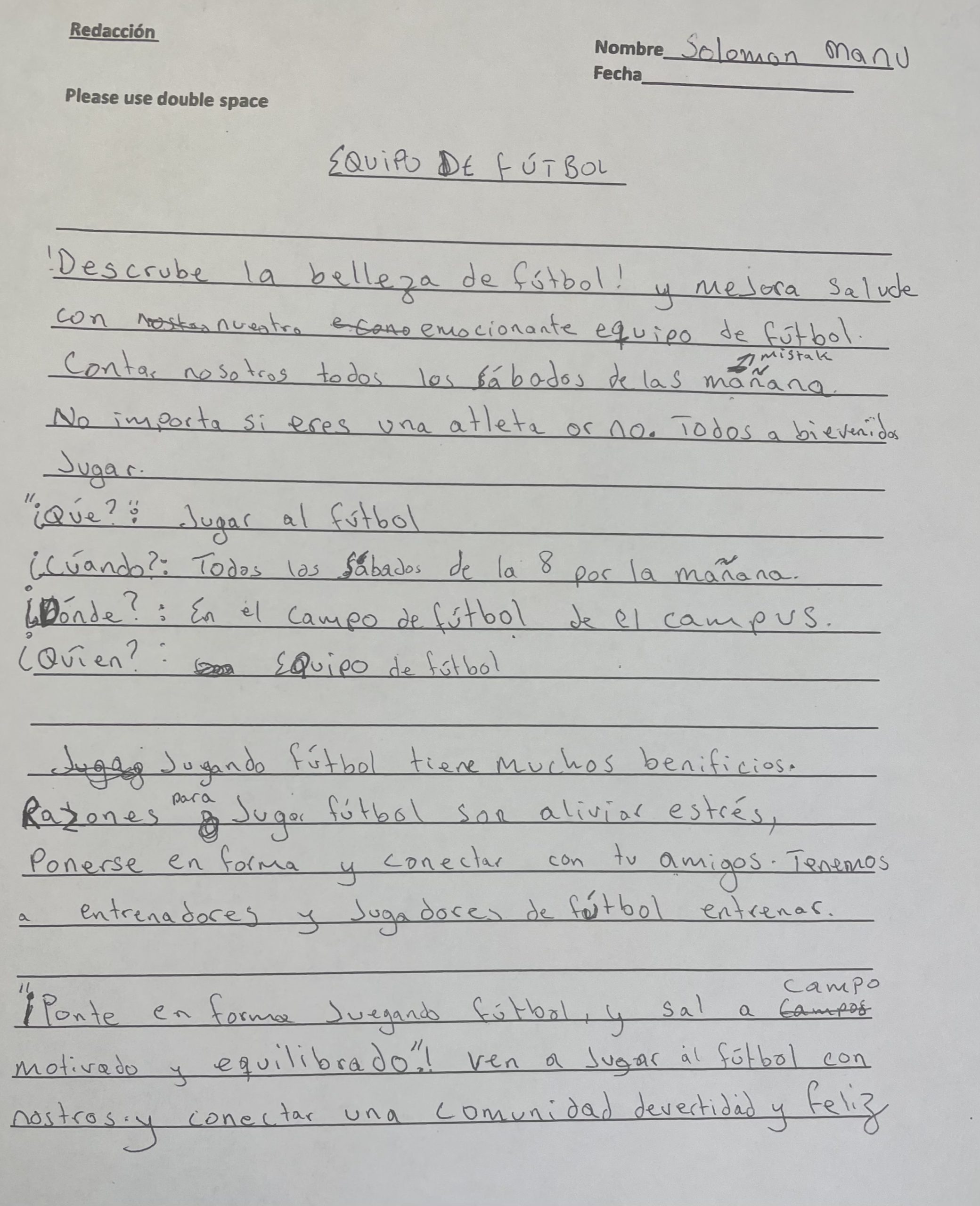
In Chapter 7, we worked on a project involving the creation of a Spanish flyer to invite students to join an on-campus organization. My specific theme was soccer, encouraging students to participate in games every Saturday morning. I emphasized the availability of the soccer team and trainers for training sessions. This task was enjoyable and expanded my vocabulary with new words and verbs that I hadn’t used before.
Interpretive Listening
In English, give a very brief 2-3-line description of interpretive listening activities you completed this semester for or related to your Spanish learning. (See Modes of Communication link for description and examples).
Then, write a short reflection paragraph that includes the different things you listened to/heard this semester inside and outside of class or in the Language Learning Center or its website. Find a recording and add to this section; be sure to cite it. What was unclear or challenging for you? How did you overcome this difficulty? What did you find most interesting or compelling? What was your takeaway from the listening experience? How have you grown with each activity?
Interpretive Reading
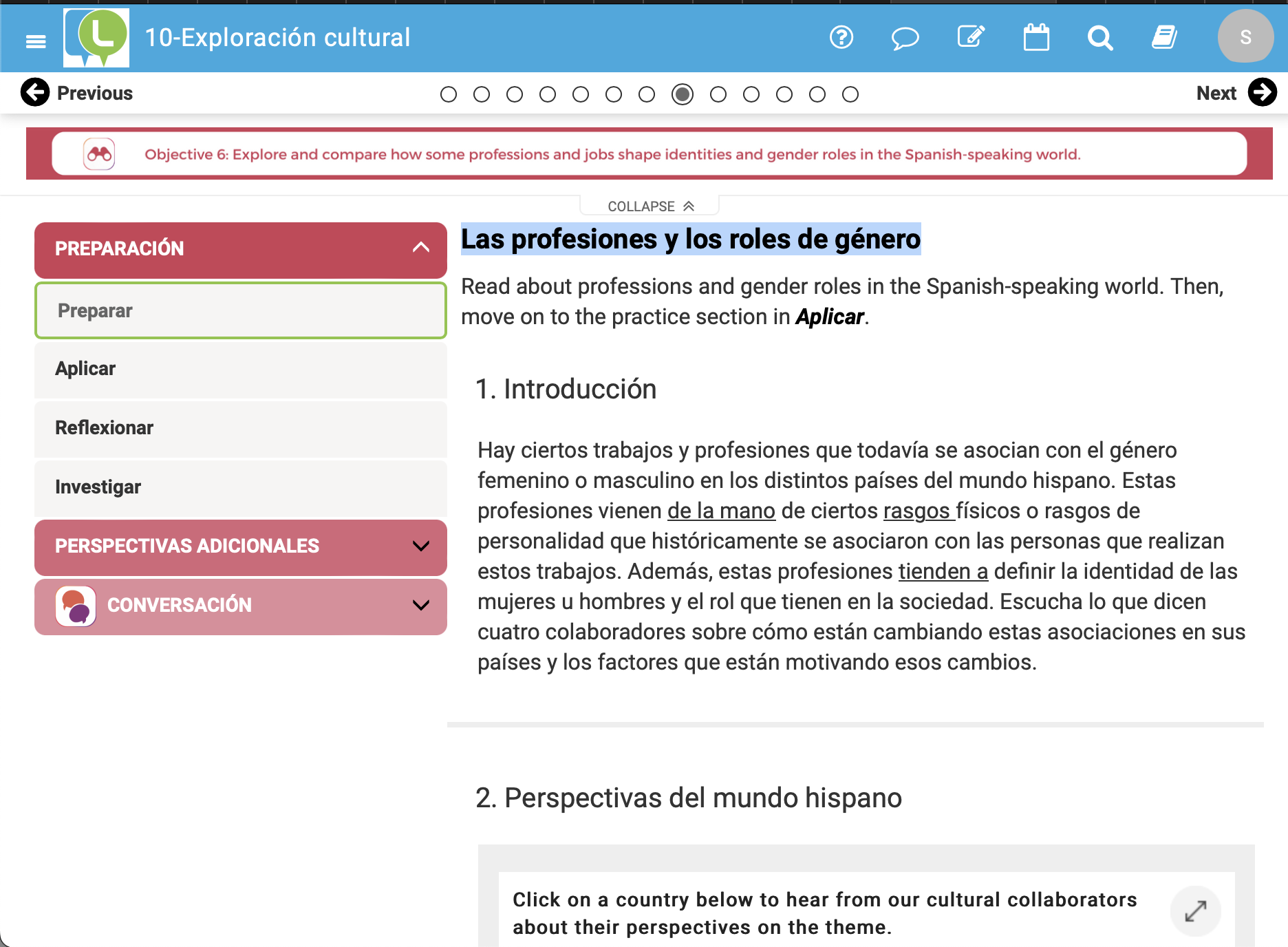
This semester, I’ve been involved in interpretive communication activities for my Spanish learning, which include reading the exploración cultural. These activities have been valuable for improving my comprehension and interpretive skills. For example, in chapter 10, I read “Las profesiones y los roles de género” it delved into gender roles in the Spanish workplace, expanding my understanding of traditions and workplace culture.