Interpretive, Interpersonal, and Presentational Modes of Communication
Address the reflection exercises in each of the following sections. For each section, you will need to embed portions of these assignments and activities as artifacts to substantiate your reflection. Then, at the end of each section, include a link to the document or embed it as a PDF.
Tutorials are available:
- Embedding a PDF
- Embedding Media (Images, Audio)
- Embedding a Video
An Effective Reflection Is
- Written in English.
- A demonstration, explanation, comparison of skill and growth described through what you learned and the challenges you had in that learning while highlighting your best work.
- A discussion of how you overcame any weakness or obstacles. Explain what you mean.
- Supported by evidence as represented by your artifacts (course materials, photographs, video, conversations, projects, news reports, authentic materials, etc.).
- Specific, addressing particular strengths, weakness, skills, transformative experiences, etc., avoiding vague generalizations (ex: “I learned a lot.”).
An Effective Reflection is not
- Only sharing an artifact without context or discussion.
- Only a description or explanation of an artifact. Focus on your learning and growth as a result of having completed that experience.
- An attempt to justify your work to an instructor. Instead, think more broadly about future audiences that might benefit from seeing evidence of your work and the skills you are developing.
Artifacts
A good artifact is a portion or clip of an assignment. It needs to be carefully selected to provide evidence/proof that supports what you are saying in your reflection.
Your reflection will help you determine what that will be. It is a quest for quality. It will represent you academically and professionally, and have personal meaning. It can be written, audio, or video.
At the end, ask yourself if the artifacts best demonstrates your abilities and growth over time.
At the end of your reflection in each section, link or embed the assignment/artifact. If the assignment has multiple pages and seems to overwhelm the section, consider adding just the first page and offering to provide the rest upon request.
Instructions
Exploring Culture
In Spanish 101F, I found myself struggling to maintain interest in the cultural aspect of learning the language. Spanish 102F has helped to open my eyes to the beauty of understanding different cultures. I felt a strengthened knowledge every time I learned something new about Spanish speaking countries and was able to connect why certain words and phrases exist. LingroLearning was a main way that I learned about other cultures. Between the preparar, investigar, and other applications of what was learned in the preparar sections, my knowledge grew significantly in this class. The second way I found myself diving further into the culture was in the classes discussions. These discussions asked great questions that required insight and research that I would have otherwise not developed.
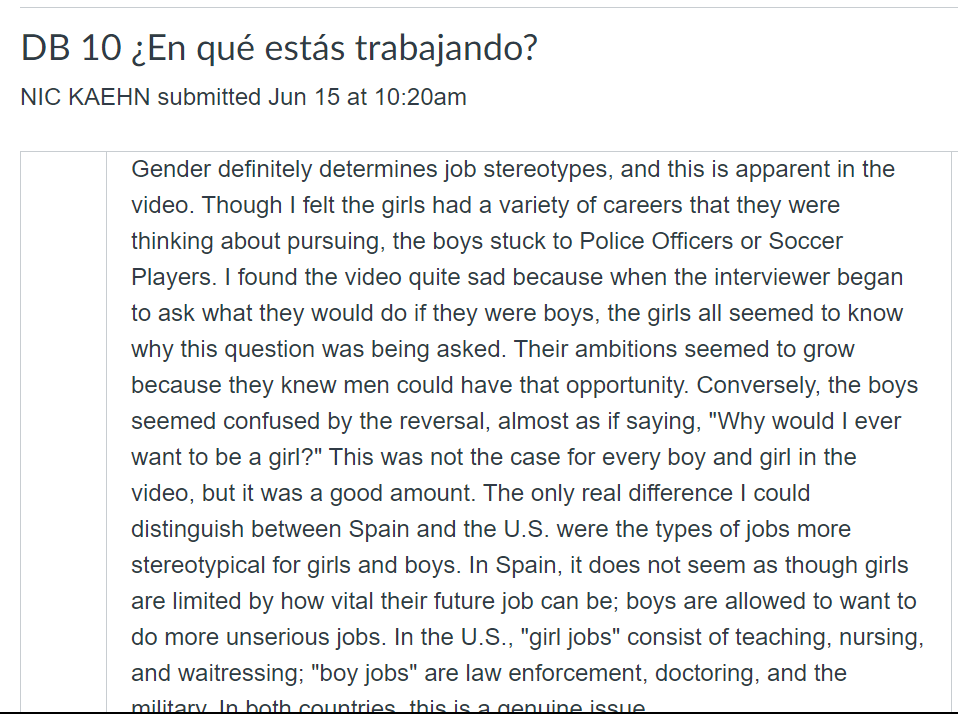
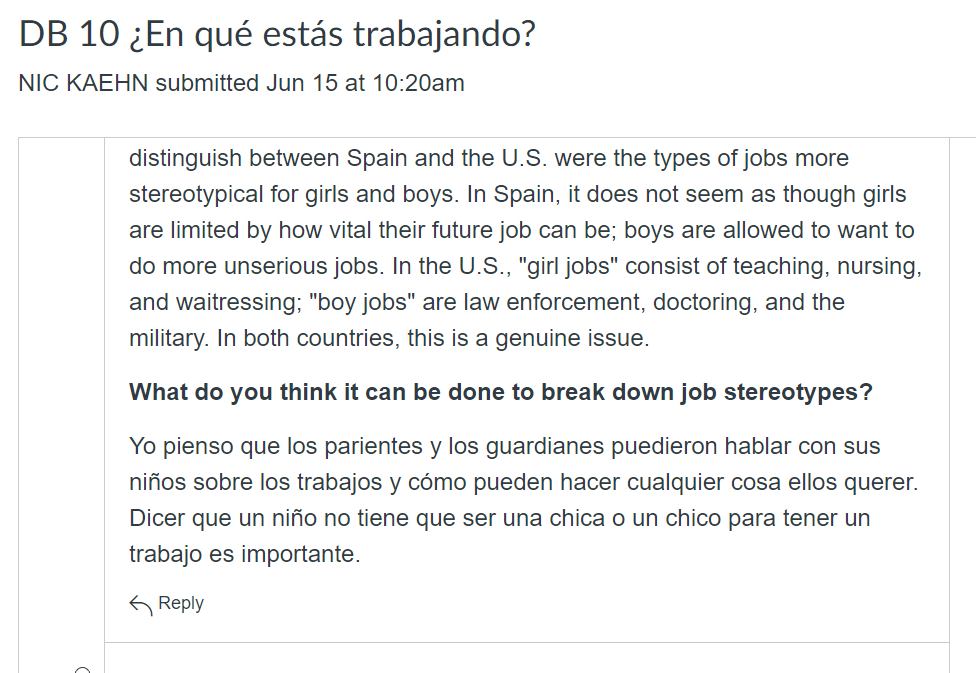
One of the biggest aspects I learned about in the Spanish-speaking cultures and communities were gender roles. Spanish is a gendered language, something I did not always understand previously, but learning the values of machismo and marianismo– this part of the language began to click. LingroLearning provided really interesting anecdotes and informational blurbs that kept me engaged. I have always considered the United States to be leading in healthcare, but have learned through our discussion posts:
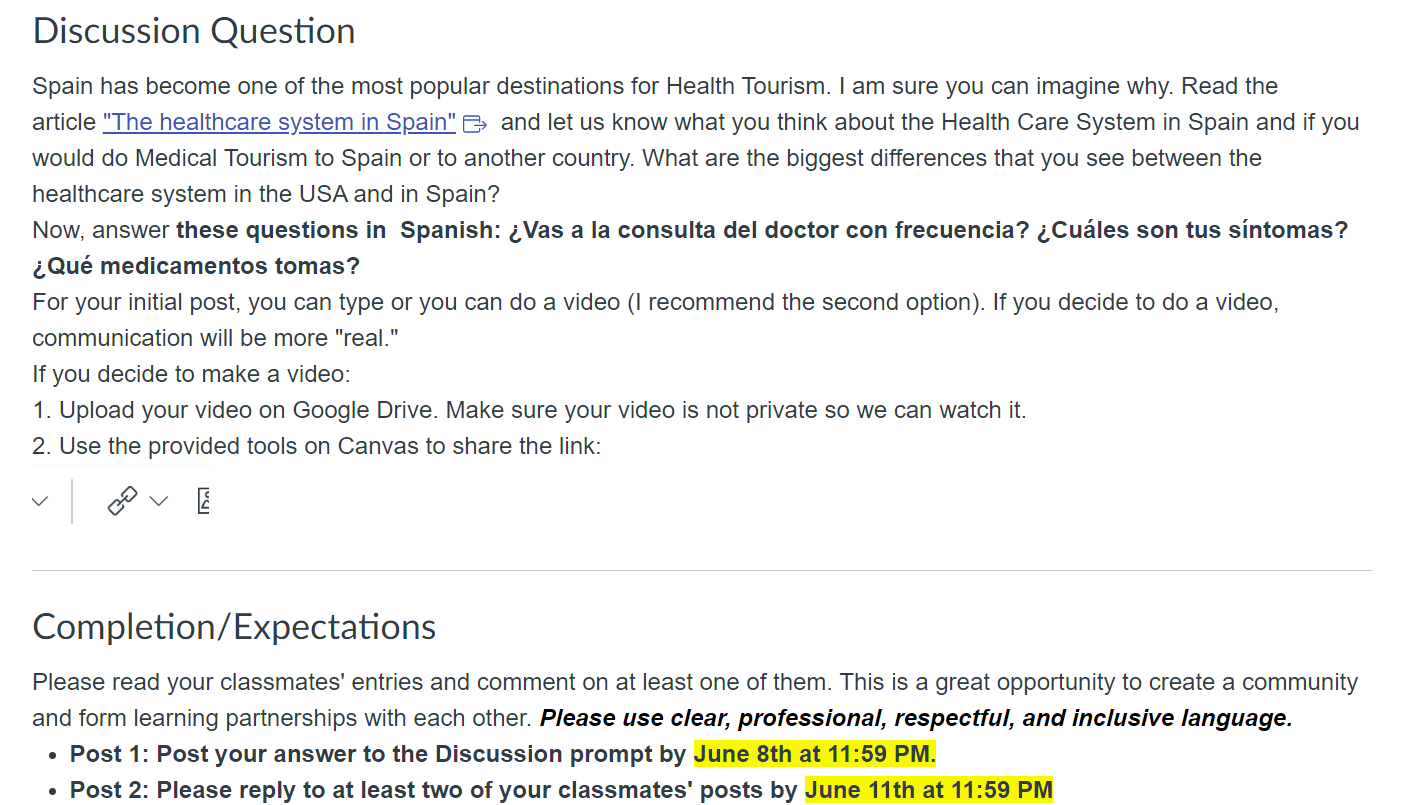
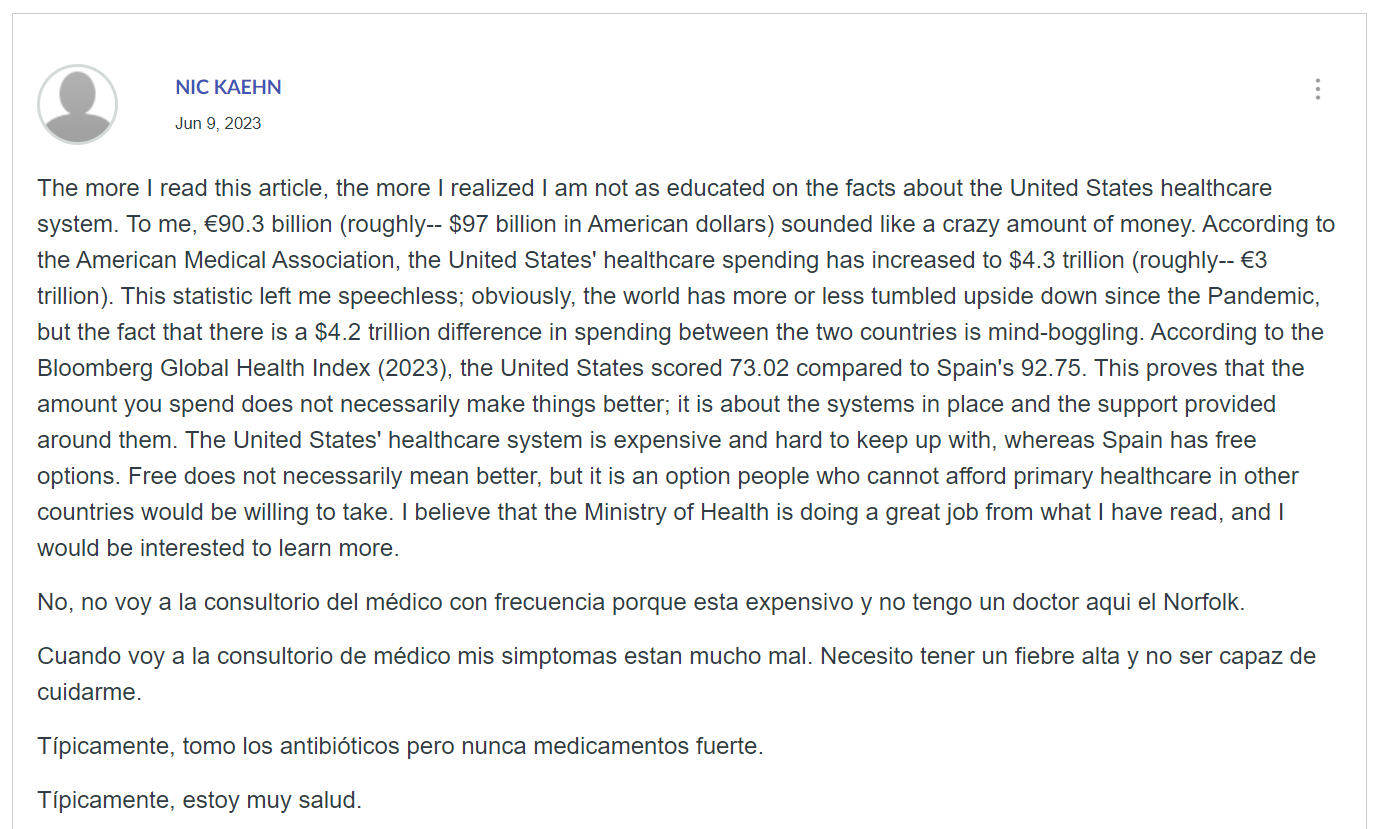
that this is not always the case necessarily. The research we were instructed to do led me to find that Spain is one of the leading countries in healthcare at a significantly reduced cost for the government and citizens.
Engaging in Communities
Engaging in communities is extremely important. There are so many misunderstandings about the world around us and engaging with others helps to limit these misunderstandings. In doing so we can limit biases, learn, and grow.
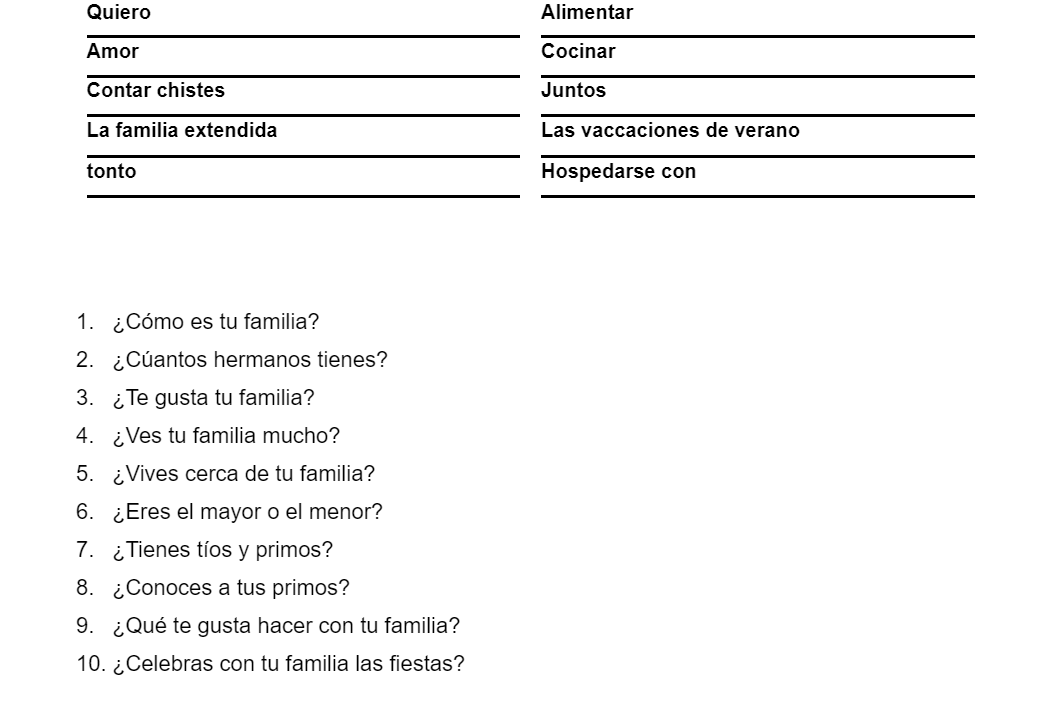
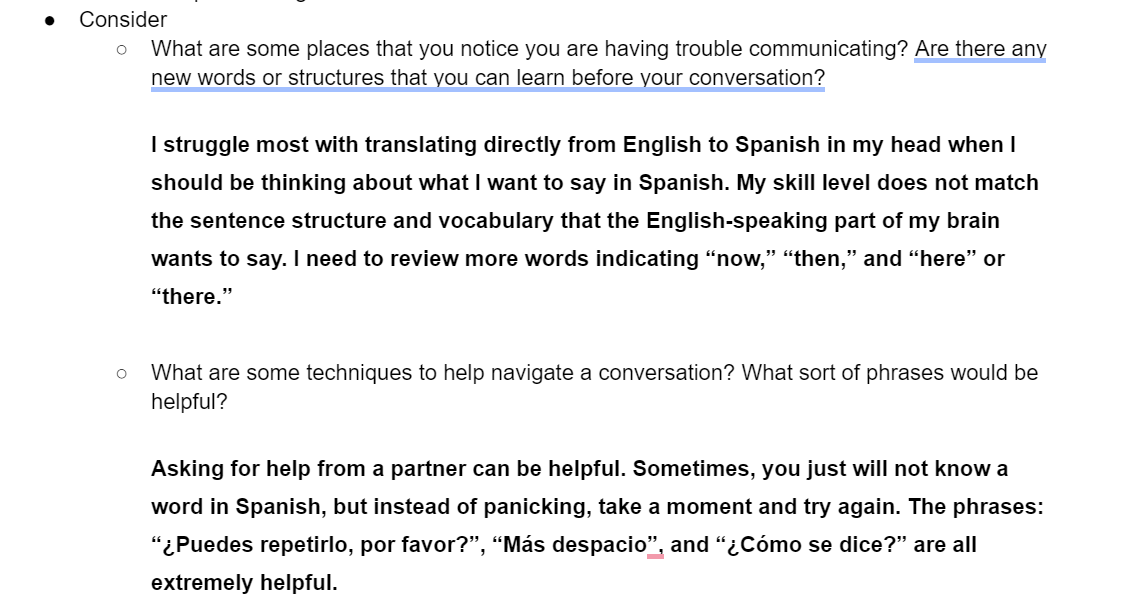
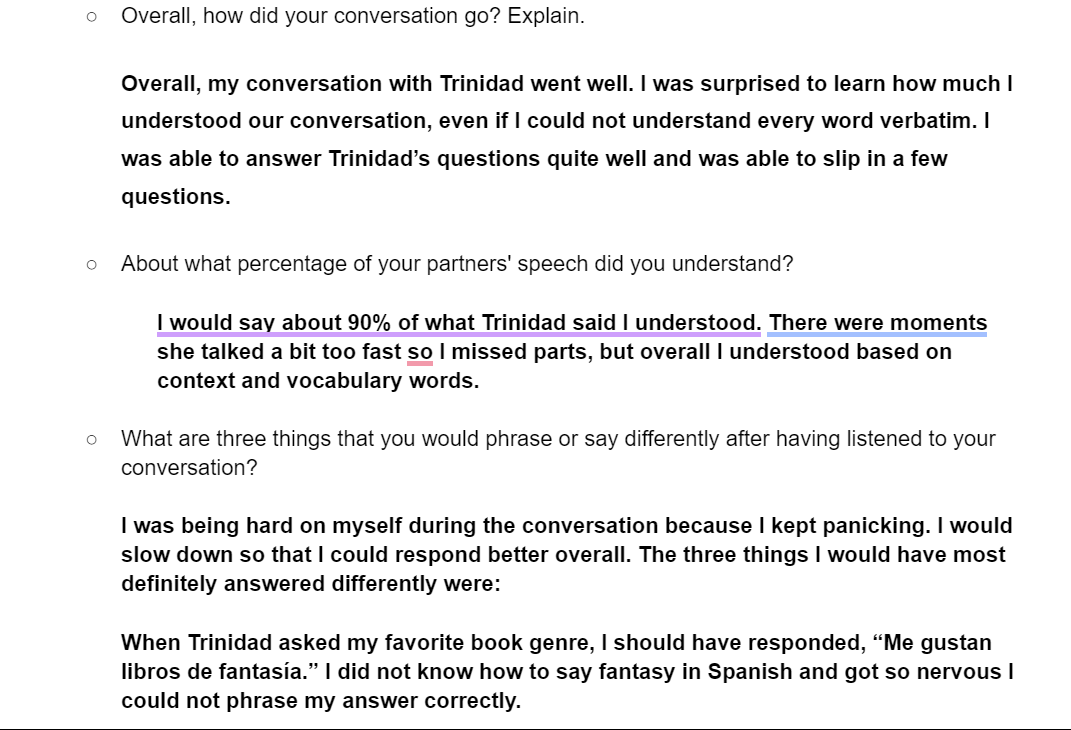
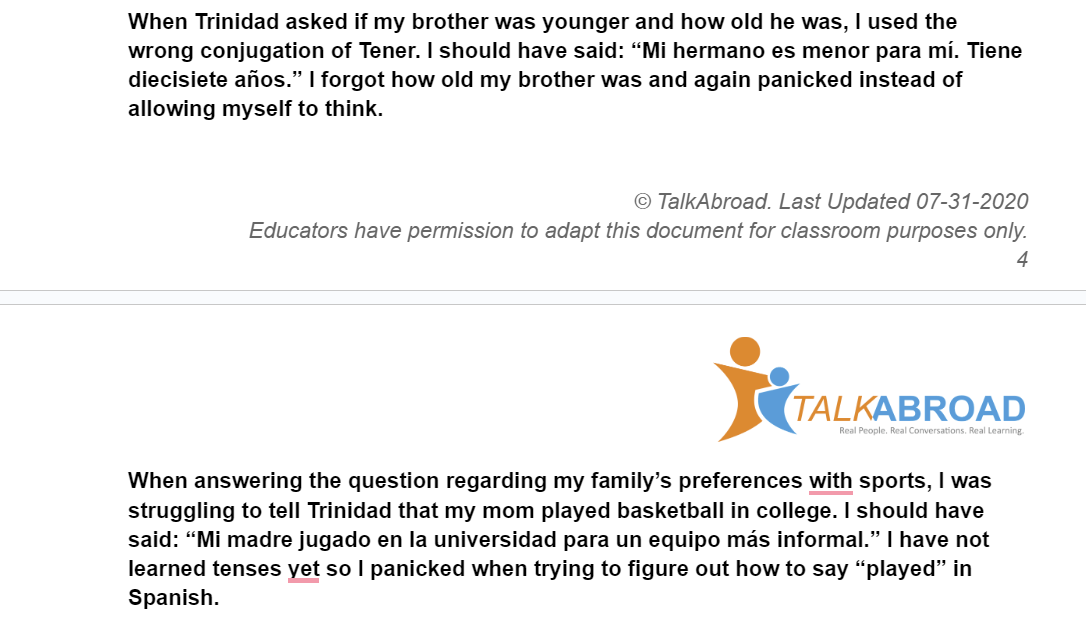
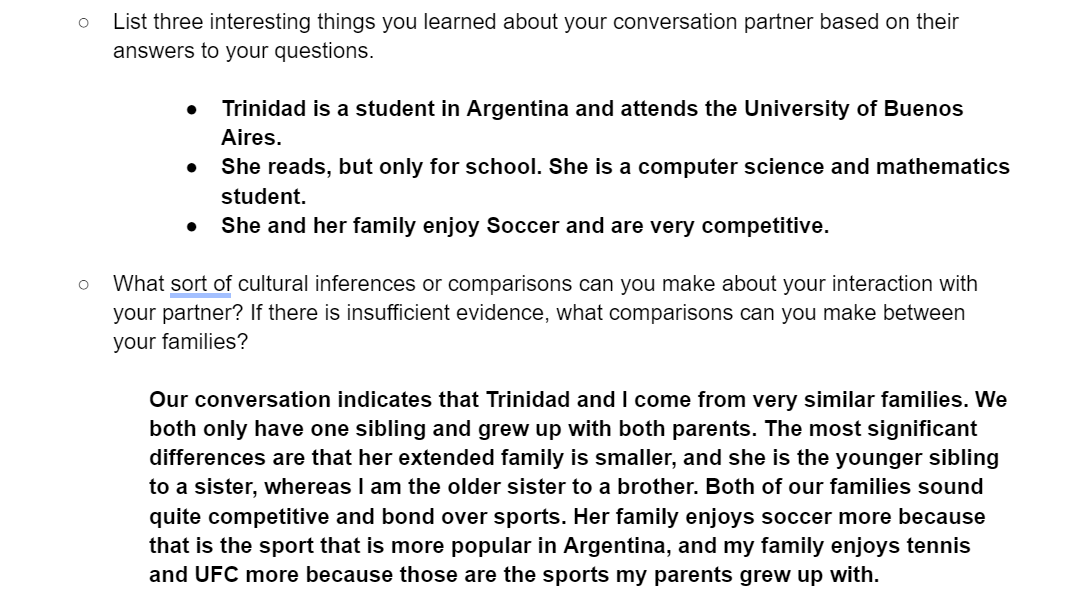
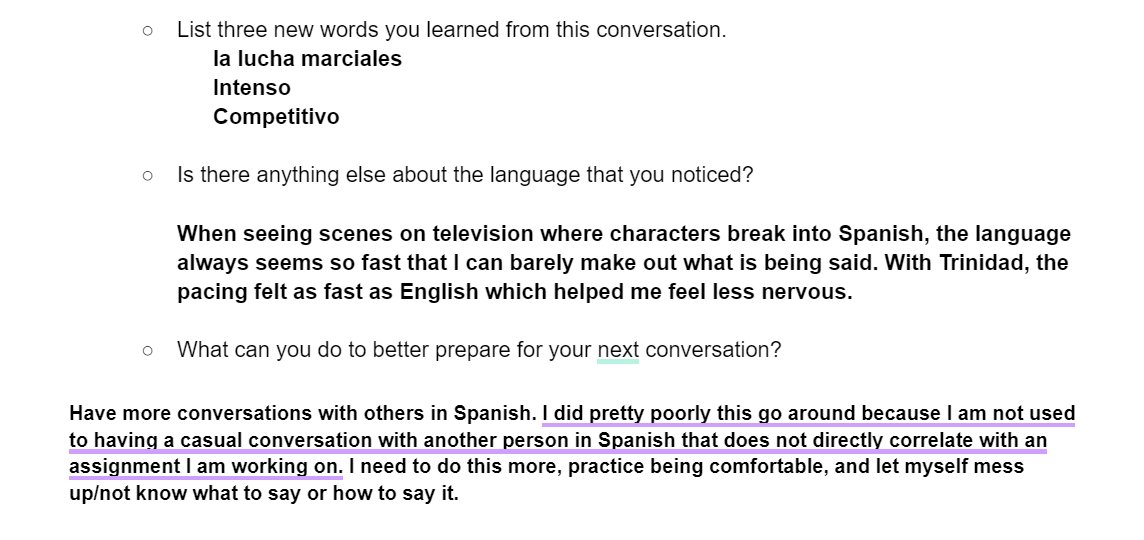
I was rightfully nervous, but excited to engage with a Spanish speaker from Argentina. Through TalkAbroad I was able to engage and felt that even after a small 15 minute conversation, I had learned so much. Other aspects of community engagement I started to do throughout this class were watching shows in Spanish and consuming Spanish content (i.e. Spanish-speaking influencers). The shows I watched before and am simply rewatching so that I have context clues, and I make sure to have subtitles on for Spanish-speaking influencers. All of these ways of engagement help push me to my learning limits so that I can continue to only get better from there.
Here is an assignment I submitted that recorded my experience of this engagement:
Interpersonal Communication
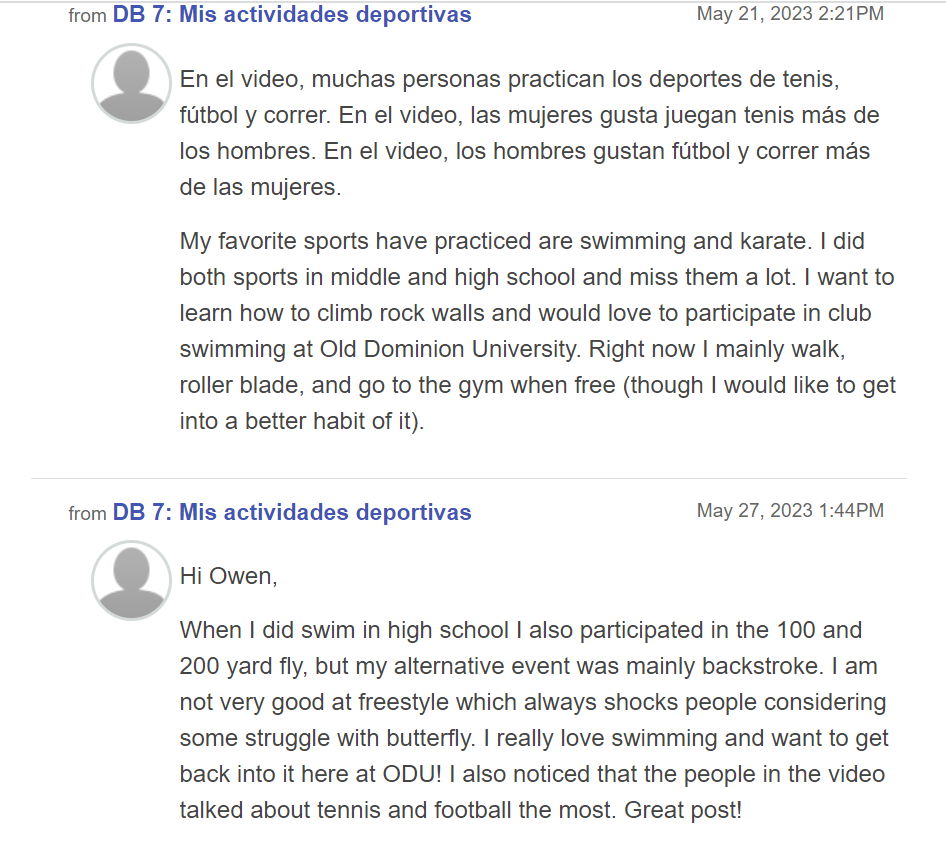
Though I learned much from the TalkAbroad experience, I only completed one conversation; therefore, I was unable to truly track my growth. Because of this I would like to focus on the discussion board posts. This was one of my favorite aspects of this class as I felt more like my classmates and I were all in the same boat. We communicated fully and effectively and were able to share our interests. I enjoyed being able to connect my experience to others in the discussion posts whether they were in/from the United States or not.
I only participated in one TalkAbroad conversation; however, my aunt asked a spanish-speaking coworker to call with me so that I could practice spontaneous communication and I felt like I improved significantly. As the semester went on, I learned tenses and new vocabulary that helped me to not hesitate as much because I was able to actually communicate what it was that I was thinking. In my first conversation, my biggest issue was that I simply did not have the knowledge to communicate in different tenses, and didn’t know certain filler words. I felt as I went on, this was less of a problem.
My discussion posts improved more in the aspect of outside research and actually gaining an interest in Spanish culture. Initially, I was very self-focused and unconcerned with how my culture varied from others. As the semester went on, I learned to integrate research and actually take away and digest other’s experiences.
Presentational Speaking
The most notable presentational speaking activity I completed in Spanish 102F was the pronunciation assignment. This assignment was extremely straightforward and somewhat unintimidating as I imagine most online class presentational speaking assignments are. There are no people sitting there watching you and a person can rerecord as many times as they please. I felt very comfortable with this assignment.
https://screenpal.com/watch/c0hro8VA4rf
This presentation included reading the Spanish alphabet and then a bunch of words. This assignment was used to show a student’s ability to pronounce Spanish words while considering accents and spelling. My biggest challenge was getting tongue-tied and adding extra syllables to words as I recorded. I did finally get a take where I did not stumble as much when I spoke. I felt I excelled at accented letters. Next time, I would slow myself down and not rush.
Presentational Writing
The presentational communication activities I completed were done mainly in LingroLearning. My favorite of these writing activities were the Investigar portions. These portions asked that student’s utilize outside research and type a large body of information learned, in Spanish.
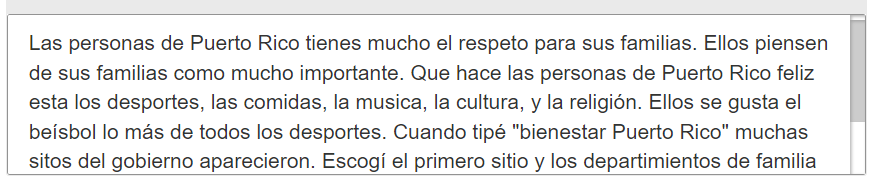
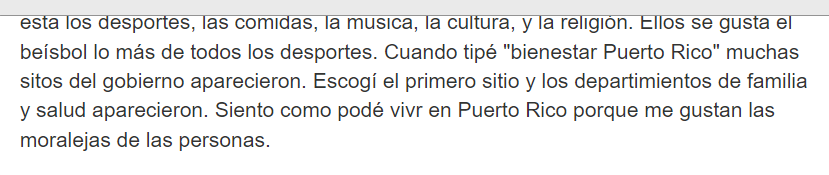
Each time, it became easier to arrange my thoughts and add on the the information that I needed to include. Initially, I struggled with how to answer the Investigar prompts and how to organize the sentences. The further into the semester, I was able to utilize my knowledge of tenses and heightened vocabulary to really elevate my writing. If I were able to do this over again, I would focus more on the specifics of my cultural investigations instead of being so broad, this way I can fully highlight my vocabulary skills and knowledge.
Interpretive Listening
In LingroLearning there were an abundance of interpretive listening activities. Many times student’s were asked to figure out the conjugation of the spoken sentences or even retype what was said. I really enjoyed this aspect of learning as it used a different part of my brain.
Here is an example from LingroLearning:
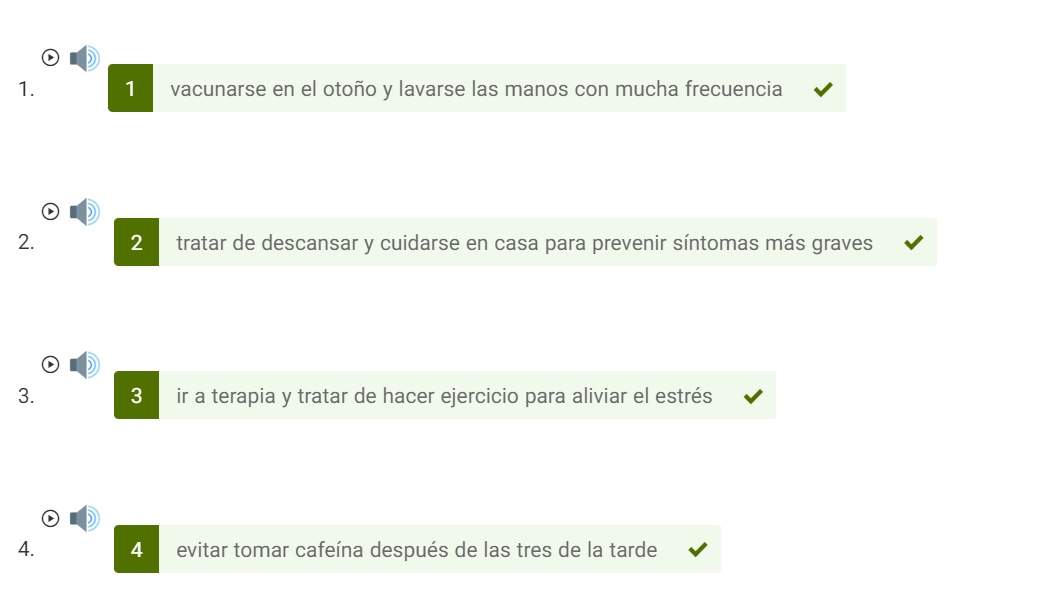
I listened to many different things throughout the semester that involved audio comprehension skills. I also believe that these exercises strengthened my vocabulary. Hearing words as well as reading them helps to shape a permanent place for them in one’s brain. The worst part of these exercises is that I have a hard time hearing people in English; therefore, having to comprehend an entirely different language through hearing felt impossible at times. I hope that I will figure out my hearing difficulties relatively soon (I have a doctor’s appointment) and think this might help me in the future.
Interpretive Reading
The best review and practice of interpretive reading were within the tests for this semester. In a few instances, the test taker was instructed to read a large paragraph written entirely in Spanish and answer questions regarding the text. This was by far the hardest part of the tests so I had to allot a good amount of time to complete these sections.
Here is an example:
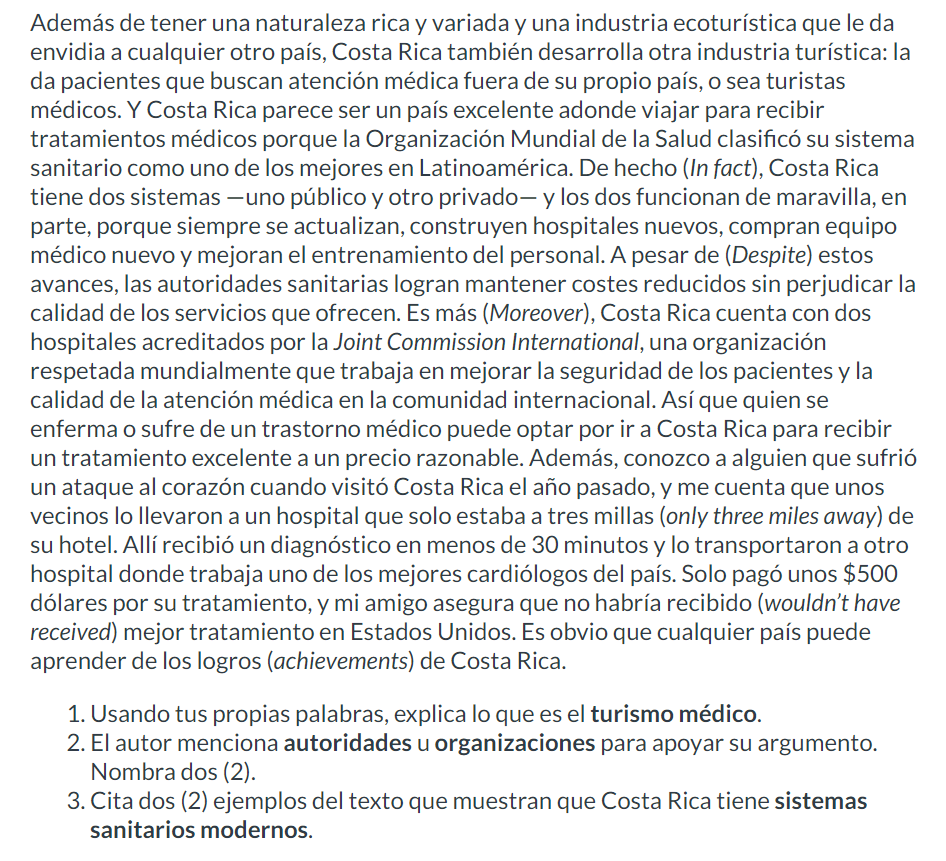
The hardest part for me was when I encountered words I was unfamiliar with. I also forgot that sometimes using the question to find the answer is the way to go. I got a bit overwhelmed by all the words at times and had to remind myself to take a deep breath and slow down. I really enjoyed learning as I read, it was a bit distracting under a time limit but cool to learn nonetheless. I feel I did close to the same in this section on my tests as I feel like I cracked the code in looking for the answers within the questions. Context, and learning to communicate in Spanish often relies on this ability. When someone asks: “¿Cual es tu espacialización?” you would repeat back part of that person’s question with the answer, “Mi espacialización es ___.”