Review the NICE Workforce Framework. Are there certain areas that you would want to focus your career on? Explain which areas would appeal the most to you and which would appeal the least.
After reviewing the National Initiative for Cybersecurity Education (NICE) workforce framework, I would focus on a few careers such as Analyzing and Investigative Backgrounds. The one that is least appealing to me is Secure Provision.
Analyzing peaks my interest because it allows for critical thinking through creating research questions for analysis of information to better assess threats. Investigating is particularly interesting because I would be on the front lines to figure out clues regarding the perpetrator’s identity. Building infrastructures to keep information secure, or Secure Provision, does not peak my interest, as I am not good with my hands.
Researching future jobs on the NICE Framework helps narrow my strong suits and helps me navigate my career focus I want in the future.
Explain how the principles of science relate to cybersecurity
The principles of science related to cybersecurity are Objectivity, Ethical neutrality, and Parsimony. Objectivity offers an impartial view on research subjects. It helps clarify cyber crimes by limiting personal views as applied to the real objective. Ethical neutrality has to be considered for some information to promote confidentiality, which is required to be upheld. Parsimony provides a simple and concise perspective on what experts portray to others unfamiliar with the field. It is crucial for any type of research to be done by the principles of science as it pertains to Cyber—this is a growing field, and the principles provide a deeper understanding on how to handle new issues as they develop.
Visit PrivacyRights.org to see the types of publicly available information about data breaches. How might researchers use this information to study breaches?
Researchers’ ability to look at Privacy.org and review data breaches can help prevent future incidents as tech continues developing. Comparing and contrasting these different breaches can create a better understanding of what hackers target. Having this information available can create better training courses for organizations as more breaches continue to occur in ever-advancing technology.
Review Maslow’s Hierarchy of Needs and explain how each level relates to your experiences with technology. Give specific examples of how your digital experiences relate to each level of need.
Maslow’s Hierarchy of Needs has five levels to the pyramid. The first is physiological—having access to basic needs such as food, shelter, and clothing. Technology has expanded so that we can have Uber to pick us up from anywhere and bring us to a destination.
The second level of the hierarchy is safety. As technology has improved, the internet has capacity to hold and send personal information such as identification, social security information, and credit card information. Lacking security can lead to various issues including, but not limited to, identity theft, theft of private information, and stealing money, undermining personal safety.
The third level of Maslow’s Hierarchy of Needs is belonging, which refers to an individual’s experience feeling accepted. Experiencing the impacts of Covid-19 showed how disconnected and alone I was from the world, but with technology like FaceTime and Zoom, I was able to more easily stay in touch with family and friends.
Esteem is the fourth level, which is having confidence and achievement in oneself. There are many technological avenues that can help build esteem. LinkedIn is used to display professional achievements. It also provides a network to share different opportunities and events to empower users to grow in their fields of work. Instagram allows me to show aspects of my life through photographs. This technology has the ability to inspire confidence in users, for example, receiving positive comments on photos that you post.
The final level of the hierarchy is self-actualization, which is realizing the full potential in life and becoming one’s best self. It is nearly impossible to become perfect, but technology offers programs like Duolingo to provide easy ways of learning languages, so that I can continue the journey of education and reach the highest goals in life.
Review the articles linked with each individual motive in the presentation page or Slide #3. Rank the motives from 1 to 7 as the motives that you think make the most sense (being 1) to the least sense (being 7). Explain why you rank each motive the way you rank it.
The number one motive that makes the most sense to me is political motive. Creating an attack towards the government creates chaos and is typically an attempt to influence government action based on the individual’s political leanings. The second motive that makes most sense is monetary. Businesses, and the individuals employed by them, are hunted by hackers to make money. Technology has made it easier to make attacks and entice more people to try to steal money through hacking. The third motive, that makes less sense, is revenge. Being a safe distance, in the comfort of your home, makes it easier to take revenge. With technology, more avenues are available to wreak havoc in someone’s life in response to harming others. The fourth motive, which makes less sense to me than those above, is multiple reasons. Multiple reasons range from needing money to acting out revenge. We have multiple issues throughout our daily lives and acting out on them is hard to believe. The next motive on my list is recognition, which is achieving higher status and standing out in society. This motive makes less sense to me because you need to know who a person is to achieve that status and fame will not last long if caught. The motive that makes the least sense is entertainment. It is illegal to create attacks and infiltrate a system. Being that it’s a crime, attacking businesses just to see what happens does not make sense.
Article Review #1: Privacy Threats in Intimate Relationships
Privacy and data are becoming extremely difficult to keep safe on the internet, so
individuals create safeguards. These safeguards include passwords, security questions
for the passwords, keys to unlock cell-phones, and sharing locations. We share our
most intimate details with our loved ones. It is sometimes the key to unlocking
information that is private and confidential to an individual. We do not consider that our
biggest threats could be the ones closest to us.
The article I reviewed relates to the closest individuals in our lives and how they could
potentially threaten our privacy. The article, “Privacy Threats in Intimate Relationships,”
describes intimate threats, where “one member of an intimate relationship—a spouse, a
parent, a child, or a friend, for example—violates the privacy of the other.” (Levy and
Schneier). It is underlooked and undervalued that someone you care about would attack
you, which is why most studies do not include loved ones as threats.
The article relates to a few principles of the social sciences such as relativism,
determinism, and empiricism. Relativism, because it relates to technology being more
prevalent in individuals’ lives and causing issues within the realms of family, friends, and
partners. This topic also relates to determinism since we are giving out our information
on our own accord; it is only a matter of time before it can be used against us. The last
principle that relates to the article is empiricism, because families can use confidential
information to help each other or abusive partners could use it as a ploy against their
partner.
The study’s hypothesis is that intimate threats are more devastating and occur more
often than regular attacks made on us by hackers. The research question behind this
study is that women, children, the elderly, and the impaired are most often targeted.
The research methods used by Levy and Schneier included analyzing and comparing
surveys and case studies. In their article, the authors relied on analysis of existing
research rather than conducting their own, definitive research. They analyzed surveys
and case studies in drawing their conclusions about intimate threats to cybersecurity.
While they did not conduct their own surveys, their analysis of research from sources
like NPR and Pew Research Center shed light on the need for action to be taken
against this serious threat.
The types of data and analysis done in the article are predictive and prescriptive.
Predictive analysis is data based on making future decisions. The authors use
predictive analysis to demonstrate a narrative that situations are ever-changing—
parents and children will grow old, relationships will end, and living situations change
(Levy and Schneider). It uses this analysis to demonstrate that sensitive information
may create issues in the future. The article also relies on prescriptive analysis, which is
what prescribes or advises us on what to do. It shows different ways to fix the problems
at hand by different tools, policies, and regulations done to protect privacy. “[S]ystem
designers can take some steps to proactively mitigate the risks of intimate partner
threats.” (Levy and Schneier).
The concepts from the PowerPoint presentations that relate to this article are motives
and lack of study of Sociology. Revenge, for example, is a major motive in intimate
relationships. Intimate partners, friends, and family experience issues that result in
negative feelings, which can certainly include the urge to seek revenge. Seeking
revenge is made easier by sharing sensitive information online to friends and family.
Further, sharing an online bank account would allow attackers to withdraw from
accounts without notifying all parties. The study of Sociology fails to account for the
biggest threats in our closest proximity—loved ones. Sociology is the study of social
behavior, social life, and social institutes and should account for intimate threats. Having
increased research within the dynamics of family, friends, and partners will help create
better safeguards within our increasing use of technology.
Interestingly, the article stands out for marginalized groups including women and the
elderly. When it comes to the elderly, family members monitor their online presence.
While “is very often motivated by care and a desire to protect,” it can have the effect that
an elderly person’s desires are unaccounted for (Levy and Schneier). Women are also
uniquely targeted, often through abusive relationships. Technology can be used in
controlling a romantic partner. Abusers are more easily able to follow women using
location sharing settings. They can also manipulate women by having access
to passwords and intimate details. The elderly and women are marginalized groups
who are susceptible to being taken advantage of in this way.
After reading and reviewing this article, the contribution to society is to create more
awareness about the cybersecurity implication of intimate threats. As technology
becomes more prevalent, individual relationships must be accounted for in
cybersecurity. This article provides well-researched awareness of attacks that may
arise—attacks not from hackers, but by people, you trust. It also benefits relationships
and encourages thoughtful reflection of what intimate details you want to share with a
significant partner, friends, or family members.
In conclusion, close relationships and their interactions with technology have changed
drastically as more ways of communication and information sharing with our loved ones
have developed. There are numerous ways of people being taken advantage of by
loved ones and those with access to private information. Presently, there is a lack of
research into this topic of cybersecurity. This article aims to generate awareness about
intimate threats in cybersecurity to promote better safeguards and cautiousness within
this ever-changing technological landscape.
References:
Levy, Karen, and Bruce Schneier. “Privacy Threats in Intimate Relationships.”
Academic.Oup.Com, Journal of Cybersecurity, May 2020
Yalpi, Diwakar. “Introduction to the Social Sciences.” 2023. Powerpoint
presentation
Yalpi, Dikwakar. “Applying Psychological Principles of Cyber Offending,
Victimization, and Professionals.” 2023. Powerpoint presentation
Can you spot three fake websites and compare the three fake websites to three real websites, plus showcase what makes the fake websites fake?
Easily accessing trustworthy websites has come to an end as technology develops and hackers get smarter in gaining control of personal information. Differentiating between trustworthy and fake websites is crucial in daily life. Fake websites use similar spelling as real websites, but sometimes make one letter a capital or lower case letter to throw a user off (e.g. earthlink-renew.net). The real website has a capital letter without special characters—https://www.Earthlinkdeals.com. Most trustworthy websites start with ‘Https’ such as Https://safe.apps.mil/security.php, to signal to users a secure connection. The Https shows to users that using their data is safe. Clarifying websites is crucial before sharing information—most secure websites provide contacts for the creators to give feedback or questions. An example is https://cbsdeals.com. The website, https://bestdealsonline.com, provides none of the information with a red flag about trusting their website. Accessing secure websites and implementing a human firewall will protect individuals. Hackers constantly try different tools to access personal information. The ability to differentiate between real and fake websites will help individuals and organizations from unwelcomed hackers is imperative.
Review the following ten photos through a cybersecurity human systems integration framework.
Create a meme explaining what is going on in the individual’s or individuals’ mind(s).
Explain how your memes relate to Human Systems Integration.

This meme demonstrates using Human Integration system that believing that our biggest threats are individuals physically around us when in reality most of our threats are online.

This meme represents the Human Integration system by highlighting that individuals are too trustworthy about any site that is on the internet and do not check sources before diving in.

This meme demonstrates Human Integration system by detailing how unsafe being able to connect to an open Wi-Fi, as it is unsecure and anyone can have access to it. It is a danger to one’s privacy.

This meme demonstrates Human integration system by highlighting that even though VPN’s are secure it does not stop visibility on individuals connected to this network.
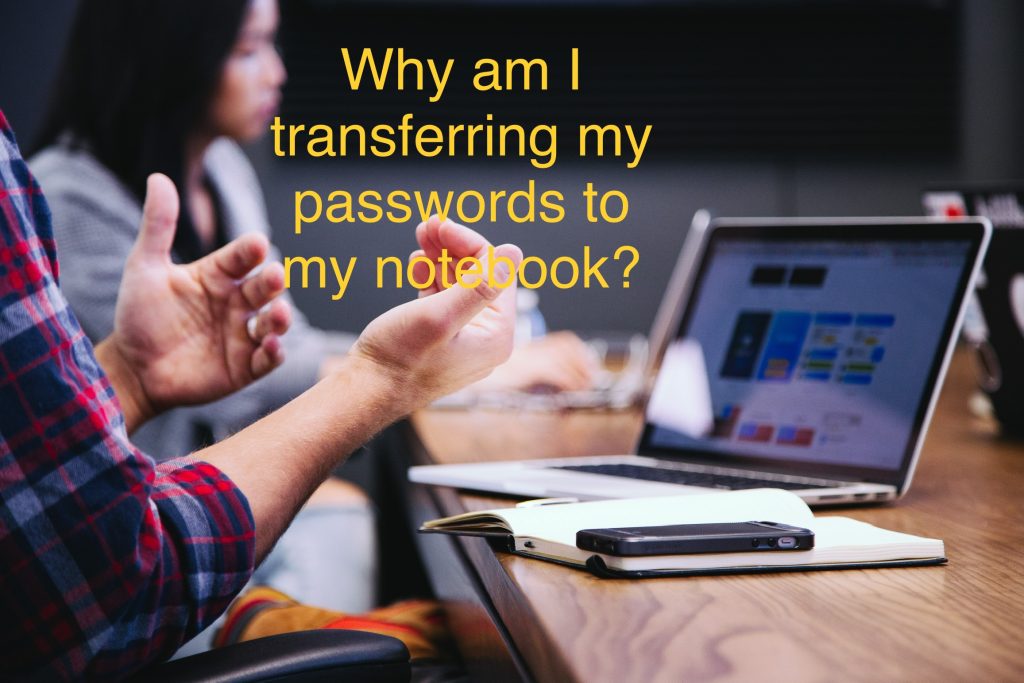
Being able to save passwords on a computer is easy and simple but if compromised all of those passwords are leaked to the individual hacking the system

Frauds come in different ways and being gifted prizes or money is an issue for individuals and can givemalware or take money from account

Sharing our lives to friends and family is easier than ever especially with pictures. Once you share a photo though it is in the cyber realm forever and anyone can see what you post.

This meme shows that anyone can be on the internet as it is easily accessible to whomever has the tools to get there.
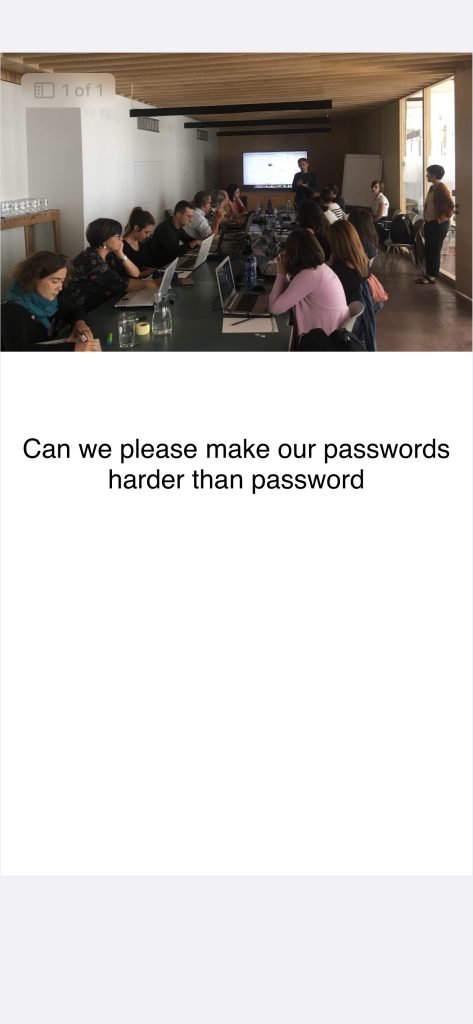
This meme interprets how having weak passwords is a major vulnerability between our companies for private information of consumers and employees.

We interact with different apps every day and not every app should be trusted as it may give malware to phone.
After watching the video, write a journal entry about how you think the media influences our understanding about cybersecurity.
As technology evolves, it’s a crucial part of our lives. How we view the media accompanying technology can be a vital part of developing a better understanding of cybersecurity. Media shapes narratives surrounding cybersecurity—for example, headlines focusing on how much money was lost by a company—influencing public opinion on the issues. Media can also be a source of information to provide a better understanding of cybersecurity depending on the source of media. As the video explains, there are many misconceptions on how the media portrays cybersecurity as it implies it is easy to break into a secure system. Media, if used correctly, such as podcasts or expert opinions on matters, provides society with an awareness and better methods to protect our systems with cybersecurity.
Complete the Social Media Disorder scale Links to an external site.
How did you score? What do you think about the items in the scale? Why do you think that different patterns are found across the world?
Upon completing the Social Media Disorder scale, I was gratified to find that I received a perfect score of 0. Reflecting on the questions, it occurred to me that had I taken this test a few years ago, my score might have been higher. This observation underscores the pressing issue of social media addiction in today’s world, given the increasing number of people going online and utilizing the internet.
The divergence in social media usage patterns worldwide is intrinsically tied to internet accessibility. In many countries, especially in the developing world, access to the internet remains a challenge due to economic constraints. This stands in stark contrast to more developed nations like the United States, where internet access is widely available. The convenience of owning smartphones or tablets in such regions can potentially pave an easier path towards social media addiction.
Article review #2
How much is your information worth?
Each day, we immerse ourselves in the digital realm, dedicating a significant portion of our lives to technology and, more notably, the internet. As we traverse this online landscape, we entrust countless businesses with our personal data. It’s within this digital tapestry that we willingly share a plethora of information, placing our faith in the security of their systems.
The article I’ve explored, titled “Tell me more, tell me more, repeated personal data requests increase disclosure,” delves into the intricate facets of our innate behaviors. As the article states “Marketer and social media gurus believe that two requests will give compliance”. It dissects the intriguing notion that when we operate within the solitude of our digital spheres, we instinctively assume that our information remains safeguarded.
Ethical Neutrality: The principle of ethical neutrality in the social sciences emphasizes the importance of conducting research without discrimination based on personal characteristics such as age, gender, or background. This principle ensures that all individuals are treated equally and without bias in research or experiments. In the context of the discussed topic, ethical neutrality underscores that research should not favor or discriminate against specific groups when evaluating how willing individuals are to share personal data online. This commitment to ethical standards ensures that research is conducted in a fair and unbiased manner.
Parsimony: The principle of parsimony encourages simplicity and efficiency in research design and explanations within the social sciences. The research topic’s straightforward approach, focusing on the level of trust in online platforms and users’ willingness to share personal data, exemplifies the principle of parsimony. By asking a concise and direct question, “How much personal data would you give away if you trust the site?” the research adheres to the principle of keeping research questions and analyzes it clear and straightforward. This approach promotes clarity and effectiveness in social science research.
Objectivity: The research exemplifies the principle of objectivity in the social sciences by presenting various user profiles and their online behaviors without personal biases or subjective interpretations. Objectivity requires conducting research without allowing personal prejudices to influence the findings. By including a diverse range of user behaviors as part of the analysis, the research ensures that the study remains objective and unbiased. This inclusivity enables a more comprehensive understanding of the varied perspectives and actions of internet users, contributing to the rigor of social science research.
Research Question: The research question explores how an individual’s behavior changes after making multiple attempts to retrieve information. This question is grounded in the hypothesis that repeated retrieval attempts can lower an individual’s guard and increase their likelihood of providing the requested information. The hypothesis suggests that when individuals are presented with multiple opportunities to retrieve information, they may become more inclined to provide it, influenced by the act of repetition. This research aims to investigate the dynamics of user behavior in response to various retrieval attempts and their implications for digital interactions.
Research Methods: The research utilizes experimental methods to assess how individuals perceive the value of specific pieces of personal information. Participants are presented with scenarios or questions related to personal data, simulating real-world decision-making situations and gauging the subjective value they associate with their data. Additionally, surveys serve as a data collection method, focusing on privacy behavior and measuring how effectively individuals protect their personal information online. Participants’ survey responses provide insights into their privacy practices and behaviors.
Data Analysis: The primary analysis revolves around assessing the impact of repeated requests on individuals’ willingness to disclose personal information. Data collected from both real and hypothetical requests are examined to identify patterns in participants’ responses.
Relationship to PowerPoint Concepts:
1. Human Factors: The research aligns with the concept of “human factors” by exploring user behavior in the context of online privacy. Just as the PowerPoint presentations stress the importance of understanding how humans interact with technology and information, the research underscores the significance of comprehending how individuals respond when faced with threats, such as repeated retrieval attempts and potential privacy breaches.
2. Victim Behaviors: The research aligns with the concept of “victim behaviors” in the context of cybersecurity incidents. It examines how users’ trust in a website or application can be manipulated, making them vulnerable to potential privacy breaches. This mirrors the idea that victim behaviors are influenced by trust and deception in online environments, as highlighted in the presentations.
3. 3 Stages of Fraud: The research’s progression, from users initially getting hooked by retrieval attempts to being strung along and potentially falling into the trap, resonates with the “3 stages of fraud” concept outlined in the PowerPoint presentations. The concept of gradually manipulating users’ behavior aligns with the stages described, emphasizing the importance of understanding these stages in the context of privacy and cybersecurity.
Challenges and Concerns for Marginalized Groups:
The research addresses the challenge of individuals, including those from marginalized communities, being potentially manipulated by businesses they trust. Marginalized groups are often more vulnerable to various forms of exploitation, including data privacy breaches and cyber threats. The research highlights how manipulation of user behavior by trusted businesses can exacerbate these challenges, leading to privacy violations and exposing marginalized individuals to financial and personal risks.
A significant concern raised in the research is whether conducting experiments to understand and mitigate user vulnerability will lead to behavioral change. This concern is especially pertinent for marginalized groups, as they may not benefit from the findings and interventions stemming from such research. If user behavior does not change, these communities remain at risk, potentially widening the gap in digital security knowledge and practices.
Contributions to Marginalized Groups:
One of the contributions of the research to marginalized groups is its emphasis on the universal vulnerability of internet users. It underscores that the issues discussed, such as manipulation by online businesses and the potential consequences of repeated retrieval attempts, affect all individuals, regardless of their economic status or background. This recognition can help bridge the gap in understanding and addressing online security challenges for everyone.
Overall Contributions to Society:
The research makes several valuable contributions to society. It raises awareness among individuals about the significance of the seemingly minor pieces of personal information they provide online and how entities may exploit this information. By shedding light on these dynamics, the research empowers individuals to be more cautious about the data they share in digital spaces.
Additionally, the research contributes to the broader understanding of human behavior and its interaction with technology in the context of online privacy. It explores how individuals respond to repeated requests for information and how trust can be manipulated, providing deeper insights into the psychological aspects of online privacy.
In summary, the research contributes to society by promoting awareness, enhancing individual privacy practices, and advancing our understanding of the intricate dynamics between humans and technology in the context of online privacy and security.
Flemings, P, Edwards, G, Bayliss, A, & Seger, C (2023). Tell me more, tell me more: repeated personal data requests increase disclosure. Journal of Cybersecurity. Pg 1-10
Read this and write a journal entry summarizing your response to the article on social cybersecurity
Social cybersecurity is a concern for our society for years to come as it becomes easier to connect to the outside world. Countries were limited to how an attack should be constructed based on the geography of the area the country was in. False news and propaganda being sent from outside sources has changed ways of how to attack from inside the country. The more individuals divide on how they respond to these news creates tension from the inside instead of attacking with weapons. Social cybersecurity is a threat that needs to be focused on as technology quickly grows in our society.
think about how the description of the cybersecurity analyst job relates to social behaviors. Write a paragraph describing social themes that arise in the presentation.
Cybersecurity analysts require a strong aptitude for learning and a deep understanding of social dynamics. Their ability to impart and establish safe practices within any business is pivotal. These analysts must collaborate, pooling their ideas and working cohesively as a team to fortify businesses against cyber threats. The unwavering commitment to continuous improvement and effective teamwork will be the linchpin for success.
Read this https://dojmt.gov/wp-content/uploads/Glasswasherparts.com_.pdfLinks to an external site. sample breach letter “SAMPLE DATA BREACH NOTIFICATION” and describe how two different economics theories and two different social sciences theories relate to the letter.
One theory that relates to this sample breach is the Keynesian economic theory as Glassware had a breach that lasted a year. It is crucial for there to be initiatives to help bring more cybersecurity help to protect people’s information. After the breach happened another economic theory used was rational choice theory. Once they knew about the breach, they made the choice to invest in getting high quality help to eradicate the malware attached.
A social theory that was shown in the sample breach was the influence theory. Glassware has provided ways to help with fixing the issue to influence the consumers to change their information. Another social theory presented in the breach was the social exchange theory as the consumers had trusted the business and weighed the risks and benefits for sharing the credit card information.
A later module addresses cybersecurity policy through a social science framework. At this point, attention can be drawn to one type of policy, known as bug bounty policies. These policies pay individuals for identifying vulnerabilities in a company’s cyber infrastructure. To identify the vulnerabilities, ethical hackers are invited to try explore the cyber infrastructure using their penetration testing skills. The policies relate to economics in that they are based on cost/benefits principles. Read this article https://academic.oup.com/cybersecurity/article/7/1/tyab007/6168453?login=true
Links to an external site. and write a summary reaction to the use of the policies in your journal. Focus primarily on the literature review and the discussion of the findings.
Bug bounties have emerged as an innovative strategy for businesses to identify vulnerabilities in their systems. This approach involves offering financial incentives to ethical hackers, providing them with the resources and time to uncover potential security issues. The effectiveness of this method becomes evident through the multitude of vulnerabilities discovered across various businesses.
The findings from bug bounty programs have proven highly successful, leveraging the expertise of ethical hackers to pinpoint weaknesses in cybersecurity measures. The wealth of identified vulnerabilities, once addressed, translates into substantial cost savings for companies. The reports submitted by these ethical hackers serve as valuable resources, enabling businesses to rectify issues promptly and, in doing so, prevent potential financial losses that could amount to millions. This symbiotic relationship between businesses and ethical hackers not only enhances cybersecurity but also demonstrates the tangible benefits of proactive risk management.
Andriy LiSlynchuk has described eleven things Internet users do that may be illegal. Review what the author says and write a paragraph describing the five most serious violations and why you think those offenses are serious.
One of the most egregious violations online involves the collection of information about children. Exploiting the innocence of young individuals is not only illegal but deeply disturbing. Secondly, recording calls without consent breaches the trust we place in individuals to maintain the privacy of our conversations. Using this breach for personal advantage is a serious offense. Thirdly, falsifying identities online is a severe offense as it can lead to exploitation for financial gain and access to sensitive information. Additionally, unauthorized use of copyrighted images diminishes the hard work and creativity of their creators, a disheartening act. Lastly, cyberbullying and trolling create a hostile online environment, contradicting the internet’s potential as a space for learning and enjoyment. Deliberately causing distress undermines the positive essence of online communities, making it hurtful for users.
Tanner Seitter
11/27/23
Outlooks for Cybersecurity Analyst
In our swiftly advancing technological world, where the pace of technological growth often outstrips our understanding of its possibilities and vulnerabilities, cybersecurity analysts stand as guardians. They serve a critical function in protecting systems, networks, and vital data against the constant threat of cyber-attacks. Having a technical background is key to the success as a cybersecurity analyst but it also uses different principles of social science and research. Among the plethora of social science principles and research, the ones that particularly resonate with me include psychology, sociology, and criminology
Psychology
The daily rigors of a cyber analyst’s role entail a multitude of tasks crucial for maintaining peak performance and efficacy within their domain. As articulated in Cyber Security Analyst Responsibilities, a substantial portion of their efforts centers on “researching vulnerabilities and creating protections against them.” (Cyber Security Analyst Responsibilities) This core responsibility stands as a testament to the intricate fusion of technical prowess and an intricate understanding of human cognition.
Within the cyber landscape, vulnerabilities are meticulously engineered to deceive, often blurring the line between authenticity and malicious intent. Analysts navigate this labyrinthine terrain, leveraging their profound insight into human psychology to discern the subtle nuances exploited in cyberattacks. The evolving cyber realm demands a keen eye for detail, as threats are meticulously crafted to deceive users, invoking a sense of authenticity that masks their malevolent nature. Analysts, equipped with a profound understanding of human behavior, decipher these psychological triggers to fortify defenses against such intricately designed threats.
Moreover, their role necessitates “strong critical thinking abilities to identify information security risks and threats.” (Cyber Security Analyst Responsibilities) This imperative skill set, anchored in a deep comprehension of the psychological underpinnings of cyber threats, enables analysts to navigate the ever-shifting landscape of digital vulnerabilities. Each day births new attack vectors, each rooted in exploiting cognitive biases or behavioral tendencies. Analysts, armed with their understanding of human behavior, serve as vanguards, deciphering the psychology behind emerging threats to thwart them effectively.
In this dynamic realm of cybersecurity, adaptability and agility stand as hallmarks. Staying abreast of technological advancements, emerging threats, and evolving attack methodologies is imperative for cyber analysts. The landscape undergoes constant metamorphosis, demanding that analysts remain dynamic in their approach, continuously learning, adapting, and innovating to outpace adversaries.
Psychology serves as a powerful ally in the arsenal of a cyber analyst. As Pratt notes, it allows analysts to “understand where, how, and why they’re falling short in building a security program that works.”(Pratt) Engaging with system users through dialogue and tailored exercises generates invaluable data, enabling deeper insights into user behavior and motivations. Understanding the repercussions of cyber threats from the user’s perspective becomes pivotal, considering that most users might not even realize they have fallen victim to an attack or comprehend its consequences.
Ultimately, the role of a cyber analyst transcends technical adeptness; it encompasses a delicate fusion of technical expertise and a profound understanding of human behavior. Through this multidimensional lens, cyber analysts fortify digital bastions, safeguarding systems and data from the labyrinth of ever-evolving cyber threats.
Sociology
Cyber analysts delve into sociology research to grasp criminal behavior and societal dynamics, paving the way for fortified defenses in the digital sphere. Focusing on individuals as the culprits, analysts scrutinize the intricate “how” and “why” behind their actions. Cybercriminals exploit various sociological avenues, employing tactics like phishing emails and malware to undermine users’ security. It is vital to know that most issues come from individuals as Pineau states “Recent surveys show that 60 to 90% of cyber incidents are caused by human error.
In the quest to comprehend these motives, cyber analysts lean on theories like Symbolic Interactionism. This theory paints a vivid picture of societal dynamics, emphasizing how individuals shape and are shaped by their interactions. In the digital realm, users engage in multifaceted interactions, connecting globally and influencing behaviors often unseen in physical spaces.
As cyber analysts navigate this complex landscape, research and theories serve as guiding lights. By applying these sociological frameworks, analysts aim to dissect the nuances of online behavior, deciphering the reasons driving individuals towards criminal activities in the digital domain. Understanding how virtual interactions influence behavior is pivotal, as it often shapes actions divergent from real-world conduct.
Ultimately, leveraging sociology in the realm of cybersecurity offers a multifaceted perspective. It equips analysts with tools to unravel the intricate interplay between individual motivations, societal influences, and digital interactions. This comprehensive understanding aids in fortifying defenses and devising proactive measures, creating a safer online environment for users worldwide.
Criminology
Within the expansive domain of cybersecurity, the responsibilities of cyber analysts span a multifaceted spectrum, involving bug resolution, counteraction against diverse cyber threats, and the strategic formulation of robust security blueprints. In this dynamic milieu, the integration of criminology principles into cybersecurity emerges as a pivotal augmentation. Criminology, which delves into past transgressions and analyzes criminal behavior, presents invaluable insights beneficial to cybersecurity professionals. However, the amalgamation of Criminology within cybersecurity remains a novel phenomenon in contemporary society. As highlighted by Payne & Hadzhidimova, the “development of these criminological concepts and related laws” is a recent occurrence, signaling the nascent and evolving nature of this interdisciplinary integration.
This integration extends beyond the convergence of fields; it signifies a pivotal shift crucial to fortifying an analyst’s role. Incorporating criminology into cybersecurity endeavors enriches the understanding of criminal behavior while fortifying digital defenses, forging symbiotic ties between criminal justice and cybersecurity initiatives. According to Payne & Hadzhidimova, integrating criminology into cybersecurity efforts will bolster the “connections between criminal justice and cyber security,” fortifying collective endeavors in combatting cyber threats in every organization moving forward.
At the crux of this amalgamation lies the influential Neutralization theory, instrumental in understanding the motivations underlying cybercrime. For example, the concept of “Condemnation of Condemners” sheds light on how cyber perpetrators rationalize their actions by attributing their attacks to denied access to specific information. This theoretical construct equips analysts with profound insights into the psychological underpinnings driving cyber misdeeds, facilitating the formulation of more targeted and effective preventive strategies.
Integrating criminological wisdom into the realm of cybersecurity signifies not just a strategic recalibration but a paradigmatic evolution. This comprehensive approach empowers analysts to decode the intricate psychology of cybercriminal behavior, anticipate threats, and tailor proactive measures in alignment with the motivations and methodologies of perpetrators. Consequently, this holistic integration embodies a transformative narrative in the ongoing battle against cyber threats, underlining its indispensable role in the ever-evolving cybersecurity landscape.
Conclusion
In essence, the amalgamation of psychology, sociology, and criminology not only equips cyber analysts with diverse perspectives but also empowers them to create adaptive and comprehensive security frameworks. This holistic approach doesn’t merely fortify against known threats but anticipates and mitigates risks rooted in human behavior and societal dynamics. By embracing these social science principles, cyber analysts can forge resilient defenses, safeguarding organizations against the evolving landscape of cyber threats.
References
“Why Cyberpsychology Is Such an Important Part of Effective Cybersecurity.” CSO Online, www.csoonline.com/article/643967/why-cyberpsychology-is-such-an-important-part-of-effective-cybersecurity.html.
“Social Science and Cybersecurity: A Key Challenge for the Future.” InCyber, 23 Dec. 2019, incyber.org/en/social-science-and-cybersecurity-a-key-challenge-for-the-future/.
Payne, Brian, and Lora Hadzhidimova. “Under a Creative Commons Attribution-NonCommercial-ShareAlike 4.0 International (CC BY-NC-SA 4.0) 385 Cyber Security and Criminal Justice Programs in the United States: Exploring the Intersections.” International Journal of Criminal Justice Sciences. Of Criminal Justice Sciences (IJCJS) -Official Journal of the South Asian Society of Criminology and Victimology, vol. 13, no. 2, 2018, p. 110, www.sascv.org/ijcjs/pdfs/Payne&HadzhidimovaVol13Issue2IJCJS.pdf, https://doi.org/10.5281/zenodo.2657646.
Watch this video and think about how the career of digital forensics investigators relate to the social sciences. Write a journal entry describing what you think about the speaker’s pathway to his career.
As I delved into Davin Teo’s life story and traced his career journey, I found it utterly captivating. Beginning as a conventional accountant in a firm, he found himself bridging the gap into the IT department out of necessity. The sheer dedication required to adeptly handle both accounting responsibilities and IT challenges simultaneously is commendable.
His trajectory took an intriguing turn when he sought a role in Australia’s inaugural digital forensic team—a decision that set his career soaring. Witnessing his progression along this path serves as a profound source of motivation. It underscores the notion that irrespective of one’s starting point, the possibility exists to discover and pursue a passion that resonates deeply in the end.