Exploring Culture
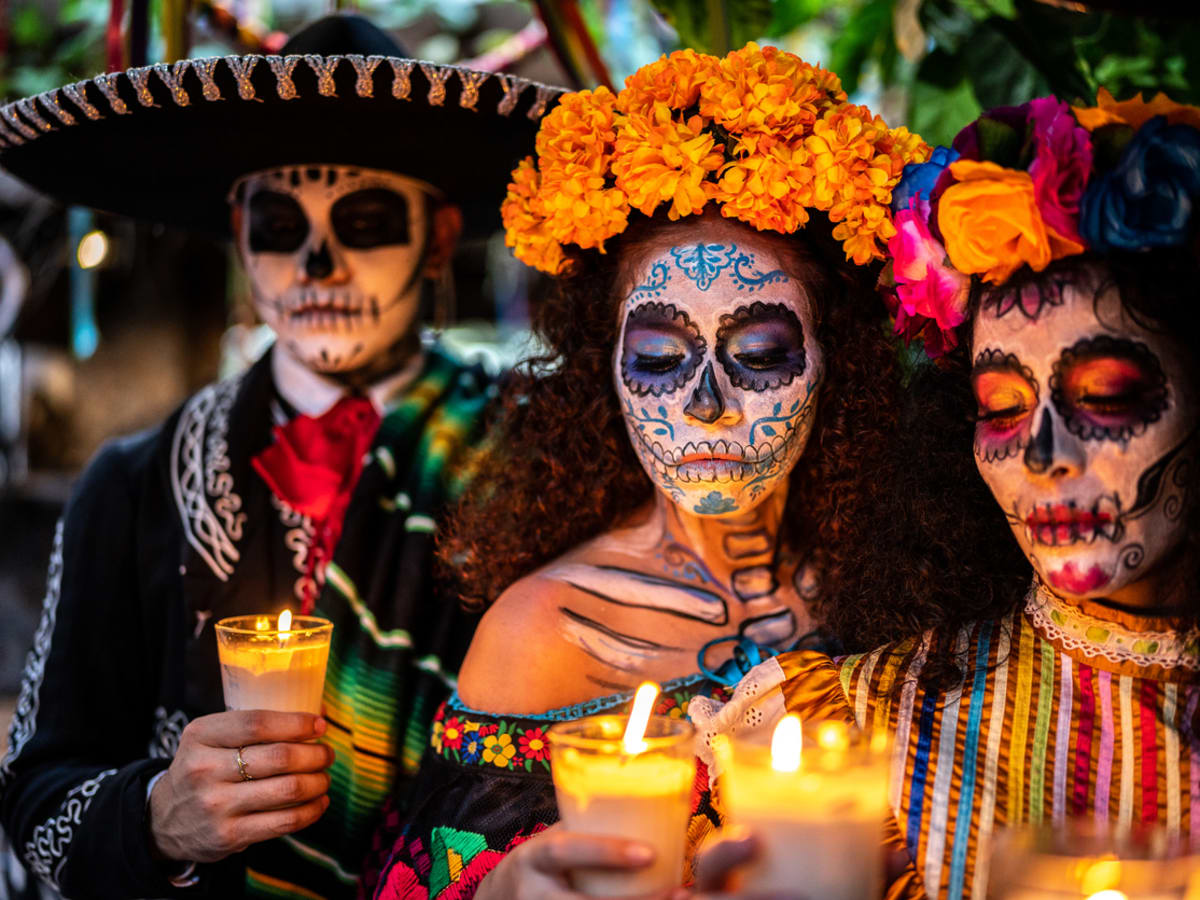
Miss Kent-Pegram’s class helped me understand different Hispanic cultures in so many ways; she had entire days where she’d focus on the cultural aspects of a hispanic society. In particular, we learned about Dia de los Muertos, and I learned more about the day than I thought there was to know; specifically that there are actually two days (one for passed adults and one for passed children) and that the holiday is also celebrated in the Philipines as well as Central and South America. She also had an entire lecture dedicated to the culture and history of Panama, including items brought from there, which included a 2.5 cent coin and aji chompo peppers.
I’d never really looked into the history of a nation as in-depth as we had that day in our class, it was so fascinating to learn about a different culture and I had honestly never realized the struggles that Panama had gone through to become the country it is today. I knew Panama as the rich, important Spanish country, as all the photos I’d seen of it showed it with huge, beautiful cities, and my only real experience with it is a friend who had to go there for medical treatment occasionally. Seeing the struggles it went through really puts it into perspective and makes its current prosperity seem hard won.
Engaging in Communities
This class also really helped me engage in the Spanish-speaking communities in the area. Being able to effectively communicate with and listen to people who speak another language is beyond useful for helping those from countries not as well-off as the United States who come here for refuge, and to make sure immigrants from other countries feel welcomed and understood. I was able to communicate with people from a local church who spoke Spanish and connect with them in a way that I was otherwise not able to, connecting myself more than ever with others who I was otherwise not likely to connect with.
Interpersonal Communication
We did various activities both in class and in the homework where we talked with each other and tried to say simple sentences in Spanish, which helped me become more confident speaking the language. Outside of class, as mentioned above, I was able to speak Spanish with some native Spanish-speakers who thought my Spanish was very good. My confidence in speaking grew with every time I tried and my stuttering became less and less noticible, I believe.
Presentational Speaking
One of my biggest issues starting out with the class was simply being confident with what I was saying. One of our first activities was writing a flyer for a club (fictional or otherwise) in Spanish, and then we read it out to our class. I did not feel particularly confident reading out this activity. However, a few weeks later, we did an activity where we read out a recipe and some information about it, and I feel my flow was a lot more confident both during and after the project. Being able to read through a script a few times helped me solidify pronounciation and the flow of Spanish in my head.
Presentational Writing
In Mrs. Kent-Pegram’s class, we did various writing projects, which we used to practice and display our understanding of the new words and concepts we learned in the modules. There were two in particular, but my favorite of the two we did was the one I did for module nine (pictured below). They helped us practice our Spanish writing skills in a way that was fun.
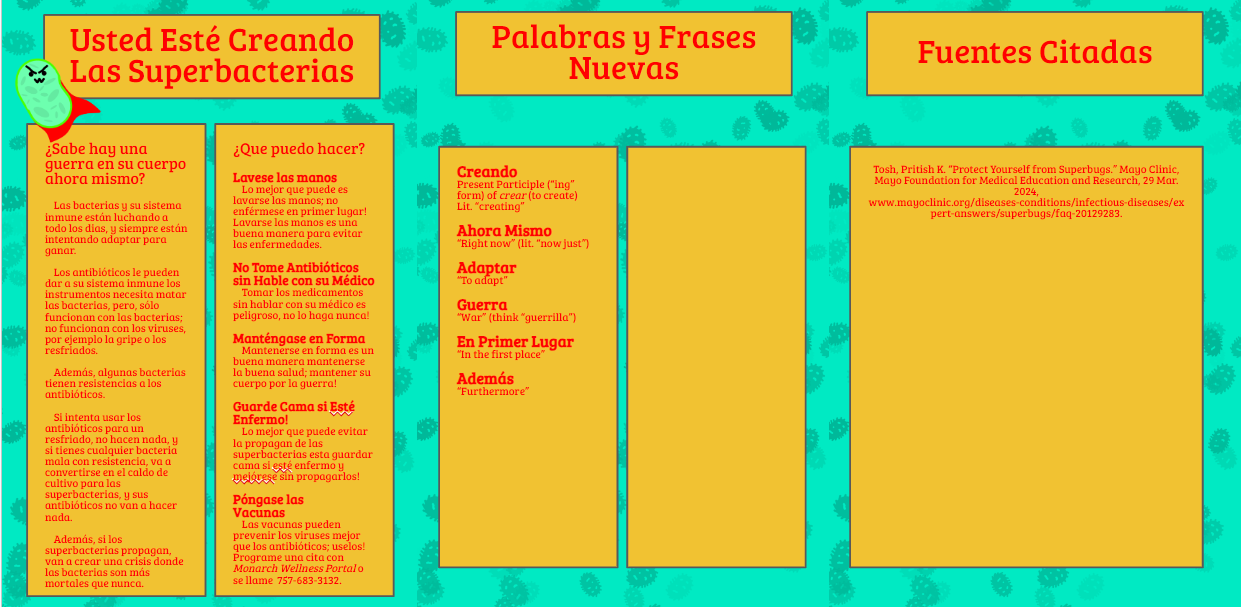
The first activity we did, I did not entirely understand the project, so it was not as good for writing. However, it was a good exercise in speaking in Spanish when we recited them in front of the class, which helped me once again become more comfortable with my speaking ability. I should have practiced more before the project, but just being able to utter Spanish sentences helped my confidence and my speaking ability significantly.
Interpretive Listening
We did a variety of activities with listening, including ones where we would listen to a recording and pick out words we recognized, such as is shown below. (Source: Contraseña, Module 10, Activity 10-Gramática I.) Listening was by far the hardest part for me; for some reason I really struggled to pick out and understand what was being said. I did improve over the semester, however, and was able to understand a fair bit more by the end of the course than I was at the beginning.
Interpretive Reading
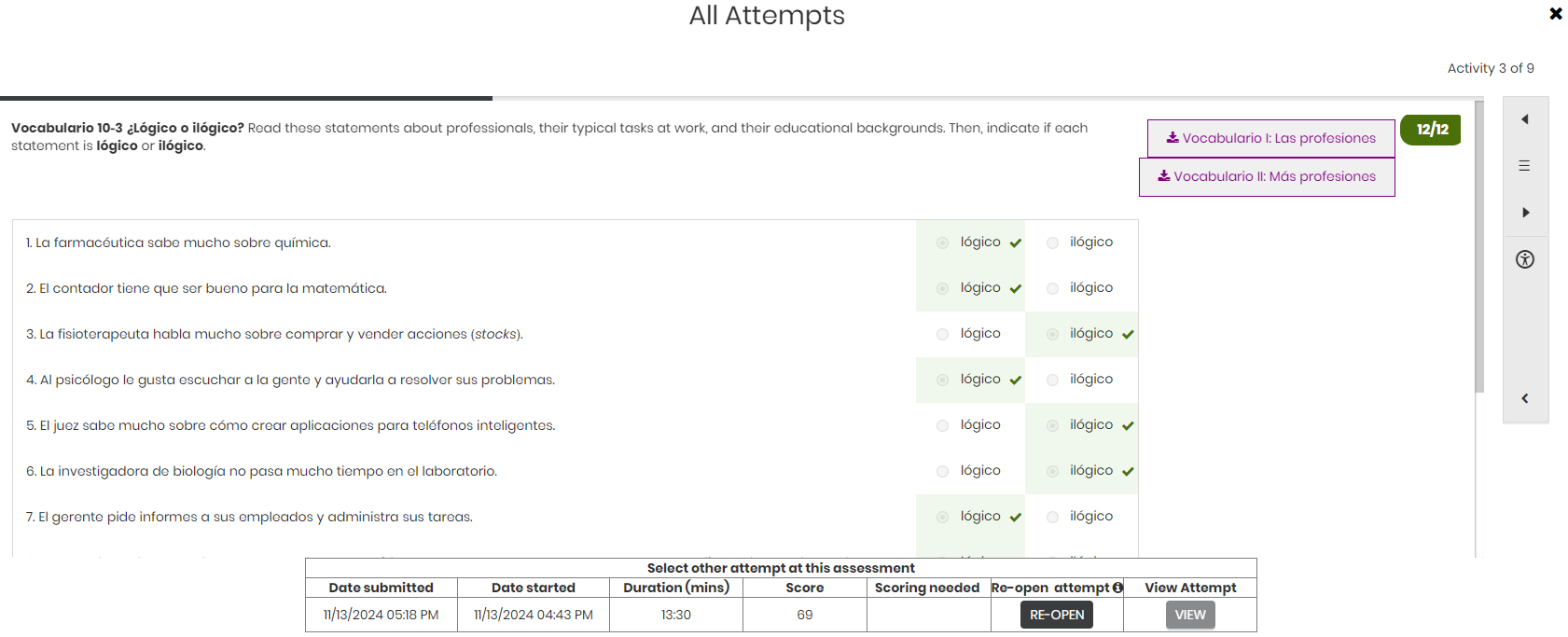
We were required to do various reading activities throughout the semester, such as reading through a Spanish email or otherwise and adding in words where we thought they fit, or by reading sentences and deciding whether they were logical or not (such as the activity below). These were also relatively challenging for me, as sometimes I would have trouble figuring out where to put what words in these activites, as either it felt like more than one of the words given could fit based on their meaning, or I wasn’t familiar enough with the material to recognize a word without looking it up (which I didn’t want to do during the activity for obvious reasons). I believe I would have been better if I had studied a little more before each assignment, and am taking this into consideration for future classes.