ATA5
Assignment 5: Pay It Forward required me to create five conscience moments of doing something nice for strangers and observing their reactions and my own feelings. The assignment concluded with the impact of how endorsing a “one good deed a day” lifestyle. Due to the quarantine and social-distancing orders in place by our state government, it made it difficult to be able to do these niceties for strangers, so the parameters were opened to include people we know. I had a difficult time being able to accomplish this assignment even with the new parameters because of a family emergency and my job transitioning to a work from home environment. In the hopes of meeting the spirit of this assignment I discussed five occasions that happened within the last month that really stood out to me and allowed me to address the reactions and emotions of the encounters.
I spoke of helping a grieving friend, a grieving husband and family and I spoke of helping some of my co-workers. These are all things I did just in response to being there. I didn’t do these things with the intention of this assignment behind them, I just did them because they’re who I am. I believe myself to be naturally altruistic, but this assignment made me question how often am I this way? I’m also an introvert and can be apathetic when it comes to people or situations not involving my family and close friends. I think of the nice thing to say or do in the moments, but don’t always act them out. It really depends on my mood. I had to take a step back and ask myself “why can’t I be more willing to help and bring about goodness to others every time, no matter what?”. I learned though this assignment that perhaps I’m not as altruistic as I like to think I am. Reflecting on how I felt about the acts and the other persons reactions gave me pause to recognize that it did stimulate me and gave me a buzz of happiness and good feelings! I think that in the future, forcing myself to act upon my thoughts instead of letting my apathy and shyness take over, will give me positive reinforcement. Almost like a “fake it till you make it” mindset where after doing the act over and over, eventually it will be second nature, and the next thing I know, I’ve got a new comfort zone that allows me to be close to the altruistic version of me in my head!
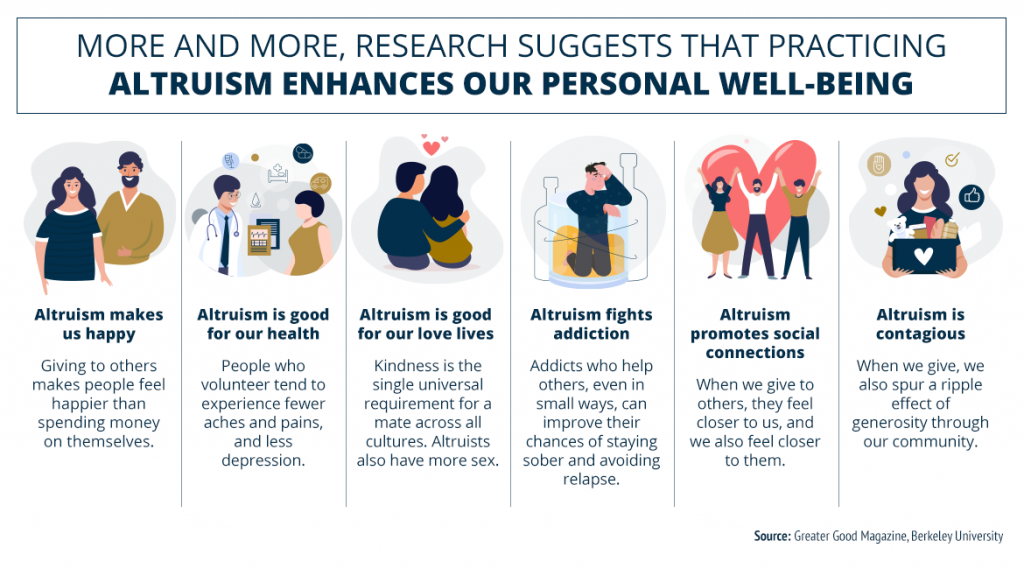
Altruism also has a neurological foundation in humans. In my previous psychology course, Human Cognition we discussed the different response centers of the brain. Altruistic acts activate the pleasure centers of the brain; the nucleus accumbens found in the center of the brain. I selected the below image as a visual representation of my takeaway because its self-explanatory! There are so many benefits to being altruistic and it’s important to keep these things in the forefront of our minds. Paying if forward is an act of altruism. Everyone can benefit from an altruistic act! Remembering these will help me to be a better person and do more than one good deed a day.
ATA3
Assignment 3 required us to view the video of comedian, Michael Richards going off on a racist tirade at a comedy event he was performing at. Our task was to answer the questions of if this tirade came from and “heat of the moment” response without any true racist intent or did it come from a deep-seeded prejudice and if racial slurs can exist without racist intent.
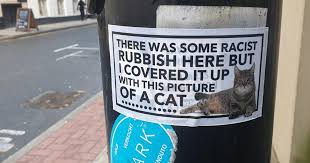
This assignment reinforced the obvious complexity of prejudice and racism. I know that we’ve been progressing as a society throughout the last several decades. Unfortunately, our current political climate has made it more socially acceptable to be prejudice and express racism publicly. Racism and prejudice is a learned construct. People aren’t born with these prejudices, they are taught them. People we think that are good can surprise us with outbursts like Richards’ or even with subtle or seemingly harmless comments. From this assignment I learned the importance of stopping, and reflecting on the situation as a whole. There is always more to observe. I believe that Richards holds some prejudice views and to an extend believes them to be true, but he is still able to be considered a good person and upstanding member of society. Remorse for our actions is the biggest indicator of change being possible. In my Human Cognition course I learned that prejudice is a cognitive process wherein stereotypic information is stored in our memory and when automatically activated it’s possible to turn into prejudice. We’re learning these stereotypes from our parents, friends, television and media. When President Obama was running for office and throughout his presidential terms I saw a lot of prejudice come out of people I cared about and had no inkling as to how much prejudice they had in them. It was eye opening for me and I feel like since then, blatant racism has increased and has become acceptable under our current administration. I truly hope that as a country we can heal and come together and grow together again. I chose the image below because while racism and prejudice isn’t something that should be taken lightly, it is at the same time extremely heavy. I appreciate this persons approach to stopping a racist message from being displayed and replacing it with something that can bring people of all races together…cats!
ATA2
The latest assignments encompassed a lot of moments for self-observation and reflection. The writing assignment required me to choose photos of myself and/or others which I used to create a self-portrait of myself, without having to literally be in each photo! It was insightful to spend time looking at some of my favorite photographs and memories and try to see what it said about me and what I wanted it to say. My family and friends are a primary part of who I am; as in they help to shape me and make me understand who I am, who I want to be and how I want to represent myself to the rest of the world. The third eBlog branched off in a similar direction about how music affects personal relationships with others. This was still an assignment that provoked self-observation and reflection, but on a different scale. It was challenging but rewarding to think of the important people and aspects of my life. Trying to choose just one song that I could relate to was difficult, because I don’t know that we all realize just how important music is to forge and navigate new relationships with others. The Module 7 assignment branched out in a different direction which prompted self-observation and reflection of dissonance, regarding attitude and behavior. We must look at ourselves from every possible angle to understand who we are, what it is that we’re putting into the world and make the changes we want in ourselves.
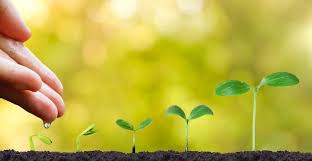
These opportunities for introspection bring to mind the Well-Being courses that I often take at work. Most of the classed share a common primary focus on self-awareness and how to promote positivity in yourself, in others and in the workplace. There was a recent class I attended called Finding Your Purpose and Passion; I went into this class with my normal cynical mindset but left feeling much more positive. I created a life-purpose statement that I aim to “…put into the universe what I hope to get from it. To be there to guide others and help their journey”. The self-portrait assignment allowed me to reflect on that class weeks after attending because it gave me a different perspective on how I want to be for the world and others and how I, inevitably want them to see me. The image below is a simplistic visual representing how we think of ourselves in our own self-portrait.
ATA1
Assignment one was a discussion of Heuristics and the rules of thumb. There are four types of heuristic behaviors; Representative, Availability, Anchoring and Adjustment and Status Quo. The Human Cognition course I completed last semester briefly dipped into heuristics but didn’t go into full detail of the four behaviors and their effects. The Human Cognition portion of heuristic study explained how people make shortcuts for problem solving and quick judgments and how that information was recalled through the neural network and used. Social psychology focuses on how we use heuristics for behavior purposes of quick decision making and judgment calls. It’s interesting to see the physical, hard-science part of this process applied to the psychological part and how they work together.
I thought it would be difficult to come up with an example for each rule of thumb while writing the assignment, but as I started on the first, I found it was easy to come up with examples. I didn’t realize prior to this how much I used these rules of thumb daily. I was torn between two examples of anchoring and adjustment heuristics while writing but landed on a work example. I realized that I could really use work situations for every heuristic rule of thumb. In my job I often must make quick decisions for customers that will promote good customer service but will also meet the contracts and legal rules of the company. I rely on availability often to help determine the outcome of a given situation. As an insurance underwriter I know that racing is not covered in our contracts. I have to be able to first, determine if this is a legitimate concern and then if adverse action is needed, I can quickly recall if I can cancel the policy now or do it at the renewal based on state contractual guidelines. Working in all 50 states, it can be a challenge to remember which states allow this mid-term cancellation and which don’t.
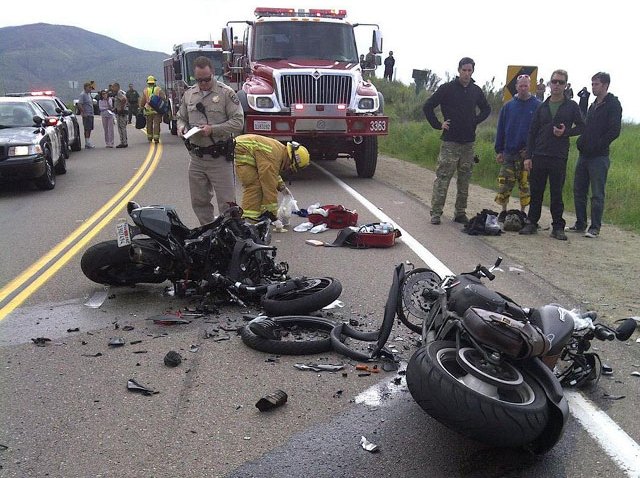
I chose the below image because I think it really captures the visual for how availability heuristics work. It’s quick to jump to the conclusion that something is factual based on the how easy it is to recall the events, regardless of the actual statistics behind it. I see a sports bike and a young operator and immediately think of an accident due to the amount of claims I encounter at work where young and inexperienced drivers crash their high performance sports bikes.
My visual takeaway:
