Exploring Culture
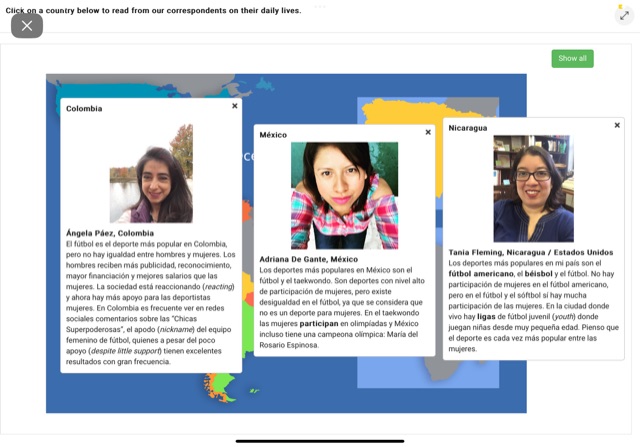
The purpose of this semester’s exercises was to help us understand cultural perspectives through the presentation of profiles of different cultures around the world. By viewing their profiles, I was able to understand that not everything is the same everywhere. It is true that everyone has their own preferences and that is true not only for Americans but also for people in other countries around the world. It is especially important when it comes to communication. Depending on the country same sex marriages are legal and others are not. Not everyone in the country likes the same sports just like in America there is variation but also some sports are more favored than others. Even when it comes to hospitals some places have more and better benefits for health care options than America. As a result of gaining a greater understanding of how other countries do things, it opened my eyes to a whole new world of understanding that just as America has its own methods that make sense, so do other countries have their own methods that make sense as well. Having gained this knowledge, I am confident that both the United States of America and the other countries that I have studied could benefit from receiving ideas and inspiration for their own countries so that they will have a better quality of life in their daily lives.
Engaging in Communities
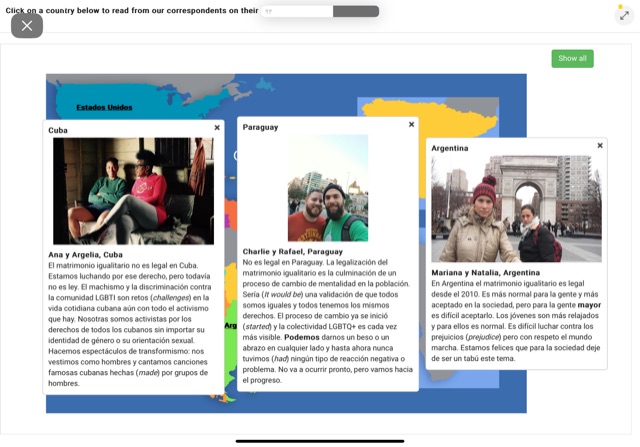
During this course we have visited different countries learning and exploring on the LGBTIQ community. Places such as Argentina, Cuba, Paraguay, and United States all have different terms when it comes to that community specifically. Whether that is marriage, dating, or even being in the community in the first place. The importance of learning about this kind of community in other countries is because everywhere is different. Here in America, it is legal to be out and open about your sexuality while other countries it can be illegal. Educating our self’s about these things not only give us knowledge about what is going on in the world but also being able to help others that do not share the same freedom as others around the world. This course has used different activities and examples to give us more background knowledge about the different countries and what is allowed and what is not. Attached down below are some more examples to give you better insight.
Interpersonal Communication
This class has focused on interpersonal communication through Talk Abroad and audio and oral activities. Through Talk Aboard, we were able to converse with people from different countries about certain topics the teacher assigned. We discussed topics such as family, activities, food, as well as self-care and staying healthy.Using audio and oral activities, we had to show off pronunciation on words from each letter of the alphabet. In the beginning, it was challenging, but as you practice and speak it out loud, it becomes easier and sounds more natural. Knowledge and interest were both present in both activities.In both cases, you will learn something new, not only about the person with whom you are conversing, but also about the language we are learning.Whatever the case may be, whether it’s about family differences or pronouncing words that you’re not used to. When you are about to convert someone from another country, using Talk Abroad was stressful at first. You have to be able to not only ask them questions, but also understand what they are saying back, as well as reply to what they are saying. As I conversed with the person, I faced some challenges, such as understanding their words. In order to understand what my partner was saying, I had to write down common grammar and vocabulary words and pick up on context. With more conversation, I was able to better understand my partner and even provide them with an answer. In my opinion, the oral activities were easier. It was more about practicing what to say and understanding what I am hearing or saying myself than attempting to pronounce Spanish. It was through talking abroad that I learned not only more Spanish but also about people from other countries who use Spanish daily. During both activities, I improved my skills in speaking and pronouncing.
Presentational Speaking
Our class has been using presentational speaking in multiple ways through Lingo Learning throughout the course of the semester. In Lingo learning, we recorded our voices answering questions about a certain topic we were studying in the module. The speaking activities were not difficult for me, other than having to keep taking new takes to ensure the audio sounded good and you could understand what I was saying. Prior to recording, I would practice what I would say in order to overcome that small challenge. This enabled me to flow better with my speech and my pronunciation to be more accurate. It is what I did that worked best for me, and I wouldn’t change a thing about how I did things. The more you do it, the better it will sound as the more practice you have.
Presentational Writing
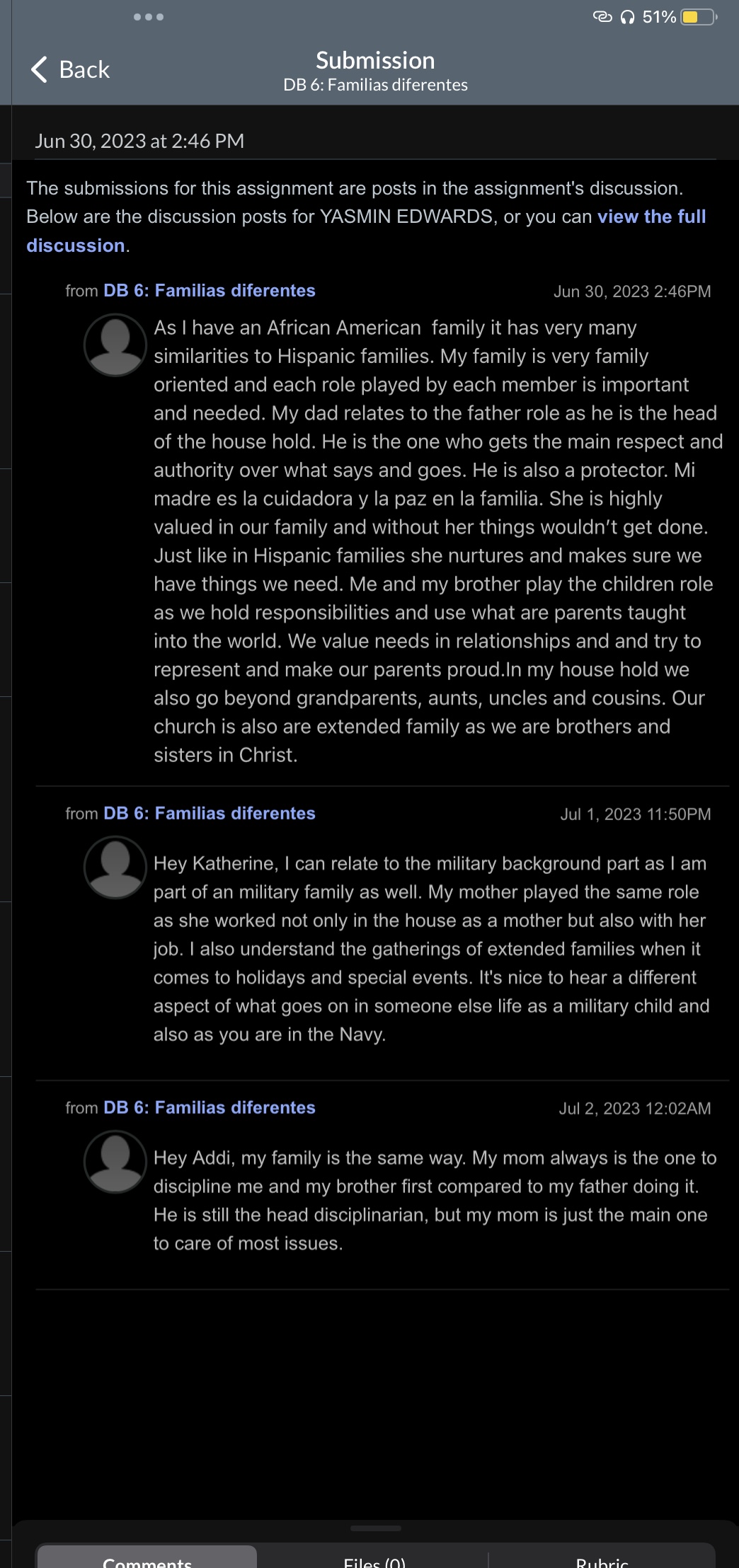
On our discussion boards, we used presentational writing as a means of communicating. In our discussion boards, we would be required to write about certain things that we learned about in different Spanish speaking countries, and even some of our answers would have to be written in Spanish as well. An article we had to write about was the “Importance of Family Structures in Hispanic Families”. In this assignment, we read an article on the importance of family structure in Hispanic families, and then we compared that to the structure of our own families, as well as the relationships we have with them and the relations we might not have with them. During the course of writing our answers, we were also required to type one sentence in Spanish. The assignments on the discussion board were not as challenging, but they did offer a great deal of information. The information they provided was excellent regarding the differences between American and other countries. As we did the discussion more and more, I gradually found that they were interesting and something to look forward to than just another assignment that I had to do. At first I found it difficult to get into because I did not have an open mind or an interest, but as we did the discussion more, I found that I enjoyed them.
Interpretive Listening
Throughout this course, we used interpretive listening in conjunction with Lingo Learning. It was very interesting to hear the computer program speak to us in Spanish during the actives that we had to complete and then we had to answer questions based on what we were hearing. The activity challenged our listening skills as well as our ability to understate what is being said. In addition, we viewed videos in Spanish in our discussion boards. People from different countries discussed what sports activities they enjoy playing or participating in. The first time we watched the video, we listened to the video without captions and then the next time we watched the video, there were captions to help us catch what we missed the first time around. When doing these activities, my main challenge was hearing what was being said and comprehending it quickly before the next sentence or word was said. In order to overcome that challenge, I would listen and pick up on certain words and context to help me understand. By doing this, I was better able to understand what was being said and listen more carefully and clearly. Among these activists, not only did they teach listening and understanding skills, but they also gave the audience a chance to learn about other countries and their culture.
Interpretive Reading
We have used interpretive speaking through our discussion boards in class. As the class reads or watches informational articles or videos on our discussion boards, we state our thoughts and takeaways. A few articles and videos include “Importance of Family Structures in Hispanic Families”, “National Dishes of Latin America: A Latin American Food Fiesta! ”, “The healthcare system in Spain”, and “¿En qué estás trabajando?”. Using the video “National Dishes of Latin America: A Latin American Food Fiesta!” we watched a video about the different foods that Latin American has and then outlined which foods we would like to try. It was an enjoyable experience to participate in these activities. Family experiences, sports, food, medical uses, and other professions were all discussed along with information about other countries. Apart from answering certain questions in Spanish, there was nothing challenging about these articles or videos. Through the use of grammar and vocabulary we learned, I was able to make sense and make it easy to understand. Throughout each assignment, I have become more aware of the differences that make the country unique from America and have come to appreciate how others live their lives.
The attached video shows one of our activities from the discussion board where we had to read what foods each country has as their national dish.
YouTube, 27 May 2020, https://youtu.be/p6zzjHm_vVw. Accessed 3 Aug. 2023.