Interpretive, Interpersonal, and Presentational Modes of Communication
In each of the following parts, I will discuss the reflection tasks. To validate your reflection, I will incorporate elements of these assignments and activities as artifacts in each section. Also, I will include a link to the documents to further my explanation.
An Effective Reflection Is
- As I started I wasn’t really confident in my abilities in Spanish and was just so nervous about making mistakes. But my professor made sure we were confident when we spoke and made, should we speak loud and clear. My biggest weakness is my pronunciation and my verbal fluency.
- I won’t pretend, I’m really not great at pronouncing words. Even after a semester later, I’m only able to pronounce words I’m semi-familiar with,, like I couldn’t really read a sign in Spanish with accuracy. Last semester, three months after my lecturer had gone through the Spanish alphabet with me, I was still using it. I feel as though I can say words more confidently and clearly as a result of that, but I still made improvements by repeating our vocabulary words to avoid mistakes.
Artifacts
Exploring Culture
Tu (informal “you,” one person) and usted (formal “you,” one person) are the singular second-person subject pronouns in Spanish. Ustedes (informal males or mixed groups/a group of all women) and vosotros/vosotras (informal men or mixed groups/a group of all women) are the plural forms (formal, group).The only difference is that in Latin America, the word vosotros is rarely used. In all circumstances, the plural “you” is referred to as “ustedes.” However, in different Spanish-speaking nations, Usted and Tu are used differently. Like sometimes its disrespectful to use Tu to someone in one country and not the other.
Engaging in Communities
N/A
Interpersonal Communication
Talkaborad was very scary for me at first, because I was going to talk to a complete stranger. However, when I did talkaboard I actually enjoyed myself talking to different types of Spanish speakers with different backgrounds and experience. Although I did have technical issues, my partner didn’t stress out about it, and we went past our talking time, helping each other understand. I thought that was so genuine and pure. It was only difficult because I was nervous and I treated it like a test, so I fumbled words, but then I stopped treating it like a grade and genuinely tried to build a connection, which made it easier on my end.
Presentational Speaking
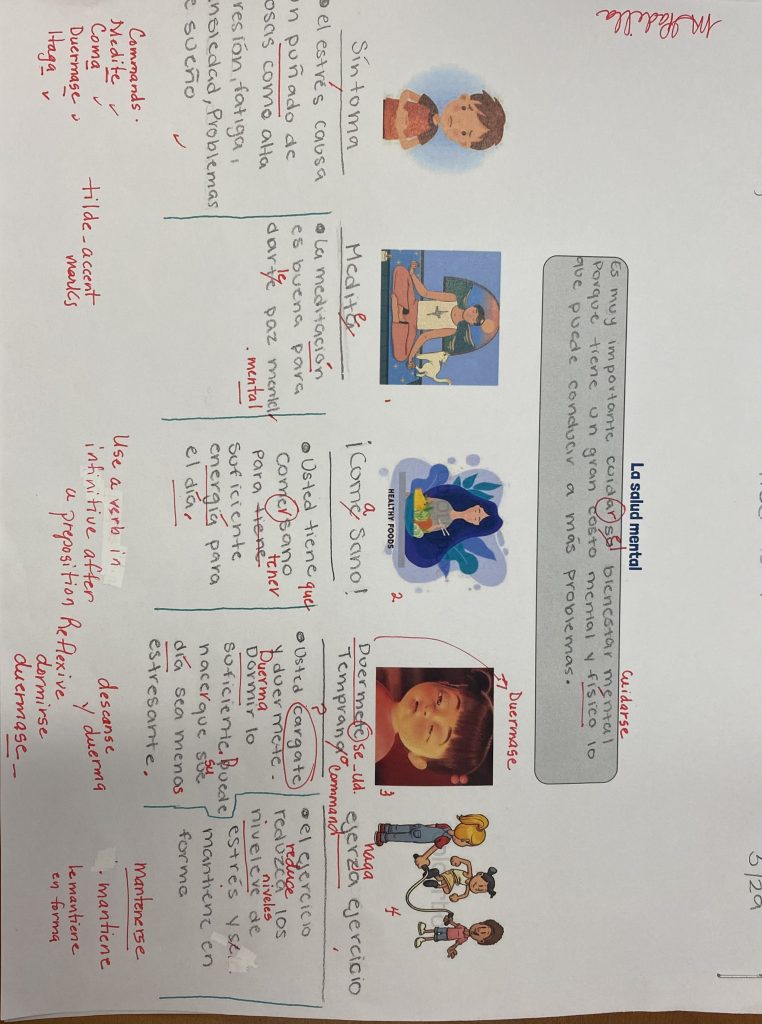
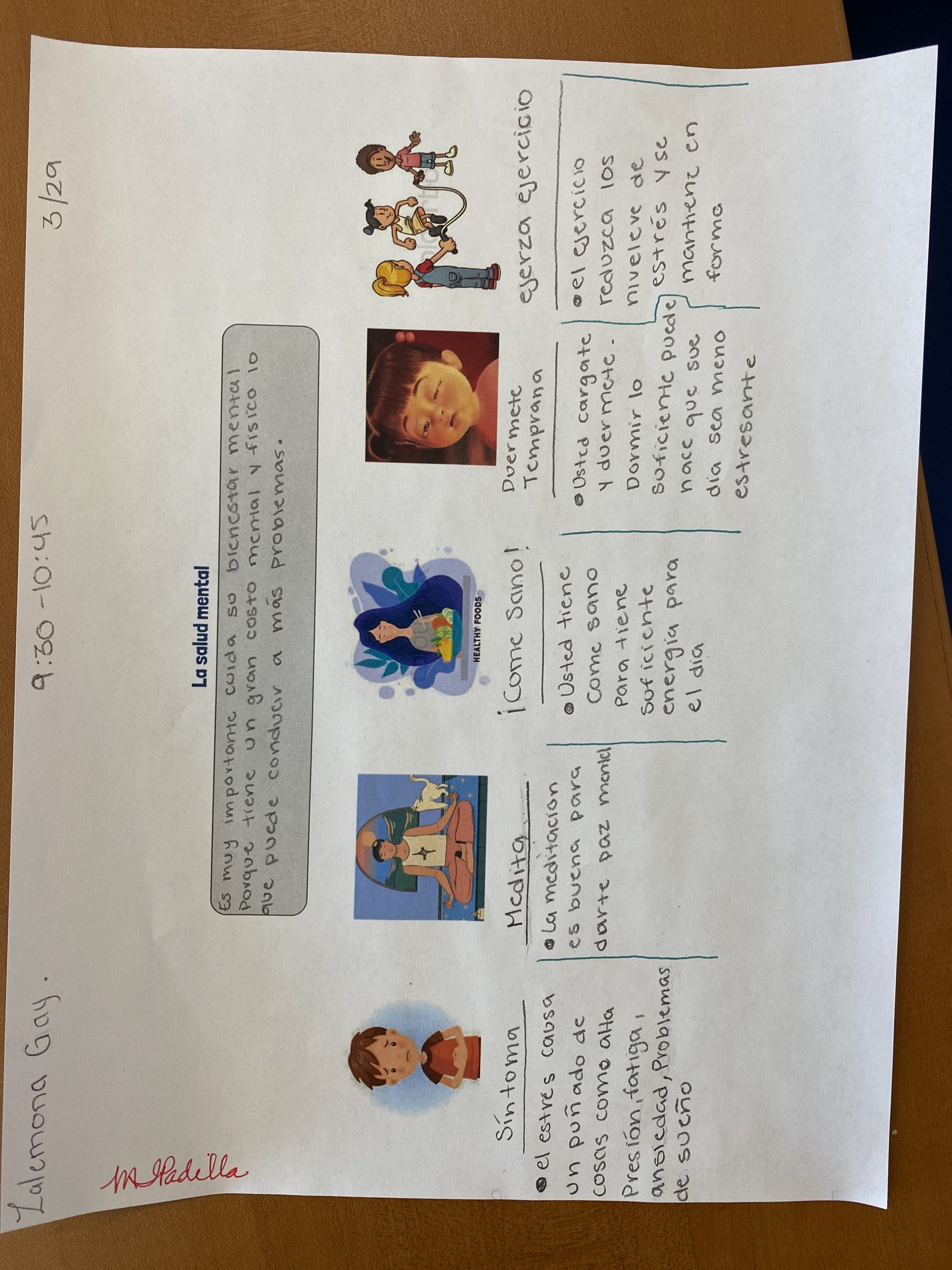
Presentational Writing
Interpretive Listening
N/A
Interpretive Reading
N/A