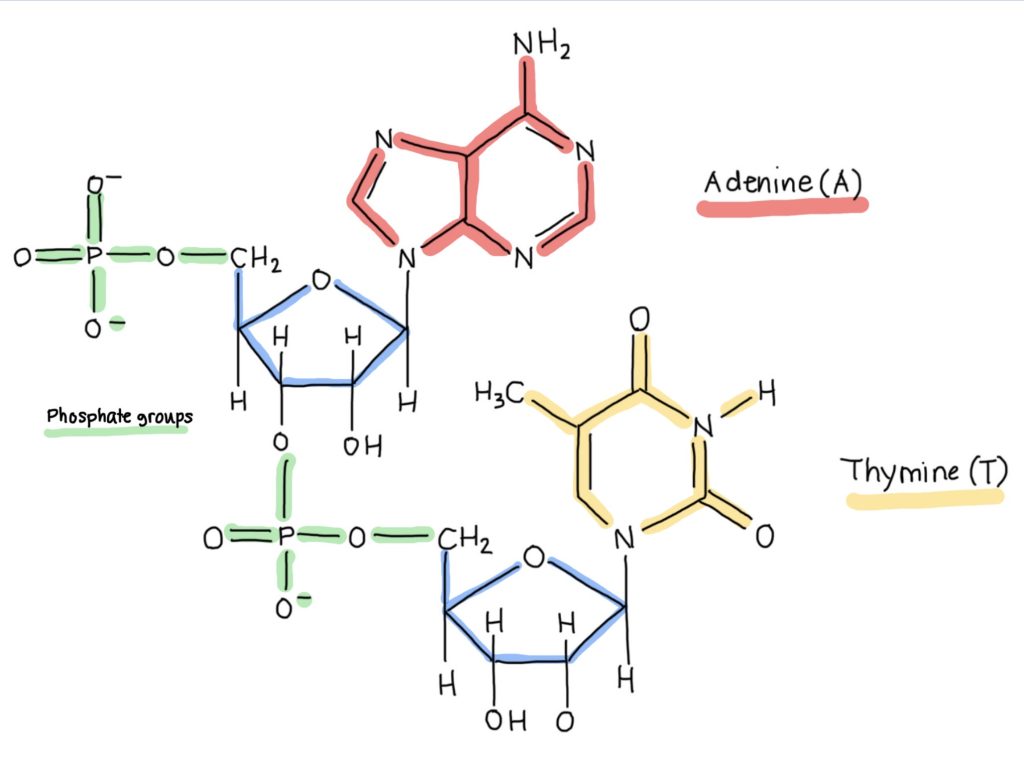
A biomolecule is an organic molecule produced by a living organism that is essential for daily functioning. This image on the right is an example of one of the four biomolecules, called a nucleic acid. This example is a dinucleotide. Three major components make up a nucleic acid. In context of the dinucleotide: five-carbon sugars, nitrogen containing bases (thymine and adenine), and phosphate groups.
Meme: Needing to be as prepared as RNA Polymerase II before an exam.
I decided to create this meme because we have many assignments and readings due before exams, as this is a summer course. I found this similar to RNA Polymerase II before initiating transcription.
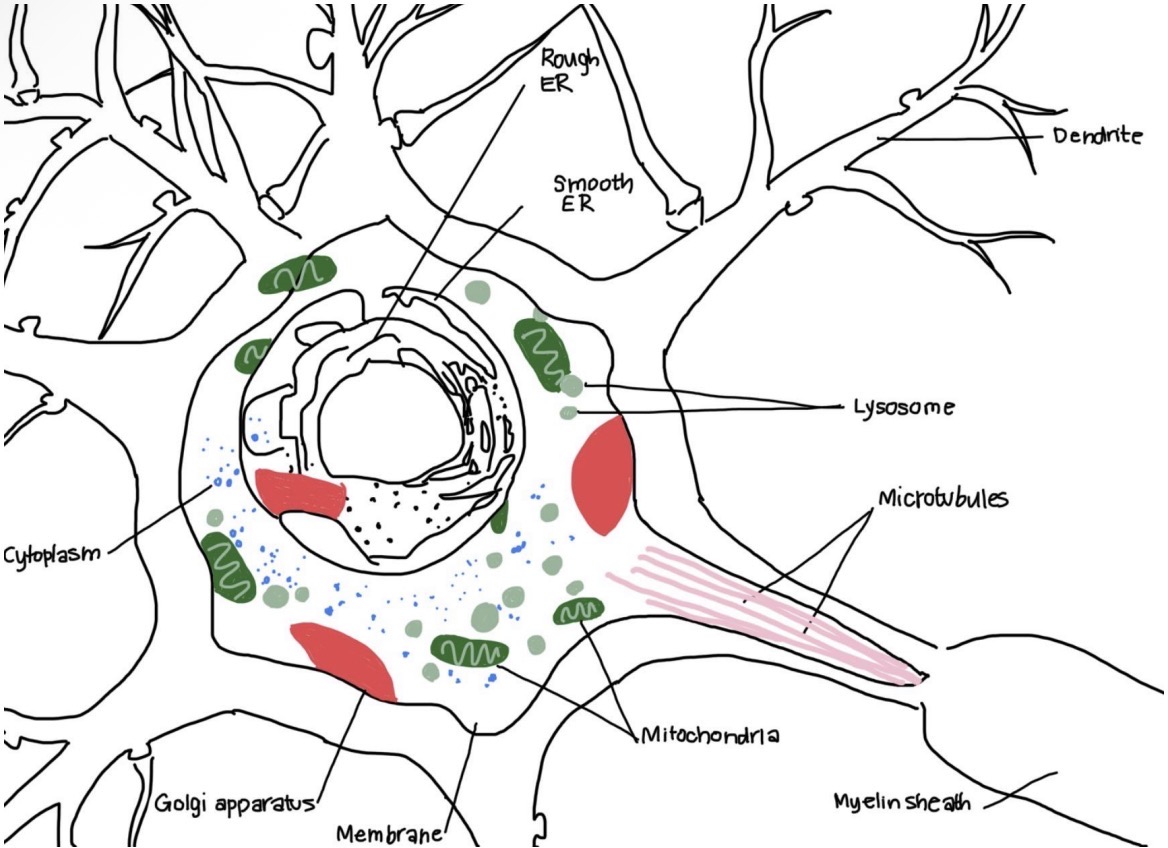
Components of the neuron:
This is a eukaryotic cell known as the neuron. The neuron is the body’s primary information messenger through using electrical and chemical signals. There are billions of neurons located all throughout your body to relay information across the central nervous system (CNS) and peripheral nervous system (PNS) to allow us organisms to perceive our environments, process thoughts, and coordinate movements. Without functioning neurons, the brain would lose ALL ability to communicate with the rest of the body, resulting in the loss of bodily functions. Understanding the importance of neurons and how they operate is crucial because they play a vital role in movement, breathing, memory storage, and many other processes necessary for survival. Personally, as an individual who is interested in the nervous system and plans to work in the neuropsychology field, understanding the fundamental building block of the nervous system is indispensable. Lacking knowledge about the neuron will make it impossible to understand the nervous system.
We use cookies to ensure that we give you the best experience on our website. If you continue to use this site we will assume that you are happy with it.Accept