
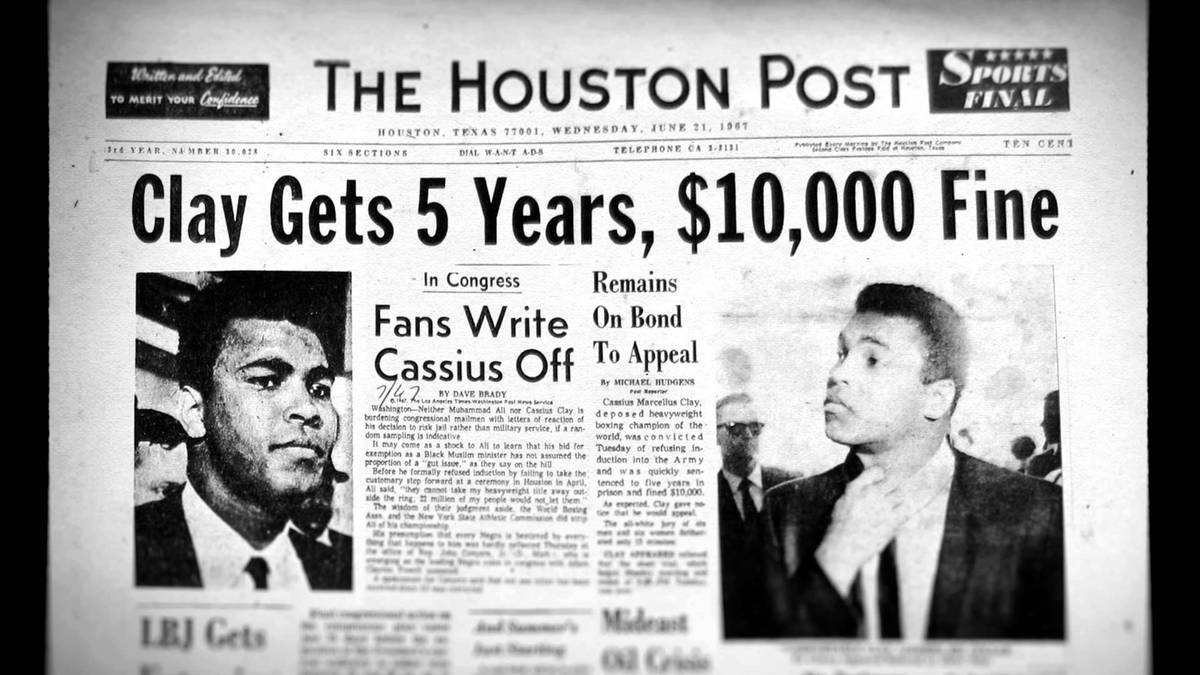
April 28th, 1967, is the day Muhammad Ali (born Cassius Clay) established himself as the most prominent conscientious objector in recent history, by refusing induction into the Army during the Vietnam war. Ali a member of the Nation of Islam was an outspoken opponent of the Vietnam war before becoming eligible for the draft, once he was reclassified and became eligible for the draft he doubled down on his convictions and officially filed a religious beliefs exemption from military service. Ali was quoted saying “My conscience won’t let me go shoot my brother, or some darker people, or some poor hungry people in the mud for big powerful America. And shoot them for what? They never called me nigger, they never lynched me, they didn’t put no dogs on me, they didn’t rob me of my nationality, rape and kill my mother and father, Shoot them for what? How can I shoot them poor people? Just take me to jail.”. The backlash to Ali’s conscientious objection was swift and harsh, public opinion was strongly against members of the Nation of Islam receiving religious belief exemption from the war; there were no religious belief exemptions approved during World War two. The media and public labeled Ali as a “draft dodger” viewing his religious beliefs as nothing but a way to avoid war, many sports writers refused to acknowledge his name change and leading calls for punishment. Professionally the New York State Athletic Commission immediately suspended Ali’s boxing license, this banned him from boxing within the United States, while also stripping him of his world heavy weight boxing championship title. In June of 1967 after twenty minutes of deliberation an all-white jury convicted Ali of failure to serve in the military, he was sentenced to the maximum sentence of five years in prison and assessed a fine of $10,000; his passport was revoked preventing Ali from traveling outside of the United States to box as well. In June of 1970 the New York supreme court ordered Ali’s boxing license be reinstated, and on June 28th, 1971, the U.S. Supreme court reversed Ali’s criminal conviction in a unanimous decision. Since no social media existed at the time most of the public received news via newspaper, television and radio. The consensus of sportswriters, broadcasters and news pundits at the beginning of the controversy was largely against Ali, with many questioning the sincerity of his objection while calling for the punishment of the brash boxer. Ali received support from other black athletes as well as anti-war activist who lauded his refusal of service as a stand against injustice; but overall public opinion was very negative the first few years of his appeal. As anti-war sentiment began to spread across the country, public opinion began to shift towards Ali’s side. The media’s vehement opposition against and later in support of Ali directly led to the impact and longevity of Ali’s act that continues to be prevalent to this day.