
PHIL202 – Information Literacy and Research
Course Overview
This course focused on developing strong research and information evaluation skills. In today’s digital world there is an overwhelming amount of information online. Not all of it is accurate or trustworthy. The goal of this course was to help students learn how to identify reliable information, understand how media influences public opinion, and recognize misinformation.
Throughout the course we explored how information is created, shared, and interpreted. We also examined how technology and digital platforms influence the spread of information. Learning these skills is especially important for cybersecurity and technology professionals because misinformation, manipulation, and digital security issues are closely connected.
The course also emphasized critical thinking and responsible use of information. These skills help students evaluate sources, recognize bias, and understand how information impacts society.
Artifact: Article Analysis Assignment
One assignment in this course involved analyzing a news article and connecting it to concepts related to information literacy and cybersecurity. The article discussed how artificial intelligence is influencing elections and how AI generated content can spread misinformation online.
For this assignment we were asked to highlight specific sentences from the article and explain how they relate to information literacy and cybersecurity concepts.
Here is an example from the article that was used in the assignment:
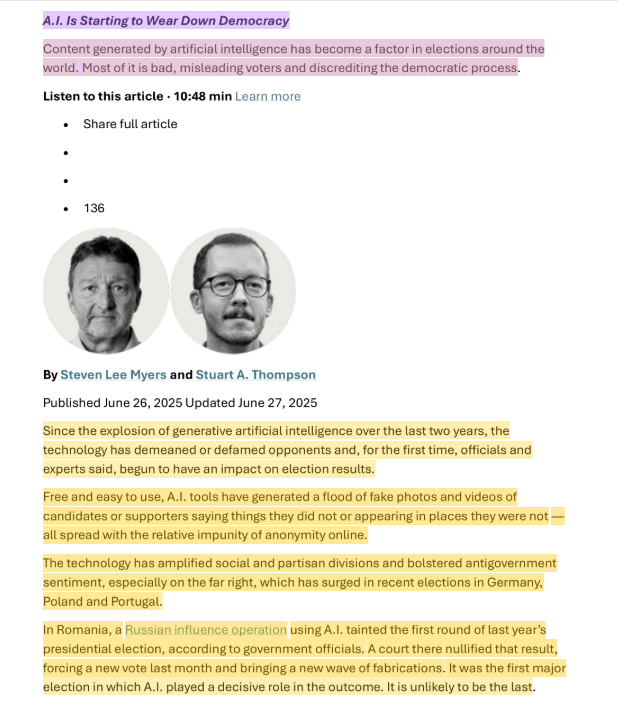
One highlighted sentence explained how AI tools can create fake photos and videos of candidates or supporters. This connects to information literacy because it shows why it is important to question the authenticity of online content and verify information before believing or sharing it.
Another highlighted sentence discussed how artificial intelligence has already begun to influence election results. This relates to cybersecurity because digital technologies can be used to manipulate public information and influence democratic systems. Understanding these risks is important for protecting digital environments and preventing the spread of misinformation.
The assignment also required responding to a classmate’s post. This encouraged discussion about how different people interpret information and how technology impacts society.
Reflection
This assignment helped me better understand how quickly misinformation can spread online and how advanced technologies like artificial intelligence can make it harder to tell what is real. It showed me how important information literacy is in today’s digital environment.
As someone studying cybersecurity, this topic is especially relevant. Cybersecurity is not only about protecting networks and systems. It is also about protecting information and understanding how technology can be used to manipulate or influence people.
This course strengthened my ability to evaluate sources, analyze digital information, and think critically about how technology impacts society. These skills will continue to be valuable as I work toward a career in cybersecurity.