Interpretive, Interpersonal, and Presentational Modes of Communication
Exploring Culture
In class we used a program called ‘LingroLearning’ it not only helped me learn new Spanish vocabulary it also helped me understand different cultural perspectives and different cultural customs. For every unit there was a story portrayed. One story was about a boy going to college and how his family was not as wealthy as other families and how because he is Hispanic it was hard for Americans to spell his name correctly and they would look at him a certain way because of it. Another unit the story was about a drink called ‘Mate’, that you pass around in a circle and finish in one sitting. It is a very special drink that you share with family and friends.
This learning program helped me to understand how different cultures can be compared to mine, it also helped me realize that some customs are more significant to people of that culture than they would be to me. It also helped me to see things from other point of views and to put myself in other people’s shoes. For example with the mispronunciation of names, it makes people feel bad when their names are getting mispronounced and not being recognized, that is not fair to them. What i try to do now is when I see a name that I might struggle with to pronounce or write I ask the person first to know how to say it/spell it correctly. I do not think that program has challenged my worldview only because at a young age I already accepted the fact that people were different from me and that it was not a problem to be different. However I do believe this programmed has broaden my mind on the worldwide cultures. I personally do not have any stereotypes of people from different ethnicities, I know there are people around me that stereotype people everyday and I know there are stereotypes about me and people like me. I do not pay attention to any stereotypes because I know what defines me and I do not like to judge people solely based off of what I hear.
Engaging in Communities
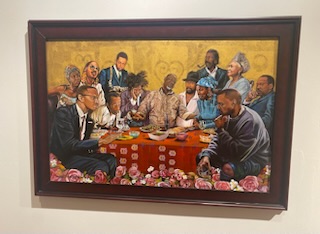
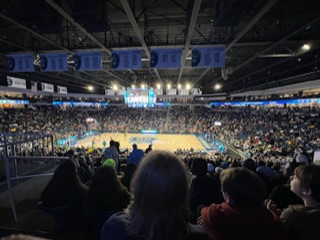
I believe it is important to engage in your community because not only are you making friends and family but you will have a community of people to support you and celebrate your accomplishments. Being a part of a community is a very important and special thing to have in life. You will have access to different materials, you will meet people that will become life long friends, you will have access to the greatest opportunities. Being a part of a community comes with so many advantages and gives you the opportunity to experience different things. I go out and participate in activities that my city is having or I go to amusement parks during holidays. I realized that there are a lot of fun things to do in my community.


Interpersonal Communication
TalkAbroad is a program where you have a conversation with someone from a different country. I had the pleasure I having two TalkAbroad conversations both 15 minutes with someone from Chile. I chose the same person both times because after the first conversation it was very easy to speak to her.
The TalkAbroad conversations were my favorite part of the entire course. Being able to speak to someone in another country in their language is very inspirational and rewarding because not everyone gets the chance to experience something like this. Before each TalkAbroad I knew what the topic of conversation was, so I was able to prepare questions for my partner and understand what was going on in the moment. I feel as if TalkAbroad is a great way to improve your interpersonal communication skills and it helps you develop the speech style of the native country whether it be Chile, Brazil, Dominican Republic, etc. Talking with my partner I learned about things they face in their everyday life and I learned that not every Hispanic country celebrates the same holidays and not every Hispanic country talks the same way. I learned that there are parts of South America that are frowned upon just because of stereotypes and the way they live. They are not as accepting of each other just like in the United States. The only thing that was difficult for me was understanding her sometimes due to my lack of knowing the language, also the Hispanic cultures talks way faster than English speakers so that is something that I have to get use to.
https://drive.google.com/file/d/1vC-oH6dMgLWVq3vu1j8m1jCRZK27PrZ6/view?usp=share_link
https://drive.google.com/file/d/1y3Ek9tmjGo08BdwsAVnKOQpAIdrnwUml/view?usp=share_link
Presentational Speaking
During my Spanish course this semester I have done several projects where I have to make videos of myself talking about the topics in each unit or giving life examples of the unit that we are on at the moment. Making these videos has really helped me throughout the semester because I am to look back at my recordings and improve on any mistakes I have seen myself make.
Presentational Writing
Making my first video I was very nervous so I would tremble over words a lot and I did not plan enough of what I was going to say, so for the next couple of videos I came prepared with knowing what to say and I built a structure to help me navigate through my thoughts and what my end goal of the video was. I excelled at being able to pass every time limit, always made sure that I had enough to talk about to make the required time length my teacher set for each video. The only thing I would do differently next time is probably practicing more before recording myself.
The only item that I would say I have made that is a presentational communication of composition is my PowerPoint for one of my projects. The PowerPoint consists of pictures and videos of the unit I was on and also some writing dialogue of what I was saying in the PowerPoint. This was my favorite thing to make in this course because I was able to show my creative side and display different ideas.
This PowerPoint helped me to improve my writing in the language and speaking in the language because I planned it out in Spanish, I wrote it in Spanish, and I spoke it in Spanish. Repeating everything in Spanish really helped me understand and remember it better. I could use more vocabulary from the unit to tie everything together and I could also add more information about the topic that it was on so my video could be longer. I need to practice overall not reading from my script that I make for every unit and try to go off memorization for every project.
Interpretive Listening
For the interpretive listening portion I think of being in class and listening to my teacher go over lessons and projects with us, also I refer back to the TalkAbroad because I listened to my partner talk as well as her listening to me. All of my listening is done in real time with no recording besides the TalkAbroad.
I have heard many different things this semester from being giving directions to having every day conversations. I will be adding one of my TalkAbroad audios under this section to demonstrate my listening. The most challenging part of listening to someone speak in Spanish is being able to keep up with the conversation, it is very hard if you are unaware of everyday terms used because if you do not know them then you will not be able to use context clues to figure out what is being said. Interpretive listening is not the thing I struggle with the most it is the reading and responding back. Over future years I plan on practicing to become fluent in Spanish and only having minor challenges.
Interpretive Reading
My whole Spanish course this semester I was doing interpretive reading, from reading text on Lingro Learning to reading rubrics for projects. I have been reading in Spanish the whole semester. Another thing I have read this semester was poem for one of my projects it was not in Spanish but it was written by a Hispanic Native. I feel ass if that would also count towards interpretive reading because of the background of the poem.
For me it is easier to listen to Spanish than to read it because I can use context clues of words I already know to help me comprehend what someone is saying. Reading in Spanish is a challenge that I am slowly trying to accomplish. I know it comes with years of practice and skill. The main thing that gets me mixed up when reading is all of the verb conjugations and having to understand who the verb is referring to. I have grown with understanding the different forms of present tense and past tense.
https://docs.google.com/document/d/1PDZdZvQU7JEu8dd4tS2K11pM0o62Y2ra6FgusGppe0I/edit