Technology & Cybersecurity Teaching Artifacts
Introduction to Linux Command Line Coding Lesson
This artifact represents a full instructional session where I guided high school cybersecurity students through the fundamentals of interacting with a Linux system using basic terminal commands. I designed the lesson to display using the command line by breaking down each command into clear, meaningful actions that students could immediately see reflected on the screen. I structured the session around authentic tasks such as updating the system, checking network interfaces, viewing routing tables, and performing DNS lookups to help students understand how Linux is used in real cybersecurity and IT environments. I incorporated live demonstrations, student‑driven exploration, and scaffolded practice so learners could build confidence as they typed commands themselves. By the end of the lesson, students were able to navigate directories, inspect system information, and run simple network diagnostics, giving them a strong foundation for future computing coursework.
This artifact demonstrates how I translate complex technical concepts into accessible, engaging learning experiences for high‑school students. It highlights my ability to teach foundational computing skills that directly support pathways in cybersecurity, networking, and engineering technology. The lesson also reflects my commitment to hands‑on learning; students weren’t just watching me work; they were actively typing commands, troubleshooting errors, and asking questions that deepened their understanding. This experience shows how I build student confidence by connecting abstract ideas to real tools and real systems, preparing them for both advanced coursework and industry‑relevant skills. It also reinforces my strength in classroom communication, pacing, and adapting instruction to different comfort levels with technology


Encrypted Socket‑Based User Messaging System
I developed a personal cybersecurity programming project that demonstrates how encrypted communication works over a network using Python’s socket library. The project simulates a secure messaging system where users can create accounts, authenticate with a username and password, and send encrypted messages to other users. The system uses client–server socket communication, allowing the client to connect to a server running locally on my machine. Once connected, the user is prompted to log in or create a new account. All login credentials are stored securely, and the system verifies returning users before granting access. After authentication, users can perform several actions: Send encrypted messages to other users View their inbox Upload files Download files Create new files on the server Log out securely The project includes custom encryption and decryption algorithms, ensuring that messages sent between users are not transmitted in plain text. This demonstrates my understanding of confidentiality, secure communication, and basic cryptographic concepts.
This project is a strong example of my ability to apply cybersecurity concepts in a real programming environment. It shows that I can: Build functional client–server applications Implement secure login systems Use encryption to protect data Work with sockets to send and receive information Handle files, lists, dictionaries, loops, and functions in Python Translate course concepts into a working cybersecurity tool For employers or educators, this artifact demonstrates both technical skill and the ability to explain complex cybersecurity topics, which supports my goal of becoming a cybersecurity and engineering teacher. Project Goal The goal of this project was to create a secure communication system that integrates multiple cybersecurity programming concepts taught in CYSE‑250. I wanted to build a tool that not only meets the course requirements but also reflects real‑world security practices such as encrypted messaging, user authentication, and controlled file access. Hardware and Software Used Hardware: Personal laptop running Windows 11 Local network environment for testing client–server communication Software: Python 3.x Standard Python libraries: socket, os, time Custom encryption/decryption functions Local file storage for user accounts and inbox messages How This Fits Into My Portfolio This artifact strengthens my portfolio by showing: My ability to build cybersecurity tools from scratch My understanding of secure communication My programming skills in Python My readiness to teach cybersecurity concepts through hands‑on projects My entrepreneurial mindset in designing functional, real‑world applications

Technology & Engineering Education Artifacts
3D Printing Demonstration Lesson
This lesson showcases my ability to manage a full classroom while teaching a technical process using the Dremel DigiLab 3D45. I demonstrate slicing software, explain printer mechanics, and troubleshoot prints in real time. Students engage with the printer, ask questions, and connect the demonstration to engineering design principles. I reinforce learning through a Kahoot review that keeps the class energized and focused.
This artifact proves my ability to teach hands‑on technology in a way that is engaging, structured, and accessible. It demonstrates my classroom management skills and my ability to communicate complex processes clearly. The lesson highlights my talent for integrating interactive activities that support student understanding. It also reflects my commitment to experiential learning in engineering and technology education.
https://docs.google.com/presentation/d/14AiabpX1G9GiAbUQNQgbXqsG8qIPqkfbJYhGc8gF5v4/edit?usp=sharing
Engineering Classroom Observation Notes
These notes document how engineering teachers scaffolded design challenges, facilitated teamwork, and supported students during prototyping. I analyze classroom routines, safety procedures, and pacing to understand how teachers maintain productive learning environments. The notes capture how students interact with tools, collaborate on designs, and respond to feedback. I reflect on how these observations inform my own approach to engineering instruction.
This artifact shows my understanding of effective engineering pedagogy and hands‑on learning strategies. It demonstrates my ability to learn from experienced teachers and apply those insights to my own practice. The notes highlight my attention to classroom culture, safety, and student engagement. They also reflect my commitment to continuous growth as a technology and engineering educator.

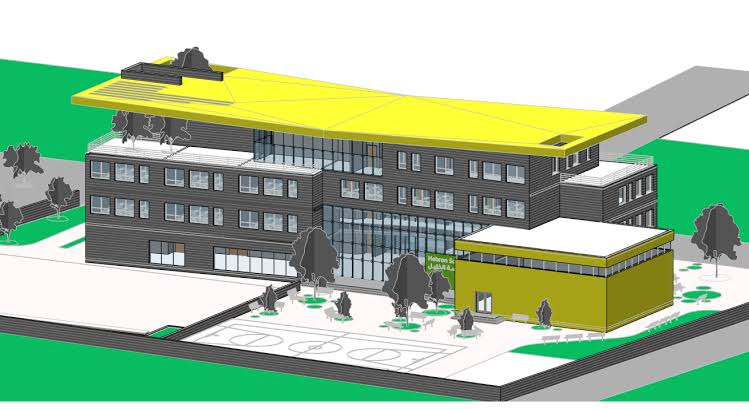
Architectural CAD Models (Revit)
This portfolio includes architectural models created in Revit, showcasing my ability to design floor plans, elevations, and structural components. I use these models as exemplars when teaching design, modeling, or engineering graphics. The models demonstrate my understanding of industry‑standard tools and professional workflows. They also serve as visual aids that help students grasp spatial reasoning and design principles.
This artifact highlights my technical proficiency and my ability to integrate professional tools into classroom instruction. It demonstrates my capacity to teach CAD concepts through real examples that students can analyze and replicate. The models show my commitment to preparing students for industry expectations and technical careers. They also reflect my ability to use visual design to support student learning.
CTE Drafting
These lesson plans demonstrate my growth in curriculum design and alignment with CTE standards. I include objectives, essential questions, materials, assessments, and differentiation strategies. The plans show how I structure learning experiences that build both technical and employability skills. They also reveal my evolving understanding of pacing, scaffolding, and student engagement.
This artifact shows my development as an educator who can design intentional, standards‑aligned instruction. It demonstrates my ability to plan lessons that support diverse learners and promote hands‑on learning. The drafts highlight my commitment to continuous improvement and reflective practice. They also reflect my readiness to create meaningful learning experiences in CTE classrooms.

3D Printed Engineering Models
These models, gears, brackets, structural components, or student designed objects serve as teaching tools for tolerances, iteration, and additive manufacturing. I use them to demonstrate design principles, material limitations, and the engineering design cycle. The models help students visualize how digital designs become physical prototypes. They also support discussions about precision, measurement, and design improvement.
This artifact blends engineering, manufacturing, and teaching into tangible learning tools. It demonstrates my ability to use physical models to support conceptual understanding. The models highlight my commitment to hands‑on, project‑based learning. They also reflect my skill in connecting design theory to real‑world engineering practice.

Hands‑On Engineering & Design Artifact
This documents my experience working inside an industrial design workshop, where I engaged directly with tools, materials, and fabrication processes that mirror real‑world engineering environments. In this workshop setting, I practiced essential industrial design skills such as measurement, prototyping, material selection, and safe tool operation. I also observed how professional makerspaces and fabrication labs structure workflow, safety, and iterative design. The workshop environment allowed me to apply engineering concepts through hands‑on activities—cutting, shaping, assembling, and refining physical components. I gained experience using equipment such as saws, sanders, clamps, measuring tools, and layout instruments while following proper safety protocols. This artifact demonstrates my ability to work in a technical space, manage tools responsibly, and translate design ideas into functional prototypes.
This artifact shows my readiness to teach and facilitate hands‑on engineering activities in a future classroom. Industrial design workshops are central to Technology & Engineering Education, and this experience proves that I can: Operate tools safely and confidently Guide students through fabrication processes Model proper workshop behavior and safety culture Support iterative design, prototyping, and problem‑solving Connect engineering theory to real, tangible outcomes For employers and schools, this artifact highlights my ability to manage a workshop environment, teach tool usage, and create meaningful hands‑on learning experiences.
Skills Demonstrated: Tool safety and operation, Measurement and precision layout, Material selection and fabrication, Prototyping and iterative design, Workshop organization and workflow, Engineering problem‑solving, Hands‑on instructional readiness,
This workshop experience strengthens my portfolio by showing that I can work in—and eventually teach in—a fabrication‑based learning environment. It aligns with my goal of becoming a Technology & Engineering Education teacher who uses hands‑on projects to build student confidence, creativity, and technical skill.


Leadership & Community Engagement
Resident Assistant Community‑Coding Event In Powhatan
These projects show my ability to build community, resolve conflicts, and support diverse groups of residents. I design events that foster connection, communication, and belonging. The work demonstrates my ability to mediate issues and maintain a positive environment. It also highlights my leadership, empathy, and organizational skills.
This artifact proves I can lead, communicate, and support people skills that directly transfer to classroom teaching. It demonstrates my ability to manage groups, build relationships, and maintain structure. The projects highlight my readiness to create inclusive learning environments. They also reflect my commitment to supporting others through guidance and facilitation.

STEM Club Support Workstudy
This artifact includes moments where I helped peers troubleshoot CAD issues, refine designs, or understand engineering concepts. I provide feedback that encourages problem‑solving and creativity. The support I offer demonstrates my natural inclination toward teaching and mentorship. It also shows my ability to communicate technical ideas clearly and patiently.
This artifact highlights my initiative and willingness to teach outside formal classroom settings. It demonstrates my ability to support learners through informal instruction and peer mentorship. The work shows my commitment to building community within STEM spaces. It also reflects my readiness to guide students through technical challenges with confidence and clarity.

Popsicle‑Stick Bridge Weight‑Distribution Demonstration
In this engineering activity, I led students through a hands‑on demonstration using a popsicle‑stick bridge to explore how weight distribution affects structural stability. The bridge was constructed using layered popsicle sticks and wood glue, forming a symmetrical truss‑style structure similar to what students see in introductory civil engineering lessons.
The bridge was placed between two desks, and students used a standard classroom textbook as the load. I instructed them to begin by placing the textbook directly in the center of the bridge to observe how a balanced load distributes force evenly across the structure. Students noted that the bridge remained stable, with minimal bending or stress. Next, students slowly shifted the textbook toward one side. As the load moved off‑center, they observed how the bridge began to twist, bow, and show early signs of shear stress along the middle seam. This helped them understand how uneven weight can cause a structure to fail — especially at its weakest point. Students recorded their predictions, observations, and explanations in their engineering journals. They identified where the bridge held strong, where stress concentrated, and how the popsicle‑stick layers reacted under tension and compression.
This artifact demonstrates my ability to help design and facilitate hands‑on engineering instruction that connects theory to real‑world structural behavior. By using simple materials like popsicle sticks and a textbook, I created an accessible demonstration (with the help of Mr. Jorge) that allowed students to see engineering principles in action. It also shows my skill in guiding students through hypothesis‑driven learning, where they predict outcomes, test their ideas, and analyze results. This activity reflects my commitment to engagement‑based teaching, where students interact directly with engineering concepts instead of only reading about them. Key Learning Outcomes Load Distribution — Students learned how balanced vs. unbalanced loads affect structural stability. Center of Mass — Students saw how shifting mass changes the forces acting on a bridge. Structural Failure — Students observed bending, cracking, and seam separation as early failure indicators. Engineering Prediction — Students practiced making and testing engineering hypotheses. Student Engagement Reflection Students were highly engaged during this demonstration. Many leaned in closely to watch the bridge flex under the shifting textbook, asking questions about real bridges and how engineers prevent collapse. A few students were distracted by laptops or games, which required redirection, but overall the activity captured attention and curiosity. The visual and physical nature of the demonstration made the engineering concepts memorable and easier for students to understand. It reinforced the importance of hands‑on learning in technical education and showed how simple materials can teach complex ideas.


Foldable Easel Design Presentation
For this presentation, I walked students through the complete design process behind my foldable wooden easel, a project built to meet strict constraints: no fasteners, fully foldable, and limited to an 8×10‑inch footprint. I explained how I developed the concept from early sketches to a functional prototype, highlighting the engineering decisions that shaped the final product. I began by showing the class my initial brainstorming sketches and selection matrix, demonstrating how I evaluated multiple ideas before choosing the easel. Students saw how I compared cost, equipment availability, ease of production, and uniqueness — giving them a real example of engineering decision‑making. During the presentation, I broke down the easel’s structure, including the front frame, pivoting rear leg, and dowel‑joint assembly. I used the physical model to show how the easel folds flat and how the grooves allow adjustable viewing angles. Students were able to see how each design choice supported the function, stability, and portability of the final product. I also discussed the materials — three ½×2×4 boards, wooden dowels, sandpaper, and finish — and walked students through the fabrication process. This included measuring, cutting, drilling, sanding, and assembling the easel using traditional joinery instead of screws or nails. The hands‑on demonstration helped students understand how engineering constraints shape real design outcomes.
This presentation shows my ability to communicate engineering concepts clearly, break down a complex build into understandable steps, and demonstrate craftsmanship in a way students can follow. It highlights my strengths in: Engineering communication — presenting technical information in a structured, engaging way Hands‑on teaching — using physical models to reinforce learning Design thinking — showing students how engineers move from idea to prototype Material selection — explaining why certain materials and processes were chosen This artifact also demonstrates my ability to model the same skills I expect students to develop: creativity, problem‑solving, precision, and reflection. Student Engagement Reflection Students were highly engaged during the presentation. They asked questions about how the easel folds, why I chose dowel joints, and how I ensured stability without fasteners. Some students connected the project to woodworking they had done at home, while others were curious about how the design could be scaled up for larger displays. A few students were distracted at first, but once I unfolded and refolded the easel in front of them, the physical movement captured their attention. The demonstration helped them visualize engineering concepts like load paths, pivot mechanics, and joint strength, making the lesson more memorable. Impact on My Teaching Practice This presentation strengthened my confidence in leading engineering demonstrations and explaining design decisions. It helped me practice pacing, clarity, and student interaction — skills I will use constantly as a technology and engineering educator. It also reinforced the value of showing students real artifacts instead of only describing them. When students can see and touch a design, their understanding deepens and their curiosity grows.
https://docs.google.com/presentation/d/1VaqYl_8l1odwe0SajJ7CeFSIoNbT9Q-VXJcn7FZkVmc/edit?usp=sharing