Interpretive, Interpersonal, and Presentational Modes of Communication
Exploring Culture
Exposure at young age to a variety of cultures helped me gain an appreciation for different perspectives. Both my parents spent significant time traveling abroad, and my father was born and raised in Europe. I have also found that if attempting to understanding what seems to be a strange foreign culture, it is important to remind myself that my culture must seem equally as strange to them. My time in the military has also forced me to work in close proximity with others that I may have previously been apprehensive about interacting with. Additionally, my wife comes from a Hispanic family, which has given my a lot of incite into the more personal/family values and their normal practices (many of which I initially thought to be extremely odd).
Having all this exposure to other cultures, and particularly having spent much time in more intimate settings with a family of Hispanic background has helped me to understand the reasoning behind many of the common practices that I initially found confusing (e.g. why, at the beginning of our relationship, my wife insisted on making me a plate of food and bringing it to while we were at her parents house, when that is certainly not something she would do at home). Working through these processes of understanding and accepting (at least the benign) aspects of different cultures, helped me to better understand my own predispositions and prejudices, but also to more easily recognize them in others, and to have the courage to question them.
Engaging in Communities
I have come to believe that diversity of background in culture, ethnicity, and individual experience is a key foundational pillar on which effective societies are built. Simply being engaged with others, especially those from different backgrounds, can have a profound affect on how we view others and ourselves.
My experience in the military has given me opportunities both at work and in the community at large to interact with all sorts of people from various backgrounds. I love how it encourages new perspectives on old opinions, breaks down social barriers, and opens door for future learning experiences.
Interpersonal Communication
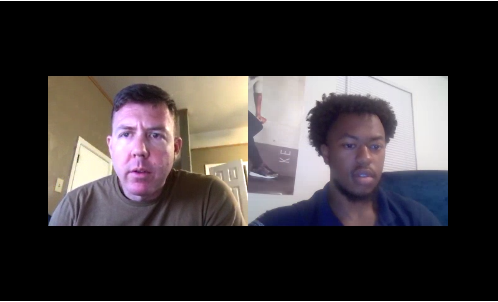
This is the second of four Entrevistas that were conducted during SPAN 101. It was still a very awkward interaction, filled with pre-memorized questions and responses, but it did help to shake off some of the initial trepidation about speaking to another person in Spanish.
Interpersonal communication can happen through a number of different mediums. Obviously, as a beginner Spanish student, oral conversations are the most difficult to practice, but I think also the most helpful. One thing I learned after several interactions, is to just learn as much as you can and then let the conversations happen as naturally as possible. Trying to memorize specific phrases, or having specific expectations about what another individual might say does not work very well. I have found short written communication (in the form of text messages with my wife) to be one of the biggest ways to continue to overcome fear of communication, and feel more comfortable with speaking Spanish. I believe this is one of the reasons I was able to make significant progress in oral communication during the course. Finding someone you are fully comfortable with, and practicing with them on a daily basis really helps.
Presentational Speaking
This is a presentational speaking video that I just made, since we didn’t do much presentaional speaking in SPAN 101. Oddly, I find this to be the most uncomfortable form of communication. Talking to a camera is not natural for me, but I understand that it is an important skill to have these days, so I’m hoping that practicing this skill in the process of learning to speak Spanish with help me become more comfortable with it.
Presentational Writing

This is one example of a Discussion Board post that was completed during this course. Although a discussion board is designed as an interpersonal communication tool, I consider initial posts to be presentational in that I am describing something about myself, and I did not necessarily expect a response from anyone in particular.
This was one of the easier ways to communicate as it allows time to consider what will be said without pressure of immediate response. Simply expanding vocabulary and practicing grammar is what made this easier as the course progressed.
Interpretive Listening
I have found that understanding the spoken language is the most difficult aspect of learning Spanish. I find listening to music to be extremely helpful, as the language is often not as clear, and so it provides an excellent way to expose myself to realistic language without speaking directly to a person who is fluent. This is one of my favorite songs with Spanish lyrics, and I have made it a long term goal to learn and be able to sing every word. Initially however, my goal is simply to be able to automatically recognize and understand everything they are saying, without the need for focused listening and internal translation.
Interpretive Reading
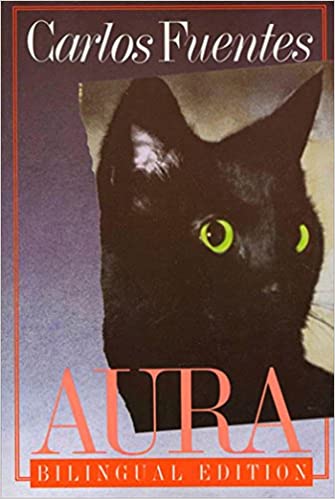
At the recommendation of almost everyone on the internet who is learning Spanish, I have chosen Aura by Carlos Fuentes to help me practice my interpretive reading Spanish communication skills when not actively working on coursework. It is a slow process, as much of the language is advanced beyond the level of 101, but still is easy and interesting enough to keep me engaged. The translation is excellent in that it captures the meaning of the text, but not a direct translation. This helps me learn how to interpret the writing without attempting to translate it in my head first.