Interpretive, Interpersonal, and Presentational Modes of Communication
Exploring Culture
Exposure at young age to a variety of cultures helped me gain an appreciation for different perspectives. Both my parents spent significant time traveling abroad, and my father was born and raised in Europe. I have also found that if attempting to understanding what seems to be a strange foreign culture, it is important to remind myself that my culture must seem equally as strange to them. My time in the military has also forced me to work in close proximity with others that I may have previously been apprehensive about interacting with. Additionally, my wife comes from a Hispanic family, which has given my a lot of incite into the more personal/family values and their normal practices (many of which I initially thought to be extremely odd).
Having all this exposure to other cultures, and particularly having spent much time in more intimate settings with a family of Hispanic background has helped me to understand the reasoning behind many of the common practices that I initially found confusing (e.g. why, at the beginning of our relationship, my wife insisted on making me a plate of food and bringing it to while we were at her parents house, when that is certainly not something she would do at home). Working through these processes of understanding and accepting (at least the benign) aspects of different cultures, helped me to better understand my own predispositions and prejudices, but also to more easily recognize them in others, and to have the courage to question them.
Engaging in Communities
I have come to believe that diversity of background in culture, ethnicity, and individual experience is a key foundational pillar on which effective societies are built. Simply being engaged with others, especially those from different backgrounds, can have a profound affect on how we view others and ourselves.
My experience in the military has given me opportunities both at work and in the community at large to interact with all sorts of people from various backgrounds. I love how it encourages new perspectives on old opinions, breaks down social barriers, and opens door for future learning experiences
Interpersonal Communication
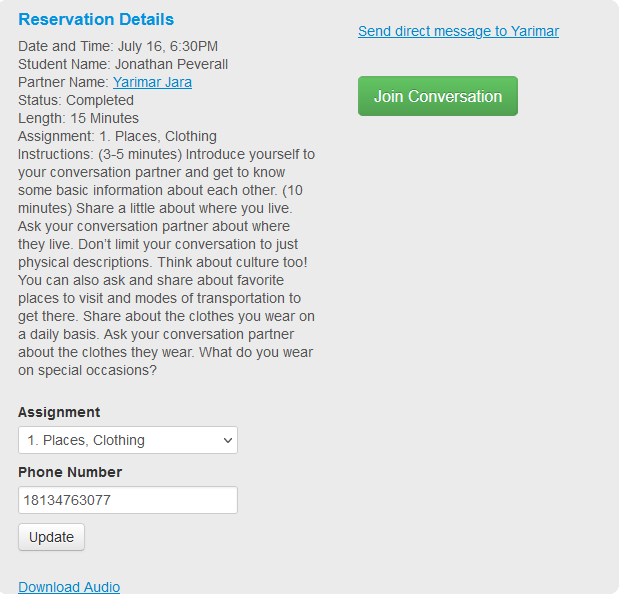
Above is a picture of my reservation details on TalkAbroad with Yarimar from Costa Rica, and the audio from our conversation that followed. Although I have traveled abroad and met many people of various cultures, this was my first attempt at a full conversation in their native language. Personally, I discovered that it doesn’t matter how much you memorize or how good your reading/writing skills have become. Physically communication with someone in a new language effectively requires experience, and the only way to get it is to practice actually communicating. While I found the experience much more difficult than I anticipated, I was still able to learn quite a bit about the culture, environment, and life of someone living in San Jose.
Presentational Speaking
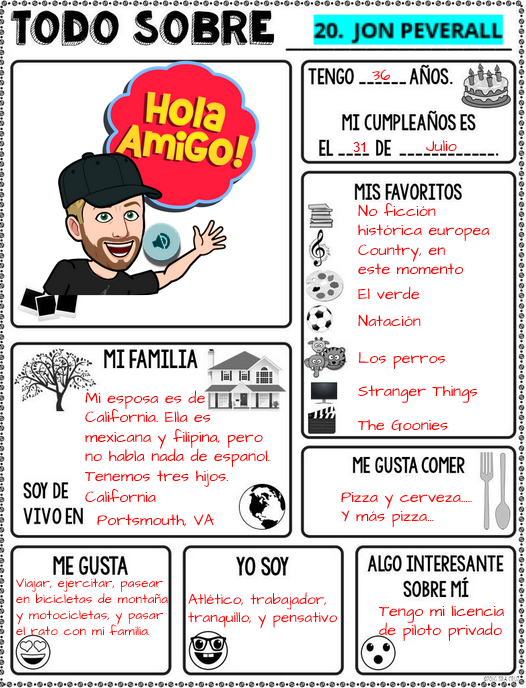
This is a recording of an introduction we did during the first week of class. Included were descriptions of me and my family and our likes. Since I was not available for the presentation via Zoom, I was required to record audio introducing myself to the class.
This was a relatively easy assignment. Most of the words used were review from Spanish 101, and because it was a recording, I was able to practice it several times before I was happy with the result.
Presentational Writing
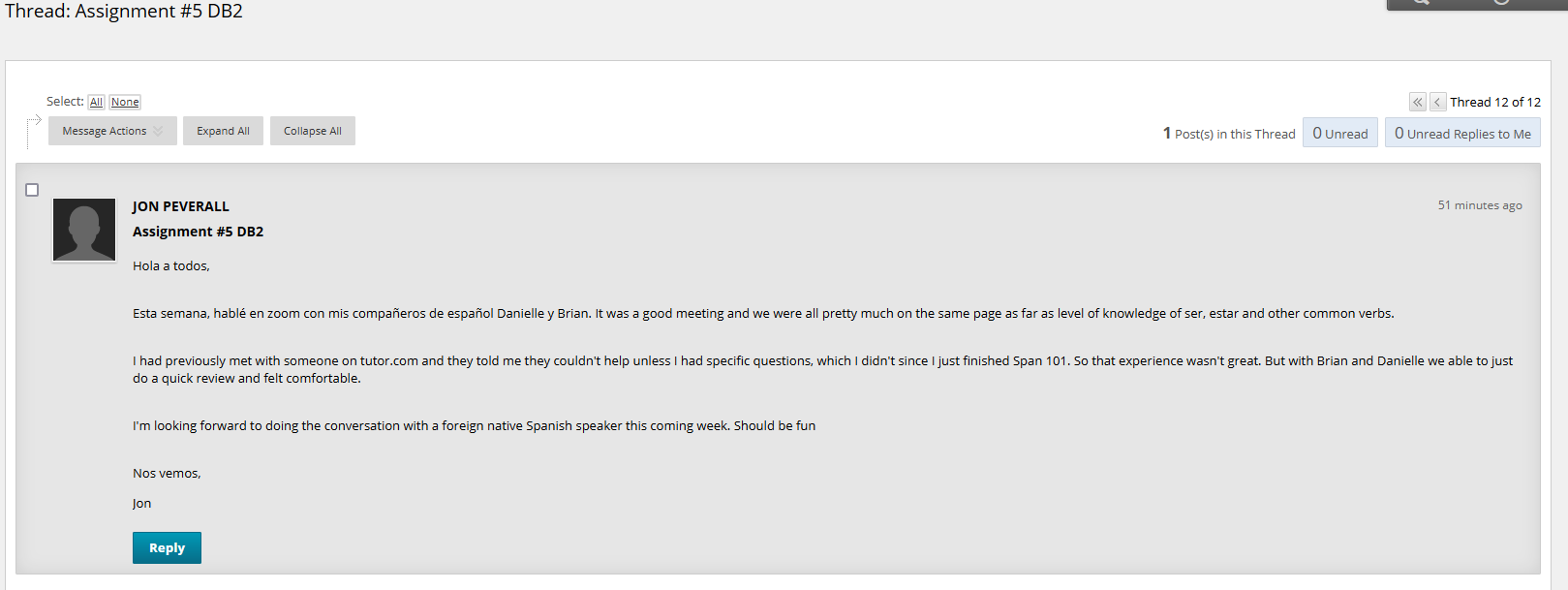
Most of the presentation writing conducted in this class was in the form of discussion board posts. The posts usually consist of both English and Spanish writing, such as the one pictured above.
The discussion boards were a good place to practice presentational writing. The minimum requirements for maximum points ensured that we practiced at least a little writing in Spanish, but we were free and encouraged to expand on that and write more or most of the posts in Spanish. It is good that because they are their for public view and open for constructive criticism, but there is no pressure and you have plenty of time to prepare your writing before posting.
Interpretive Listening
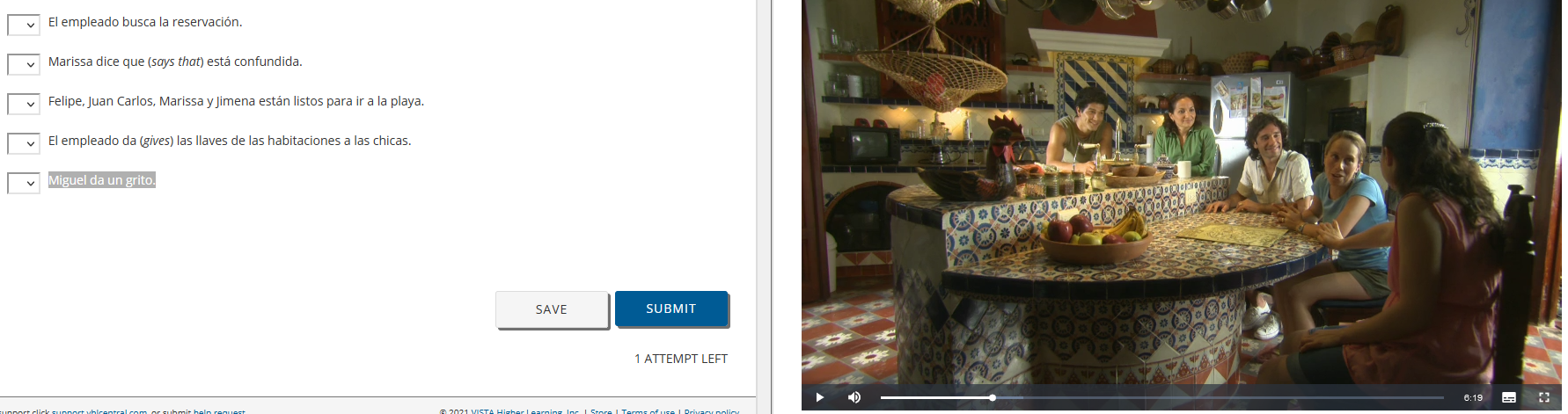
Above is one example of some of the interpretive listening activities we did throughout Spanish 102. We are required to simply listen to the actors and then answer questions about what they said, or what they are doing in the video
This was one of my favorite activities, as it helps practice listening to real, normal conversation in natural voices. This is something that we do not have as much exposure to since the class was conducted online. Aside from speaking, this is the most difficult activity, but also the most fun and rewarding. The transcripts are available in both English and Spanish, but I preferred to watch and listen only, rewinding and repeating sections as necessary to understand. Occasionally, I would need to pause and look as the Spanish subtitles to help understand what was being said.
Interpretive Reading
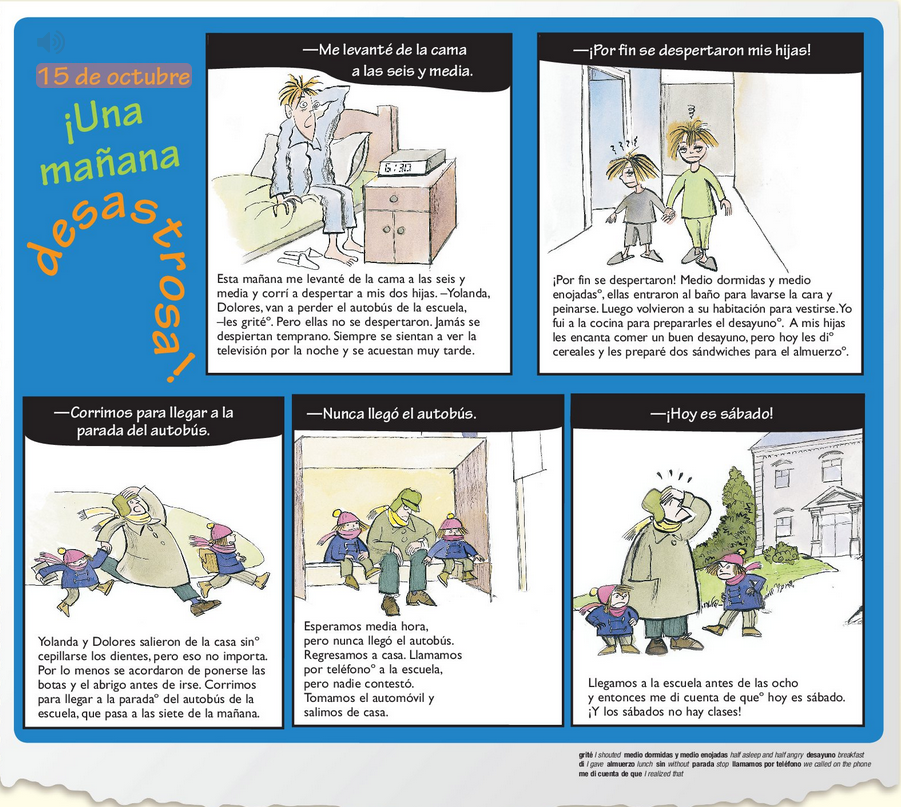
We had a variety of reading activities throughout Spanish 102, such as news articles, brochures, store advertisements and stories like the one above.
The example above is one of my favorite interpretive reading activities. Generally, reading Spanish comes easier for me than understanding spoken word. Activities such as this one make it even easier given the additional context provided by the accompanying pictures. For the few words that I don’t remember, I can usually deduce from the image what the verb means. I also just found this particular story funny and relatable as a parent, which helped keep me engaged.