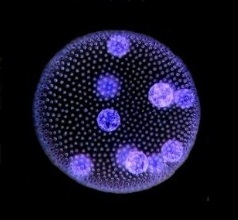
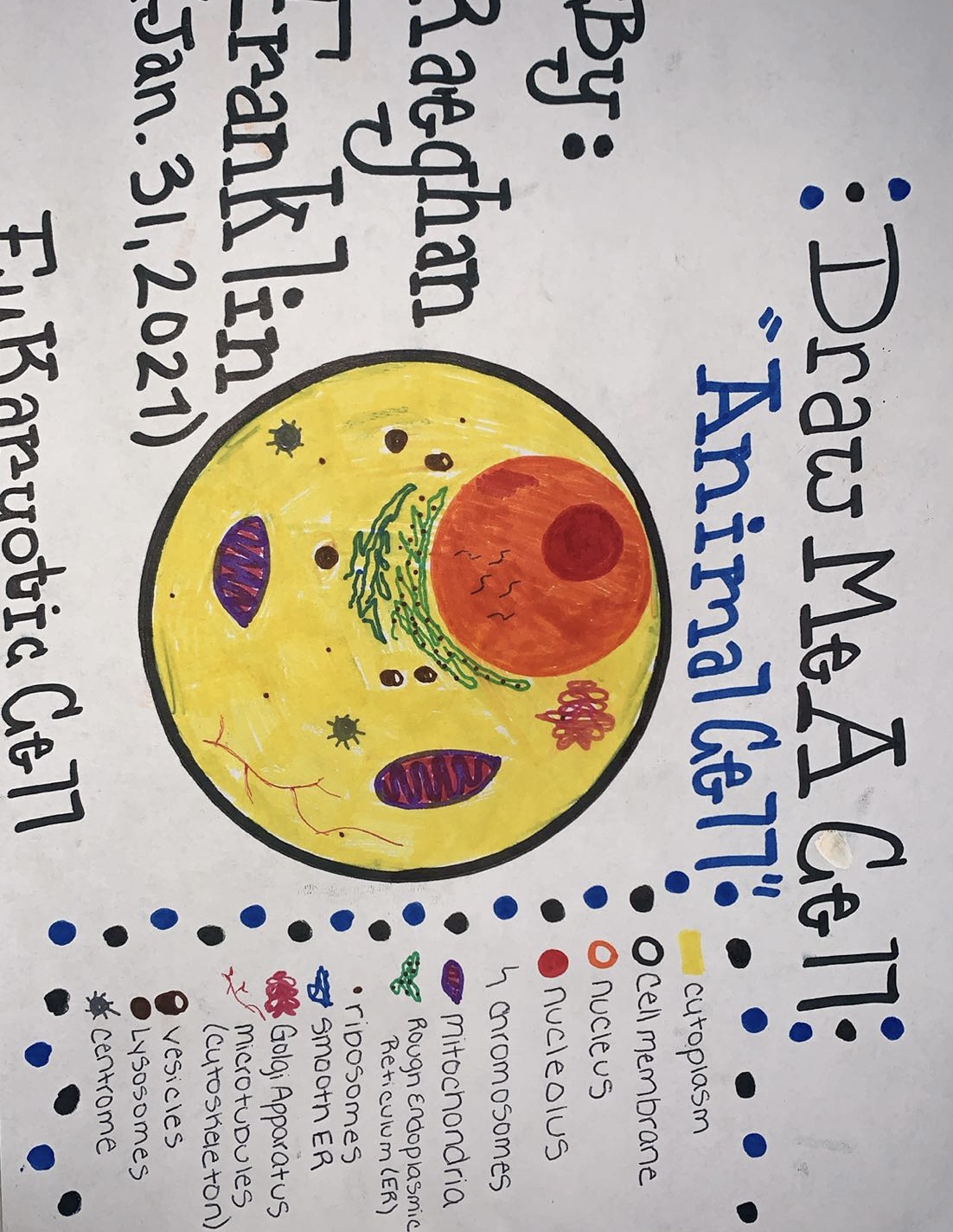
DRAW A CELL
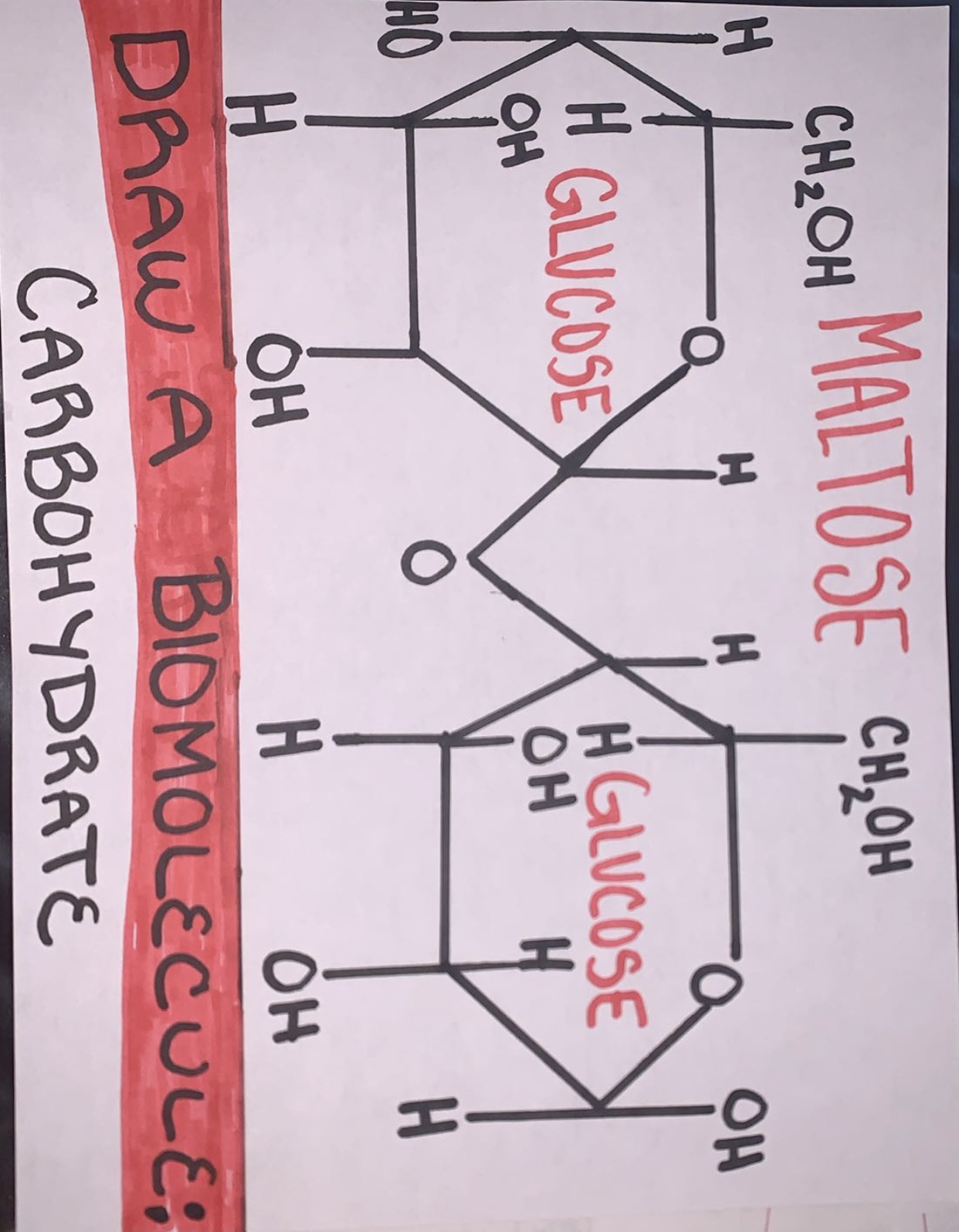
DRAW A BIOMOLECULE
FIND A MEME
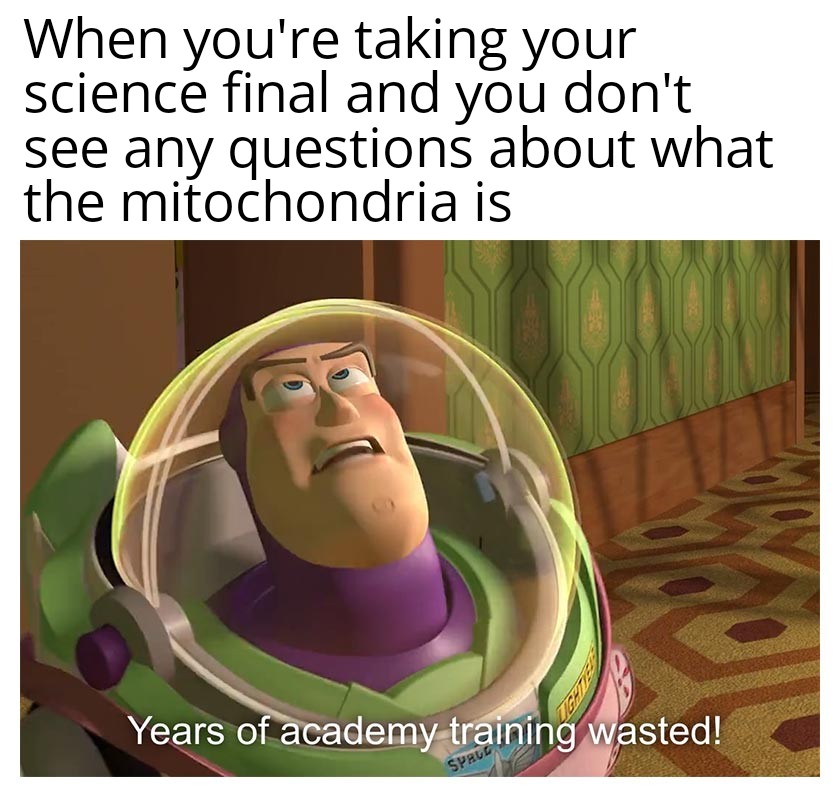
The reasoning behind picking this particular meme is because it accurately reflects my certain feelings toward cell biology at the moment. Since finals are coming up, I try to recall all of the many things that I have accumulated in this course and previous ones. I often find that I do not easily pick up on certain concepts that are usually what the majority of the exam is based on. However one thing is for certain, I definitely remember the mitochondria is the powerhouse of the cell. From past experience that most likely will not be on the final exam, even though it is taught monotonously. The more I think about it, after taking an abundant amount of science classes, that fact on the mitochondria is the only thing that has really stuck with me, probably because it is taught over and over each year to the point it is common knowledge.
SCIENTIFIC LITERATURE ESSAY
Scientific Literacy: Cell Death and the Origin of Complex Life
Apoptosis can be defined as the death of cells; this occurs in multicellular organisms and is a normal phenomenon that helps with an organism’s development. Programmed cell death is believed to depend on the function of three major organelles: the nucleus, the chloroplast, and the pyrenoid. In general, a nucleus performs the function of containing cell chromosomes. The function of chloroplasts and pyrenoid is to capture energy from the sun, in order to convert it into usable energy by plants. The nucleus of a cell is said to be essential in the process of chromatin condensation, genomic DNA fragmentation, and increase in the subG1 population that all occurs in the end stages of apoptosis (Anon, 2021). Research suggests that the chloroplast is also important in apoptosis by cooperating with mitochondria. One way this collaboration is said to function is by the mitochondria initiating commitment steps while recruiting chloroplasts for quick execution. Another theory is that the two operate parallel to each other. The pyrenoid, a microcompartment in the chloroplasts of algae and hornworts, has the main function of carbon fixation. They may play a role in the process of cell death due to the close affiliation with chloroplasts (Aken and Breusgem, 2015; Zhan, 2018) .
The four types of algae that will be evaluated are the Pandorina morum, Volvox aureus, Chlorella (mixed species), and Rhodochorton (mixed species). Each genus is uniquely different, however they do present some similarities. Pandorina is a multicellular green algae that can be composed of eight to thirty-two cells; it also consists of a large chloroplast and at least one pyrenoid. This type of green algae is exclusive to freshwater rivers, lakes, and ponds. Volvox is another genus of green algae that can be found in ponds and other bodies of still freshwater. Although Volvox aureus originated from a unicellular ancestor, it now forms spherical colonies that can be made up of up to fifty thousand cells. Two different types of cells make up this genus which includes somatic cells and germ cells. Like Pandorina, Volvox contains a cup-shaped chloroplast with one pyrenoid (Anon 2021). Unlike the multicellular Pandorina and Volvox, Chlorella is a genus made up of approximately thirteen single-celled green algae species. This species is found in freshwater, and is considered a food and energy source due to the fact that its photosynthetic efficiency can reach eight percent, exceeding the highly efficient sugar cane crop. The chloroplasts of the algae is what contributes to the high efficiency of the photosynthetic rate of Chlorella. The pyrenoids of Chlorella have been used to study the species-specific differences that show evolutionary linkage ( Ikeda and Takeda, 1995; Anon, 2021). Unlike any of the other previous algaes mentioned, Rhodochorton is a red alga that has adapted to low levels of light. These organisms are usually multicellular, but some unicellular species do exist. Depending on the species these algae can also live in either freshwater or marine habitats. Rhodochorton usually contains a chloroplast with a single central pyrenoid (Anon 2020).
A team of scientists has recently conducted experimentation on the process of fossilization on organelles and have examined the fossil record of early eukaryotic evolution. They conducted these experiments on the four algaes mentioned above: Pandorina morum, Volvox aureus, Chlorella, and Rhodochorton. In order to conduct this experiment, the researchers gathered samples from the four different types of algae. The cells were then euthanized in 300 mm BME for 24 hours to allow them to settle at the bottom of the tubes; BME stands for Beta-mercaptoethanol, and it is a reducing agent that is often used in protein-denaturing. The excess BME is then removed and the algae is rinsed in tap water or artificial saltwater depending on the species of cells. Samples are then collected immediately after euthanization. After this, each species was dispersed into twenty-one one-milliliter tubes and divided into two experimental groups. Group one, the “oxic group” had the lid of the tube removed with the water topped up in order to prevent desiccation. The other “anoxic” group had the lid remain sealed until further sampling. From observing Figure 1 of the article, it is evident that the sampling across Rhodophyta and Viridiplantae showed consistency within the results. When allowed to decay for a prolonged period of six weeks, the paralleled experiments under both oxic and anoxic conditions showed no difference in pattern of decay. However, the anoxic conditions did express slower rates in agreement in taphonomy experiments in the past. The authors of this article present the changes of the cells in six criteria: basis of colony size, cyst wall complexity, evidence of a cytoskeleton, presence of membrane bound organelles, cytoplasm decomposition, and the breakdown of chloroplasts. The authors of the article believe that none of these criteria should be considered definitive, and that fossilized organelles would provide a better criterion for identifying the fossils that would best express the evolutionary assembly of eukaryotes and the timing of their emergence. Within their experiment they observed the visibility of pyrenoids, nuclei, chloroplasts, starch grain rings, pyrenoids; Y-shaped junctions; t/h, and the thinning or presence of holes in chloroplasts (Carlisle et al., 2021).
Figure 2 in the article indicates the decay of Volvox and Pandorina. The living colonies of V. aureus portray clear structure and cell boundaries, however, after death the colonies show traces of disaggregation. As decomposition continues the chloroplasts of the cell become irregular in shape, and the formation of holes and thin patches begin to develop. Within the chloroplasts, the pyrenoids disappear, resulting in ringed holes surrounded by starch grains. After weeks of cell death, some nuclei were still able to be found without any evidence of deformation. In comparison, the living colonies of Pandorina morum are closely arranged. After cell death, this formation collapses and results in the loss of Y-shaped junctions. The researchers observed one chloroplast exiting the cell in a cloud, but this was rare. The chloroplasts ultimately developed holes and thin patches, like Volvox, as they decayed. In the later stages of decomposition, trace amounts of green chloroplasts were found surrounding the remains of the starch grain ring. Pyrenoids varied with colonies; some decayed early in decomposition and left behind empty starch grain rings, while other cells had visible pyrenoids. The nuclei could also still be observed in later stages of decay in P. morum, similarly to that of Volvox.
In reference to Figure 3, comparing Chlorella to Rhodochorton, living Chlorella cells show little difference from cells shortly after death. However, as the decaying process progresses chloroplasts begin to collapse making them irregular in shape. Like in the previous algal cells, the pyrenoids disappear quickly and still leave behind the empty starch rings. Chloroplasts continue to thin and develop holes, but some can be observed escaping from the cell. The nuclei were still apparent in some cells. Similarly, Rhodochorton cells show little difference immediately after death. The chloroplasts do breakdown quickly, and holes start to develop within them. In later stages, the chloroplasts can conglomerate alongside the cell walls with the cytoplasmic contents, or even pull away from the cell wall. The nuclei in some Rhodochorton cells could still be observed in some cells, even when most of the cytoplasm was gone.
In the fossils shown some features of plant cells were visible. These features include fossil nuclei, chloroplasts, and even mitochondria. In Cenozoic plant remains, these organelles are preserved so that historic organelle structure is visible. It is even more shocking that some of these organelles can even remain biochemically reactive in certain histological stains (Carlisle et al., 2021).
Bibliography
Anon, Volvox. Available at: http://fmp.conncoll.edu/silicasecchidisk/LucidKeys3.5/Keys_v3.5/Carolina35_Key/Media/Html/Volvox_Main.html#:~:text=Volvox&text=The hexagonal cells fit closely,are connected by cytoplasmic extensions.&text=Like Chlamydomonas, each spherical or,chloroplast with a single pyrenoid.
Aken, O.V. & Breusegem, F.V., 2015. Licensed to Kill: Mitochondria, Chloroplasts, and Cell Death. Trends in Plant Science. Available at: https://www.sciencedirect.com/science/article/abs/pii/S1360138515002034.
Carlisle, E.M. et al., 2021. Experimental taphonomy of organelles and the fossil record of early eukaryote evolution. Science Advances, 7(5).
Anon, 2021. Chlorella. Wikipedia. Available at: https://en.wikipedia.org/wiki/Chlorella.
Ikeda, T. & Takeda, H., 1995. Species-Specific Differences Of Pyrenoids In Chlorella (Chlorophyta)1. Journal of Phycology, 31(5), pp.813–818.
Anon, 2021. Nuclear condensation, DNA fragmentation and membrane disruption during apoptosis. Nuclear condensation & DNA fragmentation in apoptosis. Available at: https://www.abcam.com/kits/nuclear-condensation-dna-fragmentation-and-membrane-disruption-during-apoptosis.
Anon, 2021. Pandorina. Wikipedia. Available at: https://en.wikipedia.org/wiki/Pandorina.
Anon, 2020. Rhodochorton. Wikipedia. Available at: https://en.wikipedia.org/wiki/Rhodochorton.
Anon, Rhodophyta. Rhodophyta – an overview | ScienceDirect Topics. Available at: https://www.sciencedirect.com/topics/agricultural-and-biological-sciences/rhodophyta#:~:text=Rhodophyta or red algae represent,5).
Anon, Rhodophyta. Rhodophyta – an overview | ScienceDirect Topics. Available at: https://www.sciencedirect.com/topics/agricultural-and-biological-sciences/rhodophyta#:~:text=Rhodophyta or red algae represent,5).
Anon, 2021. Volvox. Wikipedia. Available at: https://en.wikipedia.org/wiki/Volvox.Zhan, Y. et al., 2018. Pyrenoid functions revealed by proteomics in Chlamydomonas reinhardtii. PloS one. Available at: https://www.ncbi.nlm.nih.gov/pmc/articles/PMC5826530/.
END-OF-TERM REFLECTION
Cell biology was an informative course that not only granted a new understanding of the internal mechanisms of a cell, but also more insight in other classes as well. This course allowed for a greater understanding in other courses, such as Genetics. They both tied together the science of heredity, from illustrating DNA to how it eventually affects organisms and the whole population. Cell biology is relevant to the biology field of study because knowing how the cells perform their specialized functions gives insight on how other biological functions are carried out. The cells specialized functions include structure for the body, providing energy, and transferring DNA from one generation to the next.