Exploring Culture
Throughout this course, I have learned many assignments that involve the study of Hispanic cultures, fiestas, etc. One of these learnings is the way that greetings are carried out. In the US, a handshake or a hug is typical, whereas, in most Spanish-speaking countries, it is normal to greet with a kiss on the cheek. One or two, contact or no contact, it all depends on the area.
The ways verbs are conjugated and how nouns are used as masculine or feminine were also things I learned in this class. Spanish is a very interesting culture and I am very excited to start learning the language. The women are beautiful and it is just a good time.
Interpersonal Communication
This semester included many different types of communication with other partners. Through discussion boards, I was able to talk to people and things that I enjoyed while also expressing them. Also, I engaged in five different oral conversations with partners, starting with just introductions and by the end of the semester, I was able to understand other people.
At the beginning of the semester, I was super nervous about doing an interview with my professor and having to record conversations speaking Spanish. I thought that I am not fluently to do well in both interviews and conversations. As you can see from this video, I was frightened in my first conversation with my partner. I stumble over my words. I also speak with little confidence. By the end of the semester, I got much better at doing conversations and interviews. My voice got clearer and had much more confidence. I believe this course has helped me to be more prepared for my second Spanish language next semester.
Presentational Speaking
Throughout the semester, I have had several conversations with my partner as well as a record of myself presenting conversations describing at least three favorite places on campus and/or where I live and study. For each place, it will have to include: the name of the place (i.e. where you are), what the place looks like, what activities you or others do there, and what you like or don’t like to do.
Presentational Writing
In this course, We had a lot of writing done through discussion boards and sharing our thoughts with other students. The other writing assignment was a formal letter to nominate a person we admire.
This project was really intimidating to me at the very beginning because discussion board posts have always been short and simple. But when we were asked to write a formal letter and it will have to be 100-150 words, I was discouraged. I have never written 100 words that have to be in Spanish before. So when I decided to write, I planned on just starting writing and seeing how much I could write and I surprised myself by being able to write more than 100 words in my very first attempt. After going through the materials in Lingro-learning, I was able to get more ideas to include in my letter.
Interpretive Listening
In this course, there were often quizzes that were on Lingro-learning and/or Blackboard that involved listening to the speaker and selecting/writing down the correct answers we heard. This video varies from simple words to different conjugation of verbs. The generality of these quizzes on Blackboard involves listening to the speaker and either selecting what I heard or writing it down. I did great on these kinds of quizzes and didn’t have any problem hearing. These quizzes were on lockdown browser so there was no way that the quizzes might be recorded for example.
Interpretive Reading
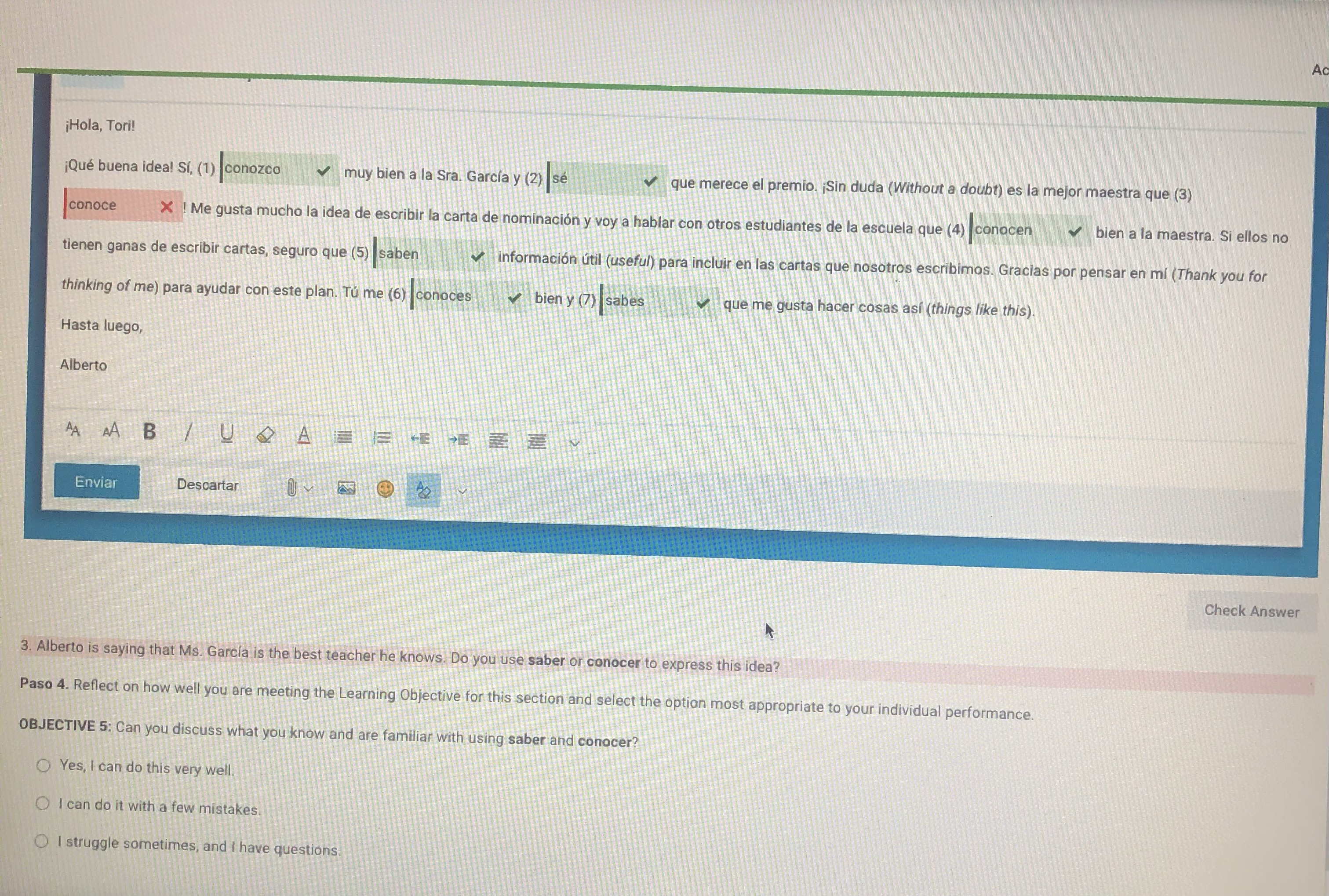
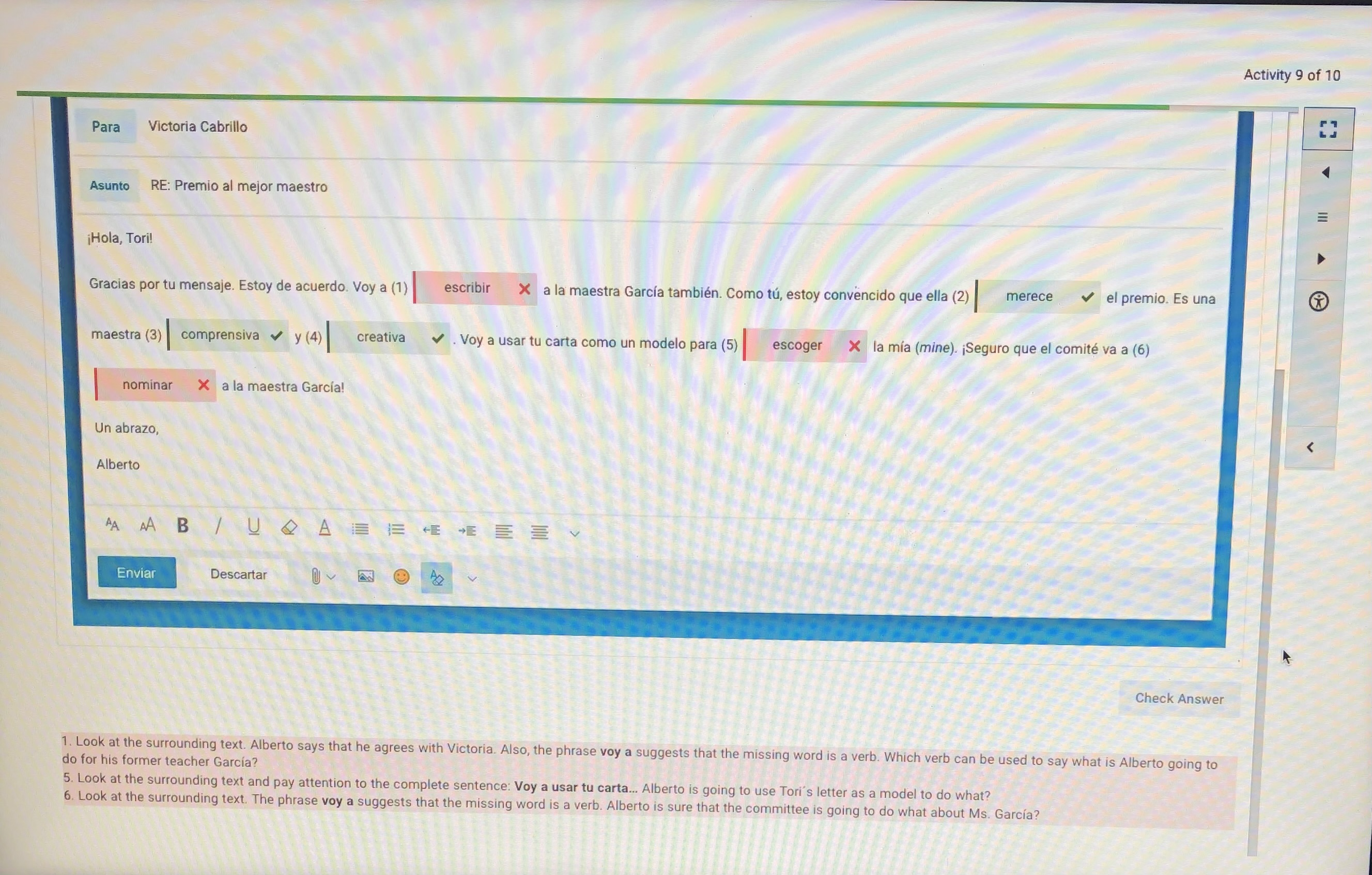
The majority of the reading that I had to do in this class was during Lingro-learning quizzes. There were many quizzes that involve a word blank or sentences that would have to be filled in myself and also conjugates in any way necessary. These quizzes were very difficult for me. The word bank part was easier but I struggled with the conjugations. Being able to read a paragraph and figured out what is going on was very challenged when new to the language. Thes quizzes taught me the importance of knowing the conjugations and understanding when to use them.