An Effective Reflection Is
Spanish 102 was my first Spanish class in two years since I took Spanish 101 in high school during the COVID pandemic. Since the class was online and I had friends who helped me, it wasn’t difficult. However, when I started Beginning Spanish 102, I became worried because I had to jump back into learning without any practice or review. It was difficult for me to recall anything from my past Spanish lessons. My biggest challenge was speaking and pronouncing Spanish sentences correctly. During my first talk abroad session, I stuttered and struggled to understand my partner. But in the second session, I was more confident in my pronunciation and able to understand my partner. I also learned how to explain my answers and ask people to repeat themselves.
Artifacts
A good artifact is a portion or clip of an assignment. It needs to be carefully selected to provide evidence/proof that supports what you are saying in your reflection.
Your reflection will help you determine what that will be. It is a quest for quality. It will represent you academically and professionally, and have personal meaning. It can be written, audio, or video.
At the end, ask yourself if the artifacts best demonstrates your abilities and growth over time.
At the end of your reflection in each section, link or embed the assignment/artifact. If the assignment has multiple pages and seems to overwhelm the section, consider adding just the first page and offering to provide the rest upon request.
Instructions
Exploring Culture
The #AyerComí project helped me explore Hispanic culture when it came to food. The food I chose was Arroz con pollo because it was one of my favorite meals at Hispanic restaurants. When doing research I found out that authentic arroz con pollo is actually made differently. This result made me think about how foods from different cultures can change from their original receipts. The original receipt was still really good and it opened my eyes to wanting to learn the originals to all the different foods I like.
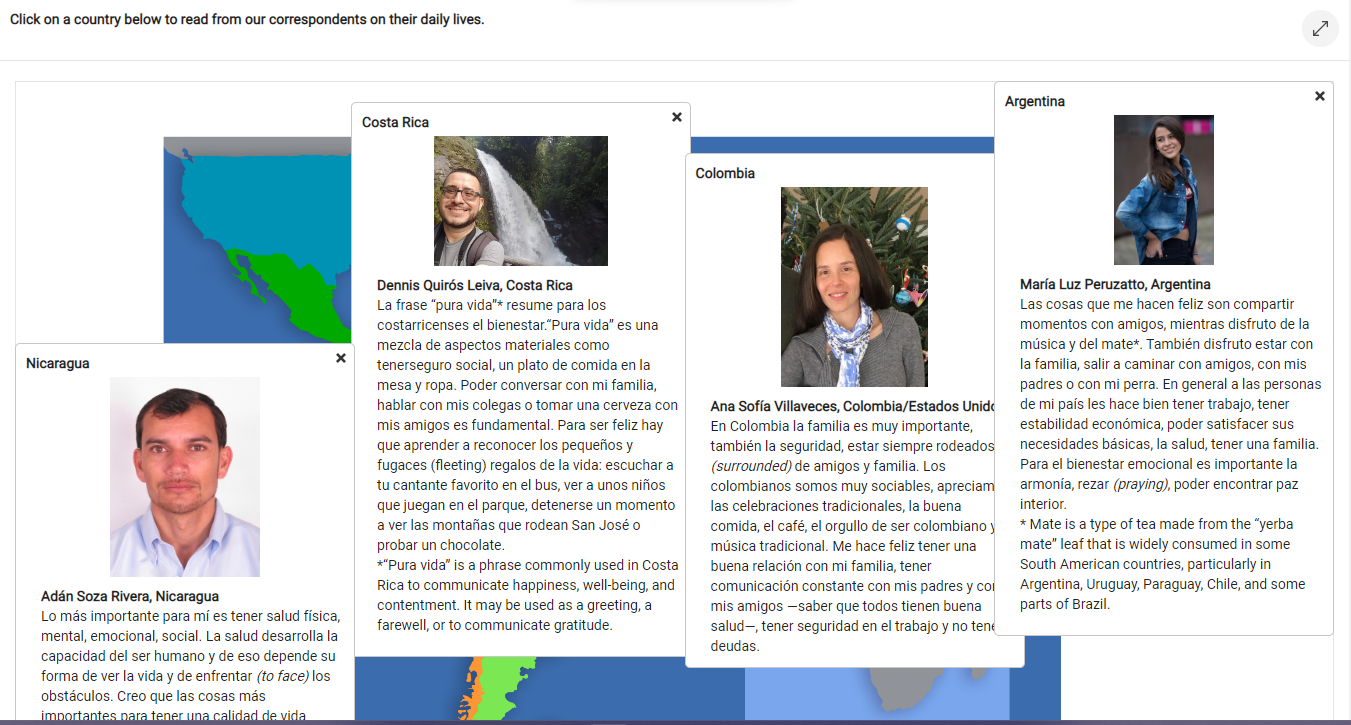
TalkAbroad is a language learning platform that offers real-time conversation practice with native speakers. Other interpersonal oral/audio activities in language learning include speaking with language exchange partners, participating in conversation groups, and practicing with tutors or instructors. These activities provide opportunities for learners to improve their speaking and listening skills in a natural and interactive way.
I found the telecollaborative conversations on TalkAbroad to be challenging because I was nervous about speaking with a native speaker. However, as I continued to participate in these conversations, I gained more confidence in my ability to communicate in Spanish.
Presentational Speaking
As part of my Spanish class this semester, I completed a presentational speaking activity where I created an introduction video in Spanish. In the video, I spoke about myself, my family, and my interests. Although I was initially nervous about the task, I dedicated time to practice and recorded multiple takes until I felt confident with my delivery.
While I was pleased with my presentation, I recognize that there is always room for improvement. In future speaking activities, I aim to challenge myself by incorporating more complex sentence structures and advanced vocabulary. Receiving feedback from my classmates was helpful. Overall, I am proud of my progress in Spanish and look forward to continuing to develop my speaking skills.
Presentational Writing
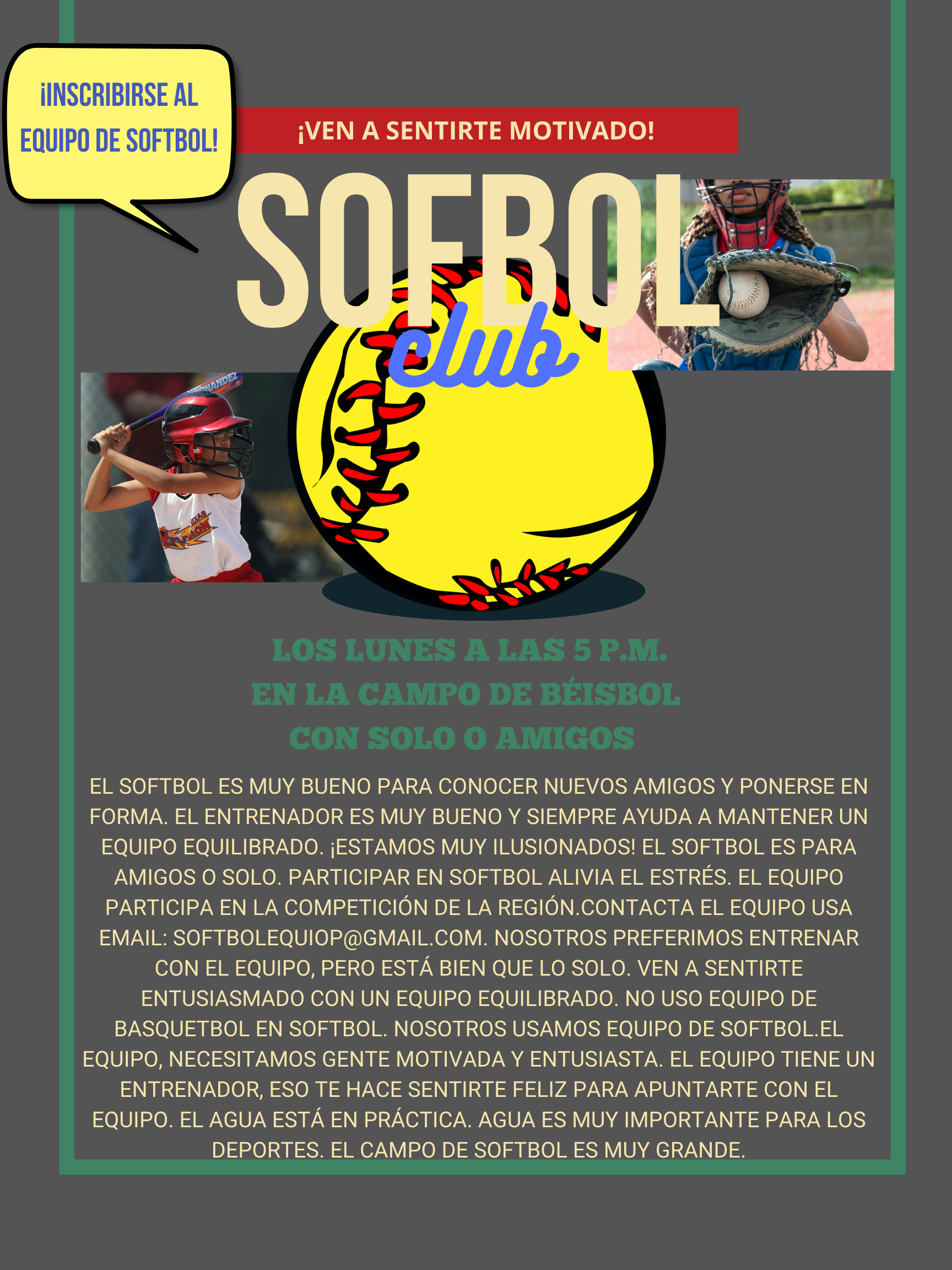
This semester, I completed various written presentational activities related to my Spanish learning, such as writing compositions, blogs, and creating flyers. As an example, I created a softball club poster in Spanish, promoting the club’s upcoming events and games. I included images and brief descriptions of the club’s goals and values.
Through these activities, I have improved my ability to write and communicate effectively in Spanish. While the writing process was challenging at times, I found that practicing regularly and seeking feedback from peers and instructors helped me overcome those difficulties. I excelled at incorporating creative elements, such as images and design, into my written presentations, which made them more engaging and visually appealing. In the future, I could improve by expanding my vocabulary and grammar knowledge, which would allow me to write more complex and sophisticated compositions.
Interpretive Listening
This semester, I did a lot of interpretive listening activities for my Spanish learning. This included listening to Spanish music, watching Spanish TV shows, and practicing with language learning apps. One recording I found particularly helpful was a video on YouTube called “Cómo el mar está devorando las costas de Puerto Rico” by BBC Mundo. It was challenging to keep up with the pace of the speaker, but I practiced by listening to the video several times and writing down new vocabulary words. Overall, I found these activities to be really interesting and helpful in improving my listening comprehension skills. I realized that it’s important to expose myself to a variety of Spanish-speaking voices and accents to become a more versatile listener.
Interpretive Reading
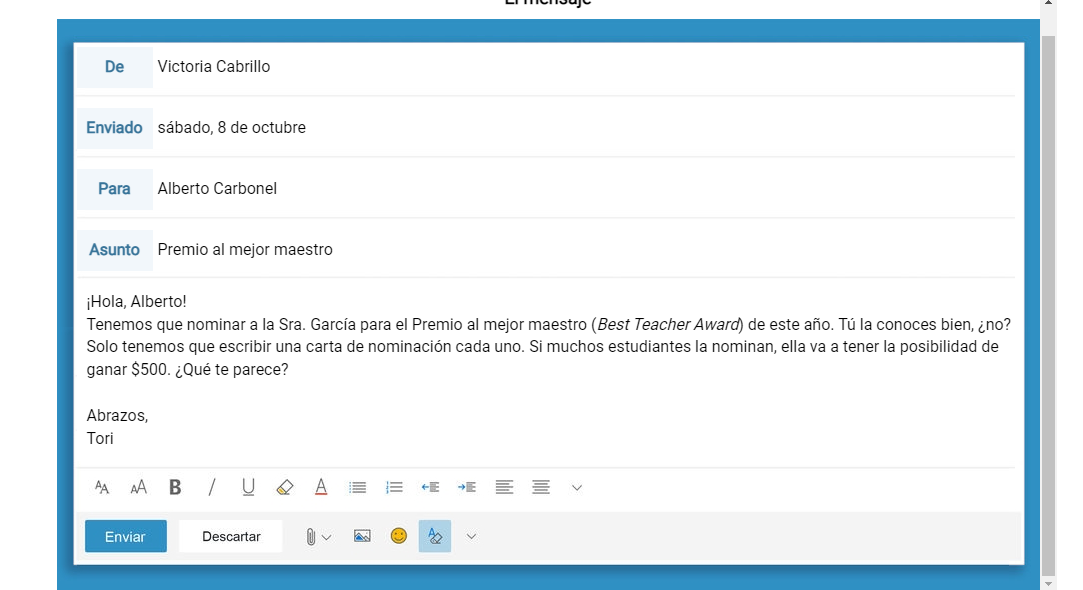
So this semester for my Spanish class, we had to read a bunch of different emails that were written in Spanish. They were formatted like real emails that you might receive in a professional setting, and we had to read them and understand the context and the message being conveyed. At first, it was pretty challenging because there were a lot of new words and phrases that I wasn’t familiar with. But as I kept reading and practicing, I got better at understanding the emails and even started to pick up on some common phrases and vocabulary that I could use in my writing. I found it interesting to see how people communicate in different languages and cultures, and it gave me a better understanding of how to write professional emails in Spanish. Overall, I think these assignments helped me improve my reading comprehension and language skills.