Interpretive, Interpersonal, and Presentational Modes of Communication
Spanish 311 taught me:
- Practice makes perfect
- Effective speeches hook listeners in right away
- An effective speech is interactive
- Difference between ser and estar
- Direct and Indirect Object Pronouns
Exploring Culture
The ways we learned about culture in this class were very diverse. We mainly used VHL Central to explore different cultures through short story readings. Reading stories in a language, not native to my own helped me form a better understanding. It also helped when we did a group conversation with our professor and fellow classmates.
VHL Central offered me a global view of Spanish in different areas. These stories helped me diversify my Spanish language with proper and more “relaxed” conversations. I find this useful because we tend to only get very formal conversations through Spanish classes. I wouldn’t say they aren’t useful, but it’s also helpful to learn casual conversations if I were to speak to a Native Spanish speaker.
Presentational Speaking
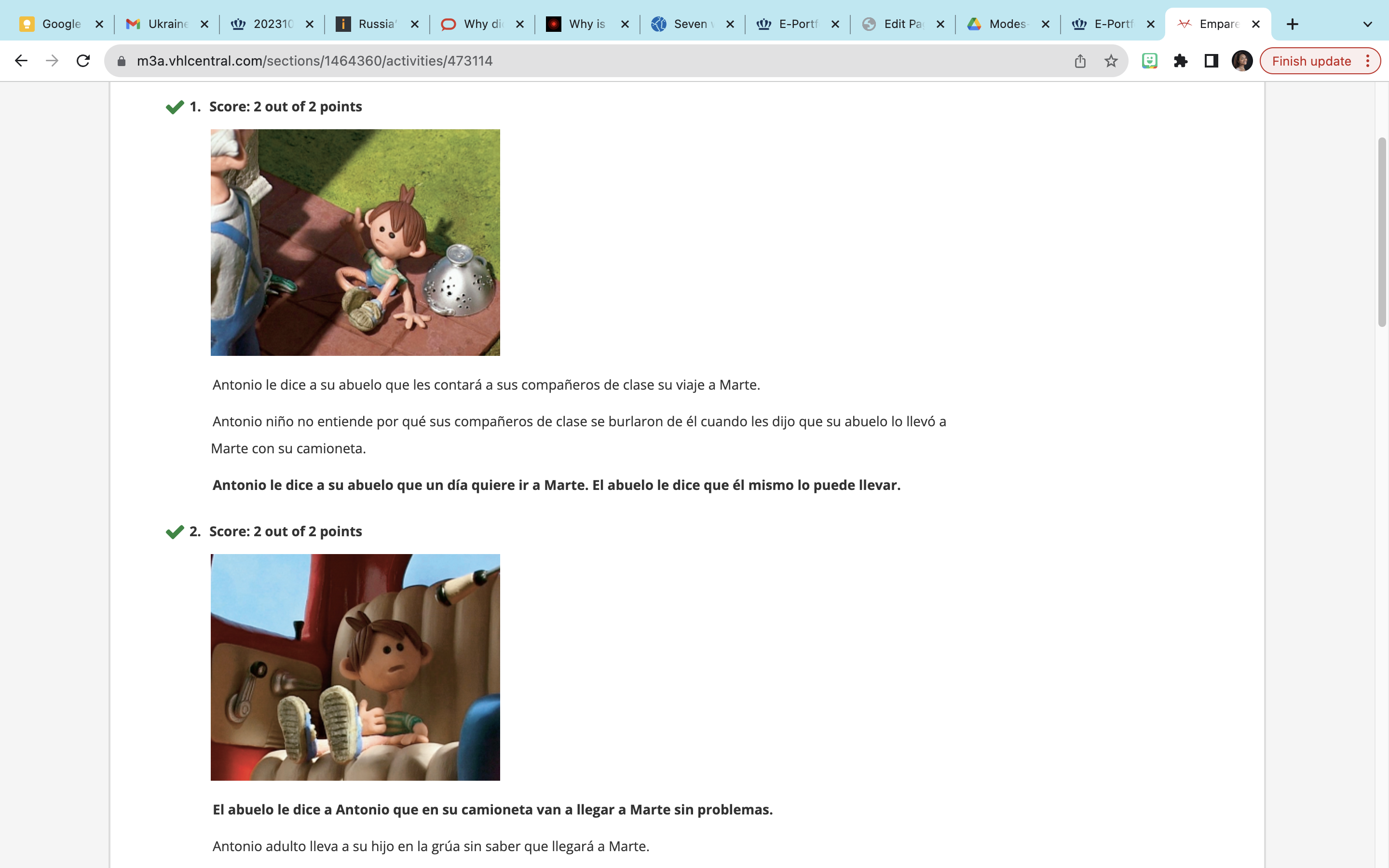
In English, give a brief 2-3-line description of any presentational speaking activities you completed this semester inside or outside of class for or related to your Spanish learning. Include a recording of one of these speaking activities. (See Modes of Communication link for description and examples). In our assignment, La narracion en el pasado, we read a story as if we were presenting to a crowd of people. I enjoyed being able to “act out” these emotions while completing the assignment.
I have a hard time not reading off a script. I get nervous that I’m saying something wrong and about possibly offending people. This is something I will be continuing to work on throughout my time in learning the Spanish language. I definitely excel at changing my voice sound to depict the emotions that I’m reading and I know that is my strongest asset when it comes to speaking in a foreign language. My pronunciation is also very good to be a native English speaker.