Interpretive, Interpersonal, and Presentational Modes of Communication
Exploring Culture
The Cultural sections in Lingro and hearing people of different spanish ethnicities speaking. Along with movies even though they are not one hundred percent accurate it still gives perspectives.
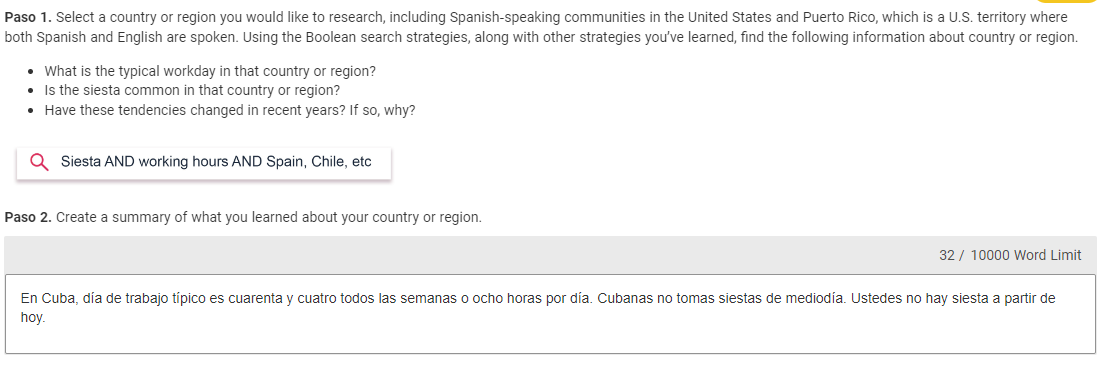
Within the start of the semester, using Lingro Learning really helped with my understanding of cultural perspectives. In each module there was a cultural section with different spanish countries and helped me see how different difference countries are. Like one of the countries I chose was Cuba which I focused on the whole semester. I learned that cuban schools have different living standards and they do not have la siestas like other spanish speaking countries do. Before even researching this stuff, I had no clue about it but i’m happy I learned more in details now and hopefully in future classes and opportunities.
Engaging in Communities
I think it is very important to engage with intermediate community. Like in class it helps me learn spanish among other people who are on the same level as me. My community can help understand alternatives ways, if needed, of spanish words and phrases along with pronounciation correction from actual spanish speakers.
Interpersonal Communication
An interpersonal oral activity I started before taking spanish 101 was duolingo. Though I stopped because I learned that duolingo does not teach you everything right like what words to use and thought in person learning was better. I also practiced listening and responding to audio along with exchanging questions and answers in class.
Going further in depth, duolingo is general spanish. Everyone should know that different places speak different types of spanish and use different words and phrases. Duolingo didn’t have that. It formed words and sentences as it would if you used a translator to speak to someone. I have to admit I have grown a bit since I last took spanish in high school and duolingo reintroduced me to the spanish speaking world.
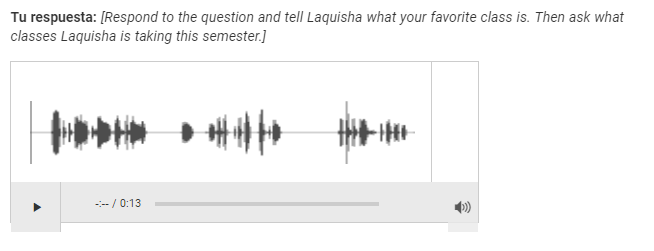
The speaking activities in conversar helped me with my listening abilities and ability to respond orally to questions asked. Questions like my name which I am now an expect at responding with in the proper from along with basic information people would need to know about me. Though, I can work on using the right verbs when forming responses.
Presentational Speaking
A presentational speaking activity I would like to discuss is from my latest project of contrasena. It was project on my three favorite places on campus
In the video presentation, I went around campus discussing 3-5 places I liked to go to while showing pictures of them and explaining what I like to do their. The thing that challenged me was knowing what words and phrases I could use to explain what I do there, a brief location to where it is in relations to other places. It really tests my skills of memory and shows what I do and do not know. Next time, I feel like I could be more serious when recording the video and making eye contact and being less nervous.
Presentational Writing
I can not really say I have done any official presentational writing but the only thing I can say that goes into this category is the spanish profile and doing a smal in class presentation of it.
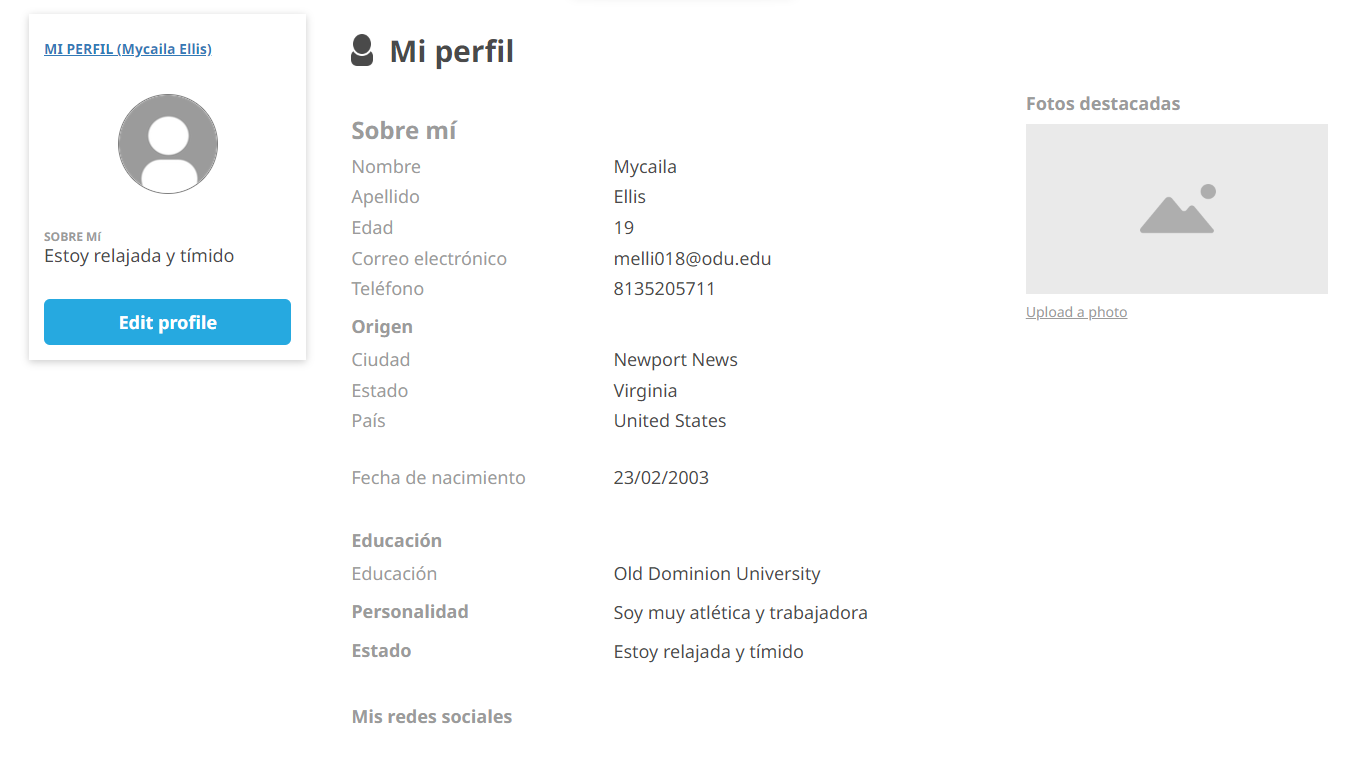
Since it is rounding the end of the semester, I can say that I am quite efficient in writing my profile and reading it off like the back of my head. But, I feel like I could use some improvements. If someone asked me to tell them my profile, only a few things are going to come to mind. Like stating my name, number, email, age and where i’m from is simple enough. But so far I am still in the comfort of answering questions people ask me which is easier for me to remember what needs to be said.
Interpretive Listening
While using contrasena and duolingo, they have both developed my listening skills to specific words. They helped me have better hearing to tell the difference between words and phrases and who they are being applied to.
In class, while doing assignments and hearing my teacher talk, I was able to distinguish between the uses of ser and estar. Also hearing when words and phrases are being applied to male or female. I was able to tell the difference when a person is talking was formal or informal.
Interpretive Reading
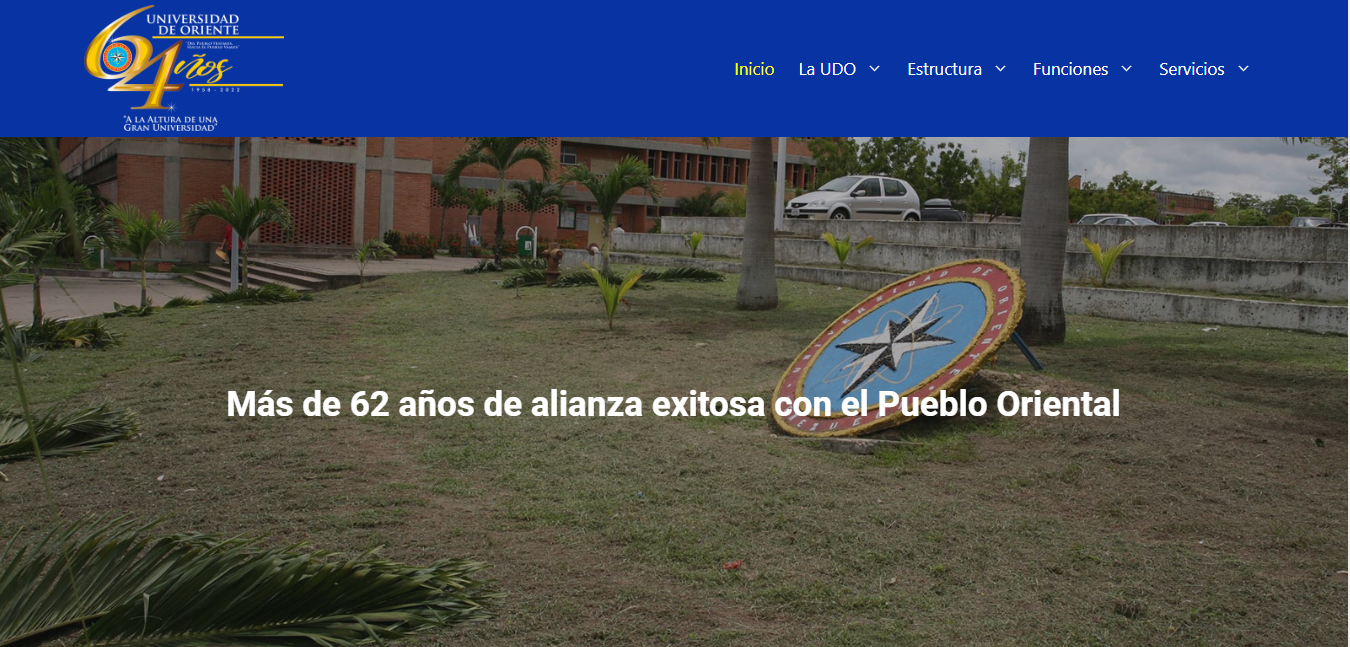
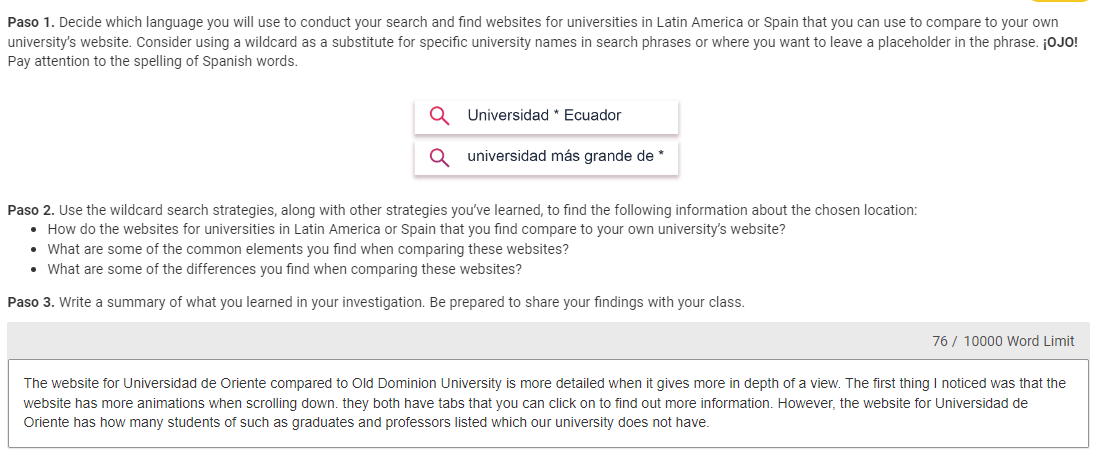
While doing these assignments, I used spanish dictionaries to help me figure out words I don’t know while breaking them down. I also had to use google to search for spanish countries and colleges within those countries to complete my spanish exploration.
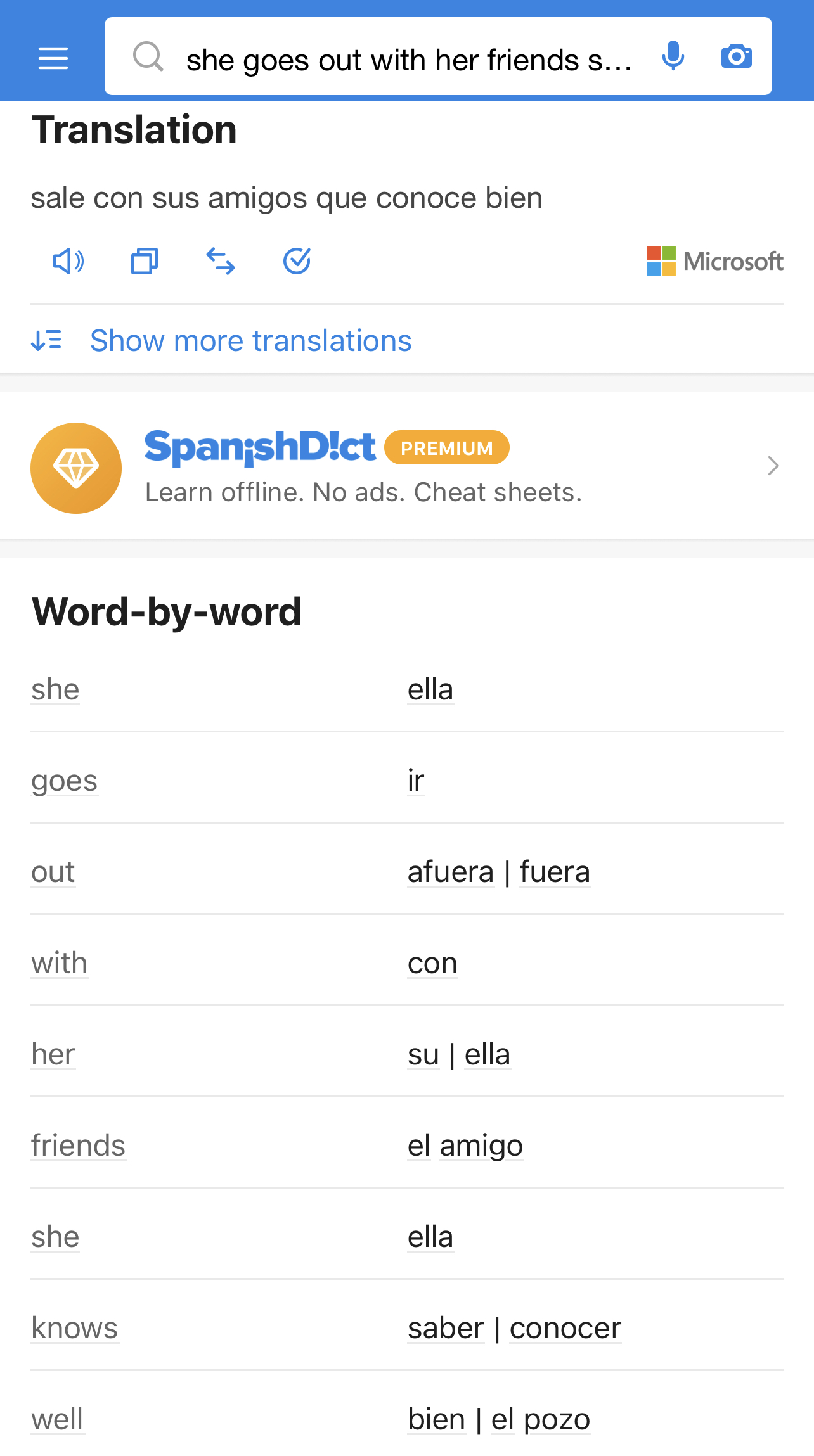
A challenging aspect of finding words I don’t know was making sure they were able to be used on my vocabulary. Even though knowing spanish words or phrases could help me, but help would it be if it was out of my spanish level and I haven’t learned yet. For the websites, it was pretty easy to search for spanish colleges and compare them to others since they were in english also.