Interpretive, Interpersonal, and Presentational Modes of Communication
Exploring Culture
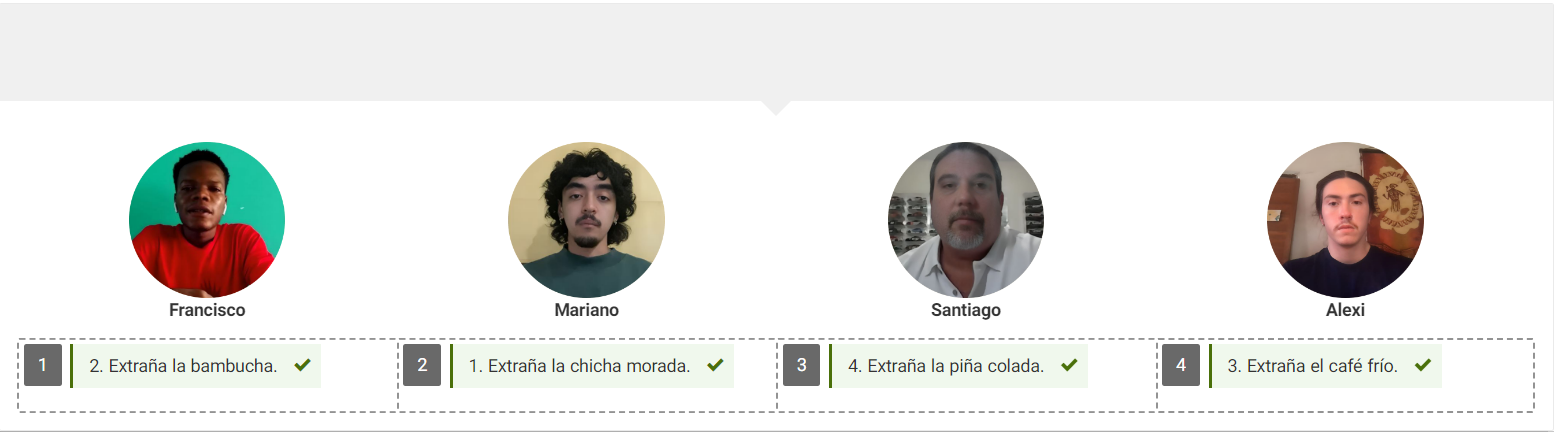
Exploring the cultural aspect of spanish, it is good to recognize that different cultures has different foods that they are use to. This is probably one of my favorite things to learn more about about since there are hundreds of various cultures who have different food norms. In reflecting the culinary landscape of Hispanic and American cultures, these diverse dishes reflect the rich tapestry of traditions and values. Each item carries a unique story, weaving together history, geography, and social practices.
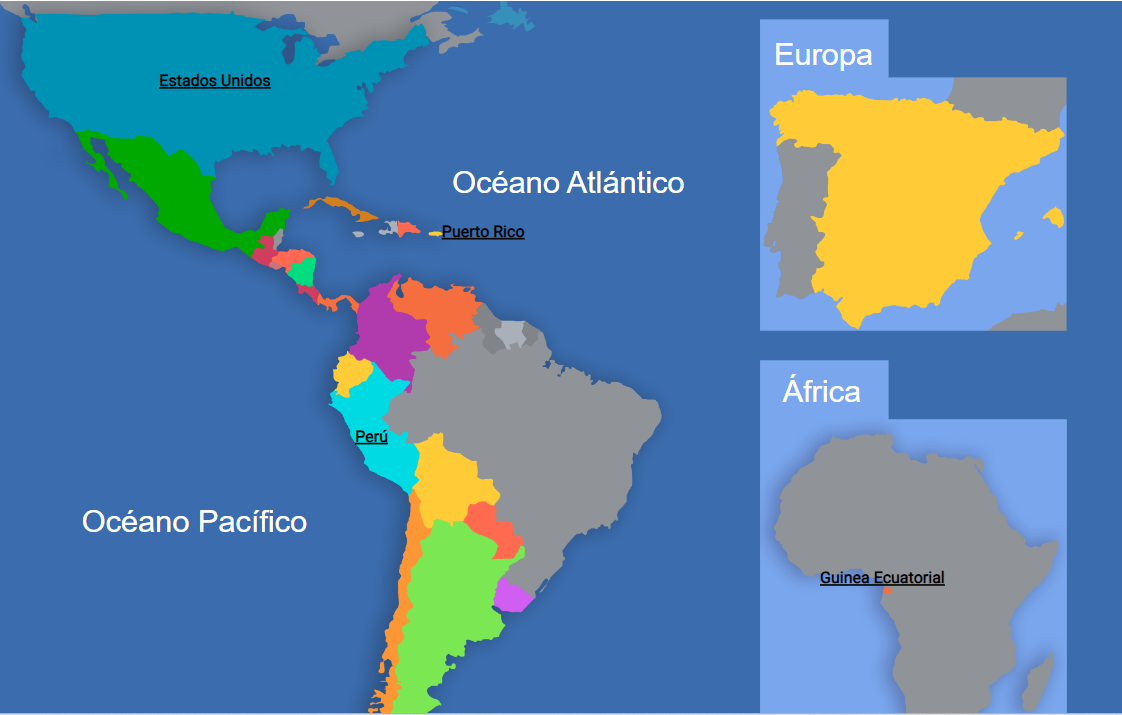
As shown the the picture, different places like Africa, North America and South America has its own food norms. In this case, its bambucha, something I barely have knowledge of being an American my whole life or purple chicken. Then others food and drinks like pina coladas which people might say are exotic drinks and cold coffee which is more of the norm in the United States. Exploring these culinary traditions challenges preconceived notions and encourages a broader understanding of cultural diversity. It prompts me to confront stereotypes and misconceptions, fostering a more inclusive worldview. By appreciating the flavors and rituals associated with these foods, people can gain insight into the shared and distinct values that shape both Hispanic and American cultures, ultimately promoting cross-cultural understanding and appreciation.
Engaging in Communities
Engaging in both local and global communities is crucial for creating social bonds, addressing shared challenges, and building a sense of belonging in the immediate community. On a global scale, such engagement is essential for tackling interconnected issues like climate change and poverty. It promotes empathy, cultural awareness, and shared responsibility, contributing to a more inclusive and sustainable world.
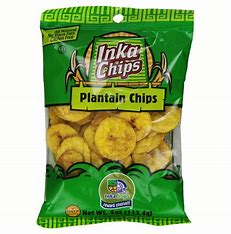
One of the many times I have engaged with local communities is trying out new foods and snacks I never tried before. There was a time in class when plantain chips were brought for the whole class to try so i think it helped helped with cultural awareness regarding food. Not a lot of people like the chips of course since it is a acquired taste for some people but I personally liked them. I had plantain or banana chips before but they were much more sweeter compared to the ones I tried during class which was more salty.
Interpersonal Communication
During the Fall 2023 semester of spanish 102, one of thing projects I have completed was TalkAbroad. In this project, our goal was the communicate with people from other spanish countries and speak with them about various topics.
The purpose of TalkAbroad will coordinate regular conversation practice for you with native speakers during the semester. As shown below, this workbook will guide you through that process with preparation activities, conversation topics, and reflection activities.
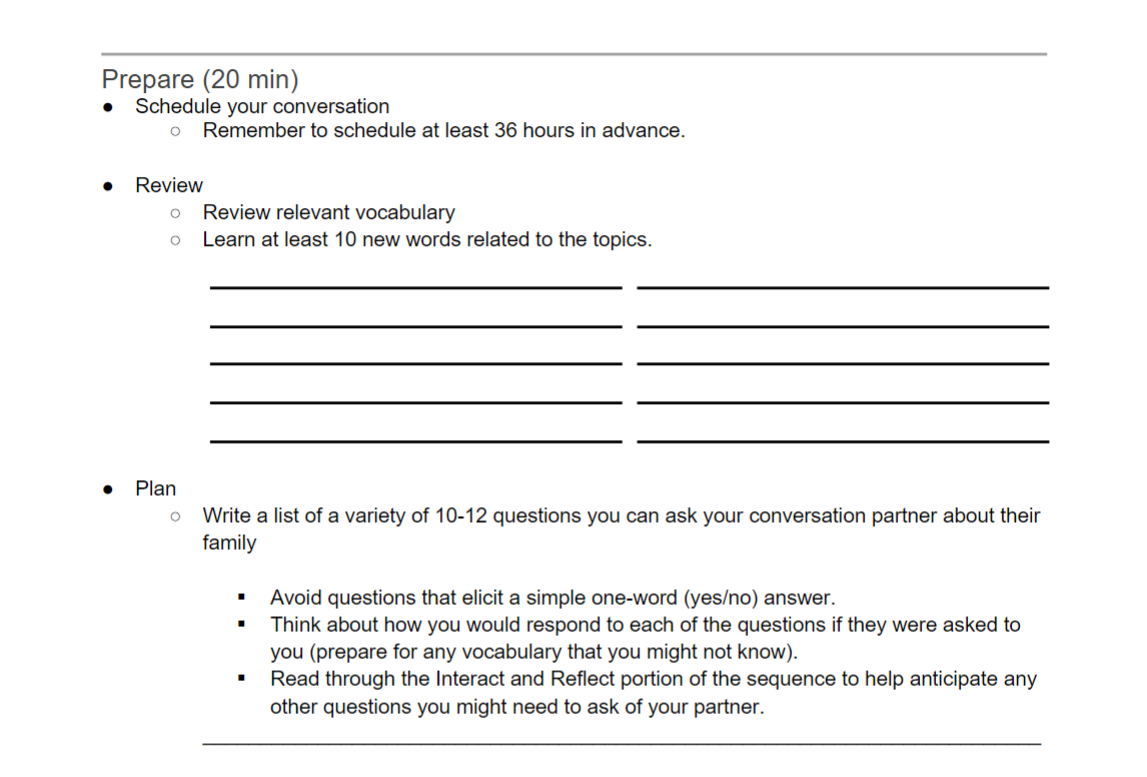
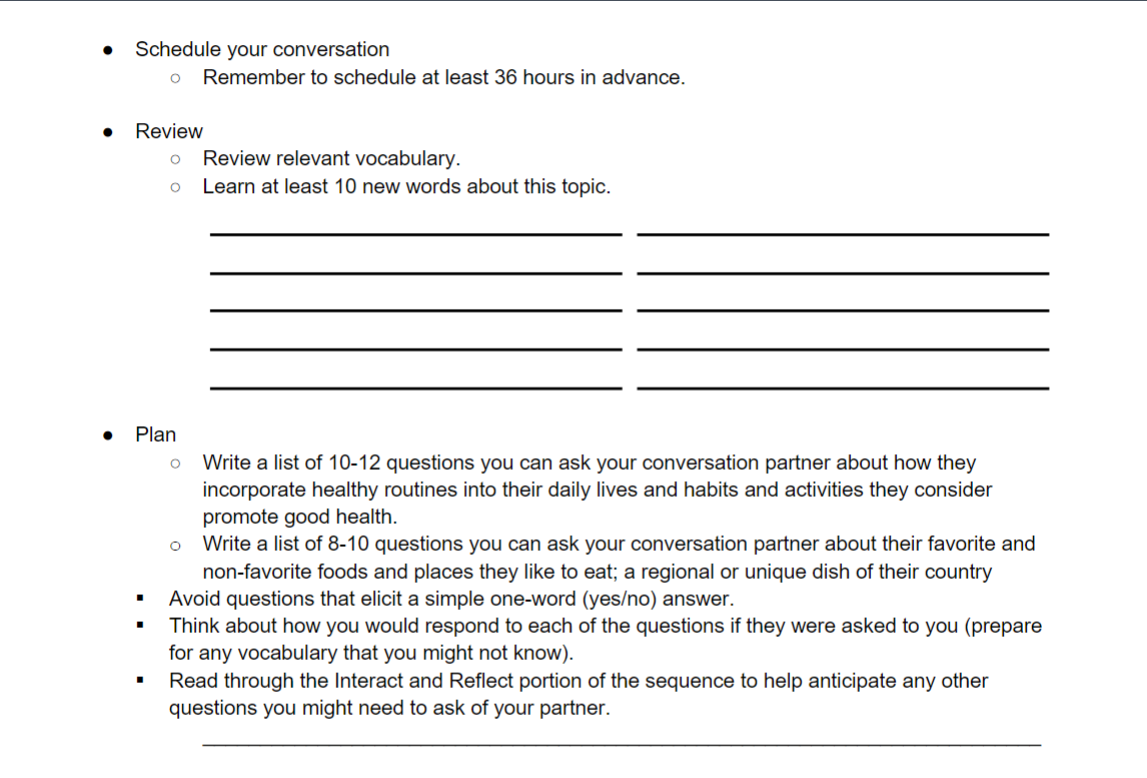
In the first TalkAbroad, I was pretty nervous and had no clue what to expect. I was more prepared with a few questions that I wanted to ask and answer but in all honesty, there isn’t a way you can prepare for a conversation. The person I did get paired with did help me a lot when i was stuck with what words to say. The second TalkAbroad, I felt less anxious and was able to ask a few questions and answer some. The person I had completed it with was super helpful, along with the fact I chose someone who had similar interests with me.
There was times where I was confused on what words are because they don’t know that we haven’t learned some words so I was trying to decipher what was said. Other times, I was silent because I did not know how to answer some questions with what I really wanted to say like I would in English. So some of it was pretty challenging. Overall, both conversations went smoothly and I was able to experience talking to people fully in spanish for the first time. I think if given an opportunity to practice again, I would do better.
Presentational Speaking
A presentational speaking activity I did this semester included a video of me talking my about my family. In the video, I described each of my family members on what they are like and and activities they like to do. It had to be at least three minute’s long and used vocabulary.
Based on my performance in this video, I feel like I could’ve studied to say a little bit longer. I think there is a part in the video where I forgot to mention something about a family member and just moved on to the next one. Also, there could have been a better way to present the pictures which next time I will do a little but more research to find an alternative way. Other than that, i think I did pretty well giving it was my first project for the semester and I enjoyed talking about my family.
Presentational Writing
One of the presentational writing assignments I have done this semester was talking about mental health and wellbeing. The point of the assignment was to make an infographic on a specific mental health or illness and talk about ways to overcome it.
69353_2023-11-10-053441_372This infographic really brought out my creative side when making it. The topic I chose was mental health overall to where I listed solutions and symptoms you could get. I originally did not think I was going to meet word count but surprisingly I did which was good on my part. Although, after submitting my project, I forgot to link the pictures to each subject which I can just remember to do next time.
Interpretive Listening
During any cultural exploration, we have to listen to different people from different countries talk about how they do things in their countries. It requires active listening to actually know what is being said but the use of captions helps dissect the words.
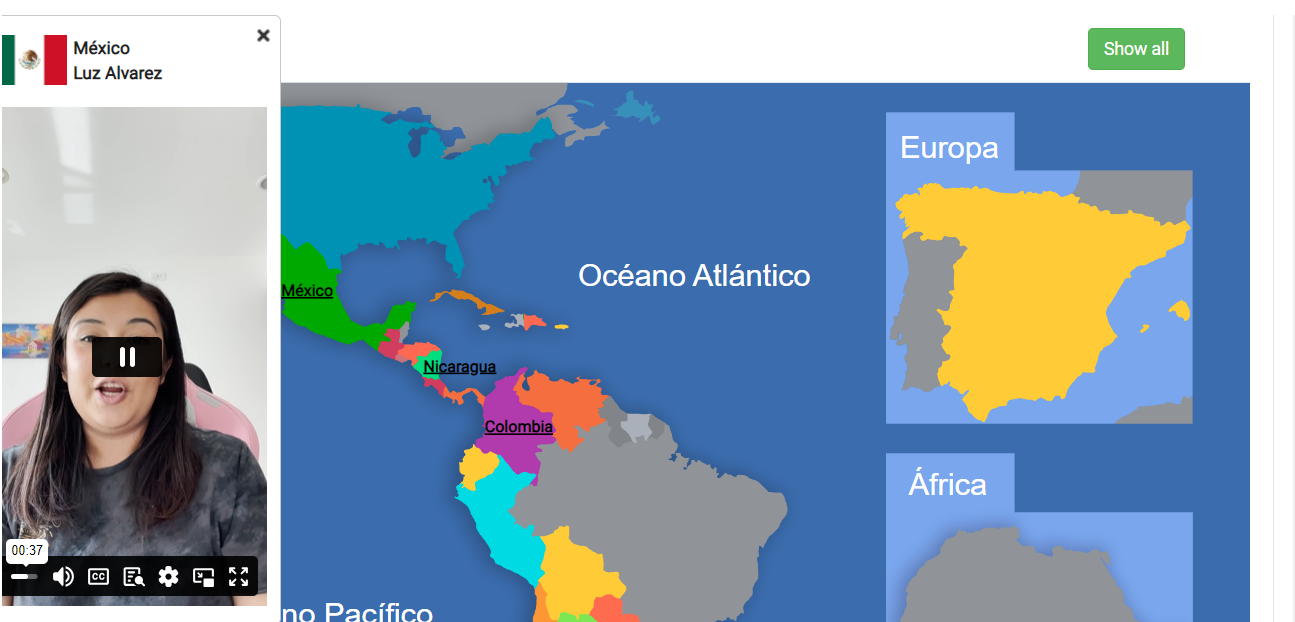
During the start of the semesters, I would just listen to the video and try to figure out what is said. But as it went on, we started to go sentence by sentence what the people were saying. I would say doing that helped more because there was times where I was left confused and did not try to understand what I was hearing. That and some of the speakers spoke too fast so it was harder to comprehend. In the end, I know it takes time to practice and understand what is going on even if it is slow.
Interpretive Reading
Lastly, one of main infographics I have read this semester was to help me create on of my own about sports. It was an introduction reading of what sports to join and it provided data and what the sport was and what times it was being practiced. It was an informative reading that helped guide me.
https://contrasena.s3.us-east-2.amazonaws.com/pdfs/v6/textos/contrasena_v6_texto_u7.pdf
Link above it to 7- Contrasena: Texto reading infographic
Some of the sports that were described above was soccer, yoga, dance, cycling, swimming and etc. There was a lot of options to choose one so you were not stuck on one single sport if you did not want to be. The most challenging was finding out how to use command words. And since it was the start of the semester, it gave like an overview on how when I wrote my infographic how it should’ve been. The main thing that stood out to me was how to write the command words so it made sense.