Interpretive, Interpersonal, and Presentational Modes of Communication
Exploring Culture
The Exploración cultural section on Lingro-Learning helped me to better understand Spanish culture. It provided me with great insight and offered many interactive activities that taught me about Spanish-speaking countries.
Lingro-Learning showed me the many differences between my own culture and Hispanic culture, as well as the many similarities. It offered unique perspectives and elaborated on the cultural practices of Spanish-speaking countries, curated by residents of those countries. These activities promote cultural awareness and helps to overcome stereotypes. I learned how to formally and informally greet someone using usted and tú respectively. I have also learned that the tradition of taking a siesta has unfortunately gone away in most Hispanic countries.
Engaging in Communities
Giving back to my community is very important to me. It gives me the chance to work alongside my fellow citizens to help improve my city and those who reside in it. I am currently working for the Veterans Business Outreach Center, we provide business training and counselling services to Veterans who wish to start their own small business. It is a very fulfilling to give back to those who have already given so much to our country.
When I was in the Army, I volunteered to go to the Philippines with a handful of other soldiers. Our task was to build a schoolhouse in a impoverished neighborhood. We worked day and night with the Filipino Navy to achieve that goal. The days were long and exhausting but to see the look on the children’s faces when it was done made it all worthwhile.

Interpersonal Communication
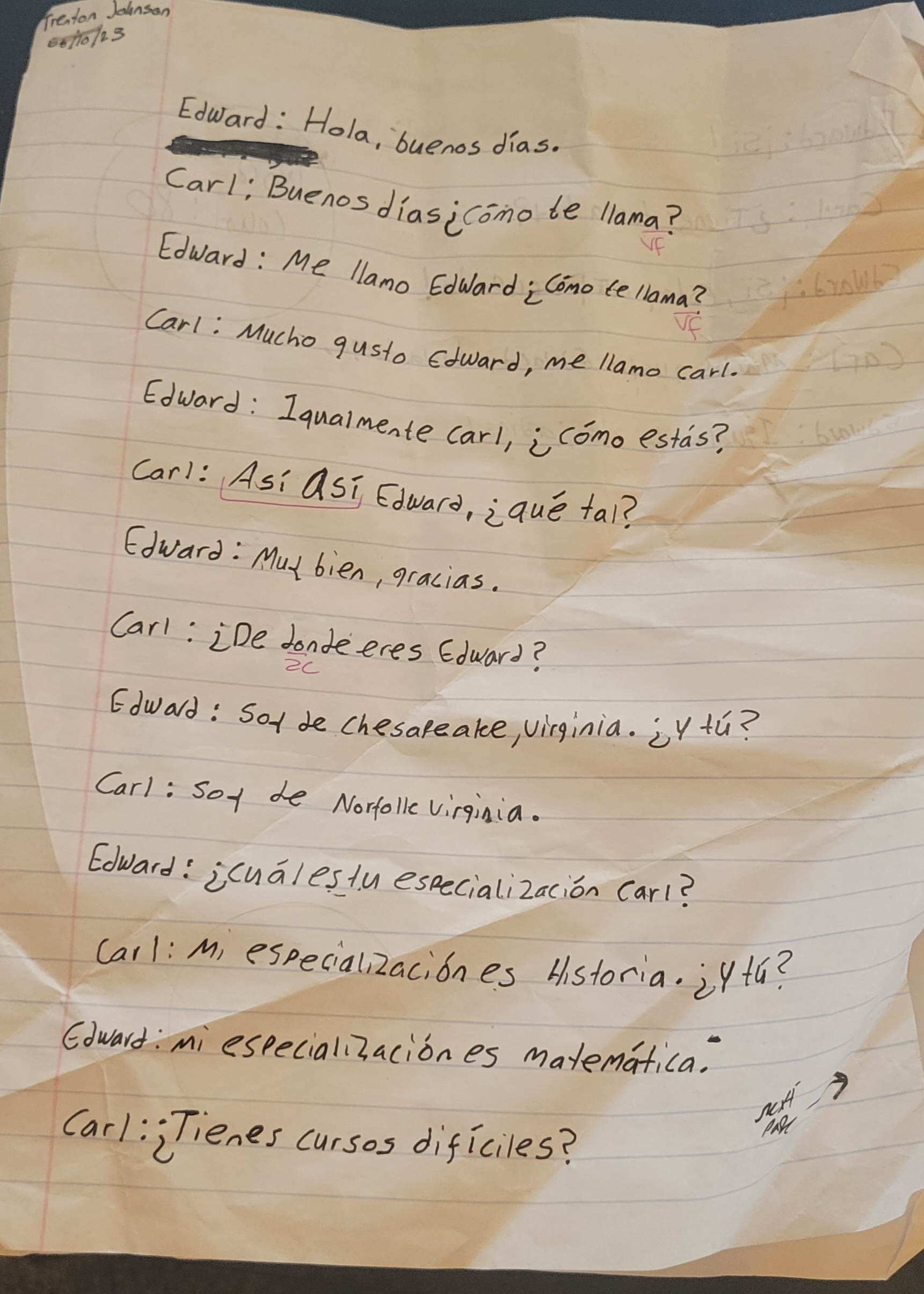
In class, I participated in a number of interpersonal activities. We would often get into groups with other students and practice grammar, vocabulary, and pronunciation. Each session we would be paired up with a different classmate, this allowed us to hear new perspectives and to learn new words in Spanish. There was an initial awkwardness when it came to speaking in Spanish, and I struggled with this quite a bit. As time progressed it only became easier, I learned that making mistakes is one of the growing pains that accompany learning a new language.
Presentational Speaking
In addition to speaking to other students, we also had the task of describing basic information about ourselves to the class. This information covered origin, inherent qualities, our schedule, and our hobbies. This was also pretty uncomfortable at first, but the more we did it the easier it was. We also had individual interviews with our professor covering the same topics. This was a little bit more stressful as it was graded, but studying the material prior helped me overcome this particular challenge.
Presentational Writing
In class, I had to complete a variety of challenging yet helpful writing assignments. Writing the Spanish language down helped me establish the connection between seeing it and speaking it. One such assignment was to compose a calendar of our daily activities. This helped me expand upon my vocabulary and writing the words down made them easier to memorize. Our written exams consisted of us describing about our life, our experiences, and our preferences. These were daunting at first, but once you have the grammar and vocab down it becomes quite easy.
Interpretive Listening
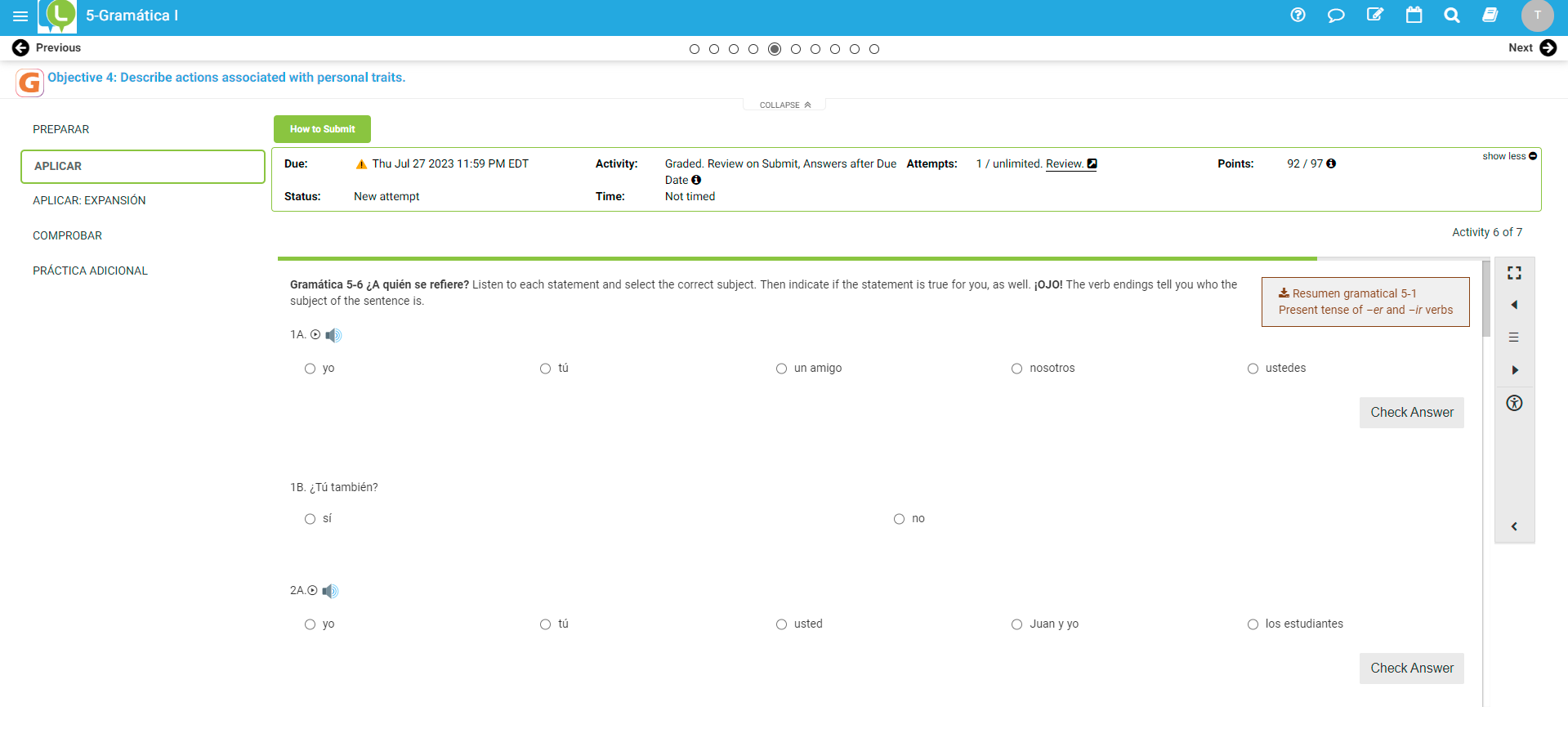
Lingro-Learning was a great resource to utilize when it came to interpretive listening. It offered a variety of activities that helped me understand Spanish. I would listen to short audio clips spoken in Spanish and in turn, would have to write a response based upon those audio clips. It was quite challenging to understand, as the speaker spoke very fast. This became progressively easier as I would understand more and more words as the semester progressed. I used to have to listen to the audio clips again and again just to catch a glimpse of what they were saying, but now I only have to listen to it once.
Interpretive Reading
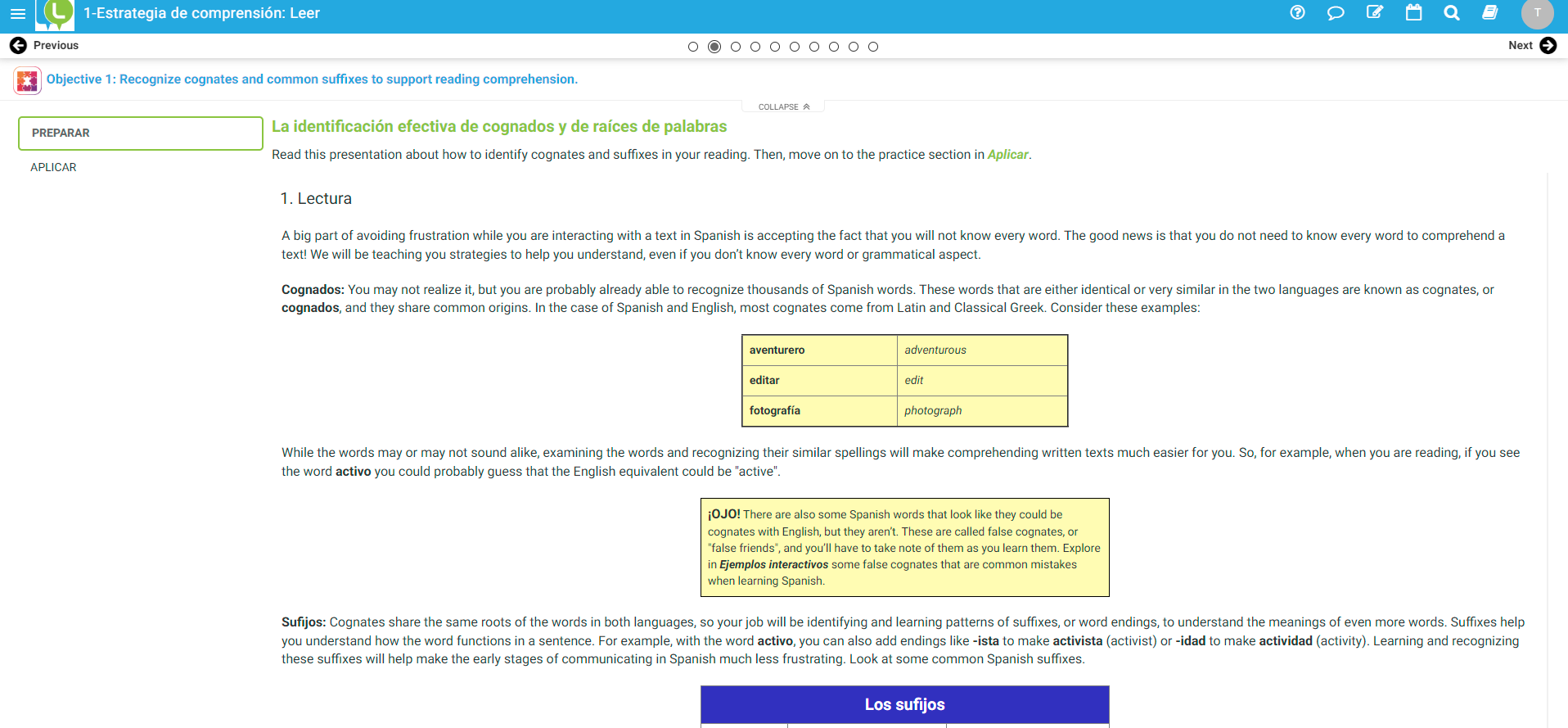
In my opinion, reading Spanish was the key to my success. In order to speak the language you must be able to convey it through not only reading it, but also writing it. Reading the actual words gives you an idea on the speaking patterns and grammar rules associated with Spanish. We had to complete several reading activities while in class. For example, we had to research several Hispanic celebrities and write about their personality. Lingro-Learning also provided great information as it had me reading about the vocabulary, grammar, and the many rules of the Spanish language. When I first began to read Spanish, it all seemed incomprehensible. But one thing I learned to do was to take the words that I did know, and think about the context of those words. This helped to uncover the meaning of the text. Memorizing cognates also went a long way in helping me comprehend Spanish.