Exploring Culture
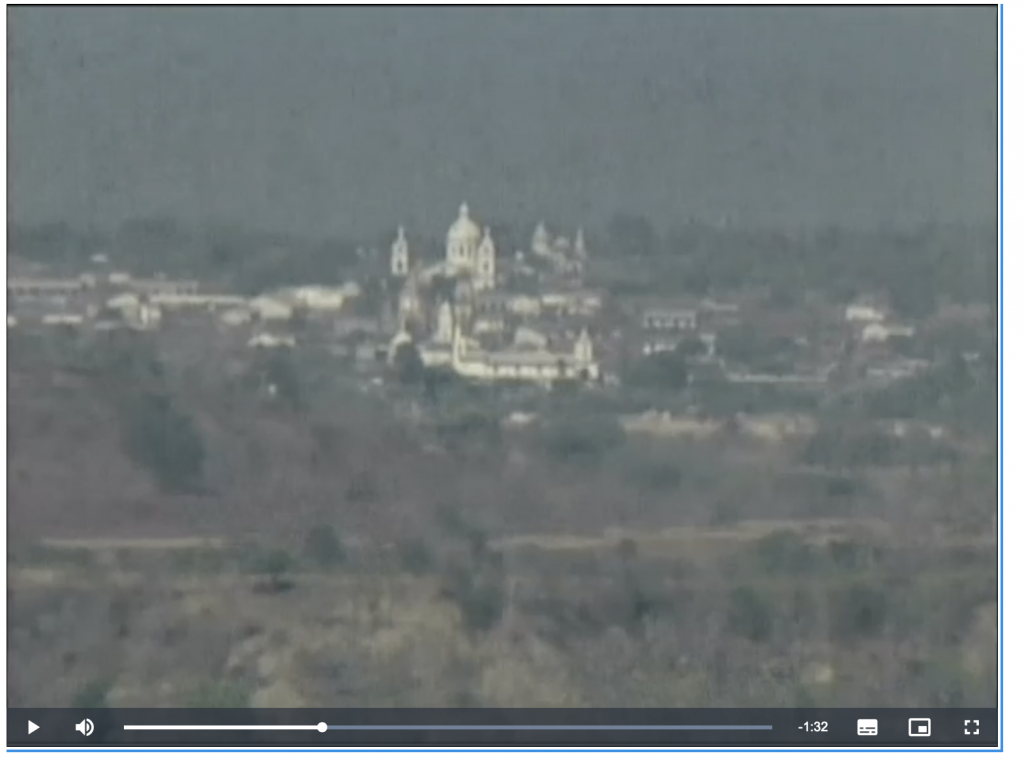
Masaya, Nicaragua
(Screenshot of “Masaya” a Aventuras en los países hispanos video)
In the city of Masaya, many citizens can be found in it’s large outdoor market. In the market, people sell fruits, vegetables, and other foods. There is also a large selection of handmade items that can be found for a good price. Masaya is also known for its El Torovenado festival. This is the most important festival that is celebrated in Masaya. El Torovenado is a celebration that features traditional dancing and dress, and this festival even has famous people in attendance.
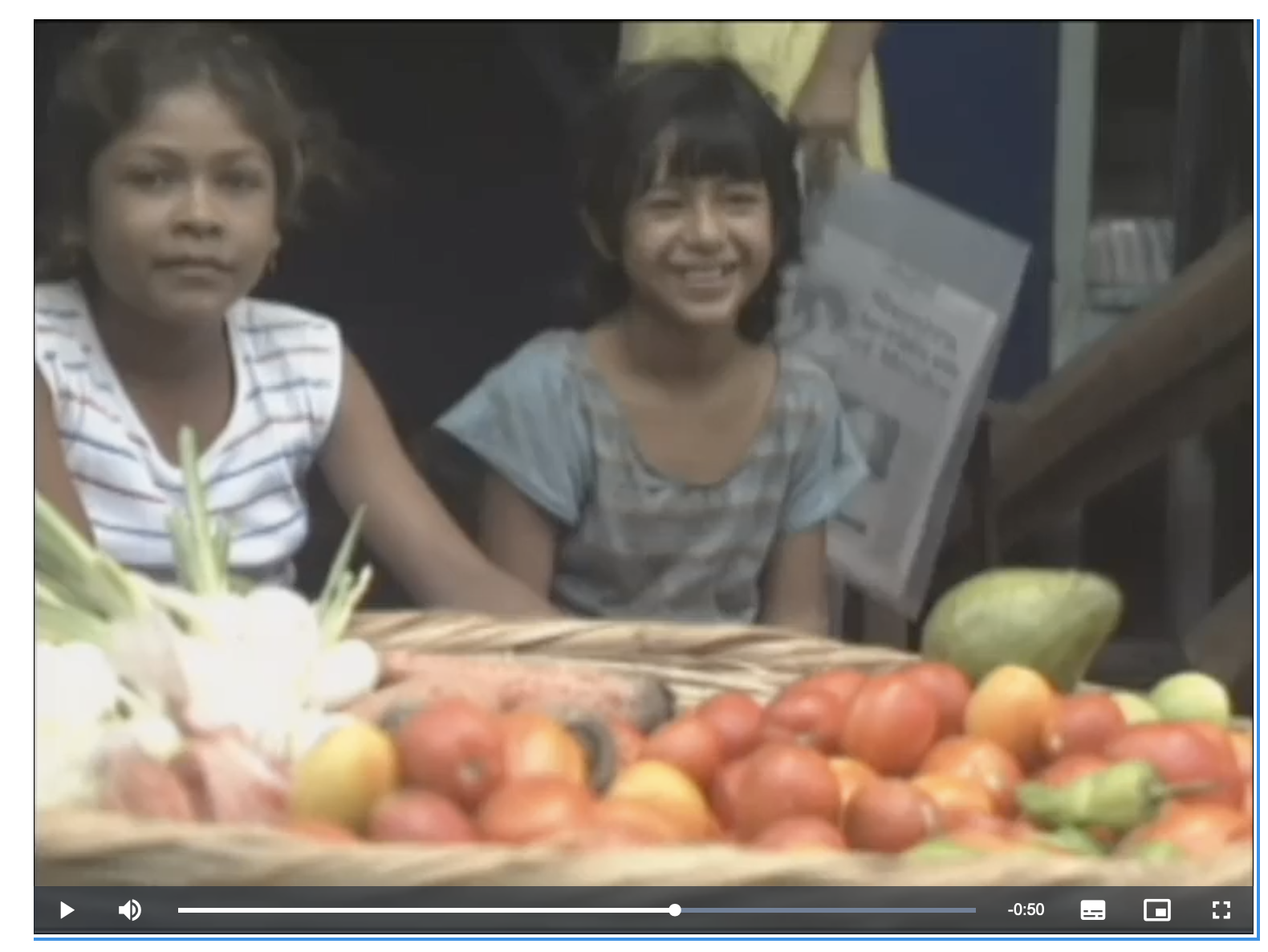
I have learned that other Hispanic countries also have different festivals that they to put on throughout the year. These festivals are usually an event that takes place yearly and is a way of commemorating a particular event or time. This has helped me to realize that Hispanic culture still highly value tradition. However, not only are these festivals just for fun, but they usually have a religious connection as well.
Engaging in Communities
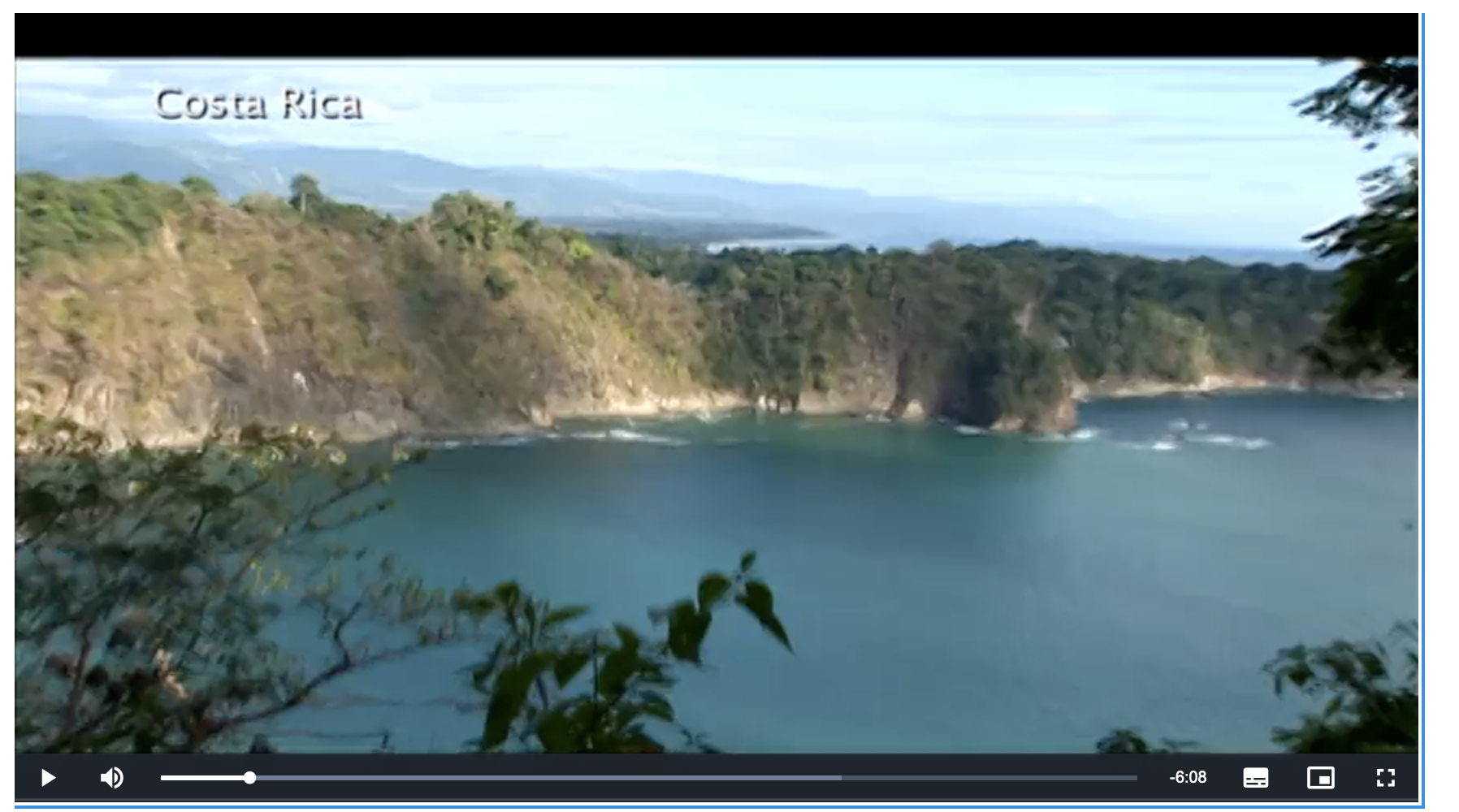
There are different ways to be actively engaged in the community. The screenshot above of Costa Rica shows its beautiful natural environment. Many of Costa Rica’s natural areas are protected in order to preserve them. One way I help to preserve my natural environment is to be “green” whenever possible. For example, I take reusable bags to the grocery store and generally try avoid single-use plastics. However, if I do end up with plastic I always recycle!
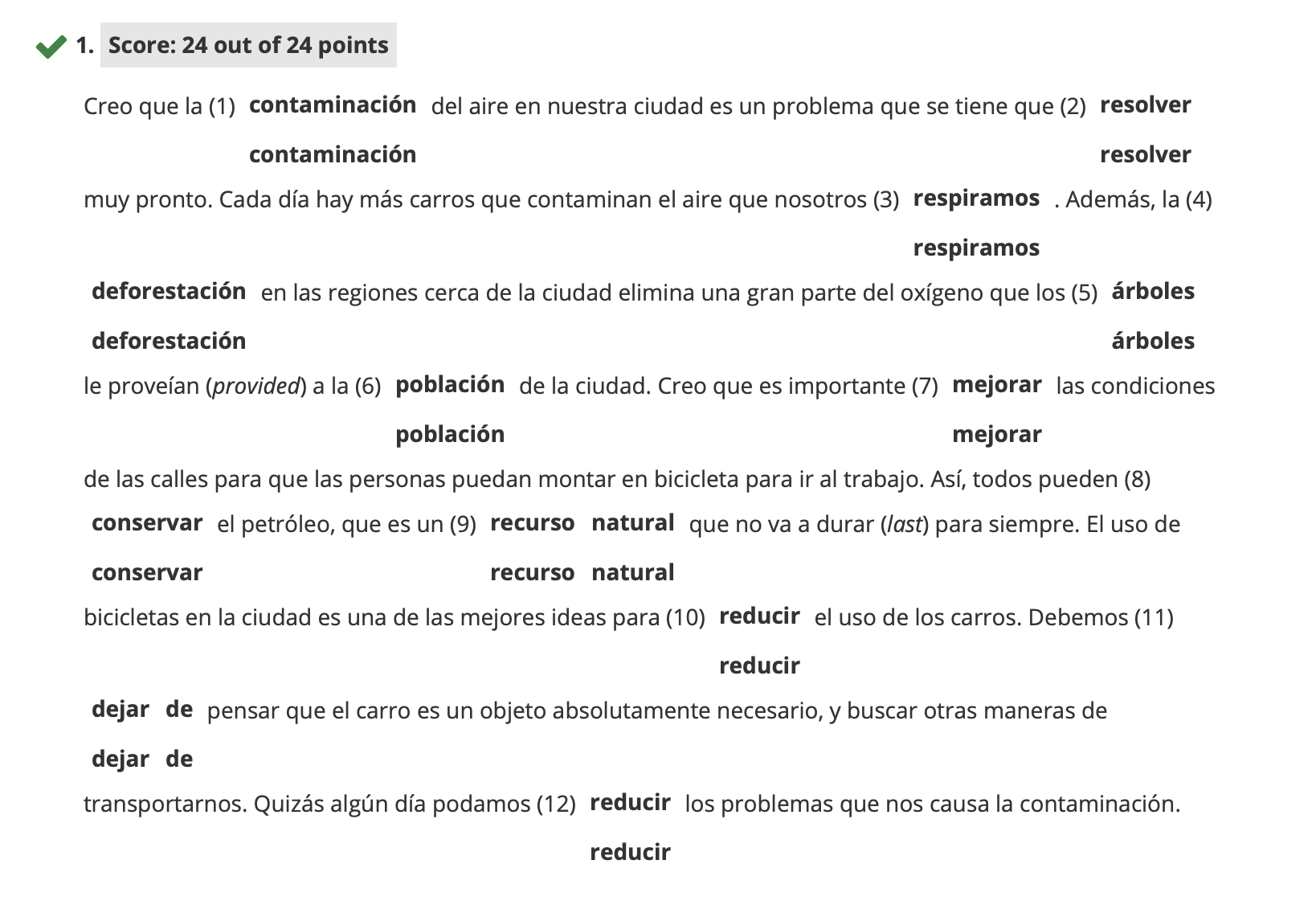
This screenshot is a vocabulary activity. It helped me practice my newly acquired vocabulary from our module about nature and conservation. This fill in the blank activity allowed me to apply the vocabulary by putting it into the correct context.
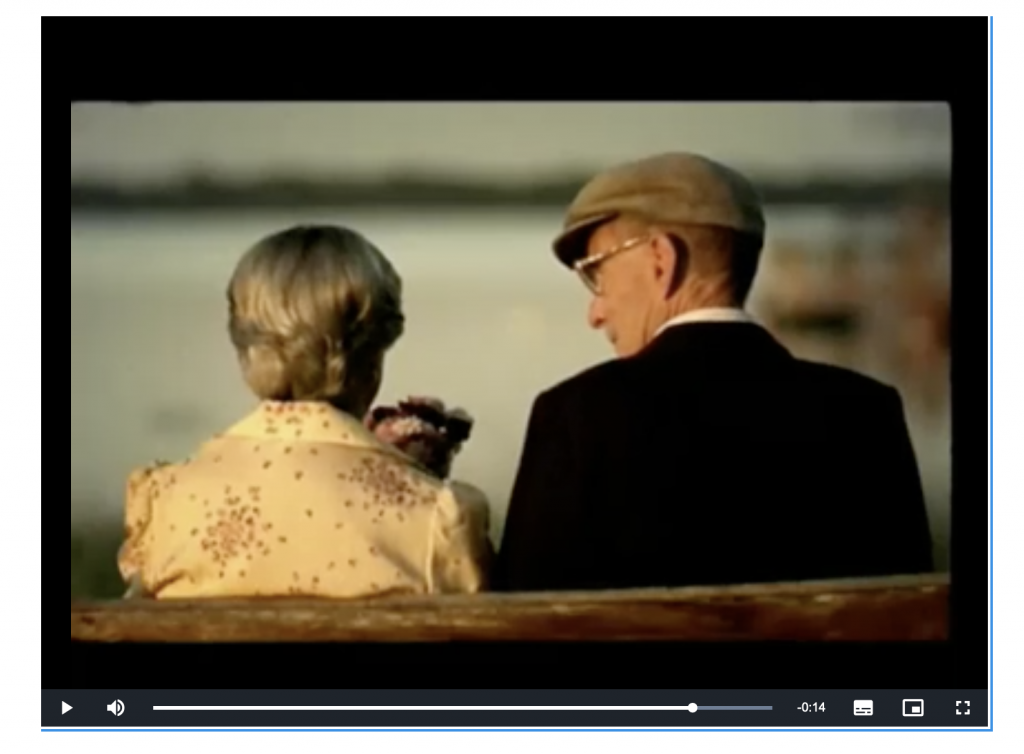
“La dulzura puede cambiar el mundo.”
(Screenshot from the VHL Supersite)
The screenshot above is from an advertisement that illustrates the importance of the acts of kindness within your community. Although the advertisement is in Spanish, the message is universal. You can be engaged in your community by simply being kind to others.
Interpersonal Communication
Throughout this semester, I participated in several activities that required interacting with others to practice my Spanish. One of these activities was a TalkAbroad conversation. The conversation was only 15 minutes with a native Spanish speaker about a specific topic. Also, I had a virtual study session with my one my classmates, so we could practice together. Lastly, I had to post to a discussion board periodically and read my peers posts and comment to engage with them.
In this TalkAbroad conversation, my partner and I were to discuss life in the city/ country as well as conservation issues. I was prepared with the correct vocabulary and grammar. Working what I knew into a smooth conversation was where I struggled. The TalkAbroad workbook’s pre-planning section helped me to generate ideas on how to move the conversation along. During the conversation, I was able to talk with my partner, Sandra, and learn more about Ecuador’s efforts to be “green”!
SPAN202-TA-Workbook_-ArgabrightThis embedded assignment is the TalkAbroad workbook that is referenced in the above paragraph.
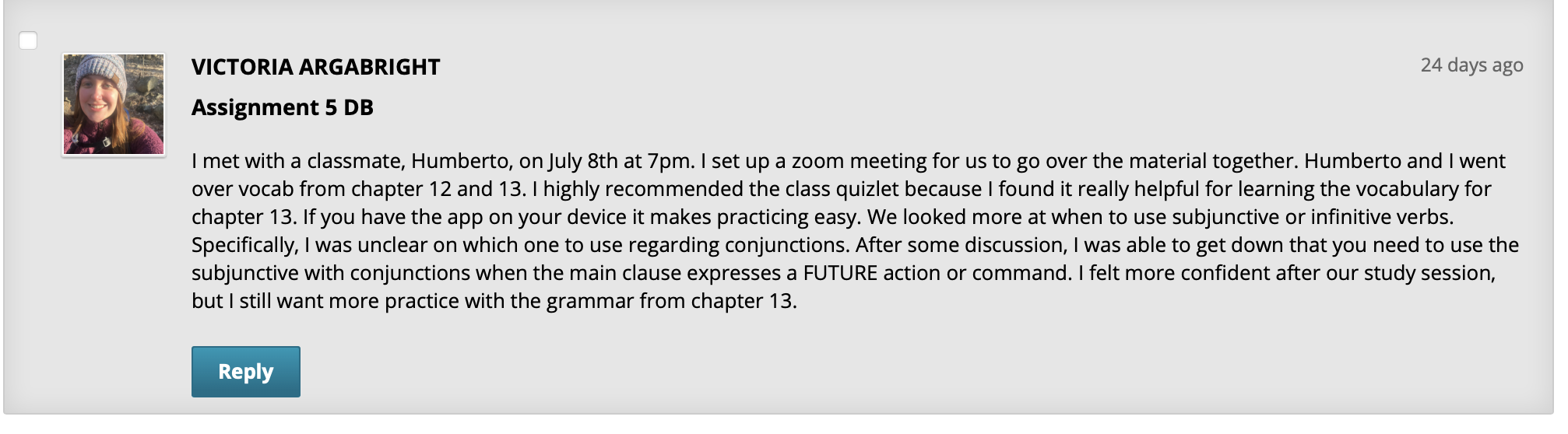
Another interpersonal activity I did this semester was a virtual study session with one of my classmates. It was a short meeting where we got to practice together instead of alone. During this study session, I was able to reinforce concepts that I already knew while getting clarification on things I was unsure of. For example, my study partner, Humberto, helped me to understand when I need to use the subjunctive or infinite verb when a clause contains conjunctions.
Presentational Writing
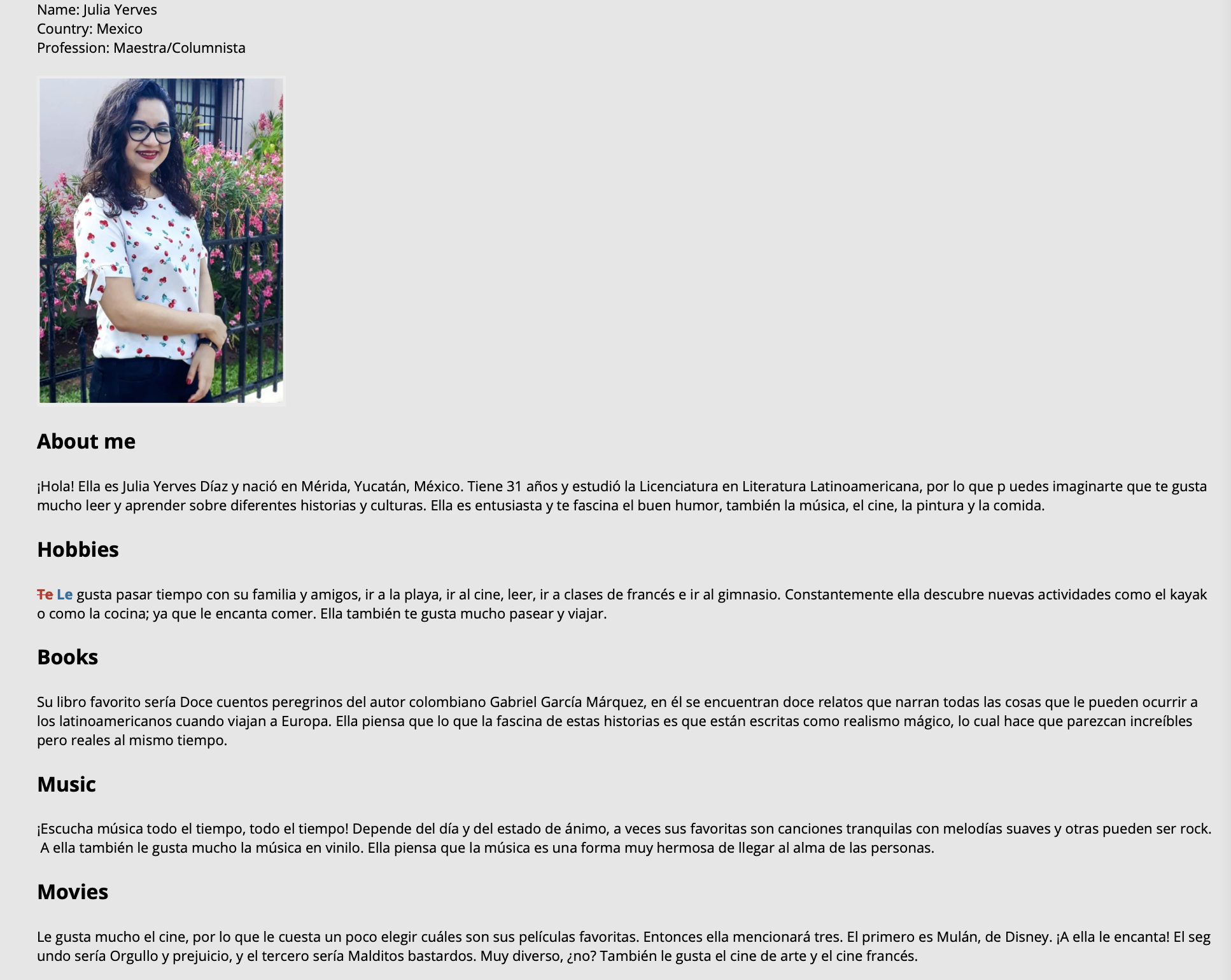
One composition I did this summer was a discussion board post about our TalkAbroad partner. We had to copy their bio and change it from first person (I/me) to third person (she/her). This composition required me to practice more with pronouns possessive adjectives, and verb endings to reflect the third person.
Interpretive Listening
To practice listening skills, each module I worked through had different audio clips I had to listen to and answer questions about. Also, I completed a fun listening activity using the Lyrics Training website. This site has many popular Spanish songs, you pick a song and play a game to practice your Spanish.

In this activity shown in the screenshot above, Sofia described her day by saying what she did at each location. I had to listen to her description and select which place she was at and construct a schedule of her day. For some audio clips I found myself getting stuck on a statement for so long that I miss the next one. Thankfully, I am able to replay the audio and listen back for the one I missed or misheard the first time.

https://lyricstraining.com/es/play/monsieur-perine-pedro-capo/mundo-paralelo/HdGuRFPq3d#b7c
Interpretive Reading
Each chapter we studied had different readings for us to complete. Many were short articles like the screenshot below. We would read the article and then answer the questions that followed.
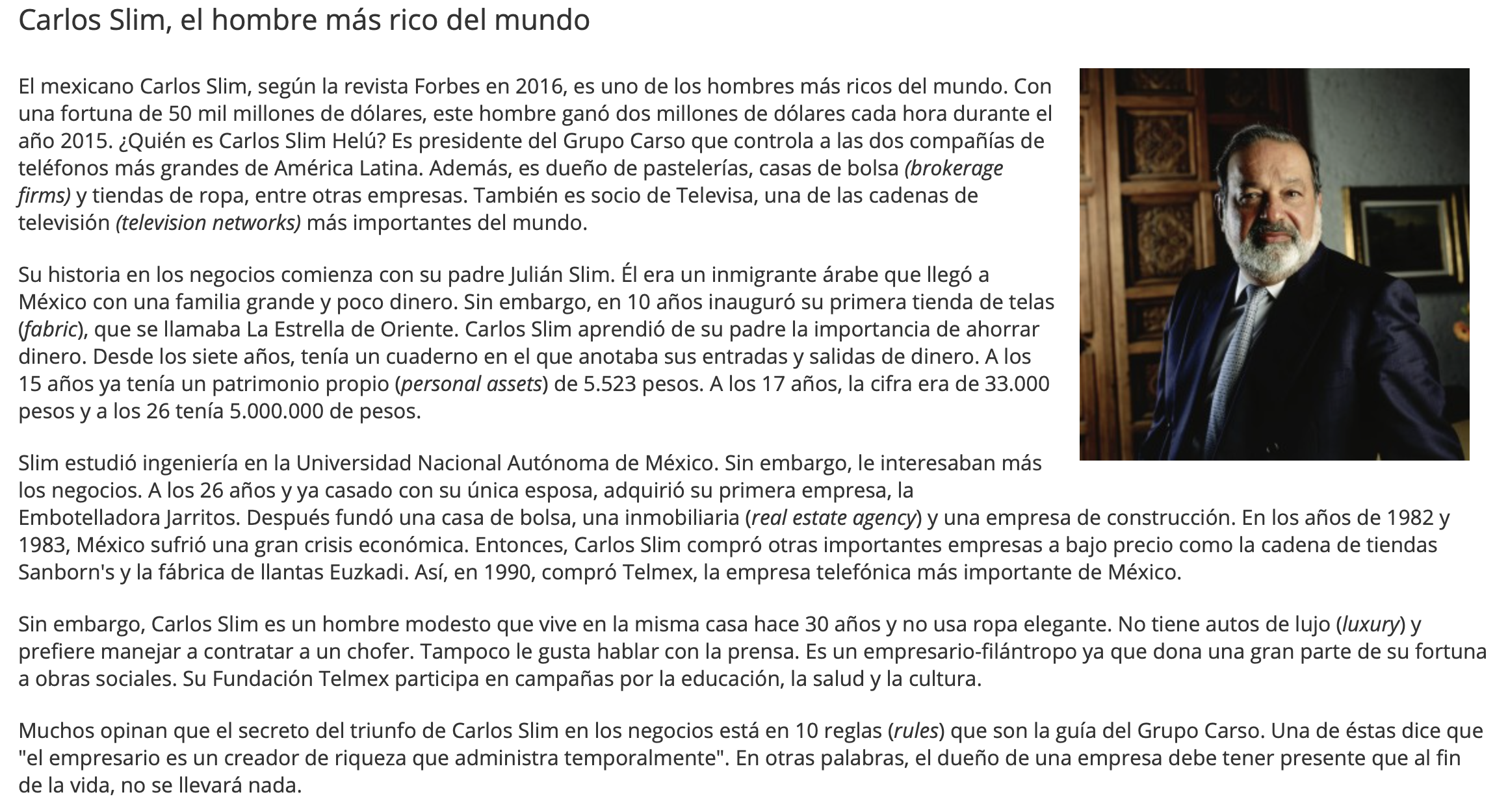
These readings were a great way to to practice my Spanish comprehension while also learning more about Hispanic culture and daily life in it’s countries. At times when I was reading, I came across words I didn’t know the meaning of. First, I would try to use context clues to try and decipher it’s meaning. If I couldn’t figure it out then I would use a Spanish dictionary to help me out.