Interpretive, Interpersonal, and Presentational Modes of Communication
Exploring Culture
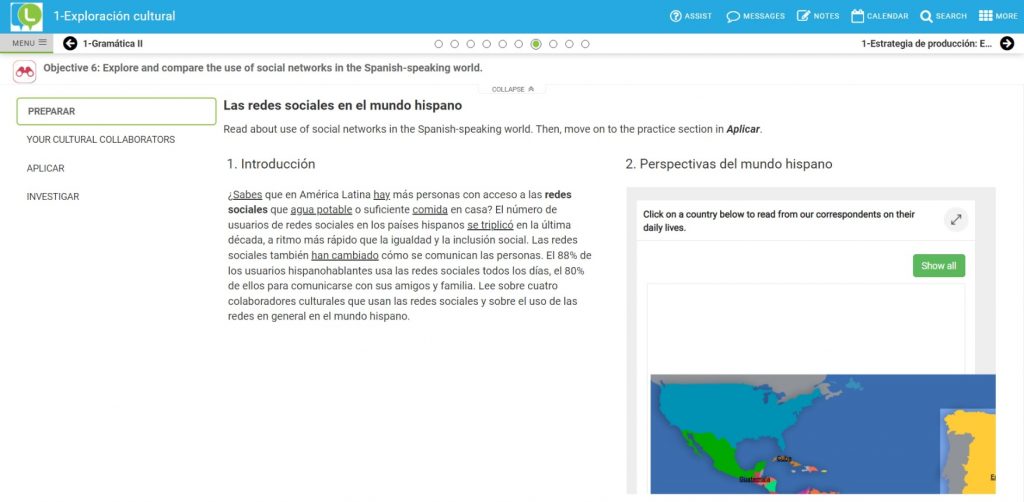
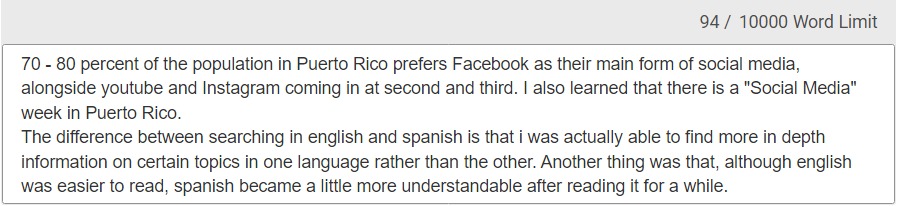
The exploración cultural assignments that we were assigned were very beneficial for me when it came to learning more about hispanic cultures. These assignments comprised of a description that informs students of the topic being presented. After students read this description and follow an interactive graphic, they are to answer questions that pertains to the cultural topic being learned and are encouraged to research (in spanish) the topics further. After researching the topic, students are to write out what they have learned and how their perceptions on said topic may have changed. For example, one of our topics was “Las redes sociales en el mundo hispano” (The social networks in the hispanic world). In the description that introduces the topic, I learned that in the general hispanic world “there are more people that have access to social media than to drinkable water or sufficient amounts of food”. This was something that had initially shocked me. The second image below is an example of my own findings when researching the topic further. One of the things that I had learned from doing the research was that 70-80 percent of Puerto Rico prefers Facebook the most.
Learning these things did surprise me and it was hard searching through spanish language results. But as I kept using it and invested myself in the language, it became easier. Although, there were always interesting things to learn from the exploración cultural assignments.
Interpersonal Communication
For our second unit, we were assigned a project where we had to interview a fluent spanish speaker using vocabulary that consisted of classes, comprehension questions for conversation, and greetings. We also had to show that we have learned the grammar uses of ser and estar properly within the interview. The person I chose for the interview was an -at the time- new friend that I had made who was a student on campus that new spanish fluently and was from Costa Rica.
For the interview, I had difficulty finding the right questions and which order to ask them. However, after I had decided which ones to ask and which order it came to me without as much force as before. There were parts in the interview where I almost thought that I’d mess up, but I quickly brought myself back to the task and accomplished it better than I thought I’d originally do.
Presentational Speaking
I have not completed a presentational assignment as of yet.
Presentational Writing
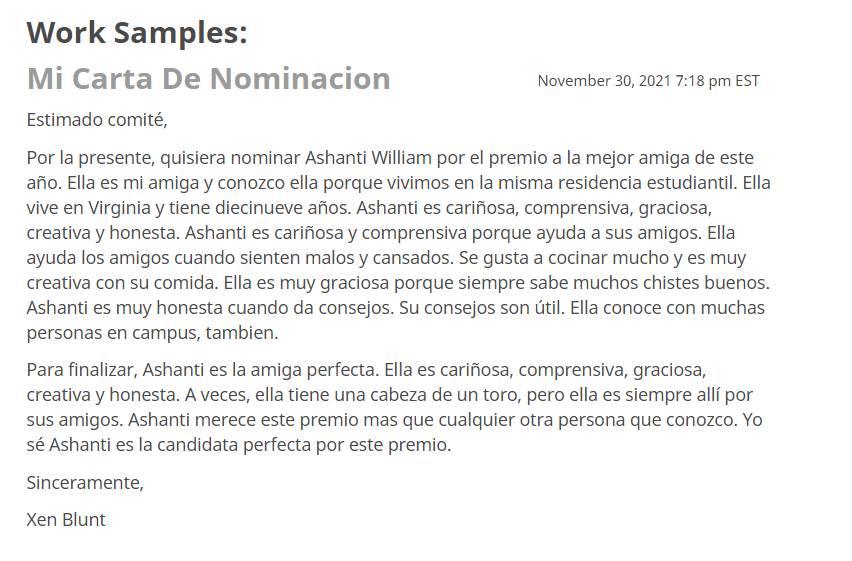
The letter above was addressed to a fictional committee to promote my actual friend, Ashanti, to a fictional award for the best friend of the year. We had to use the Usted form when addressing the committee and write it as a traditional letter. Within the letter I had to write about her personality and why she deserved this award.
To me, written assignments were the easiest to do because the pressure of responding quick wasn’t applied. I knew that I had the knowledge to answer the questions/prompt, but I wasn’t timed to do so. However, as assignments grew more varied, I had to learn how to overcome that obstacle, as I have mentioned in the other sections. It was pleasing to see how I could actually form my own longer open responses. I can’t really say that I’ve had many issues with presentational writing assignments. I just enjoyed them too much.
Interpretive Listening
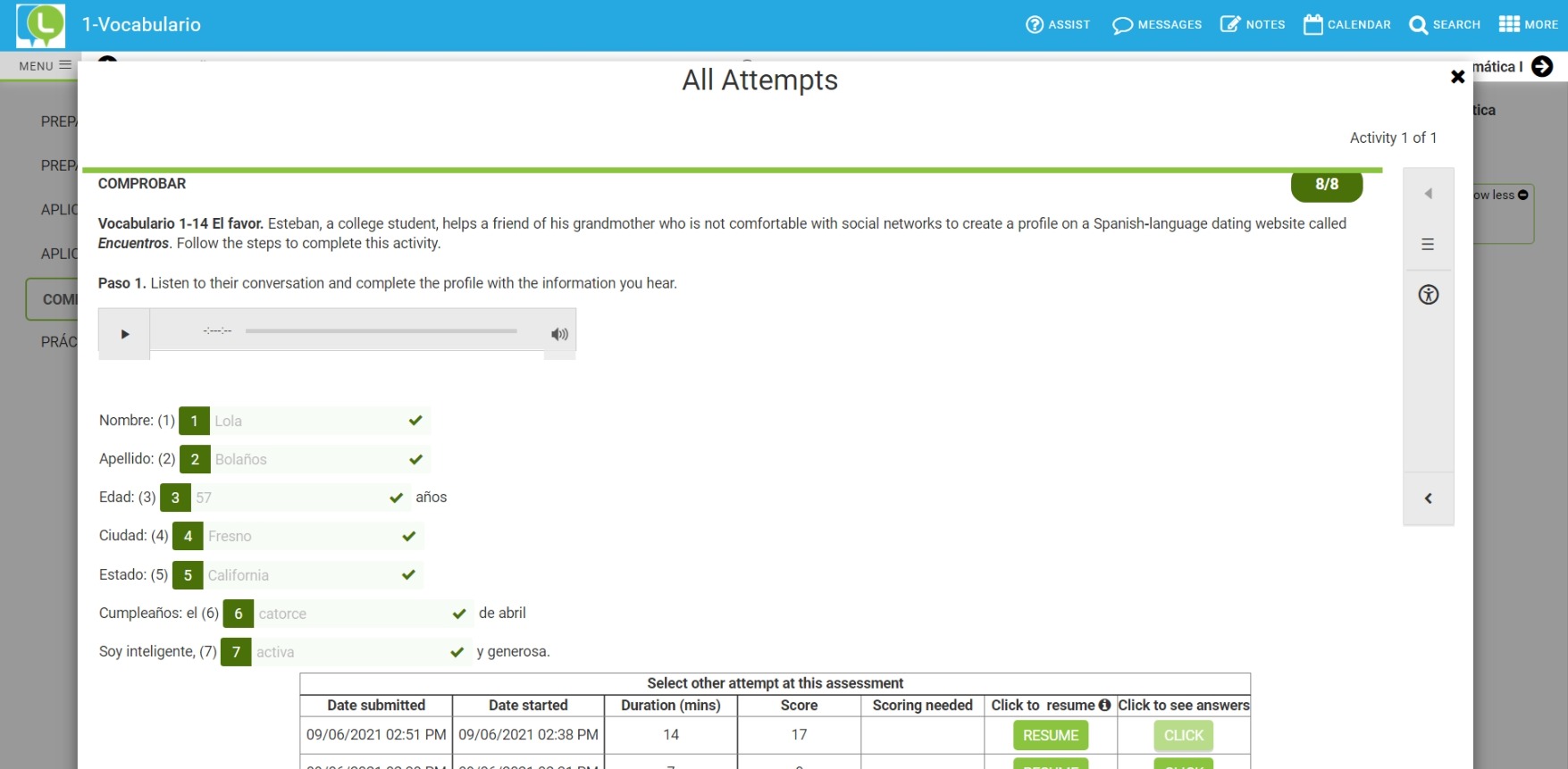
In the assignment shown above, I had to interpret a conversation between two spanish speakers. One was a college student and the other was an older woman who needed help setting up an account on social media. I had to interpret her name, last name, where she lived, birthday, and description through an audio recording.
I enjoyed interpreting the listening assignments because I personally felt the growth more directly just from doing the work. It was as if I was closer to actually comprehending what a person was saying in front of me. Of course, later on in the year, I actually was able to do this. The only issue that I had earlier on with the interpretive listening assignments was that I would miss something that was said by one of the people speaking, so I’d have to repeat listening to the recording again. As I got used to listening to someone speaking spanish, rather than seeing it on paper, it did become much easier to understand.
Interpretive Reading
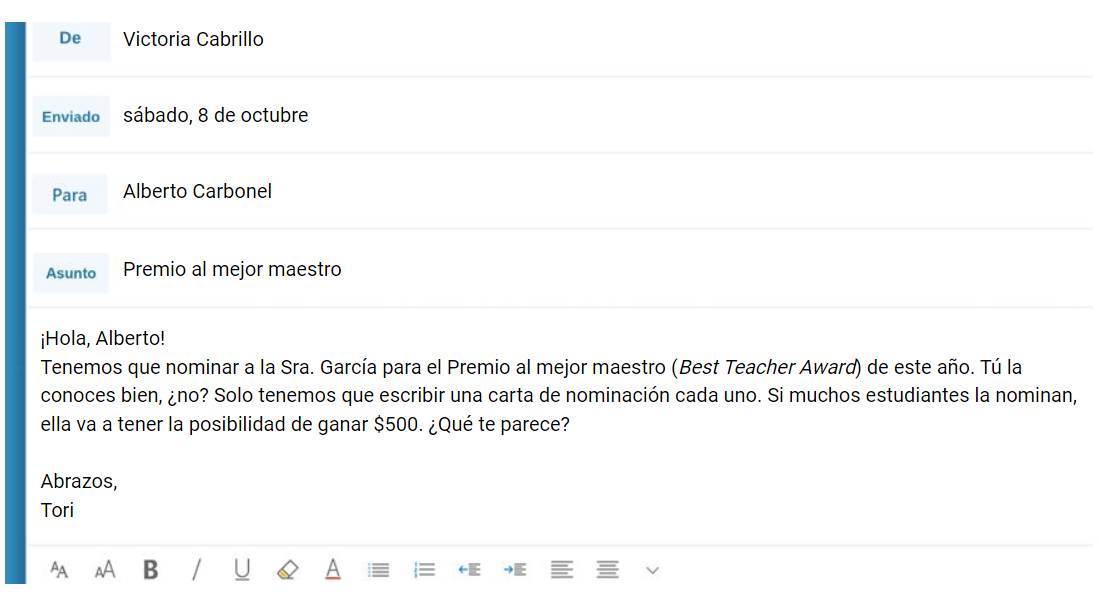
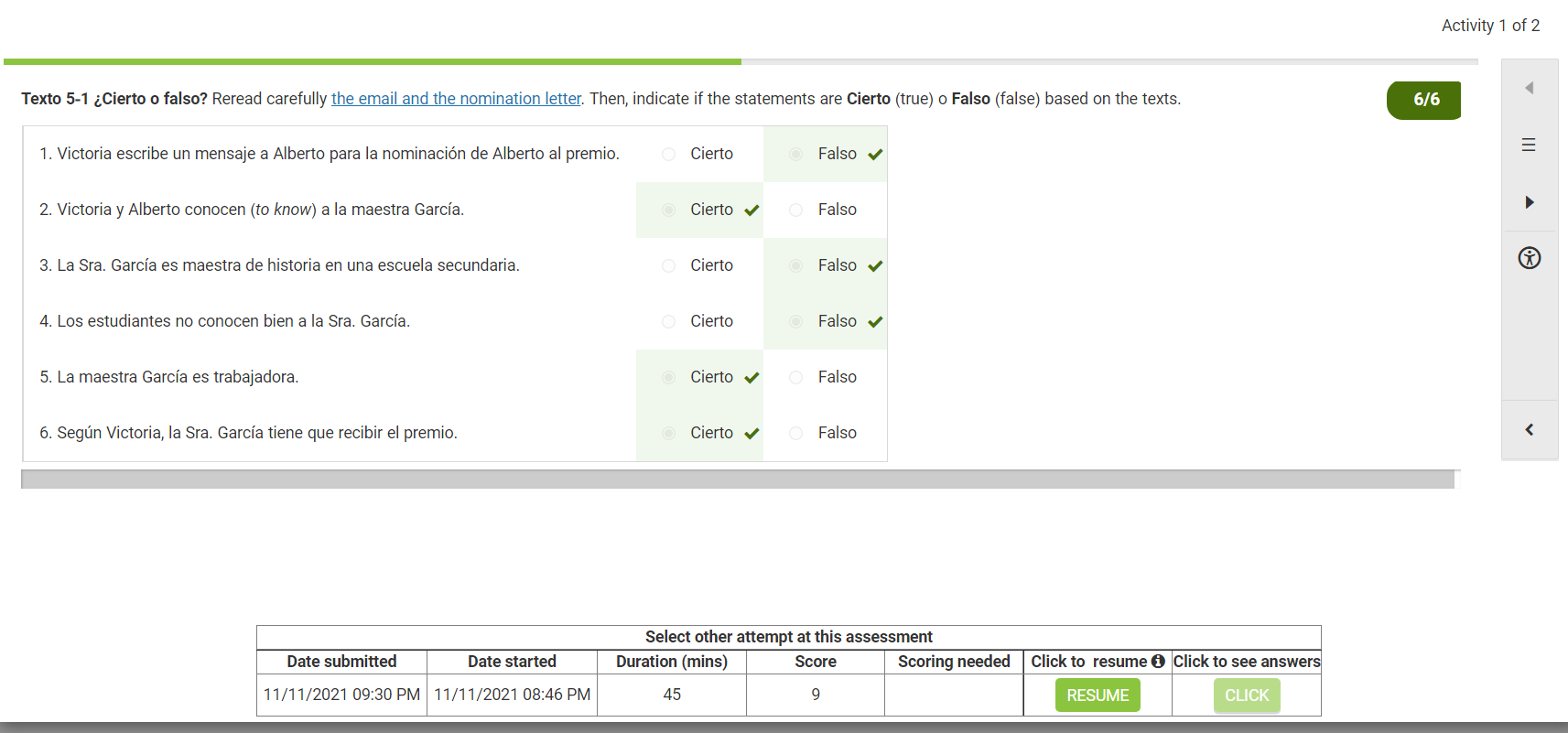
This assignment was a part of the same unit as the nomination letter project. This specific assignment was what introduced us to writing our letters and served as somewhat of an example of the skills that we were to use when writing them. In the assignment above, we were to read and interpret the letter above.
For interpretive reading assignments, they weren’t really that difficult for me, either. I felt that I was already able to understand written spanish because I could see what was being said, rather than listening to what was being said. So I feel that overall I didn’t have many issues with these specific assignments either.