ePortfolio/ Journal entries
1.) Review the NICE Workforce Framework. Are there certain areas that you would want to focus your
career on? Explain which areas would appeal the most to you and which would appeal the least.
The area of my career that I would like to direct my focus on is protecting and defending. Cyber defense analysis, cyber defense infrastructure support, incident response, vulnerability assessment and management are all specialties that align with my interests. What particularly resonated with me is cyber defense infrastructure support. Testing, implementing, deploying, maintaining, and reviewing are all things that I would like to do in the future.
2.) Explain how the principles of science relate to cybersecurity
The principles of science are as follows: form a question(s), do background research, propose a hypothesis, test the hypothesis using data from observations and experiments, and to continue testing the hypothesis or find a new hypothesis if the previous one does not work. Which will eventually lead to creating a theory. These principles form as the foundation for which cybersecurity forms its policies from.
3.) Visit PrivacyRights.org to see the types of publicly available information about data breaches. How might researchers use this information to study breaches?
Researchers using this information to study breaches will be able to access publicly available and government maintained data sources. They will be able to analyze a database that contains information about various types of breaches. Through this website researchers will be able to have access to extensive data. This website provides the date of the breach, the type of data exposed, the entity responsible, and the number of individuals affected. Researchers will also be able to further investigate for themselves as the website allows for select searching of breaches based on industry, type of breach, or the entity affected. Researchers target specific aspects of data breaches that align with your research goals. With the data provided researchers are able to look for patterns such as an increase in certain types of breaches, industries that are more vulnerable, or common factors contributing to breaches. This could include examining the methods of attack, vulnerabilities exploited, or specific security controls that were lacking.
4.) Maslow’s Hierarchy of Needs to explain how each level relates to your experiences with technology. Give specific examples of how your digital experiences relate to each level of need.
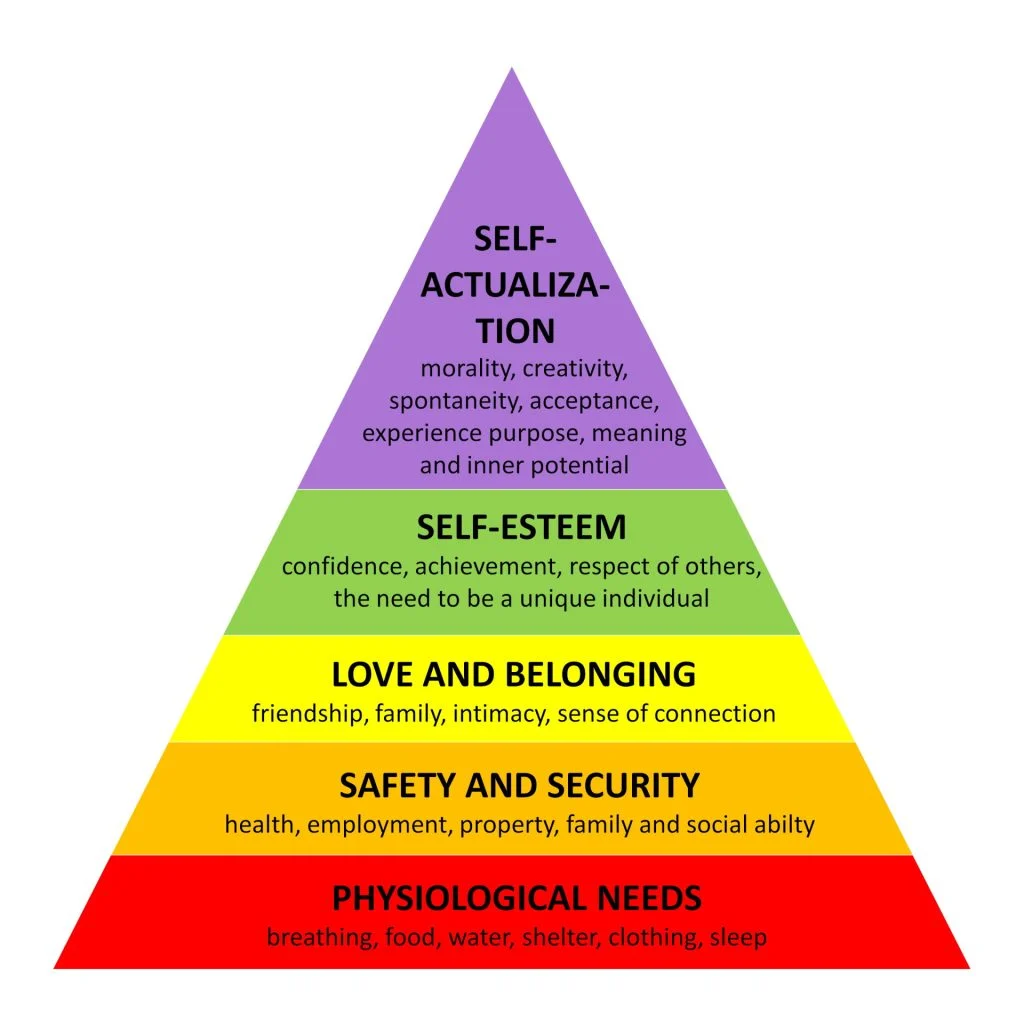
My digital experience as it relates to Maslow’s hierarchy of needs are as follows:
~Self- actualization: This is also a statement that can be taken literally. User awareness and responsibility online.
~Self- esteem: Confidence online.
~Love and belonging: Finding an online community that I can fit into free of cyberbullying or cyber harassment .
~Safety and security: Safety and security can be taken literally in this context. This level of need requires cybersecurity and its policies.
~Physiological needs: These are the foundational basics of living; food, water, and shelter. For me, in the digital world these would equate to access to the internet, and a device to the internet.
5.) Article review
Zariah Lamb
Professor Armistead
CYSE 201s
8 October 2023
Review of Employing Forensic Techniques in Proving and prosecuting Cross Border Cyber Financial Crimes
This article discusses the effects of rapid technological growth on cybersecurity in developing nations, such as Indonesia. Particularly the effects of rapid technological growth as it pertains to cybercrime and the social sciences. It references redefining the definitions of crime and law since the introduction of the internet, and how law continues to be redefined as the internet permeates throughout societies of developing nations, such as Indonesia. And as a result, the creation and implementation of new laws and regulations in the sector of cybercrime.
Social Science, as defined by the notes, is “ the science of people or collections of people, such as groups, firms, societies, or economies, and their individual or collective behaviors.”
The principles of social science are as follows; anthropology, criminology, economics, geography, political science, psychology, and sociology. It is agreeable that the aforementioned topic of this article is a matter of the social sciences. The article is inherently anthropological in nature. It briefly touches on former issues within the sector of cybercrime and in addition discusses the recent juridical expansion of cybercrime within Indonesia. As it relates to criminology, there is a section of the article where this is exhibited. Section II. Literature Review, recounts the idea of traditional cybercrime. The article gives a formal definition of the term and emphasizes the importance of its impending endangerment to the safety of individuals, organizations, and nations worldwide (Syauf et al). It also introduces another pertinent issue the country is facing, financial crimes. With this we are presented with new terminology- an intersection between cybercrime and financial crime, cyber financial crime. “The cyber financial crime was defined by Rajput (2020) as a form of illegal activity that occurs in a cyber environment for financial gain. Cyber Financial crimes include identity theft, phishing, malware attacks, and cyberattacks on financial institutions (Syauf et al).”
Neither the hypothesis nor the research questions of this article were plainly stated; however, based on this statement, “This study investigates the significance of
forensic techniques in prosecuting cross border cyber financial crimes in Indonesia, discussing the legal basis for digital forensic investigations, the role of the police, and the difficulties they encounter (Syauf et al).” I can infer that a research question may be, “What is the role of law enforcement agencies, particularly the police, in handling cross-border cyber-financial crime cases in Indonesia, and how do their actions impact the overall effectiveness of investigations and prosecutions?”
There are various research methods used for data collection including; surveys, archival research, experiments, field research, and case studies. This article was completed using archival research and case studies. The contributors of this article took an descriptive analytics approach.This article relates to concepts discussed in this class such as ethical neutrality.
This topic relates to challenges, concerns, and contributions of marginalized groups in a very minimal way. It does not specifically address a marginalized group per say; however, it does address issues within a developing nation. The overall contribution of this study to society is that it brings awareness to a subject that is rarely discussed, which is, cybersecurity within developing nations. It fulfills the purpose of social science research by determining whether social systems are operating appropriately , generating knowledge and identifying recommendations for improving society.
References
Syauf, A., Mursidah, & Zahra, A. F. (n.d.). employing forensic techniques in proving and prosecuting cross border and financial crimes. International Journal of Cyber Criminology, 10(1), 18. https://cybercrimejournal.com/menuscript/index.php/cybercrimejournal/article/view/150/55
6.) Can you spot three fake websites and compare the three fake websites to three real websites, plus showcase makes the fake websites fake?
Here are a few tips on media literacy: Check the domain name, often scammers will try to imitate popular or prominent website domains in order to trick users. Check for spelling errors or minute details that are uncharacteristic of a trustworthy website. Here are some examples of fake websites, https://www.frankwbaker.com/mlc/sample-of-fake-websites-for-educators/. As apposed to a trustworthy site which would have a few key markers, for example; The domain ends in .gov (government), .edu ( education), .org ( organization). These are Institutions that host trustworthy and factual data. Untrustworthy sites that will try to scam users will also use methods of payment that may be not reversible or untraceable. For example, payment apps such as cash app or zelle.
7a.) Review the following ten photos through a cybersecurity human systems integration framework .Create a meme explaining what is going on in the individual’s or individuals’ mind(s).
• https://unsplash.com/photos/mfB1B1s4sMc

Me exchanging the punctuation in my password so I don’t have to make a completely new one.
•https://unsplash.com/photos/gySMaocSdqs

When the domain name was “G00gle” and not “Google”.
•https://unsplash.com/photos/ICTKcvnXx_8

Successfully guessing the password because the person used personal information.
•https://unsplash.com/photos/Z3ownETsdNQ

Me writing about the interdisciplinarity of cybersecurity for the hundredth time.
•https://unsplash.com/photos/5QgIuuBxKwM

“Please type in this code to prove you’re not a robot “
•https://unsplash.com/photos/R6dSBkz32B8

You know the website is legit when the use traditional banking methods.
•https://unsplash.com/photos/BXiLSwwvqrY

Having to change my password because I fell for the “voted best on Instagram” scam.
•https://commons.wikimedia.org/wiki/File:Computer_user_icon.svg


Enjoying my WFH job after everyone said my major was boring.
•https://commons.wikimedia.org/wiki/File:Summer_school_GLAM_giorno_1_1.jpg

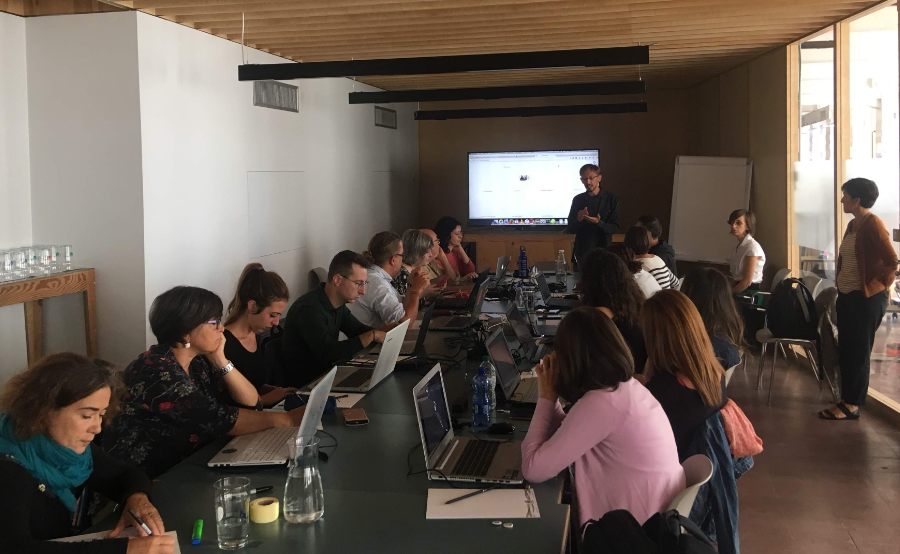
When the human firewall is effective because the company does basic user responsibility training.
•https://commons.wikimedia.org/wiki/File:CellPhone_(16491636068).jpg
.jpg)

7b.)Explain how your memes relate to Human Systems Integration.
My memes showcase how humans are reliant on technology in order to advance but technology is only as good as the human that understands how to properly navigate it .
8.) How does media influences our understanding about cybersecurity?
Media has a significant influence on how people perceive cybersecurity. Social media outlets have the jurisdiction to disseminate information, which gives them control of the narratives. It is the responsibility of the media outlets to provide security and accurate information. However, it is the responsibility of users to practice media literacy so that they are not dissuaded by disinformation or fraudulent activity.
9a.) Complete the Social Media Disorder scale.
A. During the past year, have you regularly found that you can’t think of anything else but the moment that you will be able to use social media again?
B. During the past year, have you regularly felt dissatisfied because you wanted to spend more time on social media?
C. During the past year, have you often felt bad when you could not use social media?
D. During the past year, have you tried to spend less time on social media, but failed?
E. During the past year, have you regularly had no interest in hobbies or other activities because you would rather use social media?
F. During the past year, have you regularly had arguments with others because of your social media use?
G. During the past year, have you regularly lied to your parents or friends about the amount of time you spend on social media?
H. During the past year, have you often used social media so you didn’t have to think about unpleasant things?
I. During the past year, have you had serious conflict with your parents, brother(s) or sister(s) because of your social media use?
Response Options:
Yes – 1
No – 0
Item scores are summed. Endorsement of a maximum of criterion (score of 1 or lower) is classified as normative SMU. 2-5 criteria is risky SMU and 6-9 is problematic SMU.
9b.) How did you score? What do you think about the items in the scale? Why do you think that different patterns are found across the world? I scored a 5 which is classified as risky. I think the items on the scale highlight how dependent on devices and social media we as a society have become. Different patterns exist across the world because of how social media has penetrated our culture as a social norm. The level of access to internet varies by country and so social media does not hold the same value to them as it does to us.
10.) Read this and write a journal entry summarizing your response to the article on social cybersecurity. https://www.armyupress.army.mil/Journals/Military-Review/English-Edition-Archives/Mar-Apr-2019/117-Cybersecurity/b/
This article the emergence of cybersecurity as a growing sector in national security. It introduces the term “social cyber security”. Social cybersecurity is described as “a scientific area focused on characterizing, understanding, and forecasting cyber-mediated changes in human behavior, social, cultural, and political outcomes.” It emphasizes the need to build the cyber-infrastructure as society progresses and cyberthreats persist. It discusses information warfare, It highlights that it is becoming a significant aspect of national security. Information warfare presently a lesser component of warfare is now becoming a primary form of conflict. The ability to manipulate the global beliefs and ideas through technology is changing the nature of warfare. Overall, it highlights the evolving landscape of information warfare. Social cybersecurity is essential to countering social cyber threats. The article illustrates the need for policies to address the challenges posed by the spread of disinformation in the cyberspace.
11.) sample breach letter “SAMPLE DATA BREACH NOTIFICATION” and describe how two different economics theories and two different social sciences theories relate to the letter. https://dojmt.gov/wp-content/uploads/Glasswasherparts.com_.pdf
Two economic theories exhibited in the letter are Marxian theory and neoclassical theory . Neoclassical economics is “based on the idea that individuals and firms make rational decisions to maximize their own utility or profit.” The users of this platform were exploited by the third party provider for their data because the initial company rationalized the decision to include a third party to maximize their own profits/ utility. Marxian theory concludes “that class exploitation occurs at multiple sites in modern society and that our politics, literature, family structures, sports, television programing, religions, and incomes are all complexly shaped by exploitation.” This third party data theft likely occurred as a result of the offenders rationalizing the offense due to class difference. The offender possibly assumed that the victims were in a different class from them and so stealing their data was a justified means to an end. Two social science theories exhibited in the letter are interaction perspective theory and functionalist perspective. The interaction perspective on inequality “looks at how certain social roles have more power, or authority, than others. An example using real social roles can help illustrate the interactionist perspective: A CEO has more power than a receptionist. It believes that society is in a conflict between the classes. They believe that the Bourgeoisie oppress the Proletariat through various social institutions without their full knowledge.” The functionalist perspective “sees society as a complex system whose parts work together to promote solidarity and stability. This approach looks at society through a macro-level orientation and broadly focuses on the social structures that shape society as a whole.” The letter addresses the users with tips on how to prevent fraud, not necessarily blaming the victims for putting themselves in that situation, more so framing the situation as a preventable event that all parties took place in.
12.) Review what the author says and write a paragraph describing the five most serious violations
and why you think those offenses are serious. https://clario.co/blog/illegal-things-you-do-online/
The five most serious violations in my opinion are collecting information about children, illegal searches on the internet, sharing passwords, addresses, and photos of others, bullying and trolling, and faking your identity online. These are the most serious offenses in my opinion because the do not align with my morals. I do not agree with collecting information about children, it is grotesque and in appropriate. Sharing passwords, addresses, and photos of others otherwise known as doxxing is very dangerous and puts the now victimized individual at risk for a greater multitude of crimes. Bullying and trolling within the cyberspace becomes even more tormentive because victims are not taken seriously and offenders do not face immediate punishment. Illegal searches and faking identity are inherently wrong.
13.) Digital Forensics | Davin Teo | TEDxHongKongSalon – YouTube Watch this video and think about how the career of digital forensics investigators relate to the social sciences. Write a journal entry
describing what you think about the speaker’s pathway to his career.
Davin teo’s pathway to his career was very moderate, but his actions were deliberate. He knew that he had an interest in computers, which led him to the field of IT. From there he progressed to an accounting firm. He was able to be one of the first digital forensic investigators in his country. He initially accepted that position on a whim because he was unaware of what the position entailed, but that opportunity enabled him to open the door to numerous other experiences. He was able to travel the world for work and have access to the latest technology of its time.