Old Dominion University, founded in 1930, is an institution recognized for its commitment to innovation, global engagement, and an entrepreneurial mindset that encourages students, faculty, researchers, and partners to build solutions that matter. Within this university ecosystem, the Department of Engineering Management & Systems Engineering (EMSE) stands as a leader in advancing systems thinking, applied engineering management, decision analytics, model-based engineering, and the development of future-ready talent capable of shaping the next generation of complex technological and socio-technical systems. EMSE embraces the principle that the future of competitive advantage lies in the ability to model, evaluate, and manage complexity, not avoid it, and to prepare leaders who are able to operate confidently inside environments where technology, human judgment, policy, economics, and risk constantly intersect.
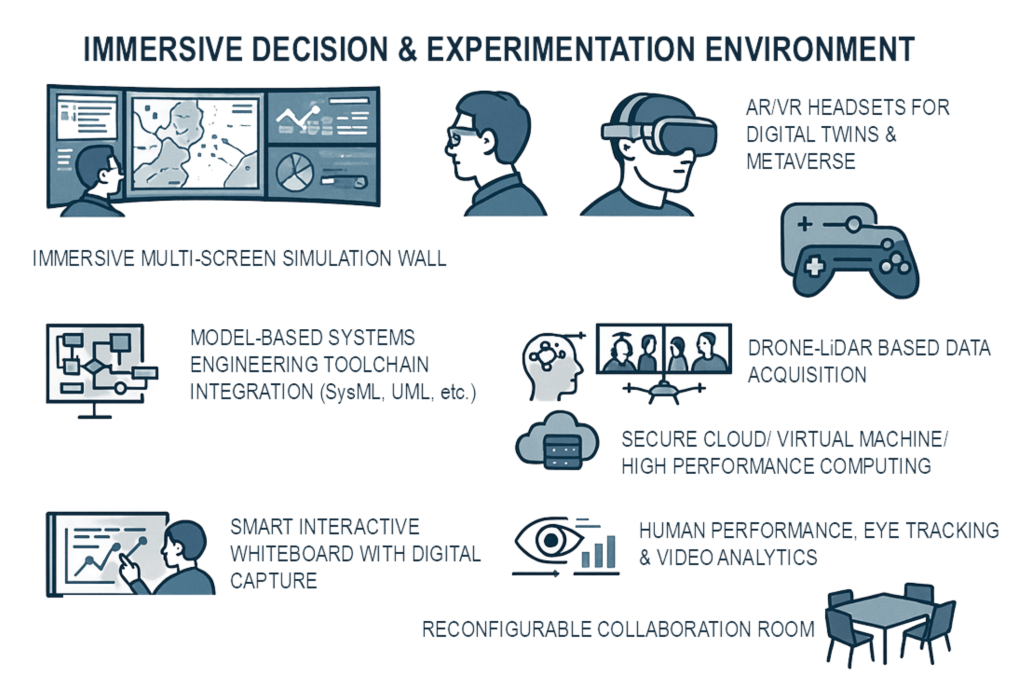
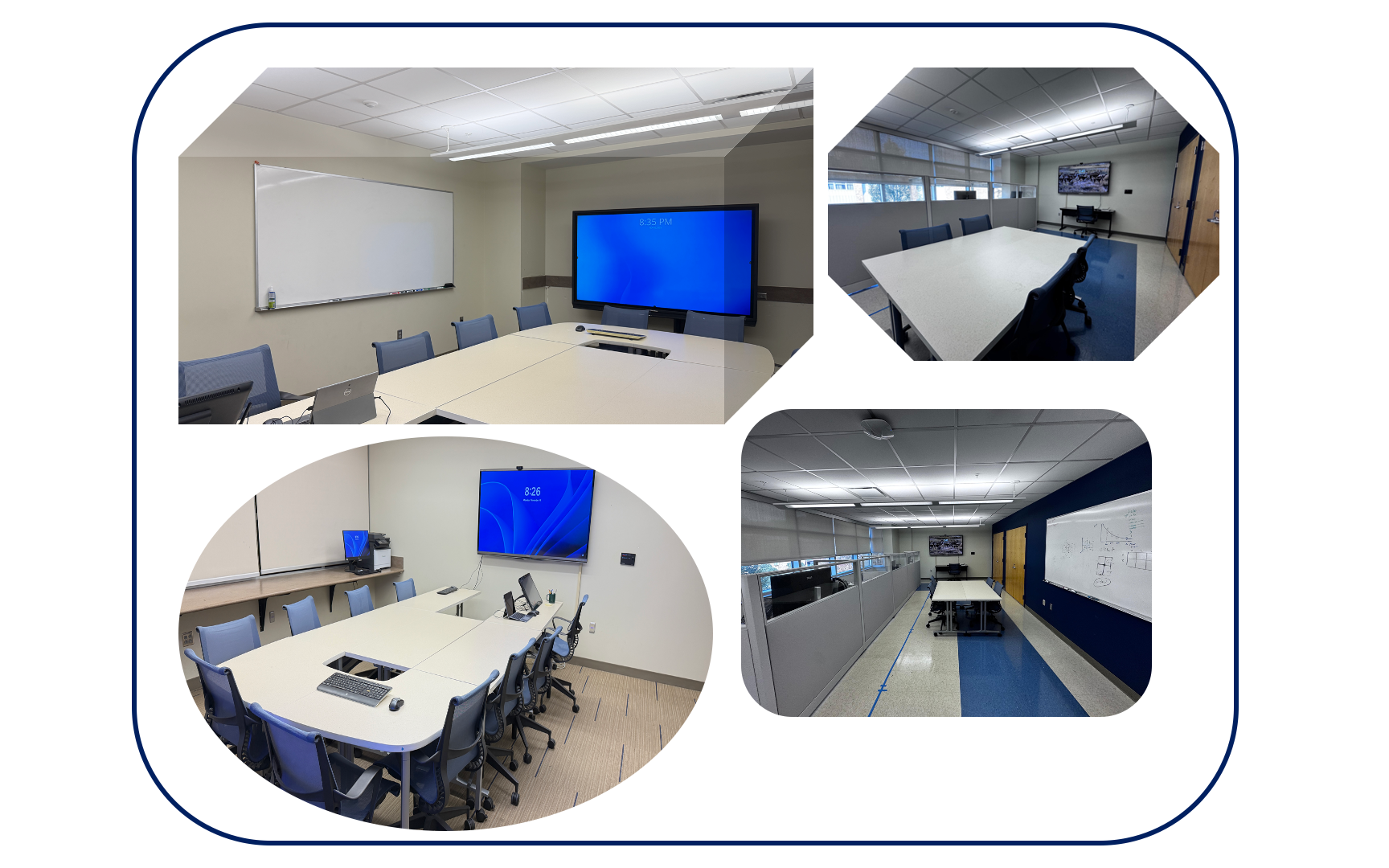
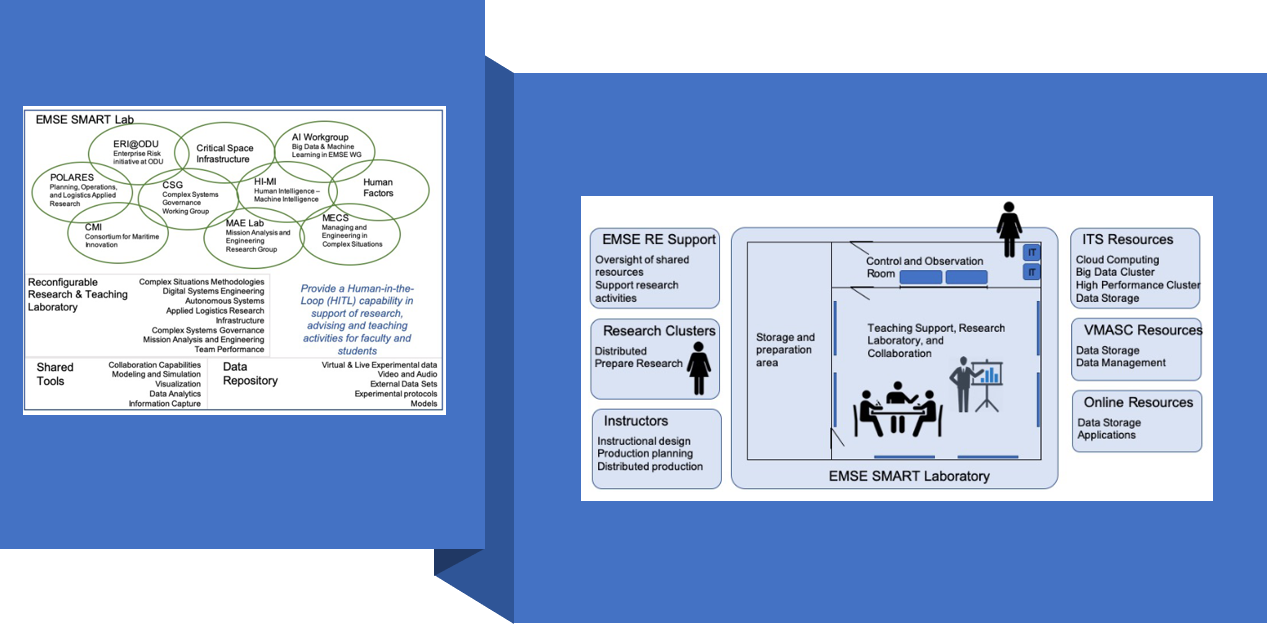
The SMART Laboratory is a manifestation of that philosophy, a shared, multi-purpose, reconfigurable space designed for collaborative research, experiential teaching, and sponsor/stakeholder interaction. SMART supports in-person, fully online, and hybrid collaboration models, enabling distributed or co-located teams to explore, model, simulate, sense, visualize, and evaluate complex systems in context. The Lab connects human-in-the-loop experimentation with computational capability, including digital engineering workflows, data pipelines, analytics, simulation, visualization, and immersive XR/AR/VR environments, to advance understanding and accelerate insight. Within SMART, researchers, instructors, sponsors, operational experts, and students can test concepts, evaluate tools, compare models, run trade-studies, and demonstrate capabilities in a decision-support environment aligned to real mission, operational, and organizational questions. SMART is therefore more than a room, it is an integration platform. It is a socio-technical ecosystem for advancing the science, the learning, and the practice of engineering management and systems engineering.
Key Capabilities:
- Reconfigurable collaboration space for stakeholder interaction, workshops, reviews, and human-in-the-loop experimentation, enabling rapid contextual scenario shifts and mission-focused decision exercises.
- Dedicated computation space for simulation, digital engineering, data pipelines, model execution, and analytics, optimized for complex, high-fidelity computational experimentation.
- Integrated teaching environment supporting hands-on systems engineering learning experiences, connecting theory to practice through live modeling, decision gaming, and concept evaluation.
- Research platform enabling controlled socio-technical experiments, including instrumented human participation, modeling tool chains, and engineering management workflows.
- Sponsor-facing decision space for capability demonstration, concept exploration, trade evaluation, feasibility analysis, and translational problem-solving in operationally relevant contexts.
FACILITIES