

Dr. Sam Kovacic is an assistant professor in the Department of Engineering Management and Systems Engineering at Old Dominion University. He is an educator, researcher, and practitioner. He has worked in engineering and management positions in academia, government, and industry. He has a well-developed practical appreciation of the complexities inherent in the complex problems that are faced by engineers, managers, and leaders, which extends into his formal research projects. He has published extensively in peer-reviewed journals, presenting his work at a variety of academic and industry conferences and venues.
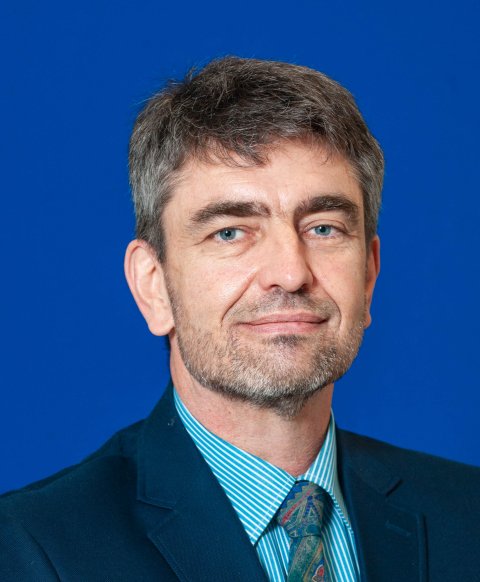
Dr. Sousa-Poza is a professor in the Department of Engineering Management and Systems Engineering at Old Dominion University. He is an educator, researcher, mentor, and consultant with over 25 years of experience in academia and industry. He has led major research projects with a wide variety of agencies, including the National Aeronautics and Space Administration (NASA), the US Navy, the US Coast Guard, the Department of Homeland Security (DHS), Lockheed Martin, and MITRE. Dr. Sousa-Poza has been awarded 21 projects by external sponsors (15 as PI). Extensively published in peer-reviewed journals and presented his work at a variety of academic and industry conferences and venues.
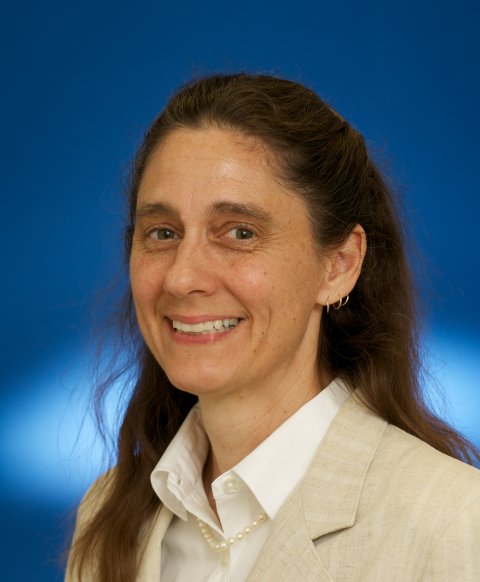
Dr. Holly Ann Heine Handley is a professor in the Department of Engineering Management and Systems Engineering at Old Dominion University. Dr. Handley applies engineering principles and experience in computational modeling to support projects in human systems engineering research and development. She develops models and methodologies to better represent the human component of socio-technical systems. She is currently part of the committee developing HSI industry-wide standards and was also a member of the original NATO panel to develop the Human Viewpoint for system architecture development. Currently, her Human System Engineering Laboratory @ ODU is investigating questions on the balance of human roles and automation and the implications for personnel capabilities and manpower requirements across systems and organizations.

Professor Emeritus Dr. Chuck Keating’s research focuses on Complex System Governance, System of Systems Engineering, and Management Cybernetics. He is a Fellow, Past President, and recipient of the 2015 Sarchet Award from the American Society for Engineering Management, recognized for his pioneering efforts in the field. He has published over 170 peer-reviewed papers and graduated 32 Ph.D.’s. His research spans defense/security, healthcare, R&D, and automotive. Degrees include a B.S. in Engineering (United States Military Academy – West Point, M.A. in Management (Central Michigan University), and a Ph.D. in Engineering Management (ODU).
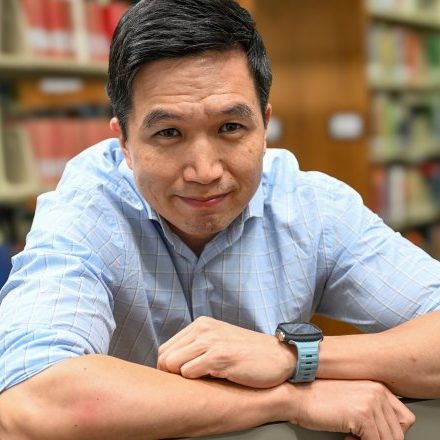
Dr. John Park is an associate professor in the Engineering Management and Systems Engineering Department at Old Dominion University. His research focused on actively quantifying uncertainty reduction to empower computationally efficient artificial intelligence (AI) capable of operating in real-time. Funded by the National Science Foundation (NSF) Information and Intelligent Systems program and NASA’s Jet Propulsion Laboratory, the adaptable AI has been successfully applied to the digital twin of Hurricane and Mars autonomy. He has developed a decentralized digital twin of complex dynamical systems, which integrates on-demand multimodal sensors. The next-generation AI combines ensemble prior physics and posterior belief with the main objective of maximizing the sum of utilities along the path while saving energy constrained by a strong wind field in tropical cyclones and multi-agent Mars autonomy, earning me four patents.
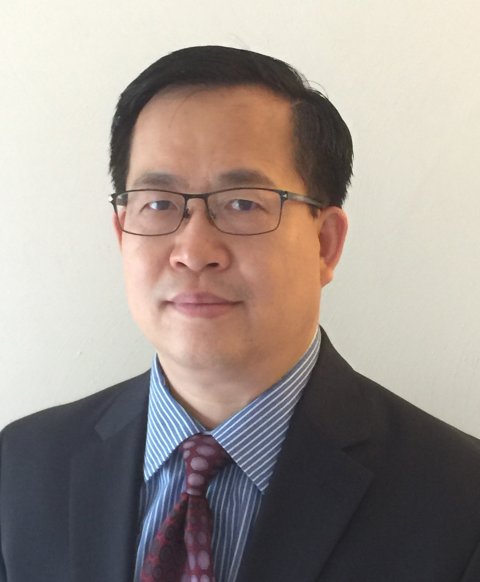
Dr. Yuzhong Shen is a professor in the Department of Electrical and Computer Engineering at Old Dominion University. He received his B.S. in Electrical Engineering from Fudan University, M.S. in Computer Engineering from Mississippi State University, and Ph.D. in Electrical Engineering from the University of Delaware. His research interests include signal and image processing, visualization and computer graphics, and modeling and simulation. He is also affiliated with the Virginia Modeling, Analysis, and Simulation Center(VMASC). Prior to joining Old Dominion University, Dr. Shen had worked as an engineer and as a senior engineer at Weifang Hua-Guang Technologies, a research assistant at the National Science Foundation Engineering Research Center for Computational Field Simulation at Mississippi State University, a research assistant at the University of Delaware, and a senior research scientist at the Virginia Modeling, Analysis, and Simulation Center.

Dr. Jiang Li is a Professor in the Department of Electrical and Computer Engineering at Old Dominion University. He received his Ph.D. degree in electrical engineering from the University of Texas at Arlington, TX, in 2004, the M.S. degree in automation from Tsinghua University, China, in 2000, and the B.S. degree in electrical engineering from Shanghai Jiaotong University, China, in 1992. His research interests include applied machine learning research in medical signal/image processing, remote sensing image analysis, neural networks, and deep learning. Dr. Li has published more than 100 journal and conference papers. Dr. Li worked as a postdoctoral fellow at the Department of Radiology, National Institutes of Health, from 2004 to 2006. He joined ODU as an assistant professor in Spring 2007. Dr. Li is a senior member of the IEEE. Dr. Li is married to Hemiao Zhang and the father of two: Qiaoyi and Shiwei.

Dr. Chung-Hao Chen is an assistant professor in the Department of Electrical and Computer Engineering at Old Dominion University. He received his Ph.D. in Electrical Engineering at the University of Tennessee, Knoxville, in August 2009, and his B.S. and M.S. in Computer Science and Information Engineering from Fu-Jen Catholic University, Taiwan, in 1997 and 1999, respectively. After receiving his M.S. degree, he was enlisted in the National Military Academy from 1999 to 2001 to fulfill his civil duty/military service. In April 2001, he joined the Panasonic Taiwan Laboratory Company, Ltd. as a research and development engineer, where he remained until August 2003. In August 2009, he joined the Department of Mathematics and Computer Science at North Carolina Central University as an assistant professor.
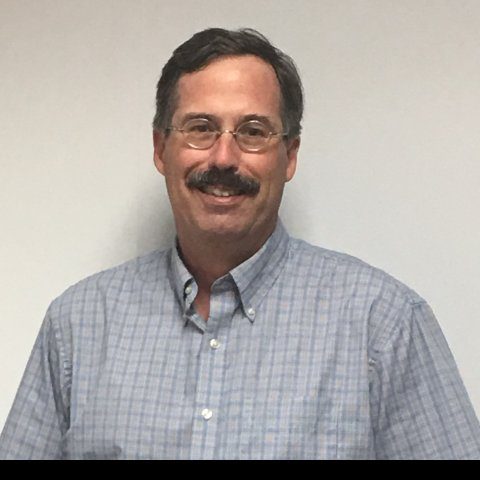
Dr. James Leathrum is an Associate Professor in the Department of Electrical and Computer Engineering at Old Dominion University. He is also the Academic Program Coordinator for the major in Modeling & Simulation Engineering. He received his Ph.D. in Electrical Engineering from Duke University. His research interests include simulation-based test & evaluation of autonomous systems, AI-based software development, simulation architectures, and distributed simulation.

Dr. Jiajun Jiang is a research scientist at ODU who received his Ph.D. in Electrical and Computer Engineering from Old Dominion University, USA. He also holds an M.S. in Mathematics and Physics, as well as a B.S. in Electrical and Electronic Engineering. His research interests include computer vision, image processing, machine learning, and multimedia forensics.
EXTERNAL COLLABORATORS

Dr. Mustafa Canan is an Associate Professor in the Department of Information Sciences at Naval Postgraduate School. He completed his Physics Ph.D. (2011) and Engineering Management and Systems Engineering (2017) at Old Dominion University. Before joining NPS, he was a National Research Council post-doctoral fellow and a research scientist at the Air Force Research Lab. He is the recipient of the 2023 Richard W. Hamming Teaching Award for outstanding teaching, excellence in thesis supervision, and the 2022 Rear Admiral John Jay Schieffelin Award for Teaching Excellence (for AY21). His research interests include Complex Adaptive Behavior, Human-Machine-Teams, Quantum Information Processing, Decision Making under Uncertainty, and Digital Twins.
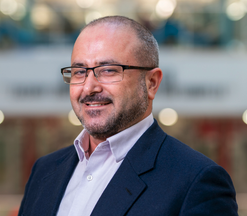
Dr. Mustafa Demir serves as a Research Associate in the Department of Industrial and Systems Engineering at Texas A&M University, College Station, Texas, and as an Associate Research Scientist at the Biodesign Institute at Arizona State University (ASU) in Tempe, Arizona. His research focuses on the coordination dynamics of Human-Artificial Intelligence Teaming (HAT). By integrating behavioral measures (such as communication and coordination) with physiological indicators (including heart rate, affective responses, and eye-tracking), Dr. Demir investigates how these physio-behavioral signals serve as markers of team coordination and their relationship to HAT performance.
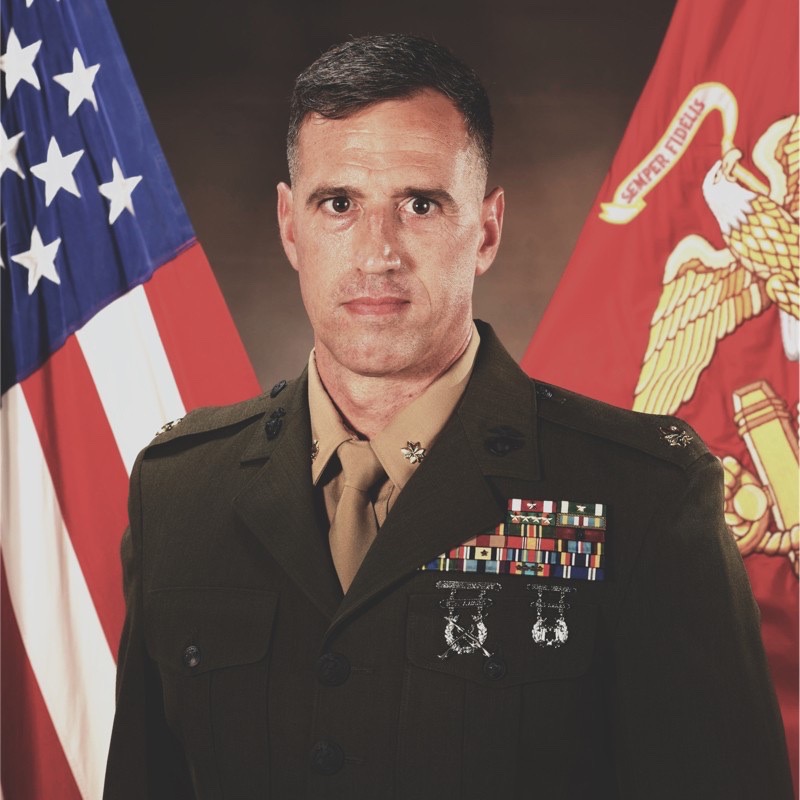
LT. Col. Scott A. Humr, Ph.D., is the Deputy Director of the Intelligent Robotics and Autonomous Systems Office. He enlisted in 1998, earning multiple honors during his training and rising through the ranks. His career includes deployments supporting Operation: Iraqi Freedom and Enduring Freedom, roles in logistics, information systems, and manpower, and earning advanced degrees, including a Ph.D. in Information Sciences in 2023. His dissertation focused on trust in AI-supported decision-making. A decorated Marine, he has received the Meritorious Service Medal and Navy Commendation Medal, among others. He is married with three children.