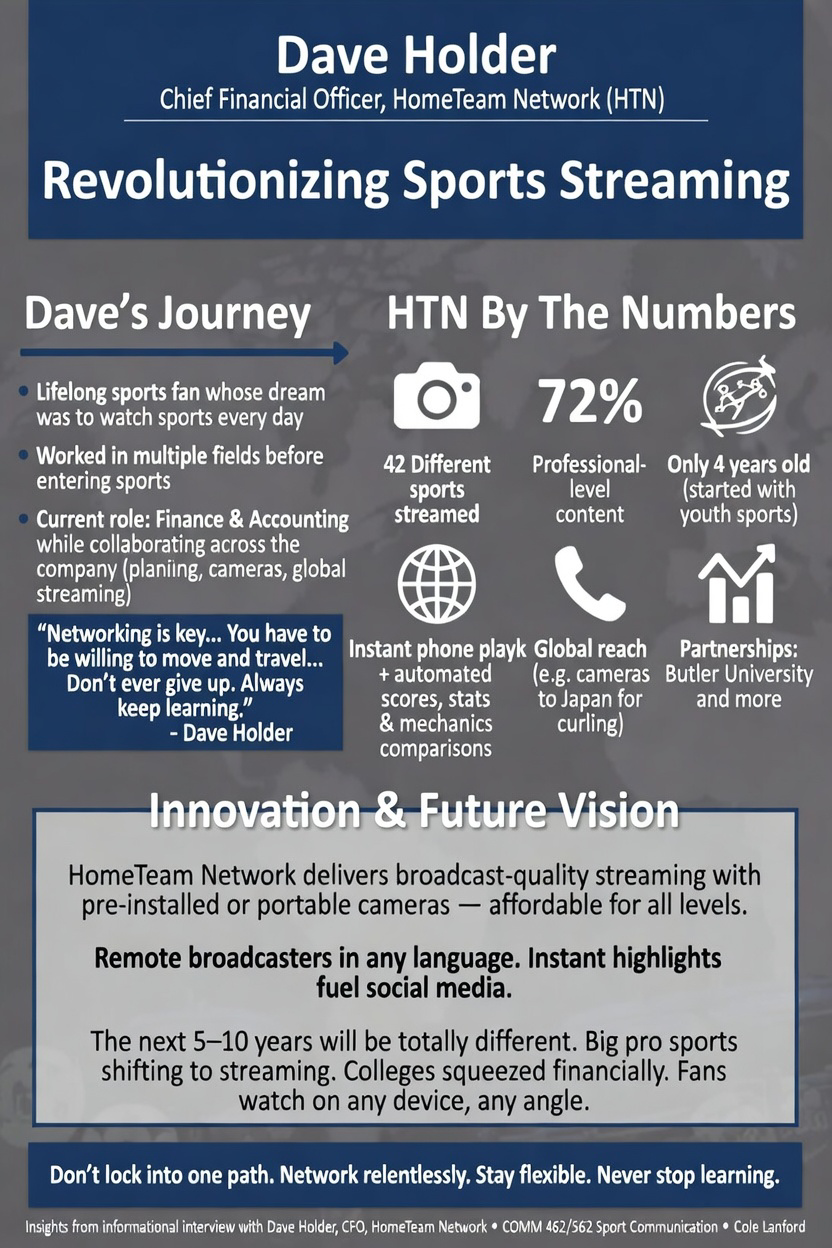
For my Professional Penpal Infographic assignment, I interviewed Dave Holder, Chief Financial Officer at HomeTeam Network (HTN). In only four years, HTN has grown from a youth sports streaming service into a company that delivers high quality streams for 42 sports, with 72% at the professional level. Dave shared his journey from a lifelong sports fan to his current role is overseeing finance while also coordinating cameras, planning, and global operations. He shined light towards HTN’s affordable technology, instant playback, and vision for a streaming-dominated future in sports media. His top advice, network relentlessly, stay flexible, and never stop learning, was something that will stay with me. The infographic below captures the best parts of his story and HTN’s industry changing approach.
Sunday’s second game of the day against Niagara ended up being the toughest one of the weekend. Everyone was tired. Playing two in one day wears on you, especially early in the season. But the second game was under the lights, and that always brings a different type of energy and mood. The crowd was still strong even for a late game, which made it feel bigger.
Before the game, Coach Finwood (Finny) told us, “The tougher team will take the second game of the day.”
Early on, it didn’t look like it was going our way. Their starting pitcher was dealing. He kept us off balance and they jumped out to a 4–0 lead. But no one in our dugout panicked. We knew they were low on pitching coming into the day. Our mindset was simple. Get their starter out of the game and we would have a shot at their bullpen.
Once we got into their relievers, things changed. Our hitters started putting together better at bats and stopped chasing. Maverick Stallings had a big RBI that tied the game, and Tyler Zedalis drove in the go ahead run with a sacrifice fly. That’s situational baseball. That is what won it.
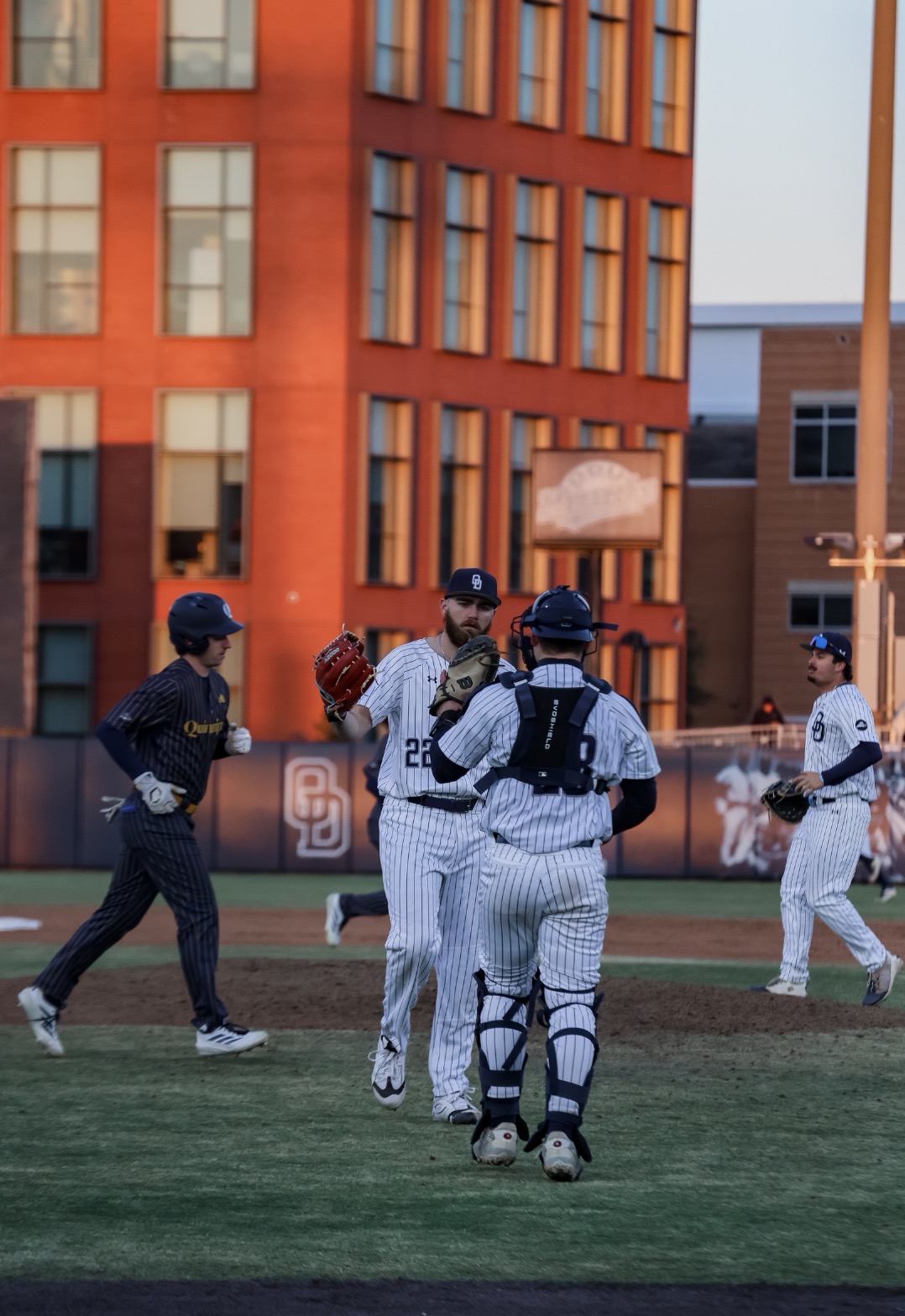
When we took the 5–4 lead, I was still on the mound. After battling back like that, I was not letting it slip. I just focused on attacking hitters and getting quick outs, keeping the momentum on our side. That ended up being my first career win at ODU, which made it even more meaningful.
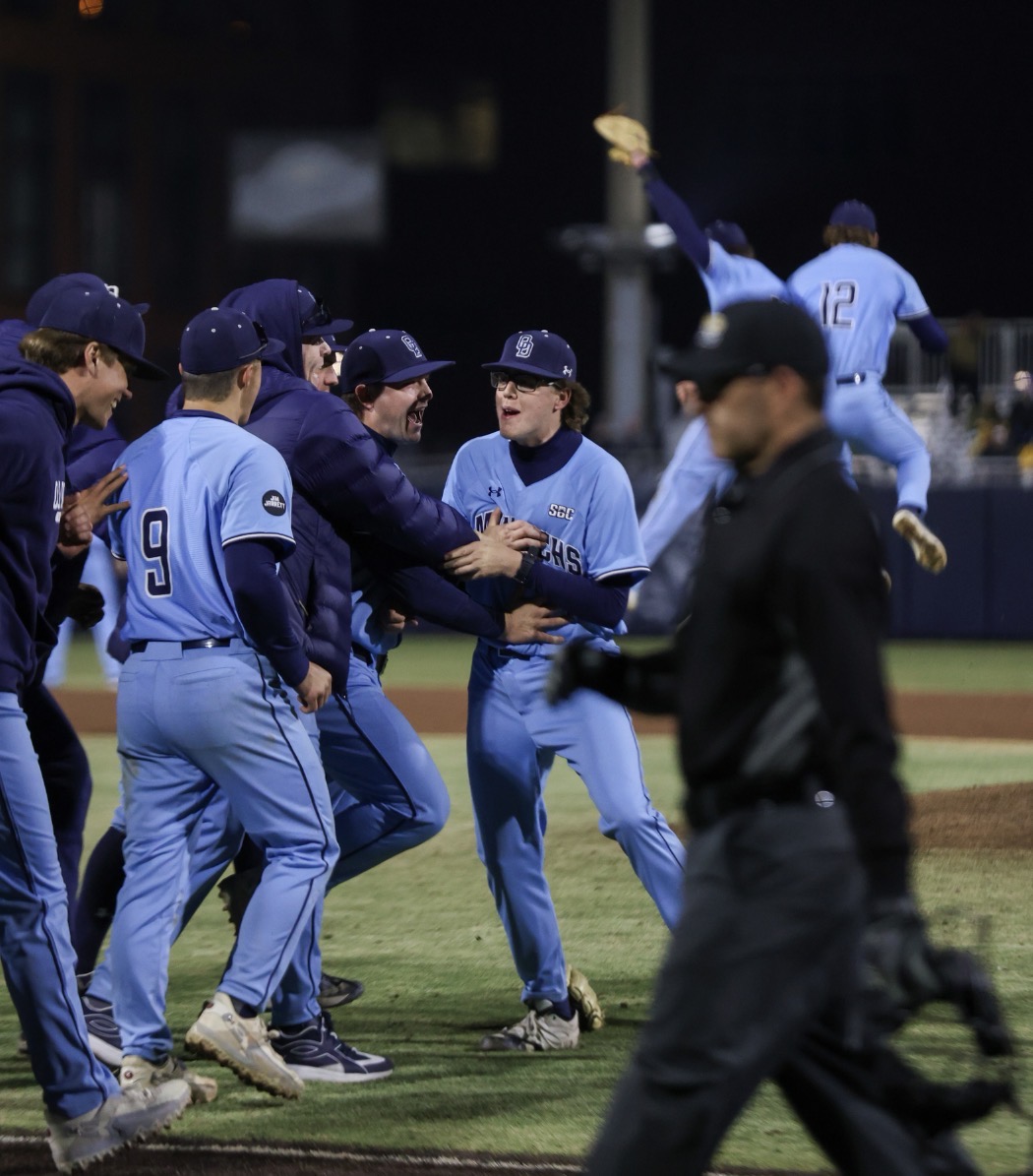
The ninth inning was probably the biggest part of that game. Charlie Pearce, a freshman, came in with the bases loaded and one out. That is not an easy situation for anyone, especially a freshman. But he stayed calm. When he got the final out, he pumped his arms toward our dugout and we all ran out to celebrate (in the photo below). It was his first collegiate save, and it secured the sweep.
A sweep means you win all three games in a series, and doing it in a doubleheader to finish it off says something about your team. We were tired and It was the second game of the day, but like Finny said, the tougher team was going to win that one, and we did.
First career win for me. First save for Charlie. And a sweep under the lights at home.
Game 3 2/21 win versus Niagara, Charlie Pearce’s first save.
For this assignment I chose X because it makes the most sense for sports. Everything happens in real time and it’s easy to post updates throughout the day. Instead of just creating a random social media page, I made my X page like a real game day from my perspective.
The first post was in the weight room before our game against Niagara. I talked about getting activated for the 3 p.m. game. I posted that because people usually only see the game, not the preparation that comes before it. Game day starts way before first pitch, It starts with moving around and getting your mind right.
Then I posted a picture of the field at Bud Metheny Baseball Complex “The Bud” before we played. I said it was shaping up to be a good day to compete. That one was more about just appreciating being out there. You don’t always think about it in the moment, but getting to play college baseball is a blessing. That post shows that side of it.
After we won all three games, I posted the final graphic and said we took all three. That’s the competitive side. We put the work in and it paid off. These Posts are under the “Social Media” tab at the top of my website.
The way I consume sports has changed a lot over the past five years. As sport communication has evolved, so has my sports media diet. I have gone from being mostly a fan watching whatever was on TV to being a college baseball player who consumes sports with more purpose and analysis.
Five Years Ago: Cable and SportsCenter
Five years ago, sports were always on in my house. When I came home from school, SportsCenter was always on the TV. We had cable, so it was easy to flip through channels and find a game. I watched a lot more full games back then, especially MLB and college baseball. At that point, I was watching purely as a fan. I wasn’t looking mechanics or thinking deeply about strategy. I just enjoyed big plays, rivalry games, and watching my favorite players compete. My sport media diet felt more passive. I turned on the TV and consumed whatever was being shown.
Now: Highlights, YouTube, and Studying the Game
Today my sport media diet looks very different. We use YouTube TV instead of cable, and during the season I mostly watch college baseball highlights on YouTube. I still enjoy watching live games because there is nothing like seeing a game unfold in real time, but I do not always sit down and watch entire broadcasts like I used to. Highlights allow me to quickly see key moments and the best plays. I also watch differently now. As a college baseball player, I like analyzing pitchers, paying attention to mechanics, pitch sequencing, and overall approach. I am not just watching for entertainment anymore. I am studying the game while I consume it.
The Next Five Years
In the next five years, I think I will continue watching live games because that experience cannot be replaced. However, I expect sport media to become even more personalized. Algorithms will likely push the exact teams, players, and moments I care about most. I also think athletes will continue controlling their own content through social media, especially with NIL and personal branding becoming more important. Live games will always matter, but the way we access and supplement them with highlights and digital content will continue to evolve.
If I Could Change One Thing
If I could change one thing about the sport communication landscape, it would be the constant overreactions to players’ words. It feels like every comment an athlete makes gets dissected, twisted, or taken out of context. Small statements can quickly turn into major headlines, and sometimes players are criticized or slandered for things that were never meant to be seen a certain type of way. As an athlete, I understand how easy it is for something to be taken out of proportion. I would want sport media to focus more on accurate representation instead of chasing attention. That would create a healthier environment for both players and fans.
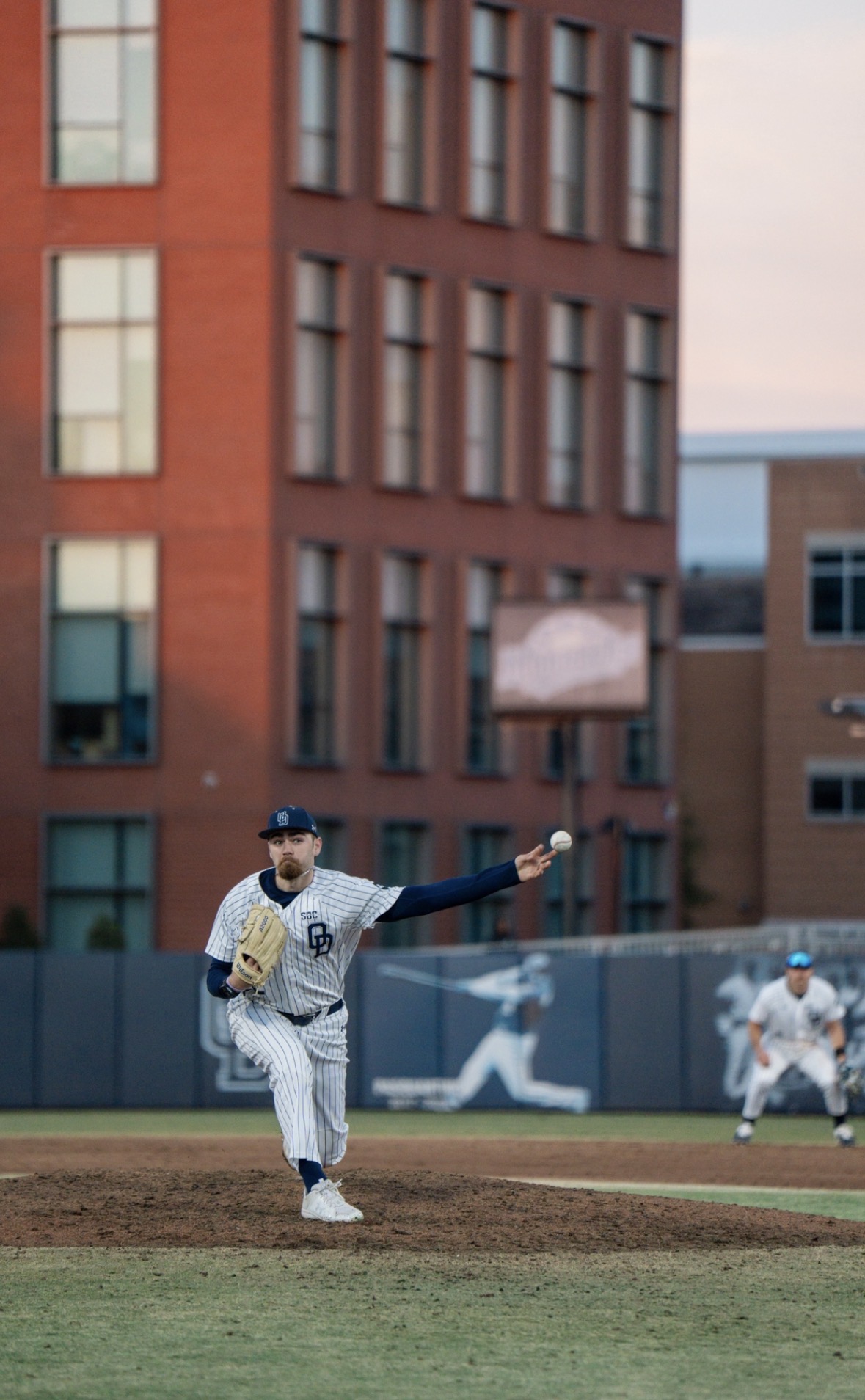
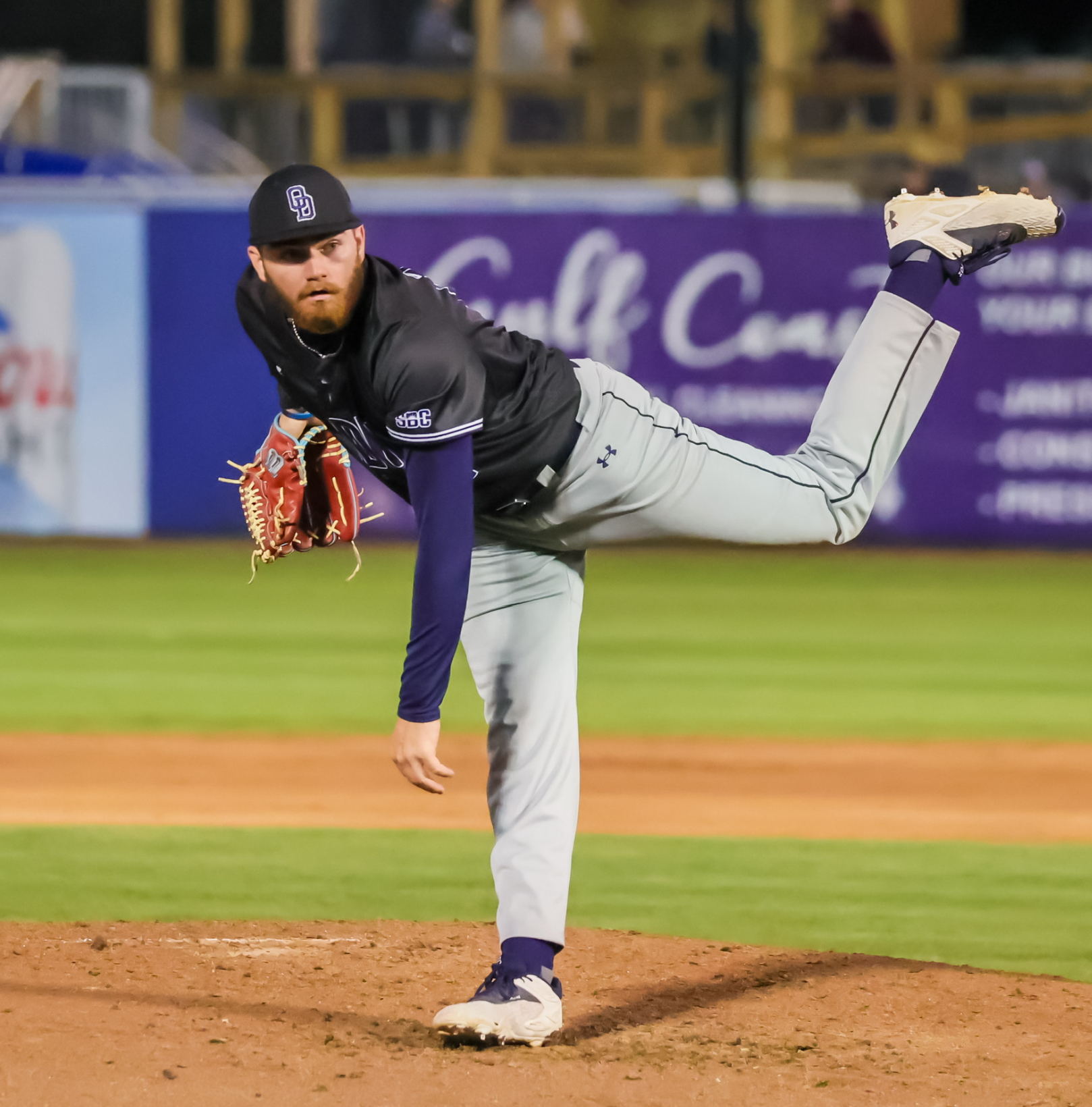
Hi, my name is Cole Lanford. I am a student and baseball player at Old Dominion University, and I am studying sports management. My passion for sports started at a young age when I began playing baseball and basketball. Eventually, my baseball career overtook basketball, and I started receiving offers from schools across the country. Still, I decided I liked ODU the best because of the atmosphere, history of the program, the coaching staff, and it was close to home. I created this blog for my sports communication class, and I hope this site becomes a good way to get to know me and what I’m about. After college I would like to get into the sports agency realm and help promote pro athletes. In the picture below, you can see me pitching in Biloxi, Mississippi, against Mississippi State.
We use cookies to ensure that we give you the best experience on our website. If you continue to use this site we will assume that you are happy with it.Accept