A Silent Protest That Roared: How Colin Kaepernick Changed Athlete Activism
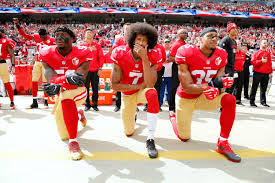
During a 2016 preseason game, hosting the San Francisco Vs. the San Diego Chargers. As it was time for the national anthem, players stood along side each other. Some holding their hands over their hearts, others taking in the moment. However, Kaepernick’s body language was calm, and his facial expression was not easy to read. The action so quiet but yet so unseen, will soon be known as a key moment that holds a thick smoke of athlete activism in modern sports.
Kaepernick’s commitment to protest police brutality and racial injustice was not for the goal of attention at first. Actually, the initial response was at a bare minimum at best. It wasn’t until weeks went by when he changed from sitting to kneeling after turning to a former military member, which signified the action had national attention. The Kneel committed in a respectful manner, but however seen as defiant, became a symbol in sport society, later followed by a forest-fire.
In the center of this short, but long controversy laid a foundational question: Should athletes be able to use their platform and status to speak on social political topics? For ages, many pushed the narrative that sport should not be in the same sentence as activism. But Kaepernick put it in perspective and defied it, for fans, the media, and organizations such as the NFL to approach the uncomfortable truths.
Media coverage has played a major role in putting together the narrative. Reports early on outlined Kaepernick’s protest as disrespectful to America, the military flag, and moving focus away from the actual issues he implied. The headlines emphasized division, and television debates turned his gesture into a boiling point. Without the full context, most of the public emphasized the controversy over cause.
However, compared to earlier athletes who pushed for activism, Kaepernick is one of the slim overview that had social media. Platforms such as twitter and instagram allowed him to explain his intentions, instead of being on the outside looking in. His clarification involved systematic racism, police violence and inequality, which are issues where media coverage has changed the narrative. Over time Colin shifted part of the narrative, making certain his messages were reaching audiences untampered.
Consequences are subjected to happen when going against the so-called system. Yet so unavoidable. Kaepernick later opted out of his 2017 contract and was never signed by another NFL team. Many have viewed this as a direct action of activism, as a small turned large message to the league about the risk of speaking out. His playing career has since come to a close, but his impact continues to grow.
The league has used his stand as motivation and followed in his footsteps by kneeling, raising their fists, or even linking their arms during the national anthem. The protest has been far beyond the sport of football, motivating athletes in the NBA, WNBA, and worldwide to take a viewable stand against social issues. What began as an independent act emerged as a movement.
Over time the perception of the public began to take a turn. Brutalities have arisen involving the deaths of unarmed black individuals and the reoccurrence of social injustice movements enforced a wider estimation. The same protest action once negatively viewed started to be seen differently.
The media narrative, at first suppressing the intention of his protest, eventually evolved as well. Stories started to reiterate his actions with in depth detail and context, recognizing both his own personal sacrifice and lasting impact. Thus, leading the media to both hold back and later amplify his message, demonstrating its powerful role in shaping public understanding.
Colin’s protest was not about going viral or creating a viral moment during the national anthem. It was about bringing visibility to challenge injustice, despite the greater cost of his personal life. His willingness to risk his career reframed what it means to be an athlete in the modern era, not just a performer, but a voice.
Today, the action of Kaepernick kneeling still holds great value in sport activism. Promoting a greater cause and informing those in the sport world that silence can still be impactful. Activism can also take many forms, which can be good or bad. This. moment also solidifies intersection of sport society cannot be belittled.