Researching the Civic Life of Shared Places
What happens when people do more than visit public lands?
What do people learn when they volunteer to care for them? How do historic places influence how people understand their communities and country? How can parks bring people into conversation across differences? What relationships develop among public agencies, volunteers, visitors, and gateway communities? And how should we understand the public value created by these places?
The Center for Civic Lands and Democratic Stewardship conducts and supports research at the intersection of public lands, civic life, democratic stewardship, volunteerism, and community engagement.
Our approach is intentionally interdisciplinary and applied. We seek scholarship that contributes to academic knowledge while also producing insights useful to practitioners, communities, and public institutions.
Research Themes
Volunteerism and Stewardship
Volunteers contribute time and labor to public lands, but their impact extends beyond hours served.
The Center examines why people volunteer, what they experience through service, how volunteers contribute to public-land organizations and communities, and how stewardship can create relationships among people and places.
Civic Lands and Democratic Life
Shared landscapes can function as civic spaces.
Research in this area examines how public lands contribute to civic learning, belonging, public memory, participation, dialogue, and the development of relationships across communities.
People, Place, and Community
Protected areas do not exist apart from surrounding communities.
The Center studies relationships among public lands, gateway communities, visitors, residents, nonprofit organizations, volunteers, and public agencies, with particular attention to how these relationships can generate mutual value.
Dialogue and Public Problem Solving
Questions involving public lands often contain competing values rather than simple technical solutions.
The Center explores how deliberation and other forms of civic dialogue can help people engage constructively with questions involving conservation, history, access, development, recreation, interpretation, and stewardship.
Organizational and Network Capacity
Stewardship increasingly depends on relationships among government agencies, nonprofit organizations, volunteers, communities, universities, and other partners.
Our research examines how organizations and networks develop the capacity and resilience necessary to sustain those relationships.
Featured Research: Volunteers in the National Parks
One foundation for the Center grew from extensive research into the National Park Service’s Volunteers-In-Parks program.
The project combined immersive volunteer experience with interviews with volunteers and National Park Service employees across dozens of park units. The research examines not only what volunteers contribute to parks, but what service gives back to volunteers—and what volunteerism can teach us about citizenship, stewardship, public institutions, and the meaning of caring for places held in common.
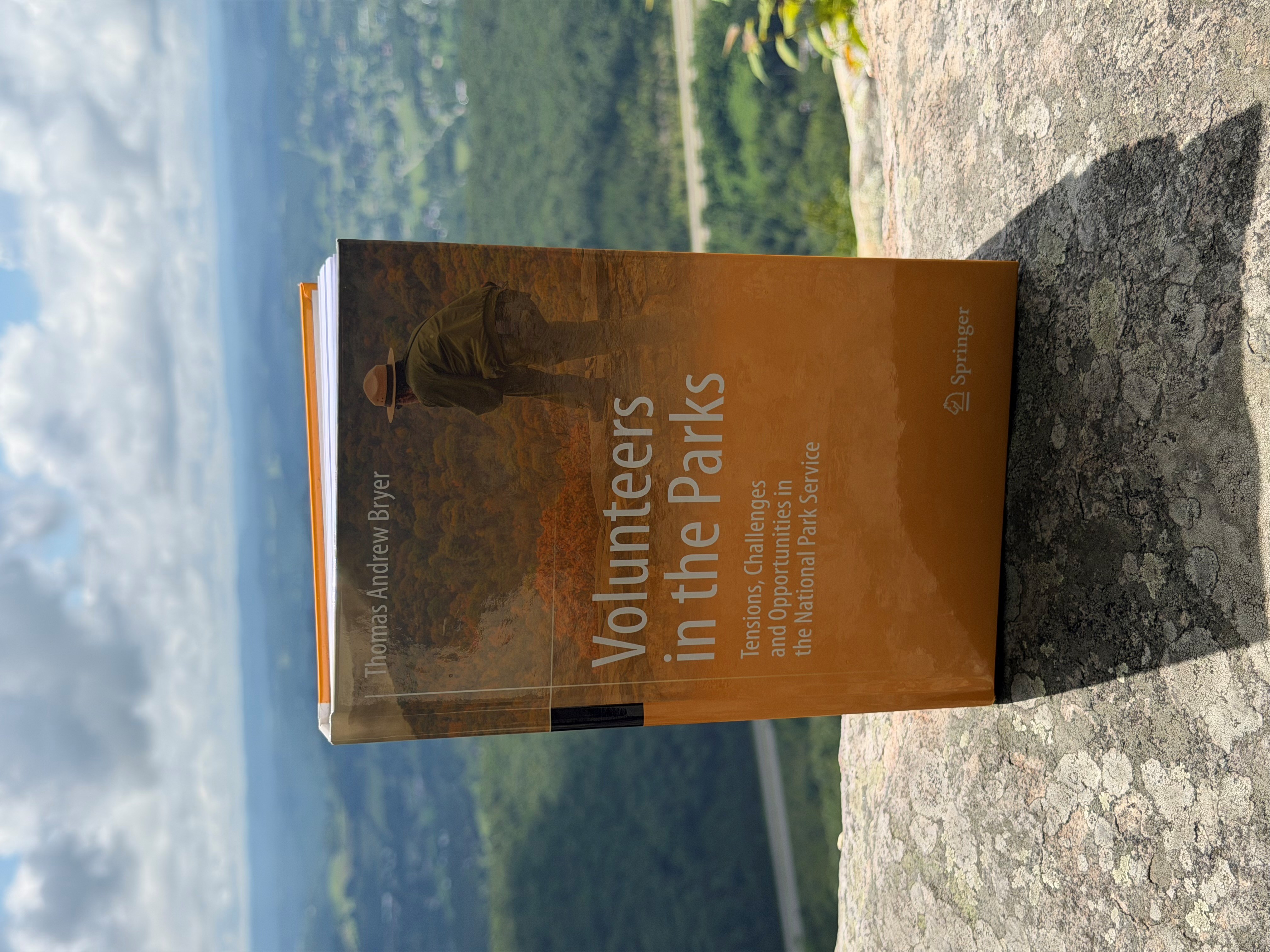
The work helps animate a broader proposition behind the Center:
Stewardship is not simply something people do for public lands. Through stewardship, people can develop relationships with places, institutions, communities, and one another.