Weekly Blog #10: Reflection. . .
My expectations for this course were very similar to what the course turned out to be — an overall study of how human thoughts and actions are influenced by others in society. This is something that I have always been interested in but had never known the name for, which is why I chose to take this course. I expected a reasonable workload, which I managed throughout the semester with no excess stress due to planning ahead. When reflecting on my expectations and my performance in this course over the semester, I am very satisfied with my work and my grades. At the beginning of the semester, and as I stated in the first blog post, I said that I would commit ample time and energy to study and facilitate my success in this course which I feel as if I have done. Over the course of the semester, I have created my own study guides, flashcards, and used other methods that have helped me retain information instead of simple memorization. Reviewing the objectives of the chapters and the course before tests and making sure that I could fulfill the objective allowed me to solidify my understanding. Most importantly, the last objective, which required me to connect what I have learned to other courses and personal experience. Due to this, I feel as if I have achieved the course objectives listed in the syllabus, and I feel as if the information that I have learned will stay with me throughout my educational journey. What made this course easier to stay committed to was the interesting content and the fact that so much of the information is not only relevant to analyzing the world but personally relevant in analyzing my own life and actions.
Prior to this course, I have never really considered social psychology as a subject. I had always separated sociology and psychology into two completely different topics that approach the world and humanity in two distinct ways. However, now I understand that they can be related to each other, and even support each other when discussing social situations and how individuals interact with each other. The question of “why” in social psychology is the most interesting to me, as I have always wondered why people do what they do. During this course, I have learned more about what causes people to act in certain ways. Therefore, my attitude towards the field of social psychology has been impacted in a positive way, and I would be more than happy to take more courses in this subject area. Over a semester only a small amount of information is learned compared to all of the information and data on within this topic, so it would be very interesting to continue studying it. Upon coming to the end of the course, I find social psychology to be one of the most important classes that I have taken so far.
If I took this course again, there would not be more than I would have done differently. Perhaps I would be interested in running social experiments on my own or get involved in a hands-on, experimental demonstration of how social psychology is used in the real world. I would have also liked to take this class in-person to hear other ideas on some of the subjects, as discourse would have been really interesting for certain chapters. Despite not being an in-person class, I remained motivated because the course content was interesting. This course has helped me grow academically through applying what I have learned to the real world, as that is what careers require one to do. This application to the real world will help me in my career as a speech-language pathologist, as psychology is very helpful in working with patients and understanding individuals. If I can successfully understand how the individual might feel, I can be more successful in treating them. One skill that I have learned due to being responsible for an ePortfolio is organization. Updating my site while also working on module readings required that I organize my work and time successfully. Luckily, organization is a skill that can be used in my professional career as I will be responsible for handling paperwork among many other duties.


Knowledge is like a Tree…
This course reminded me of the linked nature of knowledge. The acquisition of ideas and knowledge from this course was easily applicable to my life, other courses, and even the world in general. This ability to make so many connections stemming from the theories and content of social psychology reminds me of branches linking to certain aspects of life. The blog post discusses the different elements of this tree. The trunk — studying, organizing, planning, and preparing for success. Then the branches — succeeding in the course and taking valuable information learned in the course and retaining it. Finally the leaves — using what I have learned throughout the rest of my academic career and blossoming into a well-rounded employee.
Weekly Blog #9: Psychology in Real Life
Over the course of this semester, I have significantly expanded my knowledge in social psychology from what I had previously known. Not only was the information useful in the realm of education, but a lot of the information from this course is also applicable to daily life and can be used to better navigate the social world. The top three topics that I found the most interesting or took the most from was the chapter on racism, stereotypes, and prejudice, the chapter about the self, and the chapter on liking, love, and other relationships. I feel as if these categories are the most relevant to my current life, as I am going through events and feelings that are all applicable to the information in these chapters.
The chapter focusing on race and race-related psychology was interesting to me as an African-American person in the United States, especially due to the current racial climate. While racist people deserve to be held accountable for their actions, it was interesting to discover the psychological factors such as the fear of competition, which can lead to racist values. When reflecting on this assignment, I related it specifically to artifact number two. In this archive, I discussed media biases and fear-mongering which can lead to people holding certain negative attitudes towards certain racial groups. This allowed me to truly reflect on how media in America can often be twisted to fuel hatred and prejudices, and how many are initially blind to this. The chapter and activities on race reminded me of a sociology course on race that I have previously taken, as race relations are a very important sociological topic when discussing the idea of race over time and current racial tension. Comparing and contrasting the psychological and sociological approaches to race was interesting, as they both approach it in similar ways.
The chapter on the self was interesting as it allowed me to delve deeper into the human brain and how we act based on certain situations. This was particularly interesting to me because I have always wondered why people do things. I particularly found some of the theories towards human thought interesting, however, introspection interested me the most. As a young adult, I find introspection increasingly important as I learn more about myself and form new relationships. The chapter on the self reminded me the most of assignment 4 (reference assignment 4 takeaway), as this assignment allowed me to reflect on the different ways I interpret and express love. Diving into different categories of how I view love and relationships, from jealousy and manipulation to levels of unconditional love was very useful. This allowed me to realize how I stand compared to most people of my gender, and pinpoint some traits that I can possibly work on. This is one of the main reasons that I enjoy psychology, because of its application to real-life issues and scenarios.
Lastly, the chapter on love, liking, and other relationships was interesting as I have encountered many different types of men and relationship situations. In this chapter, I discovered how and why my partners and I have acted the ways that we have in past relationships, and ways to understand partners. This chapter directly relates to the emotional intelligence weekly blog, as emotional intelligence often facilitates successful relationships. Emotional intelligence and its role in society was also an important topic in my previous sociology course, where we discussed how and why people engage in certain actions or situations and how EQ impacts appropriate social interactions. While emotional intelligence is so essential in fostering connections, this is not something that can be learned by reading a book or through a Google search. Experience has allowed me to acquire emotional intelligence, and I still have work to do currently in that area. In my past, I could have definitely used improved emotional skills to help avoid conflict. This is something I hope to work on in the future and for my future partners.
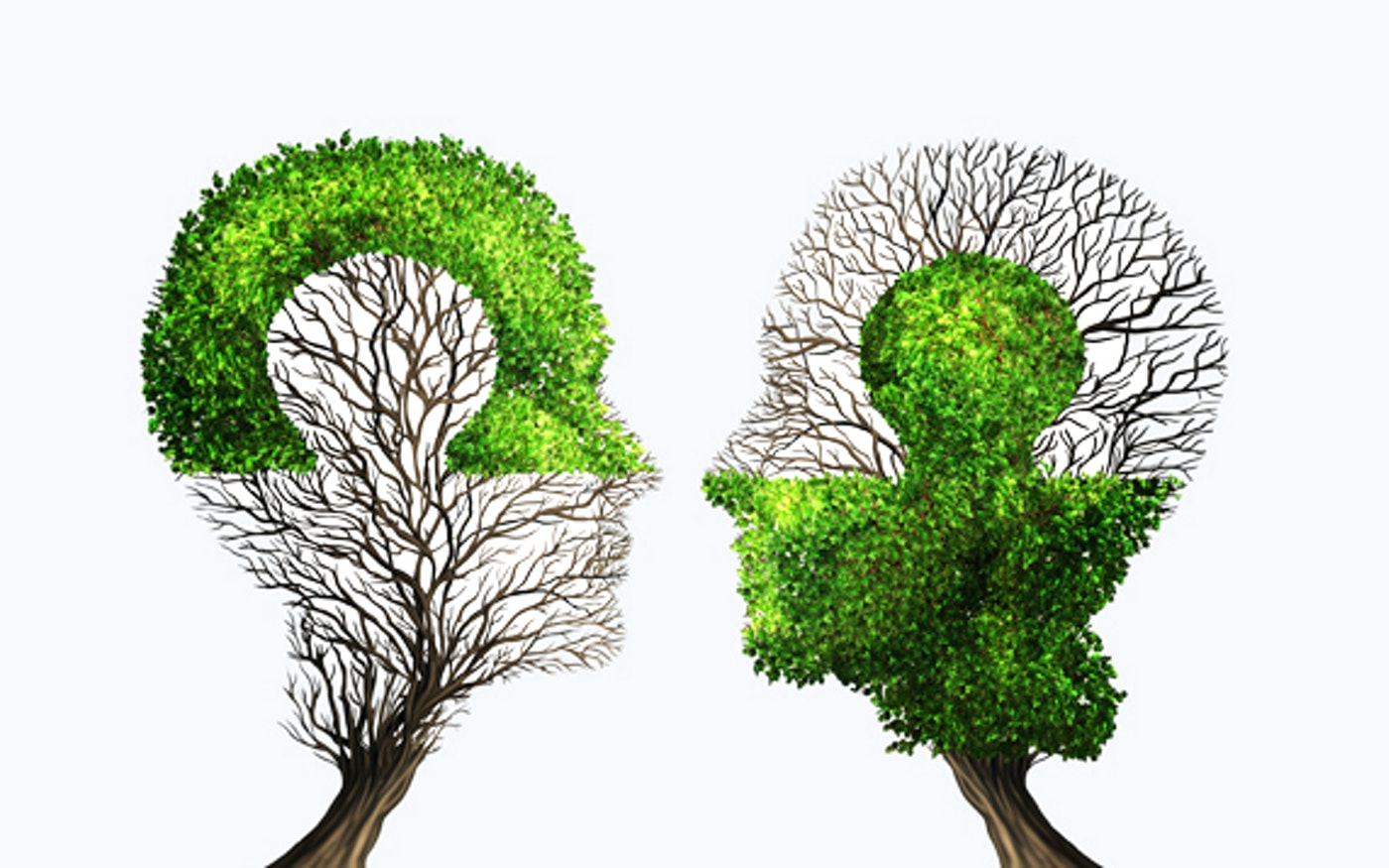
Mental Connections
In my opinion, one of the most important things to do when studying psychology is making mental connections across other subjects, personal thoughts, and worldly observations. For this blog, this is the thought process that I adopted. I connected the puzzle pieces from my own personal life observations and prior courses to synthesize the information that I have learned in this course. By doing this, I realized how so many psychological concepts are applicable in a variety of situations in differing ways.
Weekly Blog #8: Mating
The mating battleground article presents a tantalizing discussion of how men anger women, and how women anger men. As someone who is interested in the biological basis and reasoning for certain behaviors, I found this quite insightful. The provided article discusses the differences between the thought processes of men and women. There are inherent sex differences that cause men and women to act in certain ways. One of these sex differences that the author mentions is the differences in attitudes at certain points in a relationship: prior to consummation, after a relationship, has formed, and after a break-up. Prior to consummation, men tend to lie more often and do not see much of an issue with it, while women see this as deceiving and do it less. During a relationship, jealousy comes to the forefront, where both genders experience jealous feelings, yet they process it in different ways. After a relationship ends, this jealousy can continue in stalking behavior, which men tend to exhibit more than women. These natural human feelings have an evolutionary basis, and the emotions and actions of men and women can be explained in terms of mating. To understand the differences between men and women in relationships and to try to explain their actions, it is important to understand that our animalistic routes have a basis in our patterns of jealousy, anger, and more.
There are stark differences between the ways that men upset women and the ways that women upset men. Personally, I believe that men upset women often through a lack of emotional competence and availability, and having trouble interpreting and expressing feelings. Men also miss the “big picture” and tend to be blind to the bigger issue in smaller arguments. In contrast, many men complain of women being overly emotional, too needy, and unnecessarily naggy. These are very different reasons for each gender and are often things that couples have to work on to resolve together. This is a part of understanding the psychology of both genders and understanding the catalysts for certain attitudes and thought patterns. While both genders have their differences, I think that both can be equally jealous, while expressing it in different ways. I believe that trying to understand the evolutionary basis of actions and thoughts in both genders can be extremely beneficial in relationships. For many, this could help solve arguments and disagreements. However, I do not think that our primal instincts should be used as excuses for behavior that can be prevented. For example, extreme jealousy that results in toxicity should be addressed and changed in a mature way. Therefore, while evolutionary psychology can be beneficial in dissecting relationships, it is important to promote accountability and address traits that can be adjusted.
https://www.pexels.com/photo/competition-dispute-goats-37323/

The Evolutionary Consideration
When people go through fights and disagreements in relationships, the main topic is usually the faults of the other person. However, evolutionary psychology has proved that it is not that simple. There are many inherent factors that cause people to act the way that they do in certain situations, and this stems from instinct. This is something that makes the human brain so complex and interesting.
Weekly Blog #7: Emotional Intelligence
Emotional intelligence (EQ) and self-regulation are directly related to each other. Personal emotions come from what is inside of us, and we are free to choose to regulate these emotions or not. Through self-regulation, we can determine what emotions can present and which emotions we keep to ourselves. Doctors and scientists discovered this link between thoughts and feelings through the examination of brain injury patients. They found that our personalities and emotions are dynamic and not absolute as we thought. Emotions are very important as they define our thoughts and often cause us to think in certain ways. Thus, they are just important to our being or “self” as thoughts are. This is why having emotional intelligence is so important.
To me, emotional intelligence is essential to operating in an “acceptable” way in our society. In many social situations, “book” smarts aren’t needed, and emotional intelligence is necessary to interact with other individuals in this social world. Having good emotional intelligence allows you to facilitate successful relationships with friends and partners, and allows for healthy connections due to being receptive to many different personalities. Emotional intelligence also allows you to show better empathy, and be better at listening to others’ issues, and aid in solving problems. Many jobs also are more likely to hire people who exhibit traits of higher emotional intelligence. Jobs that serve communities and directly work with people, such as therapists and teachers, need workers with high emotional intelligence to help those that they work with through relating and sympathizing with their problems.
Personally, I am working on heightening my emotional intelligence as I age. I feel as if this is an important part of continuing my maturity. Many of my relationships can continue to improve if I begin to understand others on a deeper level.
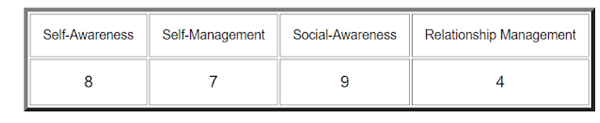
Emotional Intelligence Test
The scores from this particular emotional intelligence test are each out of 10 and focus on different subcategories of emotional intelligence. While my scores for self-awareness, self-management, and social awareness are all pretty high, my score from relationship management is significantly lower. This category deals with how one handles situations with other people. I feel that I scored this way because of my particularly blunt manner and because I rarely try to save people’s feelings to tell the truth. While I don’t think that this is an objectively negative trait, I could soften up a bit with my approaches to others in certain situations.
Weekly Blog #6: Sexism in Advertisements
Women are often portrayed in a certain light in social media and in popular culture. This portrayal of women often includes women who lack typical bodily features such as body hair, cellulite, stretch marks, and other features that are seen as imperfect. These commercials and advertisements often impact impressionable women and cause them to find imperfections within themselves. In turn, this allows for women to be persuaded to purchase products that seemingly rid them of their insecurities, as a result of societal pressure. The TedTalk titled “The Dangerous Ways Ads See Women” by Jane Kilbourne exposes how this belief pattern is not something new. It has stemmed from the 20th century during the time of the propagation of misogyny and men’s assertion over women’s bodies. This resulted in the feminine identity to be composed of pleasing men, which has arguably spilled over into today’s society, which societal pressure catering to masculine needs. I have seen the video previously, and the video did not expose a pattern that is new to me. Growing up, it has been quite obvious that the media treatment and attitude towards women are completely different than the media attitude towards men. This video and the multiple examples provided of the societal expectations and suggestions for women solidified by pre-held notions of society being a toxic vessel for women who are especially young and impressionable.
This video allowed me to view a different perspective of gender differentiation in the media through specific examples of information catered to each gender. Kilbourne specifically highlighted thigh gaps and having tiny waists, which have been a trend throughout my teen years. This was especially noticeable with young girls when they began to starve themselves to achieve these looks. While some ads were subtle with the showing of disproportionate bodies and the implication of submissiveness in women, some were direct, listing the “imperfections” some women have. This inappropriate media even went into the territory of sexualizing children. While the media is often catered to giving its opinions on the female body and its view of femininity, I appreciate the comparison to the view of men in the media. Some examples included the sexualization of men and promoting body types that may seem unattainable. While this is just as prevalent of an issue, it is quite obviously not perceived in the same light, as the sexualization of men gained immediate news coverage when it first became published.
Women are often portrayed by the media in a way that suggests that female bodies are imperfect, deserve to be sexualized, and require “fixing”. In recent culture, men have been increasingly presented in the same light. These images are damaging as they promote unrealistic standards and ideas about genders that carry over into real life, in which people adopt these ideas into their attitudes. Luckily, recent media has begun to attack this issue, and fight against long-ingrained standards. However, we still have a while to go before we come close to ridding society of its sexist and inappropriate content.
In photo A, a pear is presented, and the caption reads “This is no shape for a girl”. This insinuates that pear-shaped body types are not acceptable and need to be changed as they are not feminine. This pushes the idea that some bodies are unacceptable for women. This ad is especially interesting considering that in 2020 this body shape is becoming the standard for women in many places. In photo B, a man is showing grabbing a woman’s throat and pouring alcohol into her mouth. This photo portrays the idea of male dominance and female submissiveness, and can also be applied to a culture of giving women alcohol to lower their guard. Photo C depicts a “seven-incher” sub being placed in front of a woman’s open mouth. This phallic and suggestive image pushes an unnecessary sexual view of women in a setting that is not inherently sexual. Photo D focuses less on a sexist aspect, and more on the growing sexualization of young girls in media. The girls in the photo (who appear to be in their pre-teens) are posing suggestively. It is common knowledge that predators prey on girls who mature sexually very early. This ad does not protect the safety of young and vulnerable girls. Advertisement E, the final photo, depicts a group of men towering over one woman, and one man in this group placing his hand on the woman’s arm, pinning her down. While this photo may evoke the “sexiness” and “lustful” feeling the company wants to evoke, it pushes a negative view of both genders in the ad. It depicts women as helpless, submissive does who should simply take this treatment from men. On the other hand, it depicts men as forceful, dangerous, and domineering threats who want to exert their power over helpless women.
https://www.theatlantic.com/entertainment/archive/2015/06/advertising-1970s-womens-movement/395897/ https://www.femestella.com/mariner-watches-sexist-ads/ https://www.telegraph.co.uk/women/womens-life/11018413/Burger-King-raped-my-face-claims-model-on-angry-YouTube-video.html https://www.behance.net/gallery/1275343/The-Night-Was-Still-Young-In-TLV-I-Love-Fake-Magazine https://www.usmagazine.com/stylish/news/dolce-gabbana-gang-bang-print-ad-details-2015173/

“Sexism in Media”
Each of these photos portrays a negative stereotype or idea of the gender(s) involved in the photo. This pattern has been seen for years and pushes negative stereotypes.
Weekly Blog #5: Persuasion in Action
Psychologists have discovered that individuals can be persuaded and attitudes can be changed based on a variety of factors. Advertisements are one way that companies and groups attempt to persuade and thereby influence our attitudes. The advertisements below are three that I chose from simple Google searches. The first represents high credibility (the most likely to persuade), the second represents low credibility (least likely to persuade), and the third represents an attractive or appealing ad (which also has a good about of persuasive potential).
The first ad is an advertisement released by the CDC, or the Centers for Disease Control and Prevention. This organization is a United States organization that campaigns for many health threats, but especially works to stop the spread of disease. Their credibility stems from their evidence-based research and information, as well as the fact that they are headed by physicians, scientists, and epidemiologists. The information they released is backed by data and evidence. Their expertise in the area of health allows the public to trust information that they release (this has become especially evident during the COVID-19 pandemic). The information in this advertisement can be backed up by countless studies and the known connection between tobacco and nicotine products and lung cancer and other respiratory ailments. While this advertisement is obviously attempting to persuade and uses fear as a tactic, I believe that the appeal to emotion by using a cancer patient allows for the avoidance of dismissal by the audience. Someone who clearly suffered from the repercussions of smoking might serve as a wake-up call to smokers.
The second ad is an advertisement released by Donald Trump’s ad council, persuading Black American voters to vote for him. The first sign of a lack of credibility is that the vote from Black American voters would benefit the particular presidential candidate. In other words, this ad argues for his self-interest instead of against it, meaning that he has a personal stake in the votes that are for him. However, this is not the only lack of credibility within this ad. The “facts” listed at the bottom are incorrect and have been debunked by fact-checkers. One example includes Trump claiming that he has the “lowest Black unemployment rate in history”. This insinuates that he had a direct impact on the Black unemployment rate decreasing. This is untrue, as the Black unemployment rate has been decreasing for years, and has simply continued that trend as Trump instated office. Another untruth in the infographic is that he has had a vast investment in urban communities. This claim is unsupported, as the White House has not been able to provide a list of communities in which it invested in, nor a dollar amount. Donald Trump’s credibility as president is not very high, not only because of ads such as these but because of his tendency to lie. Advertisements such as these might not persuade well due to a lack of communicator credibility and “facts” that are not substantiated. He has also failed to support the Black Lives Matter movement, and has recently told the Proud Boys (a white nationalist group) to “stand by”. The contradiction between his words and actions also leads to his lack of credibility.
The third and final ad is an advertisement by Garnier Skincare. This advertisement is attractive and is targeted to appeal to women most likely young adults and middle-aged. This advertisement obviously appeals to the eye, with a beautiful woman, a clean and simple color scheme, and seemingly fresh and revitalizing products. The woman portrayed in the ad has clear skin, free of blemishes and imperfections. When women see this photo, they might assume that the product being advertised will give them a similar appearance. However, this is most likely not the case due to the fact editorial photoshopping techniques were used and that it is nearly impossible to achieve such a complexion. This advertisement appeals to the desire to have perfect, socially acceptable skin by women in society, yet uses a model with digitally enhanced skin. This brand is also well-known and is even more convincing to women who have heard of it before. The use of attractiveness (within the model and the artistic layout), as well as the brand popularity, will most likely be more prone to persuade its target audience.
https://www.cdc.gov/tobacco/campaign/tips/resources/social/index.html https://floridapolitics.com/archives/311537-donald-trump-campaign-pursues-black-voters-through-radio-newspaper-ads https://www.meijer.com/shop/en/facial-skin-care/new-at-meijer/garnier-skinactive-hydrating-facial-mist-with-aloe-juice-4-4-fl-oz/p/60308455970

“Credible — or not”
The advertisements above may come across as convincing, credible, and harmless. However, upon further examination, these may not all be true.
Weekly Blog #4: First Exam
In my first blog and in my “About Me” section of my site, I explained how I take my education seriously and was planning to dedicate significant time to this course. Since the first day of class, I began taking helpful notes, looking over the course materials, reviewing supplemental videos on YouTube, and utilizing the book to support my assignments. I believe these habits have truly been beneficial to my grade during this course. This was especially evident from my results of the first exam, on which I received a 98/100. I felt confident going into the exam because of my preparation for the test, which I began about a week in advance. I usually try a variety of study strategies, but the ones that work best for me are using flashcards and re-writing important materials. The study guide helped me to prepare for the exam as it was a way for me to consolidate the most important information to pinpoint my focus areas. I also felt confident based on my prior psychology courses, leading me to be familiar with the style of questions that are usually presented. Overall, the test was challenging and did require me to apply my knowledge. However, this allowed me to solidify my understanding of the topics in the modules.
For future tests, I plan to use these same strategies to succeed. Organization has been my key to success so far, and I plan to remain organized to prepare me for test review. Although I did miss a question, I am very happy with the results of my first test for this course, and I look forward to achieving on the same level as the course progresses.
https://en.wikipedia.org/wiki/Quizlet

“Flashcard Method”
For my flashcards, I use an online program called Quizlet. Quizlet allows you to create flashcards, create tests with them, and has drill activities to ensure that the student has solidified each topic. I have used Quizlet for a while because of these features and because you can study anywhere on your phone.
Weekly Blog #3: Music
Music is an important creative medium that has allowed people to express their emotions since its creation. From songs about childhood, to partying, to relationships, music has encompassed almost all categories of life. In relationships specifically, music can facilitate stronger bonds through lyrics and song. This idea is not only present in romantic relationships. Platonic friendships such as with friends or family can also be strengthened through music. I believe that this connection does not only occur when music tastes are similar. Music that corresponds with certain events such as Christmas, brings people together due to tradition. For my family, certain old-school songs such as music by K-C & Jojo, The Jacksons, and Barry White remind us of gathering together for family cookouts. I feel like this is common among many Black Americans, as cookouts are an integral aspect of Black culture.
In my life, I have not found many friends who have the same music taste that I do. As I’ve gotten older, I have found more people who enjoy similar artists, but it is rare for me to find someone who has the same favorite artist. That being said, I have never been in a romantic relationship with someone who likes the same artists that I do. However, this is partly the reason why I do not think that the idea that music similarity creates good relationships. I have had unsuccessful and successful relationships with people who prefer different music and artists. I also do not believe that my music choices represent my beliefs or ideals. I find music a way to express an opposite personality, and a part of me that exists in another dimension. Therefore, while similarity in music taste can create another thing to bond over, I do not think that it can facilitate a substantial relationship without an innate connection.
- “Champion” – Buju Banton
I chose this song as it is a song that I grew up listening to during road trips with family. Whenever I hear this song, I am reminded of my Caribbean roots and summers traveling with my family.
- “When Doves Cry” – Prince
My mother is one of the most dedicated Prince fans that I have ever met. This song reminds me of her because she would play it when I was younger on Saturday mornings while cleaning.
- “Dead to Me” – Kali Uchis
This song, by my favorite artist, represents the failed romantic relationships in my life. I have had many karmic relationships that have ended in heartbreak. However, they also ended with me learning an important lesson. From these lessons, I overcame my pain and transformed my hurt into confidence and self-love.
- “Find your Wings” – Tyler the Creator
Sung by another one of my favorite artists, I believe that the title of this song represents what this song means to me. I believe that life is a journey of trial and error to discover your true purpose. To me, “finding your wings” means to find what can truly elevate your mindset and happiness.
- “You Give Me That” – Raveena
This song represents my current relationship. This song is a slow love song where the singer explains the feeling that her significant other brings to her. I feel as if this song is a pure representation of adoration and bliss.
- “Walking Trophy” – HoodCelebrityy
Another Caribbean song, this selection represents my confidence and maturity. “Walking Trophy” is a song sung in part English and part Patois, and the singer praises the beauty of the female body, and how exuberating confidence can make a woman even more beautiful.
https://www.pexels.com/photo/butterfly-perched-on-the-yellow-petaled-flower-during-daytime-65255/

“Find your Wings”
I chose this photo because it represents the most meaningful song from the list above. Butterflies are free-roaming, beautiful animals, and I believe that the phrase “find your wings” represents a path to self-discovery.Weekly Blog #2: “What Kind of Student Am I?”
Weekly Blog #2: What Kind of Student Am I?
When answering the question “what kind of student am I”, many things come to mind. These things include my past grades, my work ethic, and my goals. However, one of the most important things that I consider when analyzing how I am as a student today is my childhood. I grew up being raised by a teacher, who loves and values education because she fully realizes that not every child has the privilege of going to school for free, or going to school at all. My father is also an educated man, who instilled hard-working qualities in my brother and me. Since elementary school, my mother would provide me with summer work to enhance my understanding of certain key topics. She would assist me with work that was not within my strong suit (unfortunately, math) and she encouraged me to get help when I needed it. As a result of this, I grew a liking for reading and writing. From reading Goosebumps, to cereal boxes at breakfast, I found acquiring new information and vocabulary through reading pleasurable. This has benefited me during my educational journey as I have consistently performed well in writing-oriented tasks. Despite my love for school as a child, I faced difficulties in more “logical” areas, such as computation and algebra due to the lack of the chance to utilize imagination and flexibility. Luckily, I had a strong support system that allowed me to work through these more difficult subjects. I feel as if working through the more difficult topics allowed me to build my work ethic the most, as I discovered perseverance and gratification through the completion of tasks I struggled with.
In college, I find work ethic one of the most important keys to success. As a student, I value this aspect of my personality as it has gotten me further in many other courses than just “book smarts”. In fact, I would go even further to say that work ethic is more important than intelligence. Completing the General Self-Efficacy Scale was self-assuring. During this unprecedented time, with a pandemic still being a threat, many asynchronous classes, and an overall shift to how the world operates, students are very stressed. Sometimes, this stress can morph into doubt, especially when the condition of America does not appear to be going in a positive direction. However, my score on the scale of 31 is a little bit of reassurance that I can truly push through to achieve my goals. My self-efficacy has been high in terms of my educational accomplishments, as when I am given a task or assignment to complete I prefer to do them before the deadline, and revise it thoroughly before submitting it. These habits have truly contributed to my educational success. I also think that my self-confidence was accurately reflected in the test as well, as others see me as a confident individual. The process of becoming confident was also a difficult task, but after years of cultivating self-love, I am very happy with my current state of mind.
Even though I have a good amount of self-confidence, confidence can always be built and improved upon. To improve my confidence, I try to step out of my comfort zones in the things that I wear and do. This includes wearing more clothing that doesn’t fit the “norm” and joining more clubs and activities on campus. This allows me to surround myself with people who are like-minded, which motivates me. Having a supportive group of friends and family members has really helped me grow as an individual. On a student level, I feel as if my confidence can be improved by simply being more confident in my capabilities. I find it easy to doubt myself, and I feel as if avoiding this and focusing on my positive traits would be very beneficial.
https://www.pexels.com/photo/man-in-gray-shirt-holding-baby-in-white-onesie-3536630/

“Reading is fundamental”
I chose this photo because it reminds me of me as a baby when my mother and father would read fairy tales and bedtime stories to me. I truly believe that these moments contributed to my inclination towards reading now.
Weekly Blog #1: Predictions and Aspirations
The course objectives for this Social Psychology course focus on the introduction of what the field incorporates, and application within other classes and real-life scenarios. The specific learning objectives include outlining procedures used by psychologists, understanding, and perception through cognitive processes, attitudes, prejudice and discrimination, and the tendency to gravitate towards certain individuals. All of these objectives revolve around the behavior of humans, and why we tend to act the way we do when confronted with certain situations. Learning more about these behaviors is not only beneficial in future courses but also allows for understanding in real-life social situations.
I expect these course objectives to help me as my minor is psychology, and I am currently taking and planning to take more courses in the field. This course and information from some of my other courses are very similar, and all link together in some form. I enjoy learning about human nature and why people make the decisions that they do, which is why I chose my minor. As a Speech Pathology major, learning about human development and social behaviors is imperative, as understanding people facilitates communication and creating personalized treatment plans for each patient. I enjoy working with children and teenagers and considering they might have more trouble expressing their concerns and issues more than an adult would, I find psychology very helpful in allowing therapists to understand patients who might not understand themselves.
During this course, I expect to add on to some of my prior knowledge about psychology from courses and research that I have previously done. In this field, I feel as though there is always new information and research that can add to theories that I have already studied to maximize my knowledge. In my experience, psychology is a field where I tend to retain information, instead of simply memorizing and regurgitating what is required of me. I hope to gain knowledge of some topics that I have never considered before and to more deeply understand the human brain, especially in today’s climate. To ensure my success in this course, I have already created a calendar with all of the dates for each assignment. I plan to stay updated with that and to also take extensive notes on current subjects. I tend to be hard on myself about my grades, but I hope to avoid unnecessary stressors but remain at my 4.0 GPA.
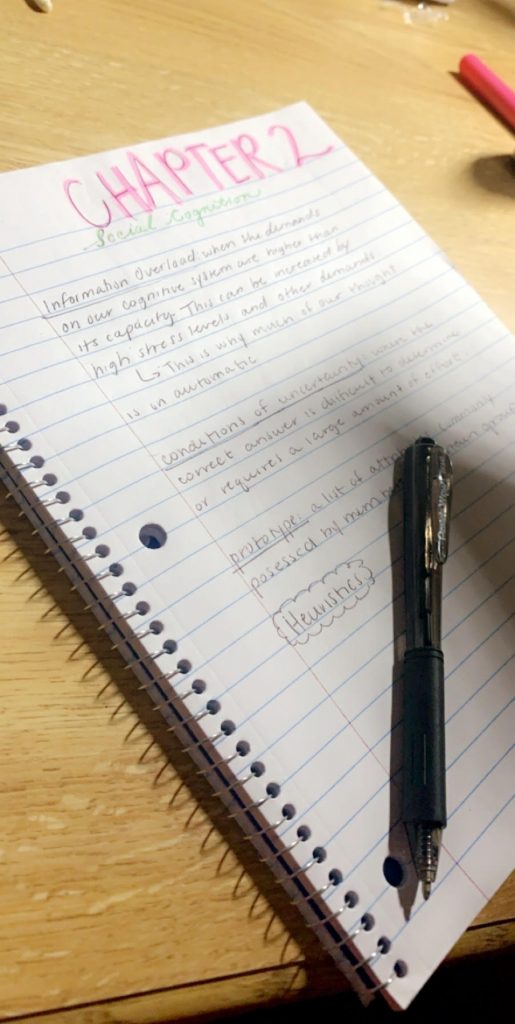
Study, Study, Study!
I chose this photo to represent my first blog as it is a visualization of one of the methods I am implementing to ensure my success in the course — notetaking.