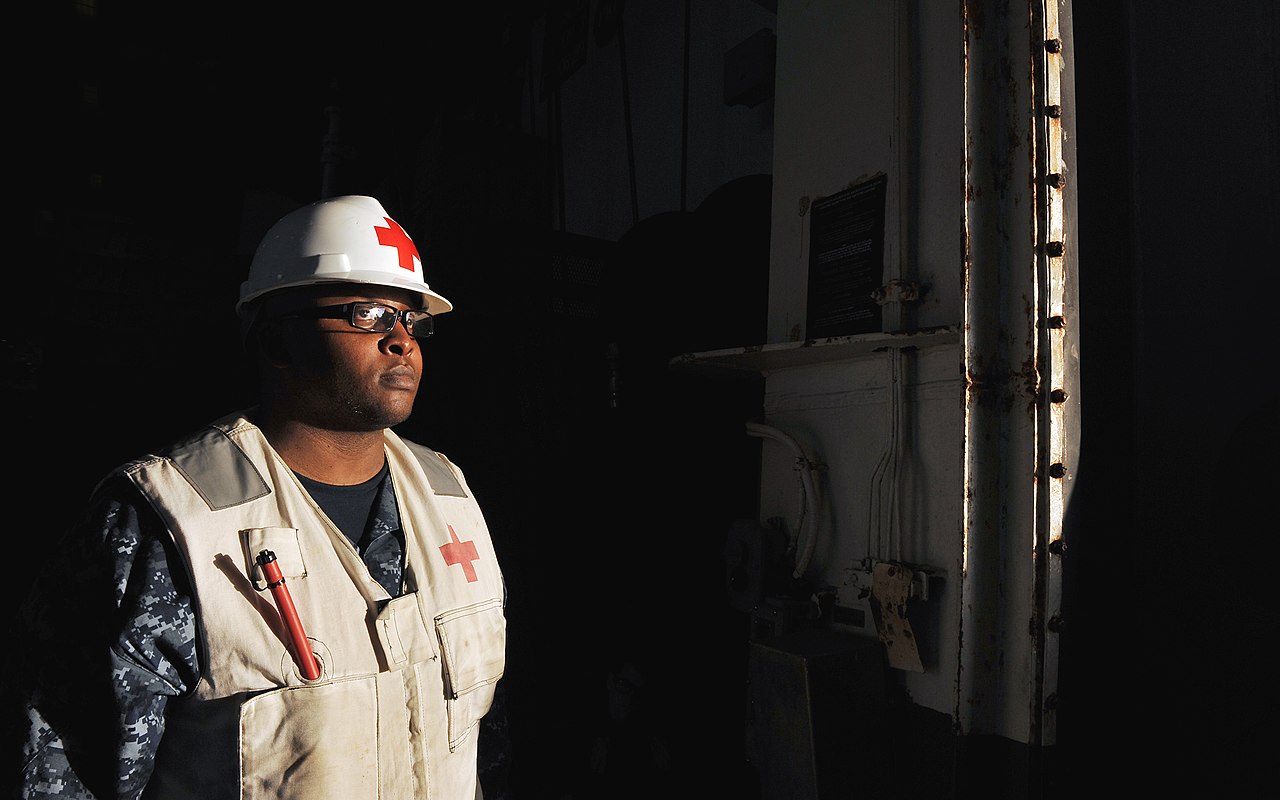
What Palmer Edema’s story taught me about sports communication, and where I am taking it next.
How This Started
When I first reached out to Palmer Edema at the beginning of this semester, I was not entirely sure what I was looking for. I knew I wanted a penpal with real competitive experience, someone whose story went beyond the highlight reel. What I found was something more layered than I expected.
Palmer is a former professional tennis player who competed from 2015 to 2017. He did not leave the sport because he failed. He left because his family needed him. He joined the Navy to provide stability for his wife and his child, who has special needs, and he never looked back. On base and stationed away from home, he found a tennis net, picked up a racket again, and kept playing, not to compete, but to breathe. As he put it himself, “I don’t play as much now, but I cherish it more.”
That line stuck with me all semester. It is not the quote of someone who gave up. It is the quote of someone who figured out what sport actually means when the contracts and rankings are gone.
What I Built Along the Way
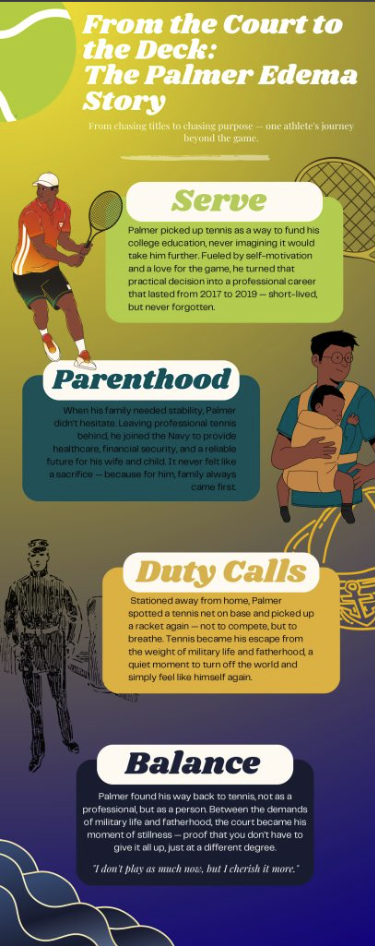
Over the course of the semester I produced two pieces of media centered on Palmer’s story. The first was a written profile introducing him as my penpal, covering how I made contact and why his background stood out to me. The second was a visual infographic titled From the Court to the Deck: The Palmer Edema Story, which told his journey in four chapters: Serve, Parenthood, Duty Calls, and Balance.
Building those two pieces taught me something I did not fully expect. Telling someone’s story well requires you to understand not just what happened, but why it matters and to whom. Palmer’s story is not just a tennis story. It is a story about identity, transition, sacrifice, and what it looks like to carry sport with you even when it is no longer your job. Framing that correctly, choosing the right details, the right tone, the right visuals, that is sports communication work. And I realized I was already doing it.
The Quest: A Freelance Sports Communication Strategy
Here is what Palmer’s story made clear to me. There are thousands of athletes like him. People who competed at a high level, built discipline and resilience through sport, and then transitioned into military service, parenthood, or other careers, with no one telling their story. No publicist. No social media manager. No brand. Just a person with an extraordinary background living a quiet life.
That is the gap I want to work in.
My Quest is a freelance sports communication strategy built around exactly this kind of athlete. Using Palmer as my foundational case study, I have outlined what it would look like to represent an athlete in transition as an independent sports communicator, covering brand identity, content strategy, and platform selection.
The Client Profile
The ideal client for this freelance model is a former competitive athlete, amateur or professional, who is now in a second career, whether military, education, business, or otherwise, and who has a compelling story that has never been properly told. Palmer fits this profile exactly. He has name recognition within his sport, a visually and emotionally rich personal narrative, and a genuine connection to two distinct communities: the tennis world and the military community.
The Brand Strategy
The foundation of any athlete personal brand is a clear and consistent identity. For Palmer, that identity already has a natural throughline: discipline, sacrifice, and the idea that sport never really leaves you. Across platforms, every piece of content would reinforce that story.
The primary platforms I would target for a client like Palmer are Instagram and LinkedIn. Instagram serves the emotional and visual storytelling side, short video clips, photo series, and graphics like the infographic I already built. LinkedIn serves the professional and advocacy side, reaching military networks, tennis organizations, and brands that value veteran and family-first narratives.
Content pillars would include behind the scenes looks at balancing military life and sport, reflections on what professional competition taught him that the Navy reinforced, and advocacy content around athletes with special needs family members, a community that is underrepresented and deeply engaged.
The Pitch
If I were presenting this to Palmer as a real client, my opening line would be simple: your story is already good. It just needs an audience. The work I would do as his freelance communications partner would not be to invent a brand for him. It would be to surface the one he already has and bring it to the people who need to hear it.
What Palmer Taught Me as a Mentor
Palmer never gave me a lecture on sports communication. He did not need to. What he gave me was access to a story that required me to think carefully about every choice I made as a communicator. What details do I lead with? What do I leave out? How do I honor someone’s real life while also making it compelling to a stranger?
Those are the questions that sports PR and social media professionals answer every single day. And working through them this semester, using Palmer’s story as my material, gave me a practical foundation that no textbook exercise could replicate.
Going forward, I want to keep doing exactly this: finding the athletes and people behind the uniforms, learning their stories deeply, and building communication strategies that do those stories justice. That is the freelance career I am building toward, and this semester showed me I already have the instincts for it.