Social Science Research
| Your Name | Muhammad Hassaan |
| Course Name | CYSE_201S-29278 Cybersecurity & Social Science |
| Instructor Name | Professor Diwakar Yalpi, D.Pharm, M.Tech, MS. |
Introduction to Research
- Everyday activities like shopping or surveys are ordinary research.
- Scientific research is different: it creates knowledge and follows the scientific method.

What is Science?
- Science is organized knowledge about the world.
- Natural sciences study nature (physics, biology).
- Social sciences study humans and society (psychology, economics).
Natural vs Social Sciences
- Natural sciences = precise, repeatable results (e.g., physics experiments).
- Social sciences = variable, uncertain results (e.g., measuring happiness).
- Social sciences deal with ambiguity and human variability.


Classification by Purpose
- Basic sciences explain natural laws and concepts (physics, math).
- Applied sciences use these laws to solve practical problems (engineering, medicine).
- Both are essential for progress.
Scientific Knowledge
Science creates knowledge through:
- Laws → observed patterns
- Theories → explanations of patterns
The goal: understand and predict natural or social phenomena.

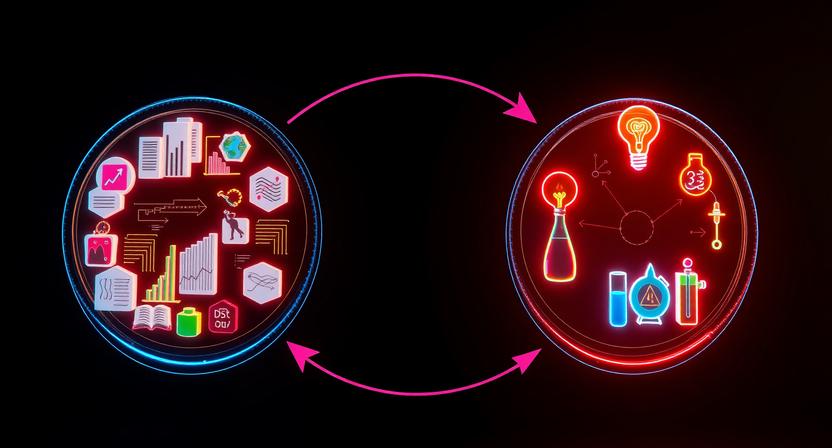
Scientific Research Cycle
- Research moves back and forth between theory and observation.
- Inductive research = data → theory (build ideas)
- Deductive research = theory → data (test ideas)
- Both are essential for better understanding.
Skills Required for Research
- Theoretical skills = develop new concepts and explanations
- Methodological skills = collect and analyze data correctly
- Great scientists combine both skills.


Scientific Method
- Science must be: Logical, Confirmable, Repeatable, Scrutinizable
- Steps: observe → hypothesize → experiment → analyze → conclude → repeat
- Arts and theology cannot be tested this way.
Types of Research
- Exploratory research: explore new problems
- Descriptive research: carefully observe and record
- Explanatory research: explain why/how phenomena happen
- Most academic research is explanatory.

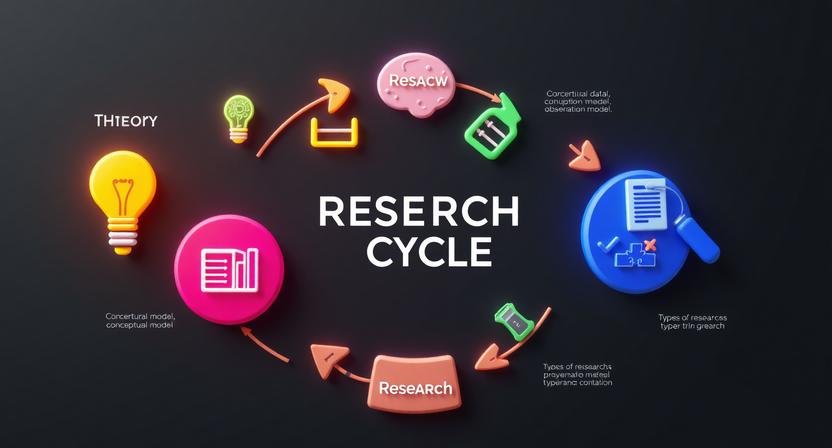
Summary
- Exploratory research: explore new problems
- Descriptive research: carefully observe and record
- Explanatory research: explain why/how phenomena happen
- Most academic research is explanatory.