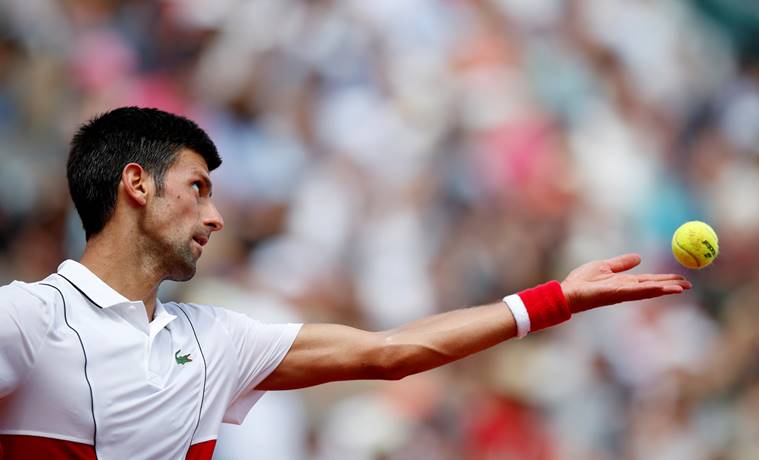
On Center Court at Wimbledon, the grass carries the full weight of expectation. In 2018, all of the weight belonged to one man. Novak Djokovic. A year earlier, however, his name was absent. Instead, Novak was facing a new opponent, himself. It was a version of his career he hadn’t experienced before, one that wasn’t defined by dominance, but by absence. A right elbow injury had sidelined Djokovic and eventually grew worse until he needed surgery, forcing him away from the sport of tennis at the highest level.
As he later reflected on the recovery process, he put it simply: “It was a necessary process I had to go through to come back healthy.” For an athlete built on control, stepping away was not just physical; it disrupted his identity.
A Champion Forced to Step Away
Novak’s decline was not abrupt, but had been building gradually throughout the 2017 season. Matches that were once easy wins became uncertain while his return game, which many consider to be the most reliable weapon in tennis, lost its edge. People began to notice that something in his foundation had changed. Eventually, the unfortunate decision became unavoidable: stop competing to address the injury properly. Novak was forced to get surgery and end his season early, cutting short what had already been a frustrating year. At the time, Djokovic admitted the emotional difficulty of his situation, “There were moments when I doubted I would come back to this level again.” This uncertainty had become the defining question of his absence.
The Absence That Reshaped Tennis
While Djokovic was recovering, the tennis world had begun to move on without him. Rivalries filled the space he had left behind. Roger Federer and Rafa Nadal had reasserted themselves back to the top of the tennis world, and the media narratives quickly adjusted. Djokovic was no longer the standard of dominance, now he had become a question mark in everyone’s minds. In professional sports, absence is never neutral, it eventually becomes interpretation. Without Novak competing, discussions surrounding his career began to arise and had shifted from achievements to speculation. Was his domination over? Had time finally caught up to him? The sport of tennis hadn’t changed, but the story around him did.
The Slow Rebuild
Once Djokovic returned to competition in early 2018, there was not an immediate return to his dominance. Instead, there was resistance. Timing issues, early exits from tournaments, and visible frustration all plagued him. Even simple, routine matches carried weight, it was as if every point was a test of whether the old version of him still existed. Recovery at the elite level is rarely a linear path. It isn’t as simple as just healing, it is a full reconstruction whilst facing heavy pressure from fans, media, and coaches. Over time, the signs of stability returned. His movement improved, and his serve consistency increased. Once broken and weak, Novak’s confidence began to rebuild slowly. Though he was improving, he was still not winning like before. At least now he wasn’t searching for himself after every point and during every match.
Wimbledon 2018: Return of Control
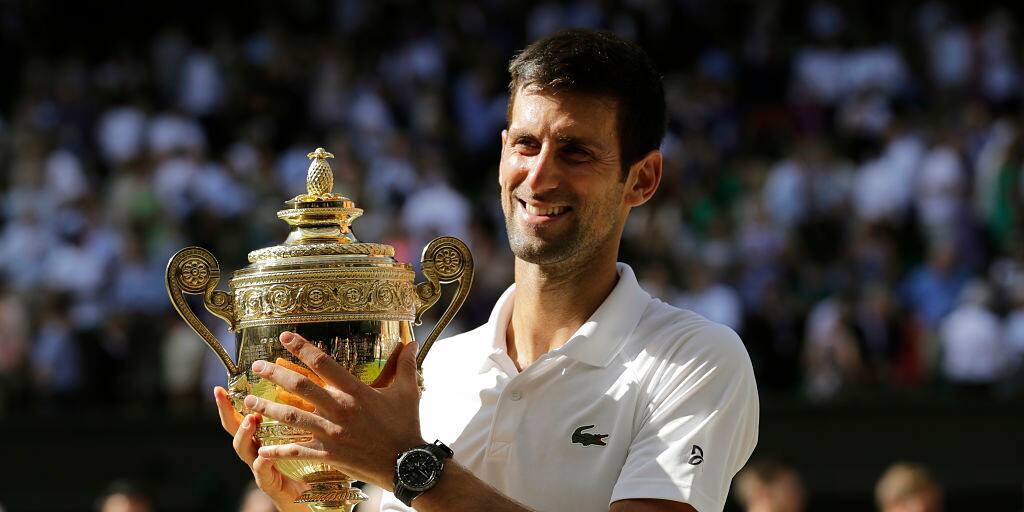
When Wimbledon came around in June of 2018, Novak Djokovic was no longer trying to prove that he belonged. Instead, he was simply playing again. Match by match, his rhythm returned. His ability to extend rallies and absorb the pressure was looking similar to his dominating times before the injury. The deeper he went into the championships, the more his presence felt less like an attempt at a comeback and more like a retaking of power. In the semis and finals, he was back. He claimed the Wimbledon crown once again, taking all three sets in his old dominating fashion. Once we won the final point, the emotions came out all at once. Holding the trophy, Djokovic captured the meaning of that moment by saying, “This is probably the biggest win of my career considering everything I’ve been through in the last year and a half.” This wasn’t just another victory, it was a confirmation that he was back and here to stay.
The True Meaning of His Comeback
Novak’s 2017-18 stretch paints a deeper picture than recovering from an injury. It highlights how elite athletes exist inside narratives shaped by performance and media interpretation. When he wasn’t on the court, his career was being rewritten without him, and when he returned, he had to rewrite that story once more. In the modern world of sport communication, comeback stories are never only about returning physically…they are also about reclaiming the signature of identity. Djokovic’s Wimbledon Championships victory did exactly that.
Final Takeaway
The elbow injury did not end Novak Djokovic’s dominance; however, it temporarily removed it from view. In that absence, the narrative around his career was questioned and debated. His return in the 2018 season did more than add another Grand Slam title to his collection, it also restored the narrative balance of one of tennis’s greatest champions. This is because in sports, just as Djokovic’s journey shows, being gone is never the same as being finished.