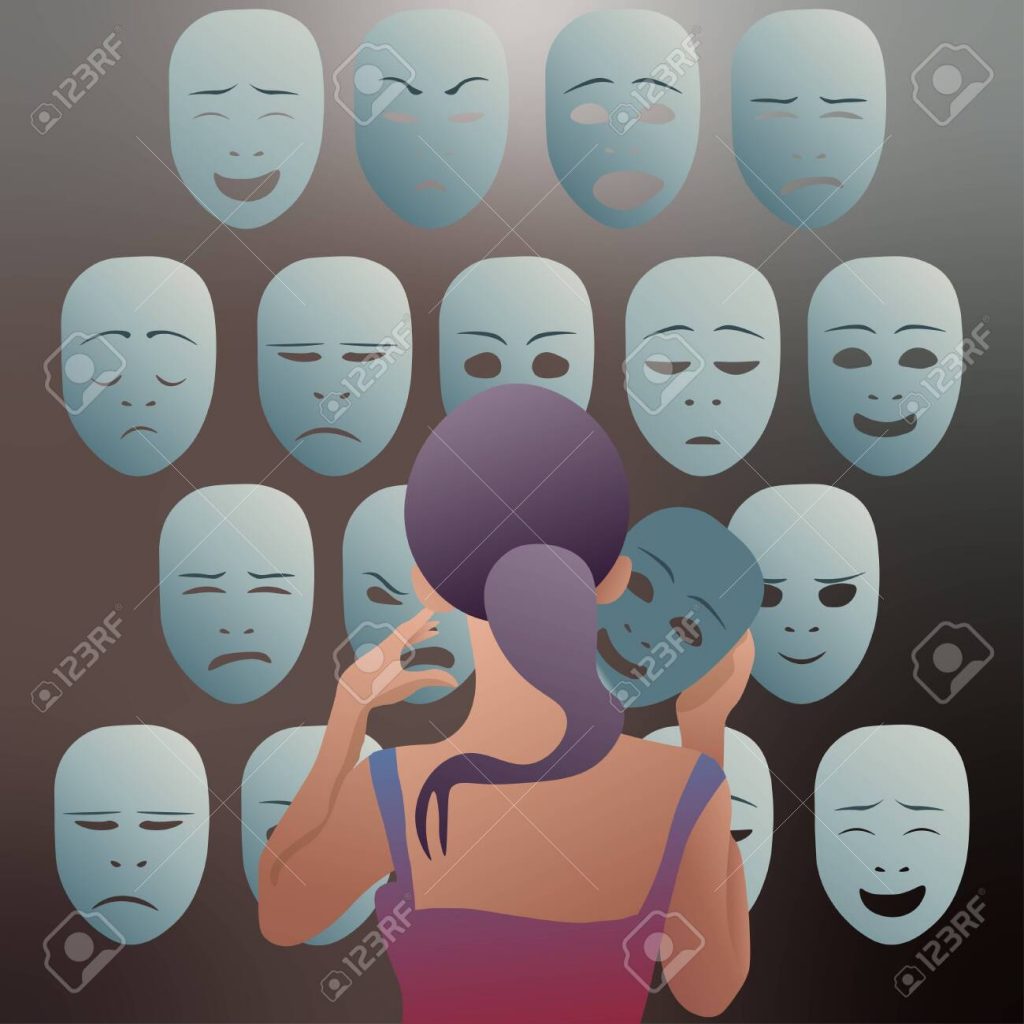
I chose this image because it best reflects the concept of cultural display rules; regardless of how we may feel, we all put on a ‘mask’ that is appropriate to the situation, time, and place that is dictated by our cultural normative rules.
When I was younger, I was intrigued by the emotional displays from my first-generation Philippine neighbor, especially, when it came to how she handle racism and discrimination in public settings. Particularly, I was invited to go back to school shopping with her and her children; unfortunately, my neighbor started to receive disparaging remarks in regards to her English from other shoppers, and inappropriate irritation and treatment from the store clerks. Yet, what surprised me the most was how subdued she was in her emotions. If you looked closely at her face, you could tell because of universality, all humans show the same signs of being upset. Meaning, she was bothered by the racist and harsh treatment by the small pinch in her eyebrows and the slight downturn in her mouth. Ironically, when we got back home, she was visibly upset to the point was she was fussing in Tagalog (according to her son) when she called her sister to tell her what happened.
I was concern because being a woman of color myself, I grew up in a family who was very assertive in calling out racist behavior and treatment; in fact, sometimes, an explicative or two was thrown out in several heated exchanges between my family and the offenders. Therefore, I was expecting my neighbor to at least defend herself or be visibly angry.
However, as I got older, I realized my neighbor was not necessarily scared or non-confrontational, instead, her behavior was more than likely because of cultural display rules. From my college experience with discussing cross-cultural norms with Philippine Americans (first and second generation), inappropriate displays of emotion— irritation, anger, and annoyance— in a public setting were not culturally acceptable to them, and these displays of emotions towards others were seen as a sign of disrespect.
Consequently, I realized that my American privilege had influenced my expectations of how my neighbor should have emotionally reacted to that scenario. Just as I am use to expressing negative emotions in public because that is culturally acceptable in American cultural display rules, my neighbor reacted based on her own cultural display rules and chose to remain subdued.