ATA 5
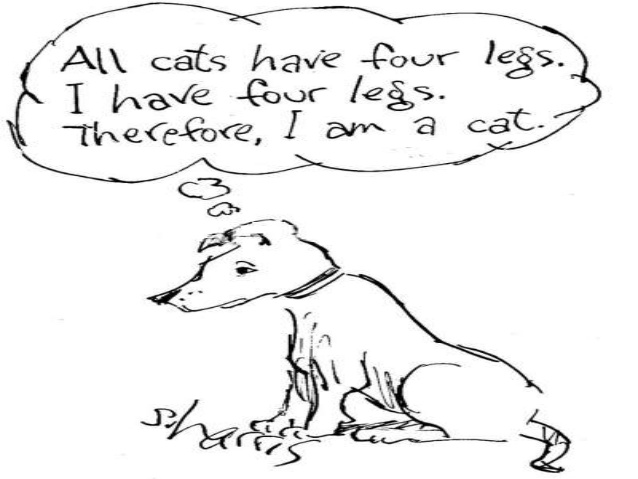
I chose this image because it represents the failure of the First of Instance of Schizophrenia research paper because of several issues such as ethnic glossing.
Using Chapter 12 concepts on Psychological Disorders, I researched the prevalence of schizophrenia in Black-Carribean immigrants and Black-Jamaicans compared to whites in Britain and North America. Surprisingly, the conclusion of the research did not prove the hypothesis that Black-Carribean immigrants had a higher instance of schizophrenia than whites in Britain because of the effects of immigration on their psychological and physical health.
Yet, the ending notes of that paper theorized that ethnic glossing, under representation, and several other denominal issues concerning reporting has effected the results. The issue in that paper related back to Chapter 2 & 3 concepts on how cultural biases can effect research, and create theories that are not translatable across culture.
Even more, the failure of the First Instance of Schizophrenia assignment reminded me of my critique on Albert Bandura’s social-cognitive experiment which I mainly criticized for his lack of diversity in children including the replication of the experiment in countries that are not known for aggression.
ATA 4

credit: https://www.nytimes.com/2008/09/10/business/media/10adco.html
After reflecting on gender stereotypes and norms depicted in Western and European advertisements, I came to a sad, but not surprising conclusion. Unfortunately, western advertisements are still hyper-masculine, and subtly emphasize traditional heterosexual gender roles among men and women. Granted, body positivity and diversity are featured more in western advertisements, yet, overt femininity and women deferring to men is still shown in these advertisements. In fact, these advertisements are similar to ones I use to look at when I was a kid that made feel as if my life was not complete if I didn’t have a male partner to smile at and share life with. For example, I use to fawn over the Macy’s Christmas advertisements as a child; I use to wish to have the nuclear family depicted because nothing says family and love like having a husband looking down on you, and wrapped in his muscular arms while wearing expensive matching pajamas.
On the other hand, while I was researching European advertisements, European advertisements showed me the importance of cultural context. Unlike its American counterpart, European advertisements depict men seemingly embracing their femininity, and showing women as a companion instead of a lover. Yet, in Europe (culture context), long hair and a waifish figure among men is a sign of youth and vitality instead of perceived femininity as it would be viewed in America.
ATA 3

Reflecting on Saskia Kercy’s blog gave me a new perspective on intercultural sensitivity. Out of all themes that Saskia had her in blog, intercultural sensitivity was the most important one beyond the usual literary themes such as emotion, societal pressure, uncertainty of the future, etc. In fact, her blog made think about how Dr. Bennett’s Intercultural Sensitivity Model never covered a concept that people go through at the Adaptation of Differences level which is resentment.
Meaning, while adjusting to differences in other cultures and trying to fit in, we all go through a mental frustration that makes us resent having to go through a difficult and inconvenient process while adjusting. Saskia’s frustration and initial resentment for the obstacles she faced in Jamaica reminded me of how I was frustrated in learning a new language. I was annoyed and questioning the purpose of trying to learn a foreign language, let alone adjusting to cultural differences of countries that were native to that language. In all, Saskia’s blog made me realized that we all have frustration at even the highest levels of intercultural sensitivity, but as long as we make a cognizant effort to adjust and get past that frustration, we will succeed. Hence, why I chose a plant sprouting from the dirt because the plant has to get pass many obstacles (dirty, bugs) before it can grow into a fully developed plant.
ATA 1

Credit:
https://www.dailynews.com/2016/01/25/nutrition-food-for-thought-in-the-new-federal-dietary-guidelines/
Our class assignment on Dr. Bennett’s Intercultural Sensitivity Model has taught me that universally, human beings have different levels of intercultural sensitivity that can affect the way they view cultures, as well how people can miss out on life-changing experiences due to their own prejudice against different cultures. For instance, when I was younger, I missed out on several opportunities to travel to rural areas of the South (United Sates) because I was at the stage of Defense Against Difference. I overtly romanticized how city-life was superior to southern culture in terms of vernacular, economy, education, technology, etc., therefore, I saw no need to make trips to the South.
Furthermore, the intercultural sensitivity assignment has made me realize how deeply intertwined intercultural sensitivity is in my other classes. For instance, in organizational behavioral psychology, I discovered that employees are chosen for expatriate assignments based on their level of intercultural sensitivity. A poll of several thousand expatriate employees showed that in order to have a successful expatriate adjustment, one should exhibit traits of Integration of Difference: willingness to immerse in other cultures, language ability, sensitivity to other behaviors in a unfamiliar cultural, etc. (Robbins and Judge 2020). Given these points, the photo above represents Dr. Bennett’s level of intercultural sensitivity. Similar to the pie, each level of intercultural sensitivity is different from one another in terms of thinking, objectives, and view of other cultures. Yet, the goal of the pie just as the goal of Dr. Bennett’s model is to provide a healthy balance. In fact, Dr. Bennett’s Model provides more understanding and immersion of different cultures (fruits, vegetables, and grains), a good portion of understanding key differences of different cultures (poultry and dairy), and significantly decrease ignorance and cultural superiority complexes (junk food).
References:
Robbins, Stephen P, and Timothy A Judge. Organizational Behavior. 18th ed., Pearson, 2020.