Artifact 5
“We are what we repeatedly do. Excellence, then, is not an act, but a habit” -Aristotle
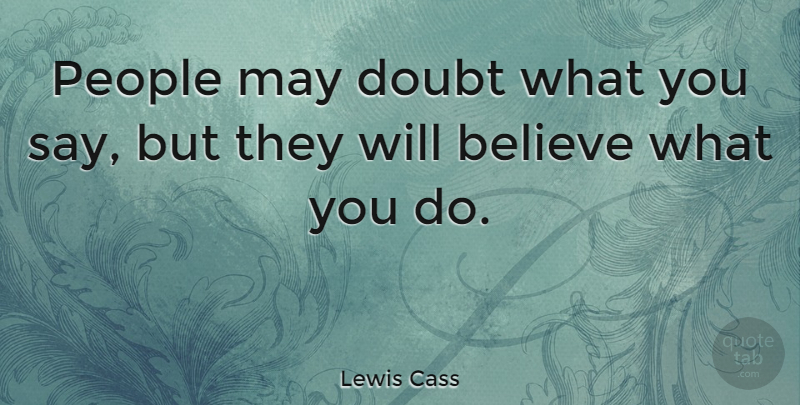
People are quick to believe that “actions speak louder than words”, which, in most cases, is true. In my representative image, there is cognitive dissonance between actions and beliefs, because it is so much easier to say what is “socially acceptable”. However, if your actions do not match, people will see right through it. According to Aristotle, there is little cognitive dissonance. Once an action becomes a habit for you, that is who you are. I liked this assignment, because it is so applicable to the world we live in. All the time it feels like everybody says, “we believe in this whole-heartedly” or “I will do anything I can to help in this situation”. Sadly, this is often as far as it goes, as people seem less than likely at following through.
Artifact 4
“Injustice anywhere is a threat to justice everywhere.” –Martin Luther King Jr
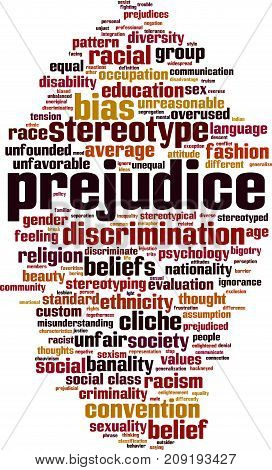
Stereotypes or prejudices may be changing, but they are far from gone. The vast number of categories that humans can bias themselves makes growth an uphill battle. This was such a hard chapter to read, and a hard assignment to face. I have never been discriminated against, so I can’t fully imagine just how humiliating, harmful, and demeaning it must feel. Sometimes, I feel so helpless, because prejudice is a daunting foe. This representative image is of a word cloud about how humans can be prejudice.
Artifact 3
“The most important thing is to enjoy your life — to be happy — it’s all that matters.” –Audrey Hepburn
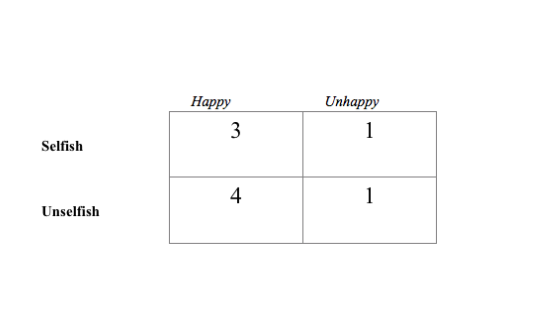
For this archived item, I wrote down the initials of people that I am close to, then categorized them as Happy/Unhappy or Selfish/Unselfish. I summarized my findings in the chart above. Of all the people that I wrote down, most were happy and unselfish, which based on our reading in the textbook, makes sense. I was surprised that I felt that I knew so few people who were unhappy. I tend to look at the world as a very unhappy, pessimistic place, and it comes as a surprise that I wouldn’t view more people as being generally unhappy. I felt that this activity was engaging, because it really made me look at how I perceive others. As I was thinking through everyone, I was going over everything that I have learned in this class to see how my perception of others, and the world, has changed.
Artifact 2
“Nothing can bring you peace but yourself.” –Ralph Waldo Emerson
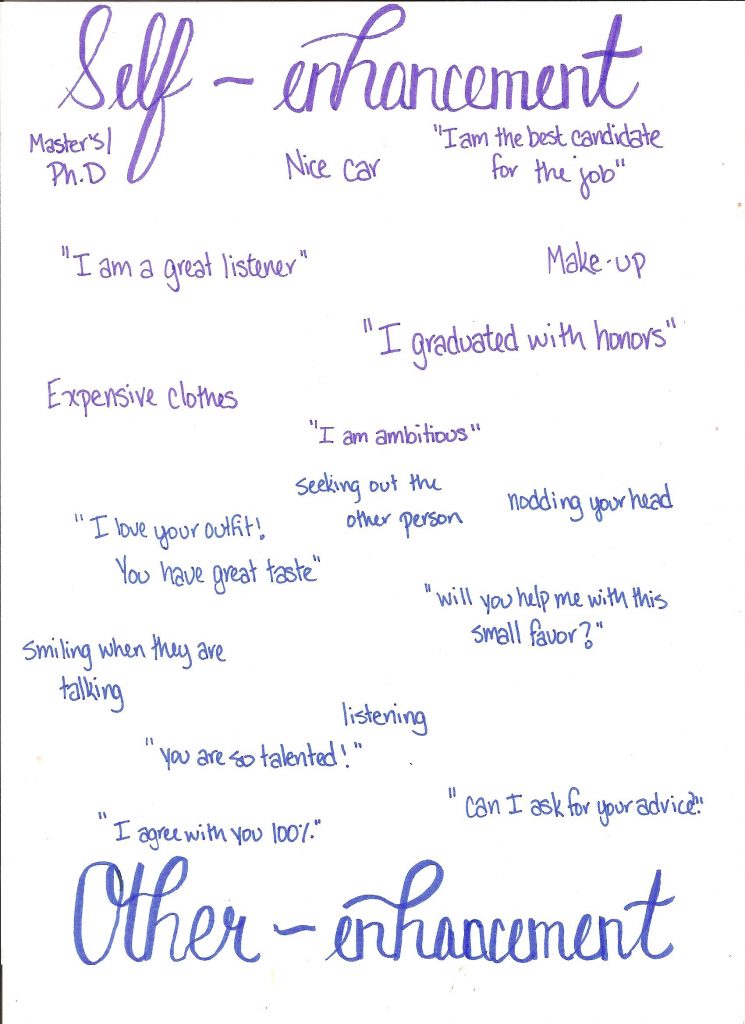
Impression management is important. Everyone does it. Humans are not always their best-selves, and oftentimes, we never want others to see it. But once this turns you into someone you’re not, that’s when it becomes dangerous. We all have to work to be our best, true selves. This archived exercise was so important, because it gave insight as to how I present myself. Above, I wrote-out a couple of ways you can enhance your image: through self and others.
Artifact 1
“What kind of society are we going to have if we can’t trust each other?” —20/20 video

There is an important factor to life — trust. We need to be able to let people into our lives that we can wholeheartedly trust. Social psychology is all about interactions; human to human. Trust is vitally important, and we need to be able to look at the world and not be consumed by fear. Can you look around and see people who will catch you when you fall? Like this photo, there are people on the ground who are prepared to help as this man is falling. This archived was engaging to me personally, because I have to constantly remind myself that there are people who are there for me, and I need to be receptive and open to them.