BIOL 302 – Introduction to Immunology
Reflection:
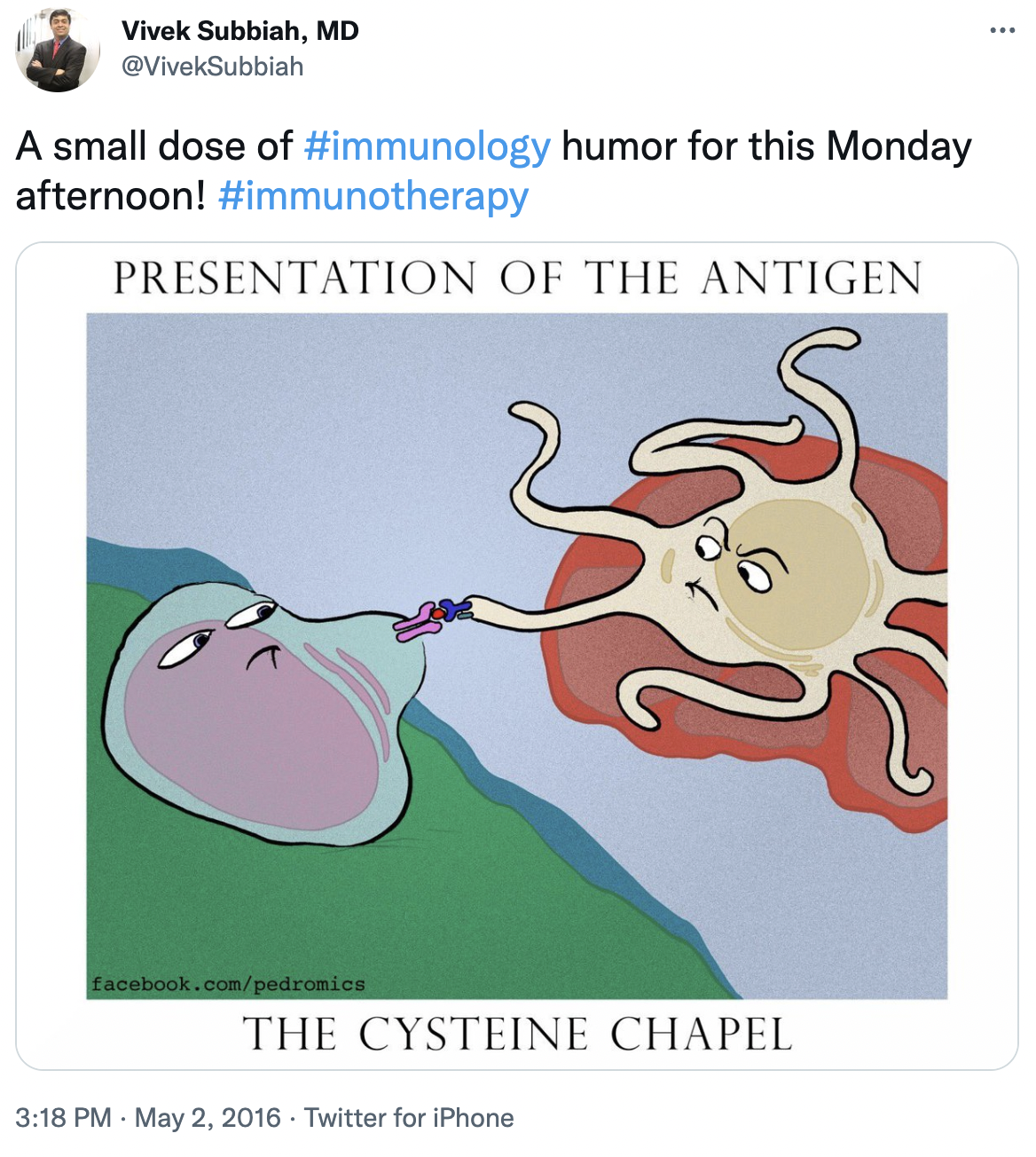
Immunology has taught me about the biomedical applications of cell-mediated immunity. From providing alternative treatments for cancer, autoimmune diseases, and viral infections, immunotherapy is a leading treatment that programs our own cellular and molecular machinery to initiate profound effector responses and establish long-term memory. Having shadowed in medical practices, I understand the importance of the physical and emotional well-being of a patient before a treatment or procedure. Since several medical procedures can be invasive and even damaging processes, I now realize that immunotherapy can boost the body’s natural defenses towards antigens and reduce the need to rely on more invasive procedures. Therefore, when looking at a patient’s overall health, it is important to promote treatments that will cause the least amount of pain and provide the highest level of comfort as possible. In addition, I am also taking BIOL 423W – Cellular and Molecular Biology this semester. Our main topic of study is how the Human papillomavirus (HPV) can travel from the endosomes of infected cells to the trans-golgi network )TGN, and our goal is to find ways to inhibit this pathway. After learning several antibody and cell-mediated responses, I believe that using B cells to produce neutralizing antibodies that bind to the L2 capsid protein of the HPV virus would be the most effective method of treatment because L2 mediates HPV exit from the endosome (Xie et al., 2021).
Assignment #1: Find me a mAB!
For my first assignment, I chose to write about rituximab, a monoclonal antibody that has been used to treat non-Hodgkin’s lymphoma and B-cell lymphocytic leukemia. Approved by the FDA in 1997, rituximab has some extraordinary qualities as an anti – CD20 receptor that significantly improved hematological cancer treatments.
 Loading…

 Reload document
  Open in new tab
 Assignment #2: Disease Topic Paper
For my second assignment, I discussed vitiligo, an autoimmune skin disorder that causes the loss of skin pigment. This paper was especially important for me because I was diagnosed with this condition in 2018. I personally enjoyed learning more about vitiligo and reading about future treatments.
Loading…
Assignment #3: Scientific Literary Analysis
In my third assignment, I summarized a 2007 study that found that type 1 interferon – β, an innate cytokine that regulates autoimmune disorders, treats multiple sclerosis by enhancing the antigen-presenting qualities of myeloid dendritic cells.
Loading…
Assignment #4: T Cells and COVID-19 Vaccines
For my final writing assignment for this course, I summarized the current understanding that we have about the use of T cell therapy to improve the efficacy of COVID-19 vaccines. T cell therapy is a great option to boost the immune response towards COVID-19 infection because they can recognize and prevent viral proliferation by targeting many parts of the virus in addition to the spike protein.
Loading…
References:
Xie J, Zhang P, Crite M, Lindsay CV, DiMaio D. Retromer stabilizes transient membrane insertion of L2 capsid protein during retrograde entry of human papillomavirus. Sci Adv. 2021;7(27). doi:10.1126/sciadv.abh4276
Recent Comments